
Flashcards
International Business & Management Teil 1
Flashcards do conjunto (200)
- 1Existential reasons to exist for a company (external perspective)Fundament to exist, fulfil customer’s needs, customers are willing to pay price for certain product Profit
- 2Vision for a company (internal perspective)Very attractive product but not able to find a group who is willing to pay for product
That’s why company has to keep up with existential reasons to survive - 3Research and Development is needed for what?Creating new needs, new solutions
Are customers willing to pay for these solutions/ideas
Unique Selling Proposition (USP) - 4USP is important for what?If a company launches a new product under the same brand, it is important to keep the same USP
To stay unique in market
Say why you are the best in market
Used in effective marketing
Straight communication
Ex. Swisstools: swiss quality, life-long usage, made in Switzerland, protection of environment, happy employees, customized tools - 5Company typesSmall & medium Enterprises
International Enterprises
Multinational Enterprises
Transnational Enterprises
Global Enterprises
Born Globals / Born Again Global - 6Ownership modelsState ownership:
government ownership, public property
Personal ownership
Common ownership
Collective ownership:
private,cooperative - 7Customer focus (3)B2B
B2C
B2B2C - 8Organizational Purpose (3)Vision Statement: desired future
Mission: employees & stakeholders clarity about purpose of organization, how to reach vision in future
Statements of corporate values: guide organizational strategy (organizational structure), definition how company should operate - 9Organizational structureDivide & coordinate the parts within people work
Vertical (different levels)/ horizontal (division among departments)
Functional
Divisional
Matric
Teams
Networks - 10When should a company go international? Advantages/DisadvantagesLimited customers in own country, going abroad to grow
Proactive: profit advantages, unique, technologic advantages, tax benefits, economics of scale
Reactive: competitive pressure, overproduction, declining domestic scales, saturated domestic market - 11Ways to conduct business abroadExport & Import
Off-shoring (outsourcing functions abroad, to save cost)
Foreign direct investments (FDI) (buying company abroad)
Licensing (selling rights to use assets)
Franchising (right to use brand name in exchange of a fee)
Joint venture (forming alliance to conduct businesses for a reason) - 12Definition of Management and ManagerManagement activity of getting things done
Manager Person who get things done - 13Why is Management needed?Adding value to resources to survive value-adding process
More output than input
Input Managing transformation processes Output - 14Different functions of managementGeneral managers
Functional managers
- Line managers
- Staff managers
Project Managers
Entrepreneurs - 15Scope of ManagementFunctional tasks like planning, in a work divided organization with purpose of delivering performance
Social describes all executives as a whole, authority in organization, purpose of influencing behavior
Mental leadership Management shapes order in company, vision/values/goods/creativity - 16Tasks of ManagementPlanning, Organizing, Leading
Staffing, Coordinating, Controlling, Reporting, Budgeting
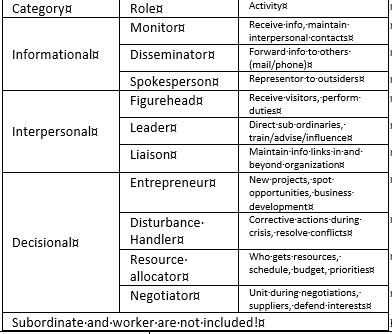
purpose to achieve goal of company with least imput but maximum output - 17Mintzberg’s 10 Management Roles
- 18Transformation within the organization and the outside environmentInternal elements immediate context of managing
External elements consist of micro (competitive) and macro (general) environment
Time elements past, present, future - 19External factors determine a mangers actions. Every manager behaves differently 3 theories shaping the contextDeterminism: Context --> Manager’s actions
Managerial Choice: Context <--Manager’s actions
Interaction: Context <--> Manager’s actions - 20Management performances Managers organize work through division of workEfficiency (doing things right)
Effectiveness (doing the right things)
Division of work: scarce limited resources, efficiently/timely achieving goals - 21Management roles Competing value framework consist of 4 complementing philosophiesRational Goal Models:
Adam Smith, Babbage-Principle, Frederick Taylor, Henry Ford
Internal process Models:
Henry Fayol, Max Weber
Human Relation Models:
Mary Parker Follett, Elton Mayo
Open System Models:
Interaction with environment
socio-technical system
complexity theory (linear/non-linear) - 22Company interacts with environment Company must add value to resources to surviveDependent on environment for inputs to deliver outputs
Manager’s assumptions about: culture, competitive environment, general environment, stakeholders
Influence direction of actions and priorities
Launched product has to respond to demand of different environmental spheres, if this is ignored it might lead to a collapse - 23Influences on organizationInternal environment: elements within an organization
External environment: beyond organization - 24General vs. Competitive environmentGeneral (macro): PESTEL
Competitive (micro): Porter’s 5 forces - 25Analysis on general environment PESTELFrameworks influences product/services rather positively or negatively?
Political
Economic
Social
Technological
Environmental
Legal - 26Analysis on competitive environment Porter’s 5 forcesHow does the market (micro-environment) in which you operate look like?
Suppliers: bargaining power of suppliers
Potential entrants: threat of new entrants
Buyers: bargaining power of buyers
Substitutes: threats of substitutes
Influences Industry competitors, Intensity of rivalry - 27Intensity of rivalry Strong competitive rivalry lowers profitability and occurs when……Many firms, no dominant
…slowly growing market, firms fight for market share
…high fix costs encourage overproduction
…loyalties
…prolonged capacity: airlines, agriculture, auto-industry - 28Potential entrants might be encouraged by low entry barriers when… (5 forces, potential entrants)…low cost of equipment/facilities
…ready distribution facilities
…no/minimal customer loyalty
…no significant advantage of economies of scale
…no relevant subsidies/regulations in favor of existing firms - 29Potential entrants might be encouraged by low entry barriers when… (5 forces, potential entrants) Profit decreases with greater power of buyers if… (5 Forces, Buyers)…buyers take high percentage of supplier’s sale
…many alternative products/suppliers available
…product has high buyers cost (seeking for alternatives)
…cost of switching to other suppliers is low - 30Power of suppliers is high and reduces “profit” to buyer if… (5 Forces, Suppliers)…buyers take small percentage of sales
…few alternative products/suppliers available (loyal customers)
…product has low percentage of buyer’s cost, little incentive to seek alternatives
…cost of witching suppliers are high - 31Easy to substitute (=less profit to supplier) if… (5 Forces, substitutes)…buyers are willing to change buying habits
…technological development enables new products and services
…transportation cost falls
…new supplier entering market - 32How to manage 5 forcesIncr. entrance barriers
Benefit from fact that forces balance each other out
Try shaping the barriers as part of strategy (competitors intelligence)
Customer-relationship-management (CRM)
Aiming cost-leadership/differentiation strategy - 33Economy of scopeLowering average cost by producing more types of product as if each firm concentrates on producing one single type of a product
Already available infrastructure/knowhow/employees can be used “twice” - 34Economy of scalePer unit cost of production falls as volume of production increases
Large volume of production is needed! - 35Stakeholder AnalysisStakeholders: individuals/groups with interes in activity of a company, they invest something and expect returns
(interest groups)
If expectations are not fulfilled, they blame company for it and put pressure on them (pressure groups)
Pressure group = risk to company - 36InterestIs the period between lender lending a loan and lender getting the money back (from loan participant)
- 37Different value systemsDifferent expectations = different value system
Risk to their interest = values are threatened
Means of power = defending values
Coping with risk = balancing everybody’s interests out - 38What is key to survive for a company in relation with stakeholders?To win loyalty with all stakeholders
- 39Stakeholders have different power to protect their interests and force a company to return these interestsSources of power: within organization, external stakeholders
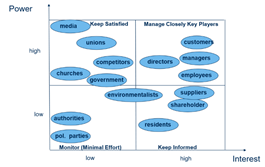
Indicators of power: within organization, external stakeholders - 40Stakeholder grid and communication efforts (power/interest)
- 41Blind spot of Neoclassical economics Neoclassical economy: dominates microeconomics, Keynesian economy, dominates mainstream economy todayLimits to growth due to overuse of resources/public goods
Optimal extent of economic system in relation to earth/planetary boundaries
Economics can't grow bigger than ecosystem provided - 42Planetary boundariesSome are global e.g.: CO2/global warming
Some are local e.g.: H20 shortage - 43Global warming and its impact on companiesWinners/losers
Impact on: energy supply, industry/manufacturing, transportation, waste/sewage, forestry, agriculture, buildings - 44Sustainability Two most important streamsCarlowitz definition:
Sustainable resource management, live off the interest not the capital
Brundtland definition:
Intra-& Intergenerative justice
More sustainable means green(er) and fair(er) - 45Corporate (social) responsibility (CR / CSR) DefinitionResponsibility of companies to contribute to the solution of societal challenges
It means for companies that
Company should have in place a process to integrate social, environmental, ethical, human rights and consumer concerns into core strategy in collaboration with stakeholders to: maximize creation of shared value
Identify/migrate/prevent possible adverse impacts - 46Strategic CR management creates value for…… society/environment
…company
Benefits society and business
Thus, CR makes sense! - 47Creating shared value (CSV) means…… creating a win-win situation
Double value for company and society
Strategic approach CSV: differentiate in market to stay unique
Direct link to company value creation and profit maximization
Society + Company = CR - 48Creating shared values when……reconceiving products & markets (social needs identification: product innovation)
…redefining productivity in value chain (productivity, efficiency, securing resources)
(…enabling local cluster development) - 49Creating shared value, CR Management, Societal ChallengesCreating shared value there is always a direct relation between CR activities and profit maximization
e.g. reputation doesn’t belong to CSV but to CR
reputation doesn’t maximize profit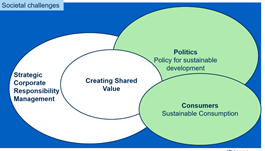
- 50Green giants Enables more sustainable brandsIconoclastic leader
Higher purpose
Disruptive innovation
Built-in, not bolted on
Mainstream appeal - 51Sustainability gapImportance – Behavior = Gap
What holds the masses back to behave in a sustainable way? - 52What can be identified by an Internal Analysis?Resources, capabilities and core competences. A company needs to identify Strenghts (available resource capabilities lead to a development of sustainable competitive advantage) and Weaknesses (lack of resource capabilities lead to prevention in developing competitive advantage)
- 53Discovering core competencies (model)competitive advantage
value chain analysis (out-/insourcing)
4 criteria of sustainable advantages (VRIO)
core competencies (capacity and ability)
resources (tangible/intangible) - 54definition of core competenciesserve as a source of competitive advantage over rivals
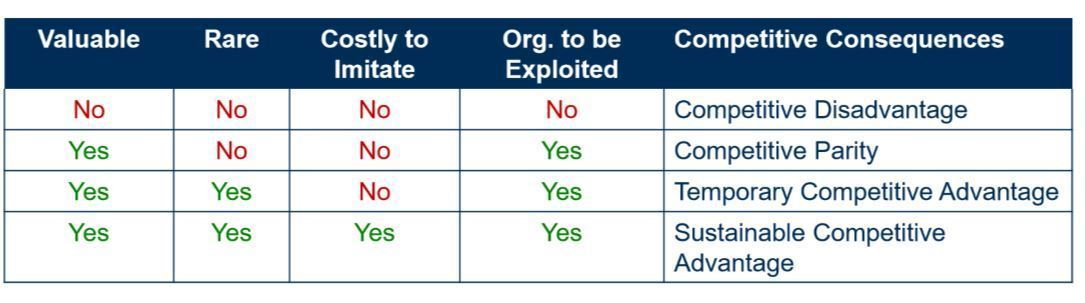
core competencies = distinguishs a company competitvely & makes a company distinctive - 55VRIO FrameworkValuable
Rate
Costly to imitate
Organized to be exploited
--> It is never taken for granted that core competencies will continue to provide a source of competitive advantage
All core competencies have the potential to become a core rigidities! - 56VRIO Framework (Scheme)
- 57Value Chain Analysis Definition M. Porteroutsourcing / insourcing
Dividing firm in its activities
-designing
-producing
-marketing
-distributing - 58Value Chain Analysis used for?basic tool to identify resources for diagnosing competitive advantage and to enhance it!
opportunities to secure cost advantage
opportunities to create product/service differentiation - 59Value Chain: Primary Activities involvement of creation, Sales, transfer of a product
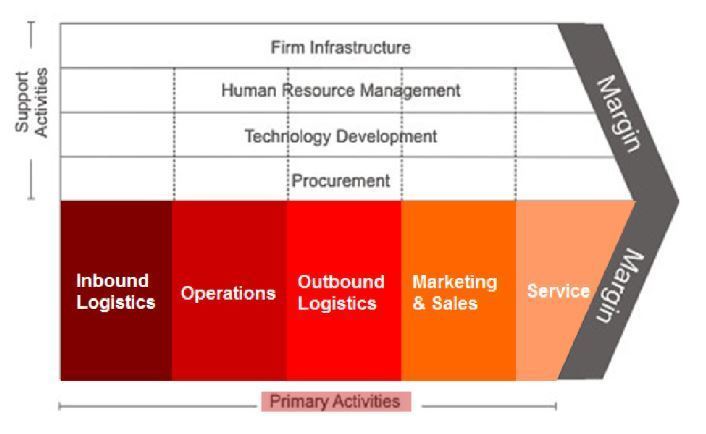
- 60Value Chain: support activities support primary activities
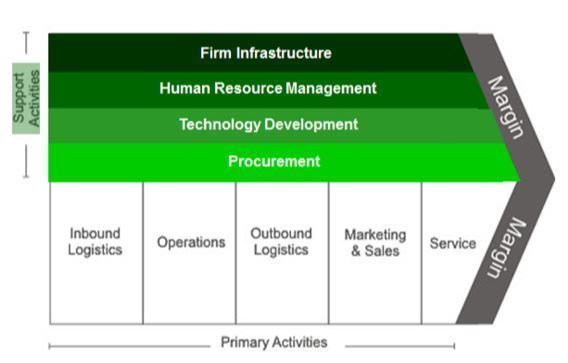
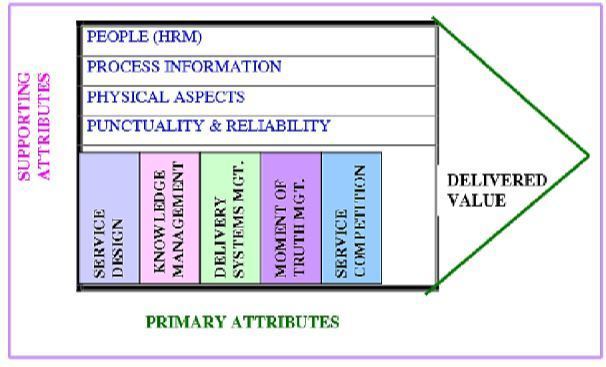
- 61value chain for services
- 62outsourcingsome or all value creating activities from external suppliers --> specialized suppliers, more efficient
- 63advantages of outsourcing-cost savings: lower cost resources, latest state of the art technologies
-technology: always the best and newest
-Flexibility: seasonal peaks, large expert pool, adjustments
-Focus/Specialization: non core services outsourced means more time for value-adding activities - 64Global Value Chains (GVCs)international production --> different stages of production located in a different country
Globalization motivates firms to think globally (where cheapest/best/efficient)
-optimization of production (go where it is best)
-trend towards international dispersion - 65Use of Value Chain Analysis-source to analyze where competitive advantage is coming from
-how discrete activities interact with each other
-competitive advantage can be created by performing better/producing at lower cost than competitors
-stay out of "no-profit"-zone
-opportunities for integration
-organize value process spendings
-divided in three directions: service / manufacturing / service + manufacturing - 66Definition of competitive Advantagefirm can performe at a higher level than others in same industry or market through its resources/capabilities (core competencies)
- 67SWOT Analysis Definitionsummarizes organization's S&W relative to external O&T
- 68SWOT Analysis
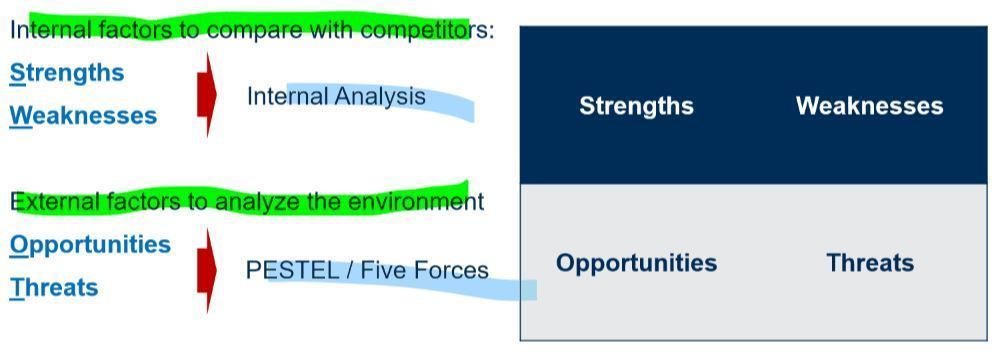
- 69When to apply SWOT Analysis-explore new possibilities for new efforts/solution for problems
-best decision making --> identify O for success in context of T to success (can clarify decisions & choices)
-determination where changes are possible (juncture/turning point)
-adjustments and to refine plans mid-course
-also suitable for organizing gathered information and communicate about initiative or program - 70Steps of developing successful Business (5 steps)1. Finding Vision/Existential Reasons
2. Analyzing Environment
3. Planning & Developing Strategy
4. Implementing Strategy
5. Responding to Stakeholders - 71Finding Vision/Existential Reasons. How?R&D:
Product/Market Development, 5 Forces, CI - 72Analyzing Environment. How?Context:
PESTEL Stakeholder, SWOT - 73Planning & Developing Strategy. How?Strategic Options:
Directions - Ansoff/TOWS + Methods - 74Implementing Strategy. How?Structure/Culture:
Organizations, Processes, Culture: ABC - 75Responding to Stakeholders. How?Sustainable Responsibility:
Value-Risk Management, Business Ethics - 76Basis of Economic Action. How does it work? Who is involved?
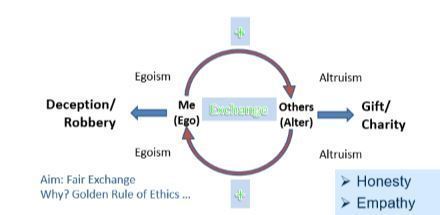
- 77Reasons for Corporate Responsibility Activities (3 main categories)Radical Transparency
Increasing Stakeholder Expectations
Declining Ressources - 78Structure of Responsibility (triangle)Authorities: Stakeholders
Subject: Company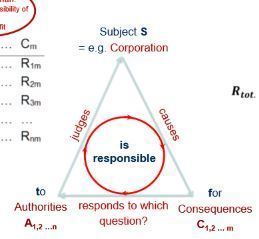
- 79Purpose of a Corporate Responsibility (3 main categories)Ecological Dimension: Aesthetic Responsibility --> PLANET
Social Dimension: Ethical Responsibility --> PEOPLE
Economic Dimension: Technical Responsibility --> PROSPERITY/SELF-PRESERVATION
--> Triple Corporate Responsibility - 80different scopes of responsibility: Levels of Moral Developmentin what world would we live if everyone would behave like always asking for something in return when we did something for someone --> Ethical Development
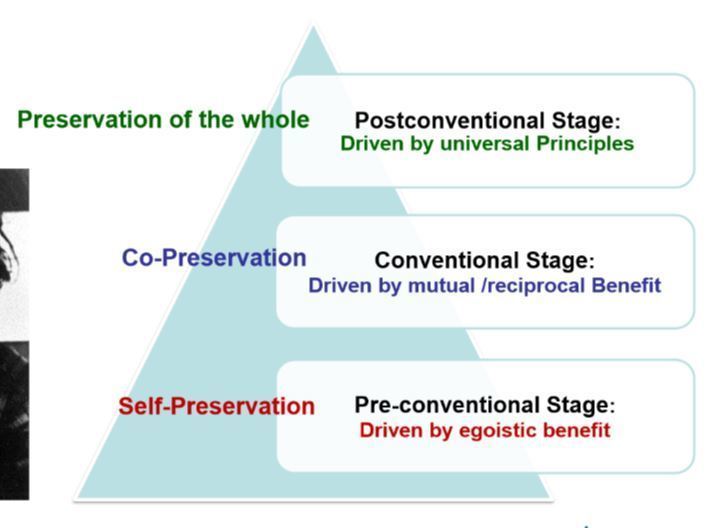
- 81Meaning of SustainabilitySustainable Development should satisfy current requirements so that future generations are not disadvantaged.
- 8217 sustainable Development Goals for 20301. no poverty 2. zero hunger 3. good health and well-being 4. quality education 5. gender equality 6. clean water and sanitation 7. affordable and clean energy 8. decent work and economic growth 9. industry, innovation and infrastructure 10. reduced inequalities 11. sustainable cities and communities 12. responsible consumtion and production 13. climate action 14. life below water 15. life on land 16. peace, justice and strong institutions 17. partnerships for the goals
- 83how to link sustainability and corporate responsibilitysustainability = the time dimension of responsibility --> responding to future generations
- 84Corporate Social Responsibility (CSR) is located in which Dimension?Social Dimension
- 85Different responsibility profiles: Economistic Family Enterprise
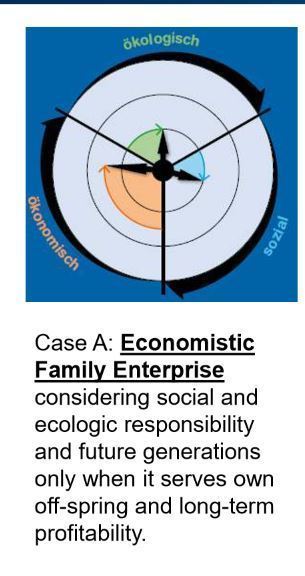
- 86Different responsibility profiles: Fundamentalist Nature Protection Organisation
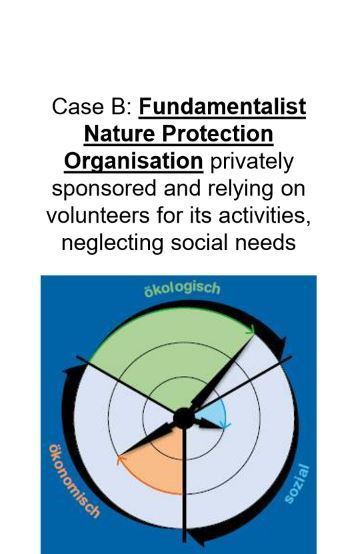
- 87Different responsibility profiles: Pragmatic-idealistic Pharmaceutical Company
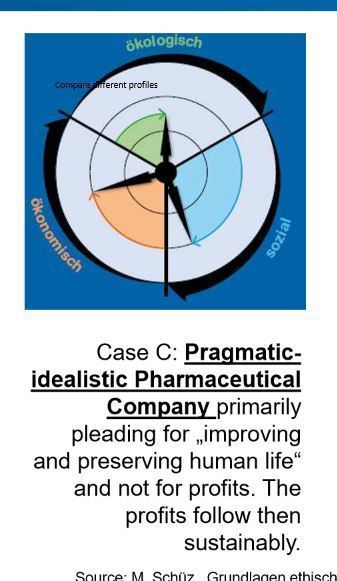
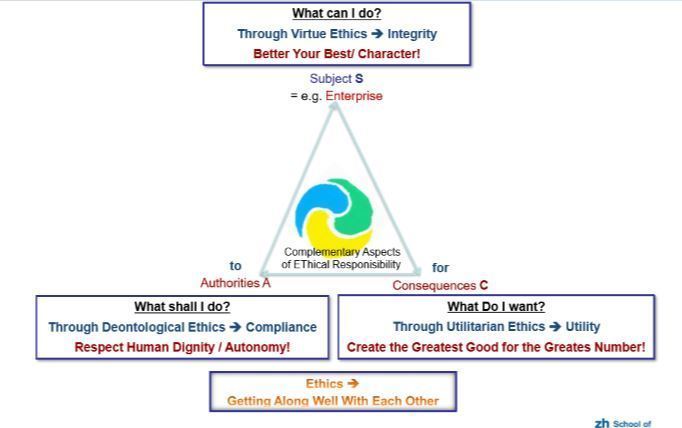
- 88What is Ethics?Ethics is a discipline which deals with getting along well with each other.
getting along well: varieties of goodness
with each other: Stakeholders/Customers - 89Relativity and Clash of Ethicsdifferent approaches of Ethics depending on ethical values
--> clash ethical theories: recommend different actions in order to solve dilemma
--> clash of ethicists: different value system
--> Consistency of Ethics: Commission is a political issue - 90What is the function of the stakeholders when it comes to Ethics?Getting along well with all Stakeholders, good relationship within the corporate world is key
- 91ethnical approaches (3 approaches)Utilitarian Ethics: greatest good for the greatest number
Deontological Ethics; respect human dignity/autonomy
Virtue Ethics: better your character - 92Effects of Responsible Leaders' Trustworthy Behavior
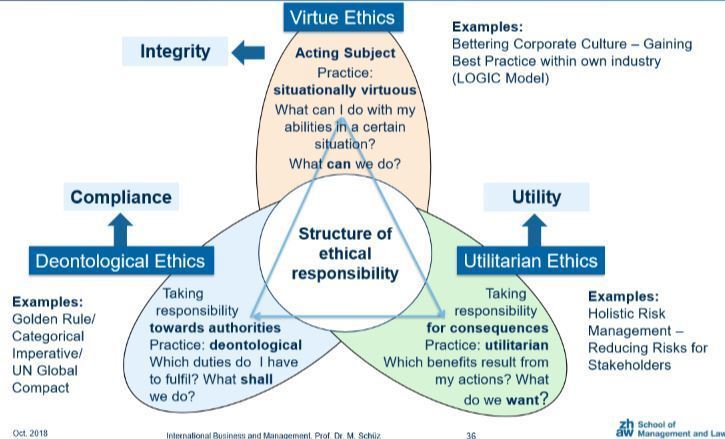
- 93What is corruption?misuse of public power for private gain
against corruption: united nations / council of Europe / OECD
reasons: weak government, underdeveloped education system, poor countries, rich in raw material - 94corporate virtues and their relation to corporate visionsguidelines how to behave in ordert o follow a certain vision respectively strategy.
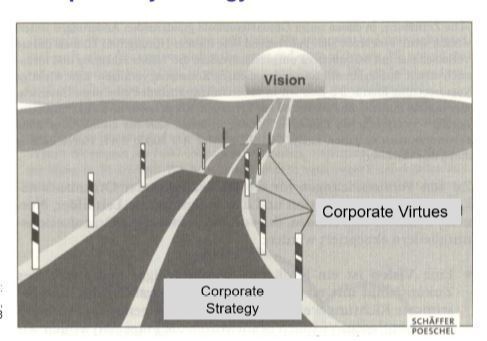
- 95Why studying and developing virtues?we would like to prove successful (profits, performance, satisfaction)
if wed want to change results or acts, the most effective way is the constructively development of virtues
Virtues direct our actions, actions direct the results --> in reality it means, practised values direct the results - 96Complementary Traditional Approaches of Ethics
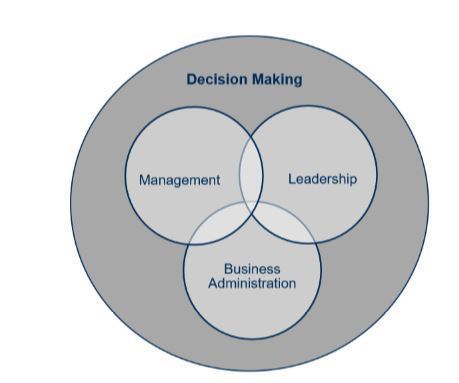
- 97Distinction between Management & Leadership
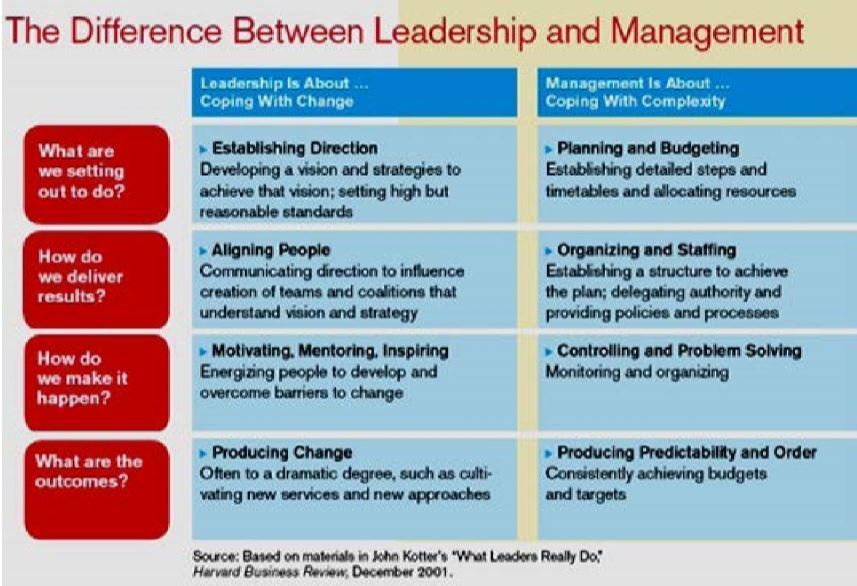
- 98Management vs. Leadership
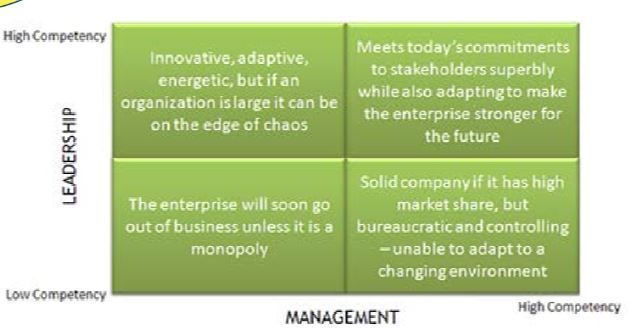
- 99Leadership AND Management
- 1008 steps by Kotter
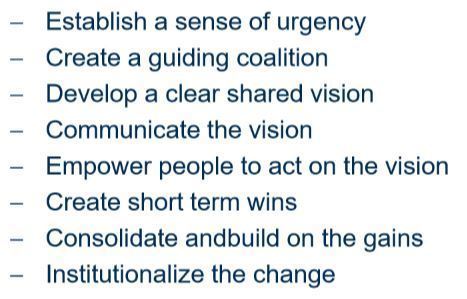
- 101What sort of Leadership behavior should an organization encourage? (4)1. be supportive
2. operate with strong result orientation
3. seek different perspectives
4. solve problems effectively - 102Business AdministrationManagement - WHAT
Leadership - WHY
Bus Admin - HOW
Mangement is activity spread between head and members of the body corporate
Business Administration brings business to life. Directly linked to M&L. performance of business and its activities - 103Leadership, Management and Business Administration. Are they distinct roles?Overlap between the 3: string overlap between Why, What and How, managers are involved in all aspects of the business and decision making
Overlap between BusAdmin and Management: without the Why, lack of leadership, long term success of business is at risk
Overlap with non of the 3: Chaos! Disconnected - 104BusAdmin Respons to theWHY --> strategic purpose, cause, beliefs of business
WHAT --> the business actually does
(Strategic)
and implements the
HOW --> it organizes, manages, conducts its business ti secure capabilities and gain comp. adv.
(Operational) - 105BusAdmin: Resources + Capabilities = valueresponsible for --> operational aspects
--> control resources
--> using resources to secure bus. capabilities
-->ensure value adding
-->comp. adv.
--> incr. profit - 106What are resources? What are the essential resources of a business?
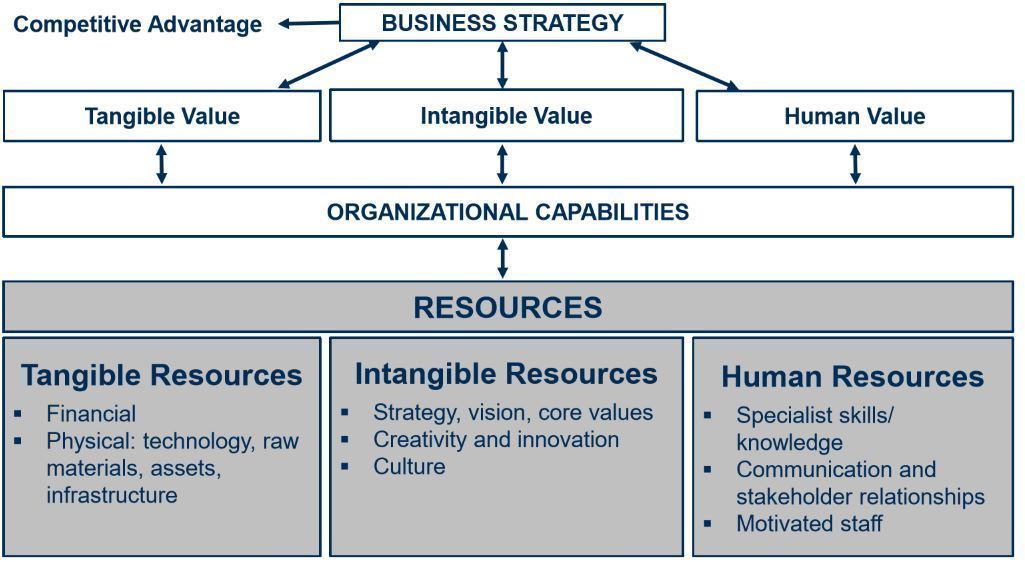
- 107What are (essential) capabilities?Leveraging resources: to secure capabilities and add value
Why is your business more valued by customers than the one of your competitor? Coca Cola vs Pepsi, Apple vs Microsoft etc.
Concentrate resources on key strategic goals, accumulate ressources efficiently, complement types of resources to add value, conserve resources, recover resources from the market in the minimum of time - 108Limited resources and adding value through capabilities
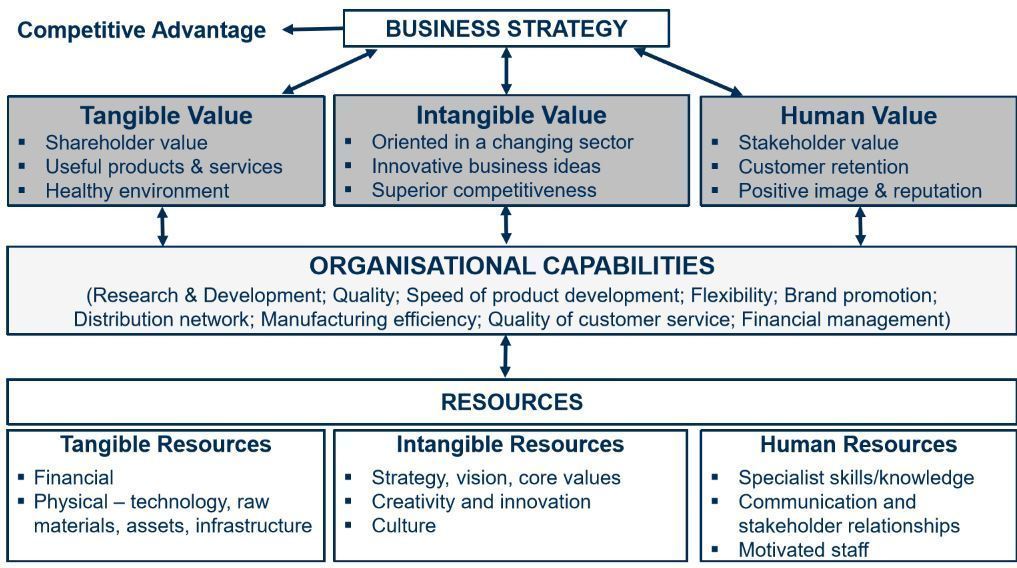
- 109Value creation through BusAdminInput: limited resources --> Business activities: Capabilities --> Output: Add value, profitable outcomes, success
- 110Decision making: Why study decision making?- every action affects value chain which organization adds to resources as it turns them into outputs
- every activity is the result of a decision
- reflecting on context during decision-making helps to reduce risks of failure and increases the chance to fulfill objectives
- every decided activity transforms limited resources to value creating (incr. income) - 111Decision making in Organization
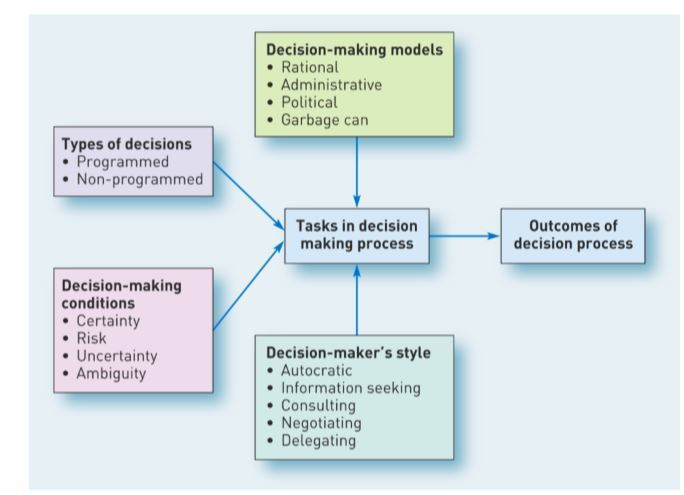
- 112Process of decision-making- specific commitment to action
- involves a measure of value (against other decision)
- always risk of failure
--> process of identifying problems & opportunities and then resolving them - 113hiring a new manager, one has to...- identify need for new staff
- budgeting
- advertise the post
- interviews
- select candidate
- negotiate work conditions
- induct new employee to his/her job
AND: measure expected return on investment - 114Tasks in Making decisions
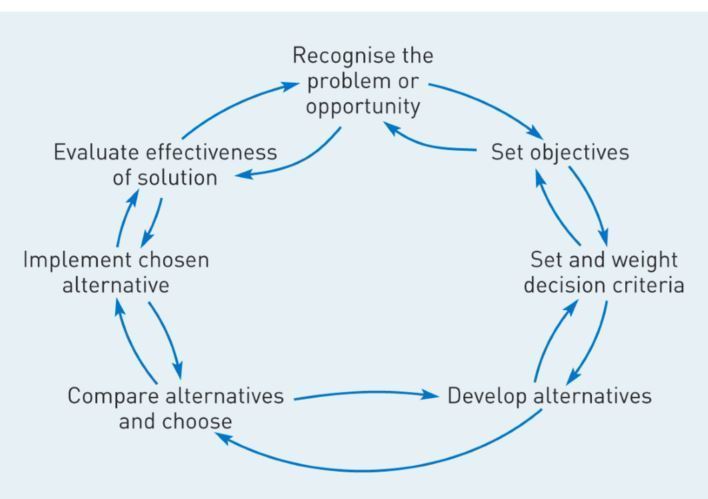
- 115Task in Making Decisions: Example
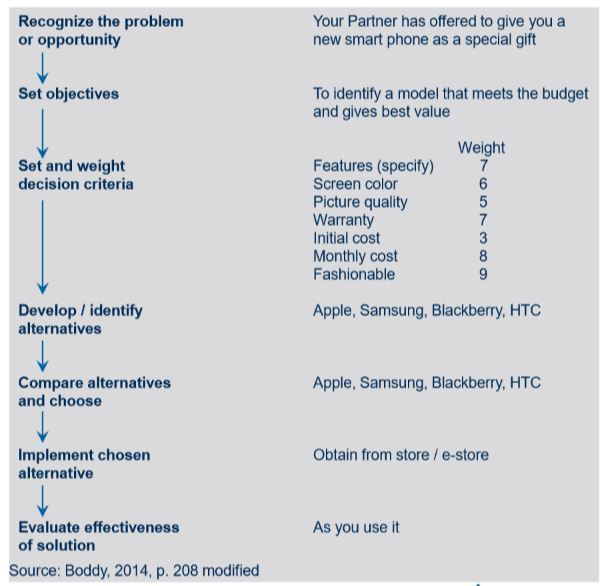
- 116Types of Decisions (2)
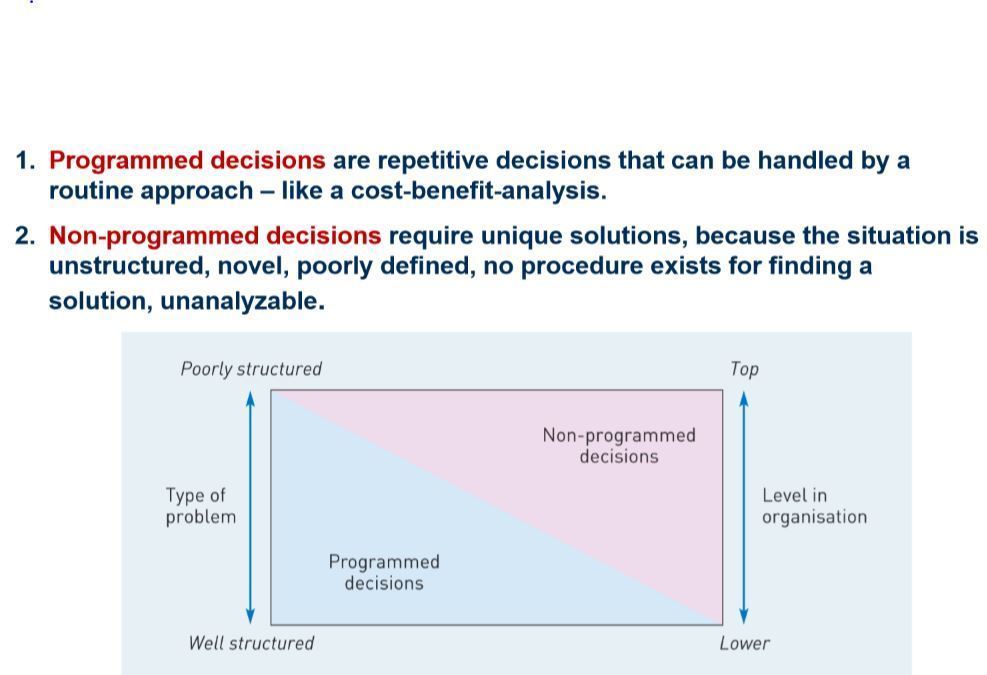
- 117Decision-making decisions
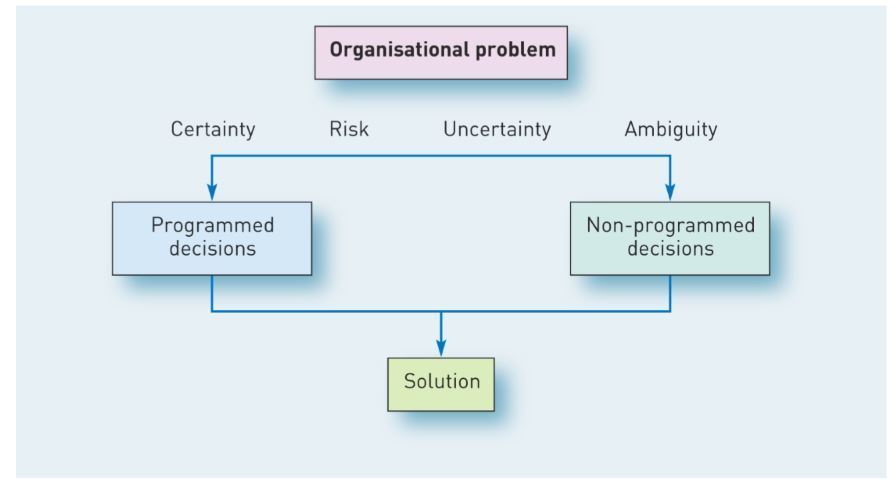
- 118Models of decision making summary
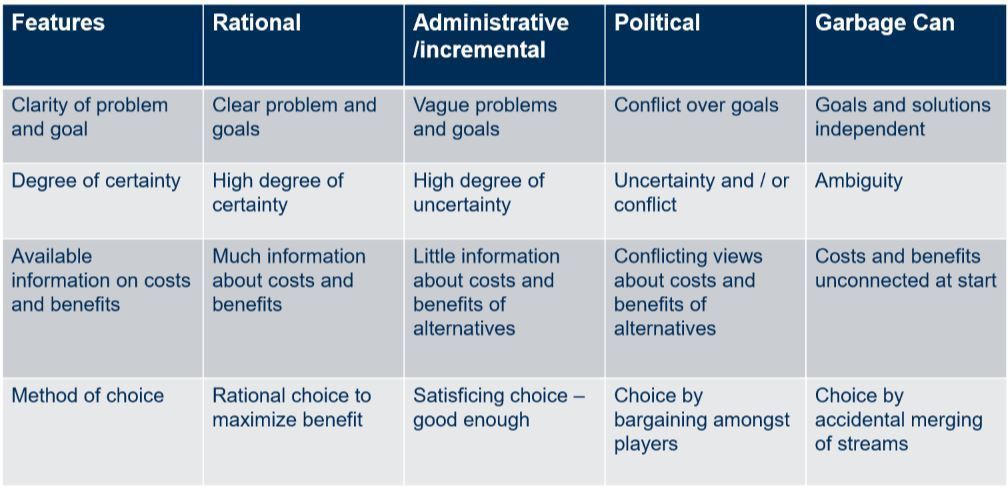
- 119B
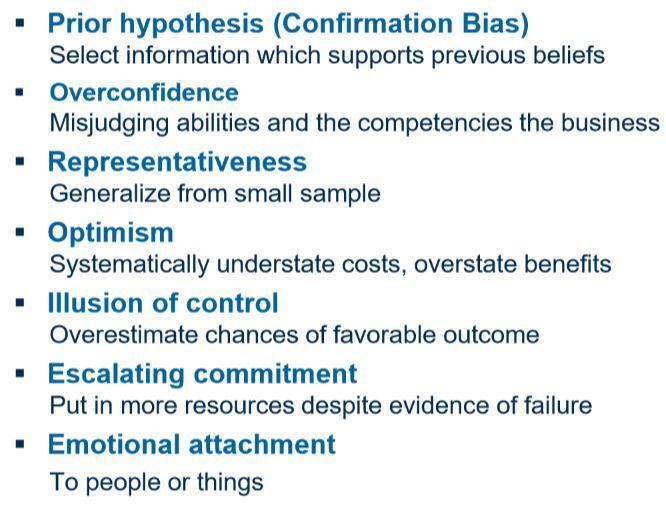
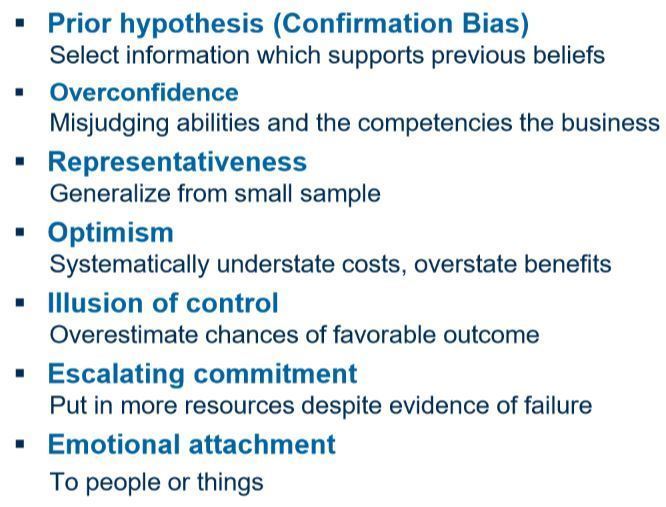
- 120Evaluation of task
- 121Evaluation of Tasks: Eisenhower method
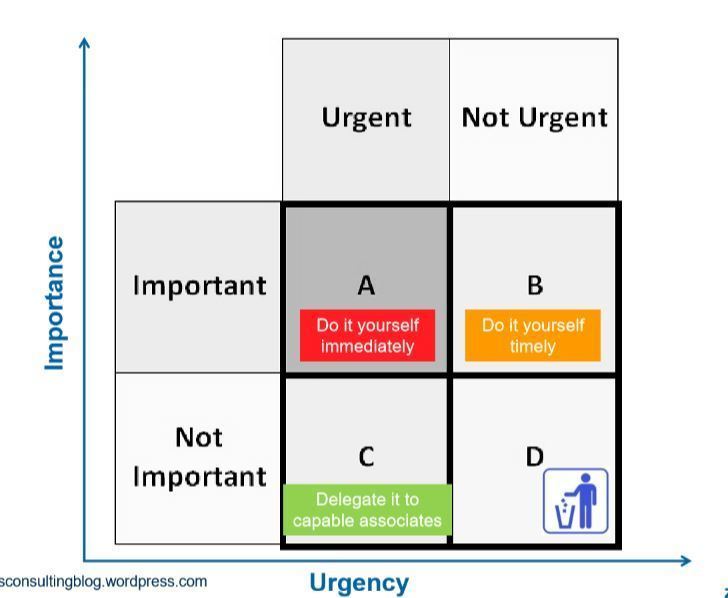
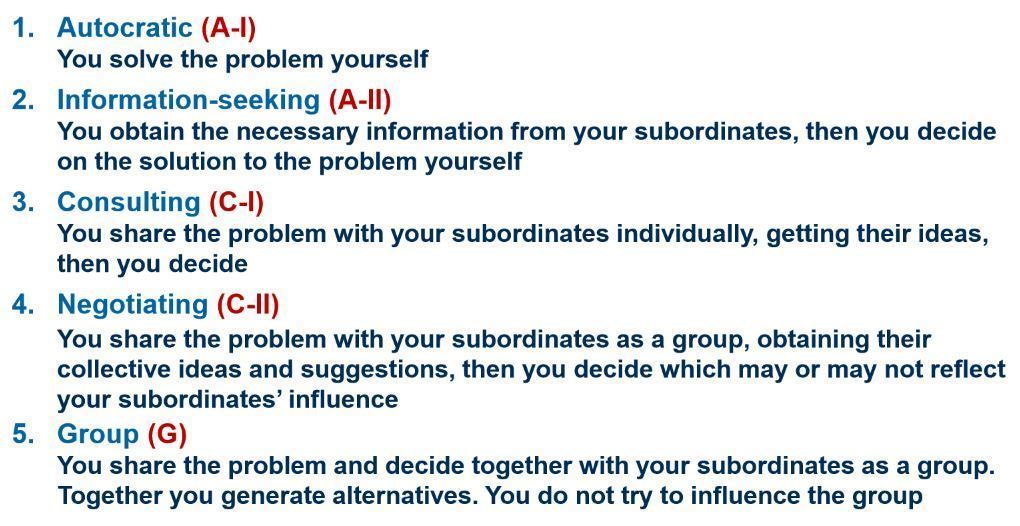
- 1225 leadership styles in decision making
- 1237 diagnostic Q's - Models of decision making summary
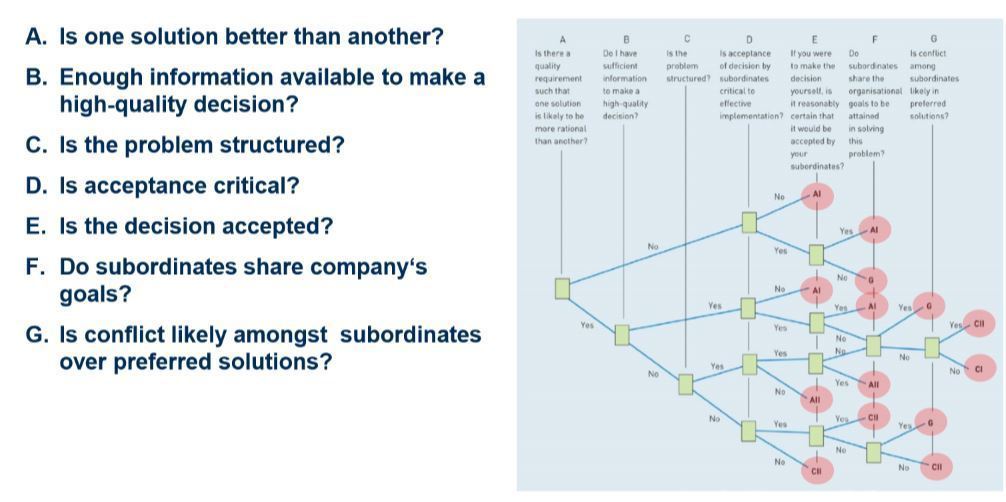
- 124What is a strategy of a company?- general direction of company
-succeeding against competitors
-motivate employees
-organization of ressources
etc.
--> these points are key to bring idea successfully to the market - 125Strategy is not equal tactics, so what is then the difference?Strategy: concerned with how different engagements are linked to achieve a certain goal
tactics: concerned with the conduct of an engagement
How a battle is fought is tactics,, the terms that is fought on and wether it should be fought at all is a matter of strategy. - 126definition of strategy/strategist, their purposestrategy is about how people decide to organize major resources to enhance the performance of an enterprise.
Strategist hope that their work will enhance performance by clarifying and unifying purpose, reducing uncertainty, linking short-term actions to long-term goals and provide control. - 127Firms strategy and its valuationGOAL: maximize value (more value => share price increases because demand is higher and so profit is larger) for owner/stakeholder
- to achieve this managers need strategies that increase profitability and profit growth
- expanding internationally can boost firms profitability (reduce cost, add values and raise price) and profit growth
(sell more in existing market, enter new markets) => Strategy should lead to GOAL - 128Strategic Management Process -> 5 P's of Strategy (Mintzberg 1987)Plan: Strategy developed in advanced and with a Purpose: PESTEL, SWOT, Brainstorming, Practical Business Planning, Project Mangement
Ploy: Outsmarting Competitors: Impact and scenario analysis
Pattern: learn from the past: pattern of action creating a stretegic advantage: USP analysis, core competence Analysis
Position: in the marketplace: competitive advantage analysis, SWOT, PESTEL, Porter's 5 forces, core competence VRIO, USP Analysis
Perspective; Substantial influence of organizational culture on strategic decision making: cultural analysis tools - 129Strategic Management Process -> 3 Perspectives on the Strategy Process1. Planning view:
identify the organisation's current mission, goals and strategies
2. Learning view:
intended strategy, deliberate strategy, realized strategy
3. Political view:
like learning view, the political view draws on the concept of bounded rationality and satisficing behavior - 130Strategic Options-DirectionsStrategy is about choosing what not to do!-> which customers not to serve
products
->products/services not to offer
-->activities not to performe
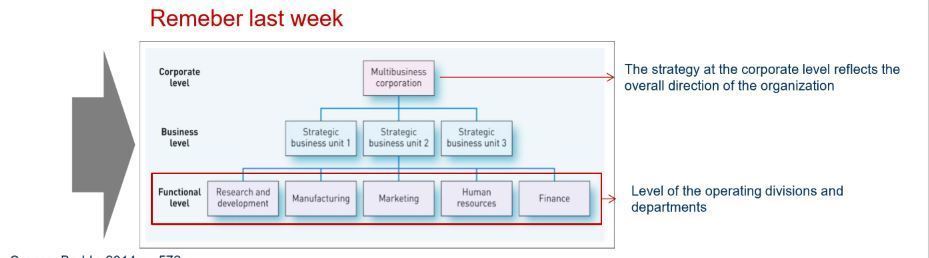
not being all things to all people => certain market segments - 131Levels of Strategycorporate level: reflects the overall direction of the organization
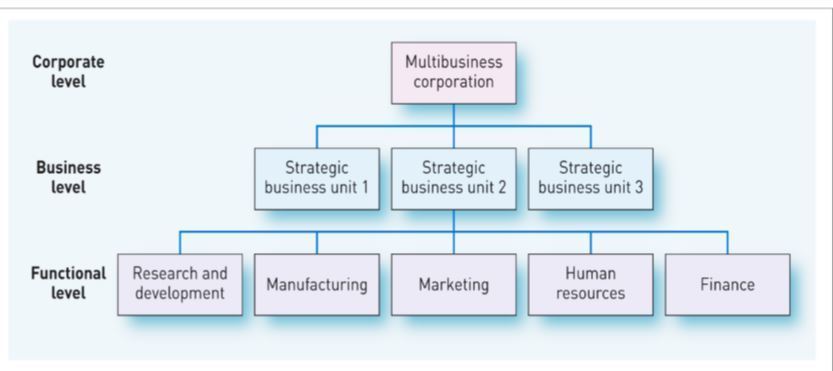
- 132Levels of Strategy: corporate levelOptions = (a) directions + (b) Methods of Strategy Development
(a) TOWS + Ansoff Matrix + Porter - 133from SWOT to TOWS
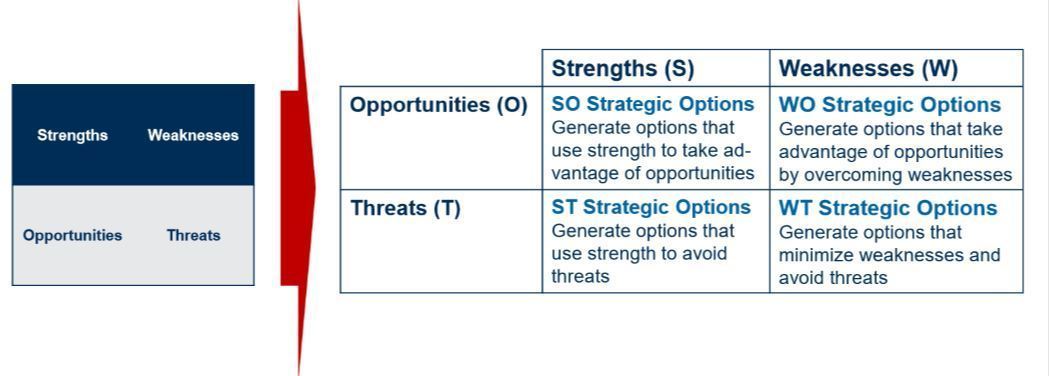
- 134Ansoff Matrix (summarizes possible directions of a strategic development: products/markets)
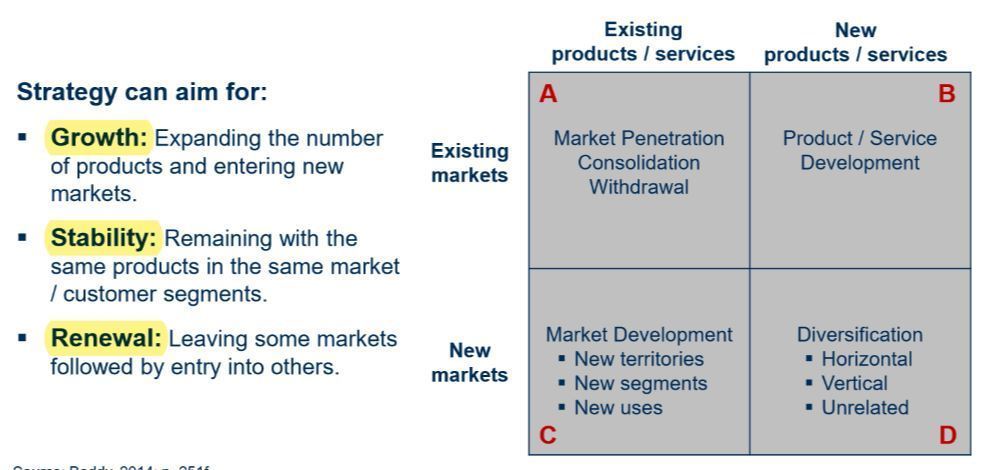
- 135Levels of Strategy: Business Level3 generic strategies that a firm can use to develop and maintain Competitive Advantage
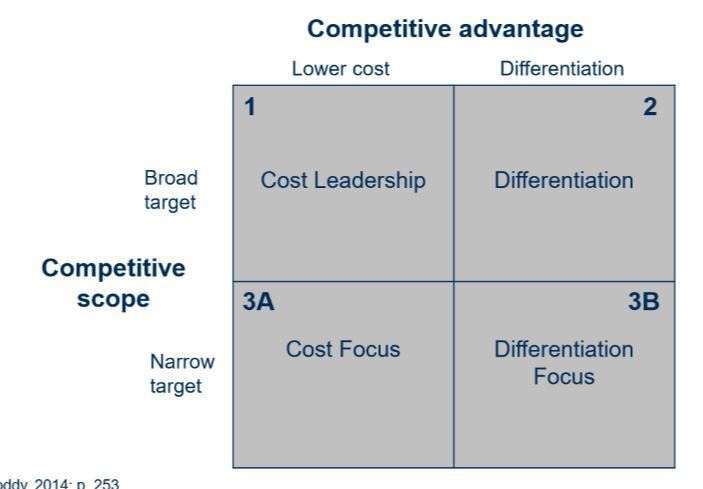
- 136"stuck in the middle"
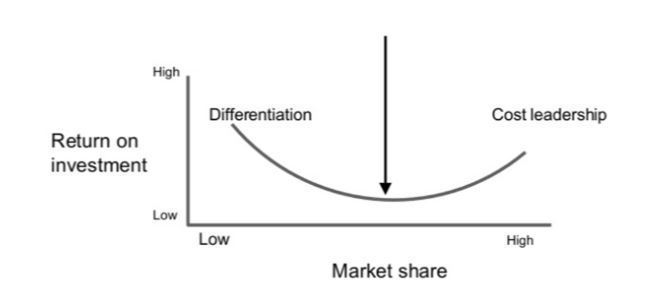
- 137Levels of Strategy: Functional Level- operating divisions and departments
- strategic issues at this level are related to business processes and value chain
-functional level strategies in R&D, manufacturing, marketing, HR, finance involve development and coordiantion of resources through which business unit level strategies can be executed efficiently and effectively - 138Levels of Strategy: (b)Methods(b) Methods = Organic Growth, M&A or Strategic Alliance
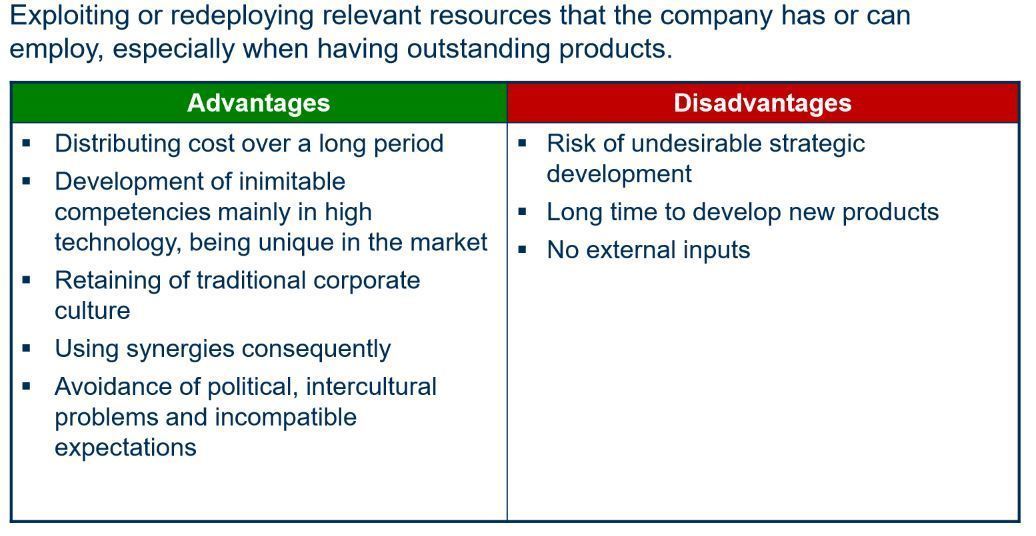
- 139Internal Development (Organic Growth)
- 140Strategic Alliance (External Growth)
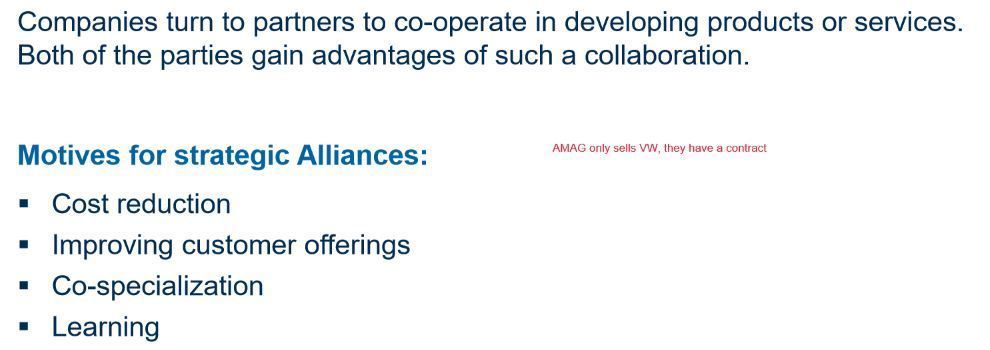
- 141Types and Examples of Strategic Alliancejoint venture: Cisalpino (SBB & ItalianFS)
networks: OneWolrd, Star Alliance
franchising: McDonalds
licensing: Microsoft Software
subcontracting: Cleaning Companies, Manpower, Adecco
co-production: Renault-Nissan/Fiat-Crysler
sponsoring: FIFA, Olympics - 142Advantages and Disadvantages of a strategic Alliance
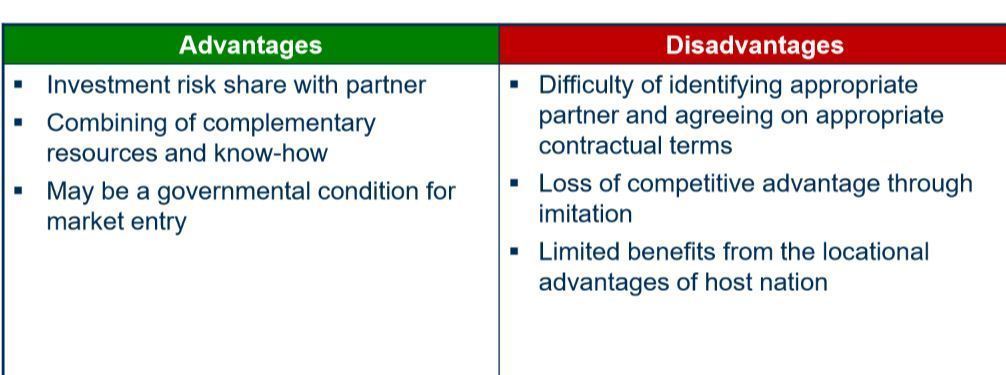
- 143Preconditions for successful strategic Alliance-good interpersonal cooperation
-contractual arrangement
-bridging gap between cultures
-clear goals
-simple/flexible structures
-senior Mmgt. support (Partner)
-trustworthiness
-mutual respect - 144Mergers & Acquisitions (External Growth)expanding own resources and competencies by acquiring or merging with another company
- 145Mergers & Acquisitions (External Growth): Advantages and Disadvantages
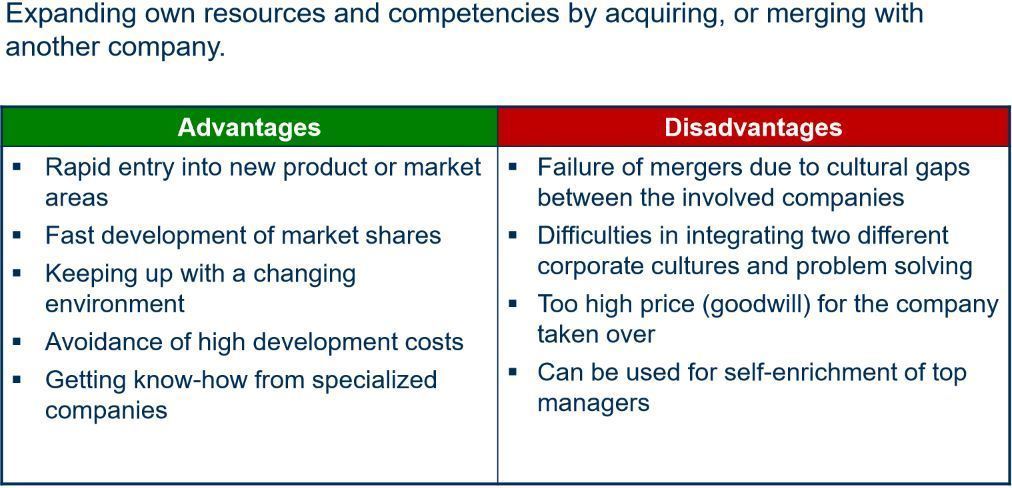
- 146Development of Strategic Options & their Assessment
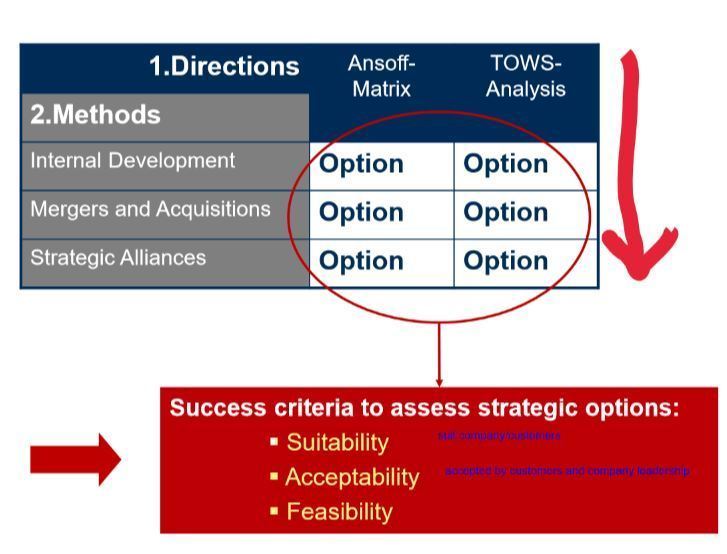
- 147Success Criteria for a strategic Optionsuitability: within context (adresses circumstances)
acceptability: of expected outcome (expected performance)
feasability: due to existing resources (has the resources)
--> strategic options need to be evaluated within these criteria - 148Suitability of a strategy
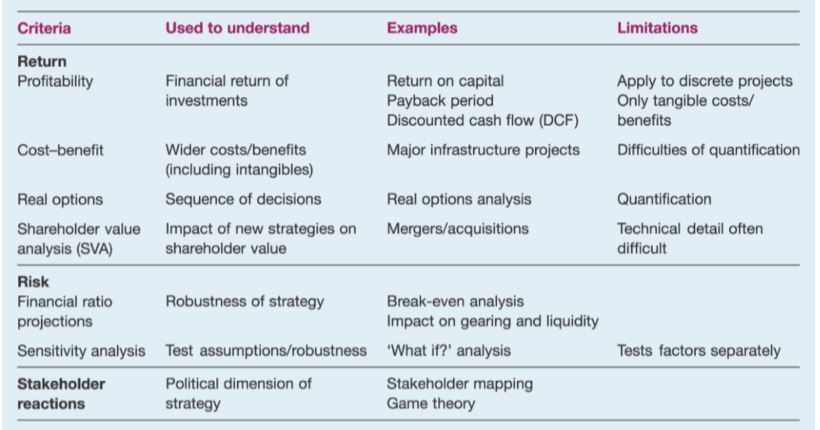
- 149Suitability of a strategyconcerns wether a strategy adresses the circumstances in which an organization is operating --> would it work?
- fit for future trends - minimizing risk - exploit strategic capability - meet expectations of stakeholders - 150Acceptability of a strategyconcerns the expected performance outcomes of a strategy
--> to which extent is the perfect outcome of a chosen strategy in line with the expectations of stakeholders? --> Return/Risk/Stakeholder Reactions - 151Acceptability of a Strategy
- 152Feasability of a Strategyconcerns wether an organization has the resources and competences to deliver a strategy --> Can a strategy be made to work in practice?
Financial feasability, forecasting, resource development - 153Feasability of a Strategy
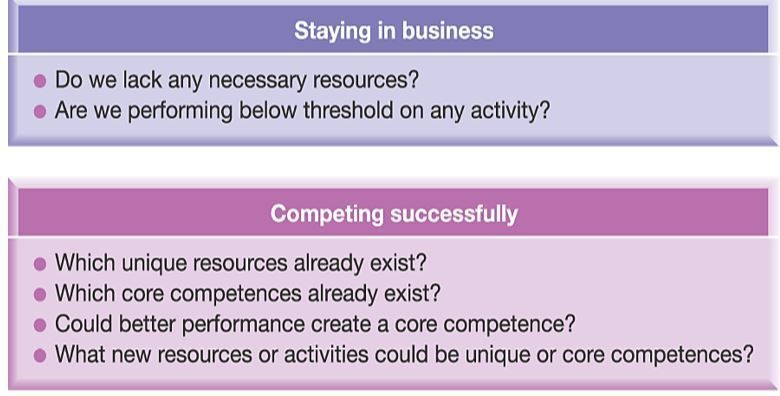
- 154Challenges of Operations and Supply Chain-Globalization: more companies operating in more markets
-Automation & Information Technology: Always inventing new stuff, better ways of doing things
-Increasing complexity: more demanding markets and more sophisticated products and services
-Increasing vulnerability: due to long and complex supply chains
-cost pressure: ends in outsourcing
-increasing environmental regulations
-interests: NGO and stakeholders - 155Operation Management (OPM): Definitionactivities, decision and responsibilities of managing the production and delivery of products and services
- 156to conduct OPM systems and processes have to be implemented-repeatable
-consistent
-reliable
-efficient
-competitive
-compliant (with legislation) - 157transformation processtakes all inputs and creates an output
- 158Nature of Productsintangible: non-physical (mortgages, legal advice)
tangible: physical (cars, furniture) - 159transformation resources transformable resources
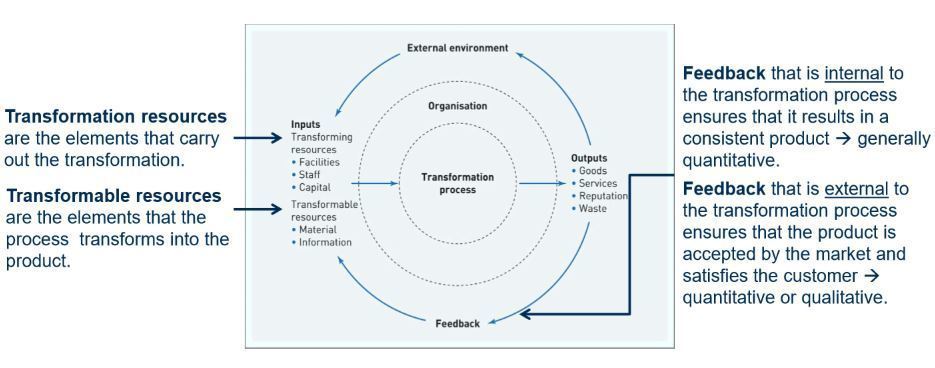
- 160differences between the two transformation processes (tangible vs. intangible)intangible --> services --> customer often present during development
presence of customer has consequences for operations manager:
-randomness: unpredictable behavior of customers
-heterogenreity: different customers=different expectations
-intangibility: difficulties to measure service
-perishability: services are difficult to store - 161differences between the two transformation processes
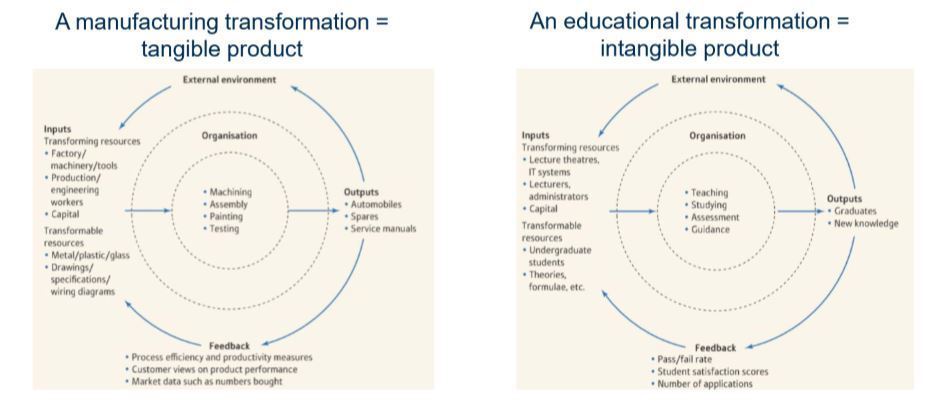
- 162Operations processes (4 Dimensions)1.) volume: how many pieces produced of a typ
2.) variety: how many versions produced by same facility
3.) variation in demand: how production volume varies with time
4.) visibility: how much of manufacturing process does a customer
--> 4 V's are key consideration before the operations strategy is defined
--> designing a system to achieve operations strategy - 163operation strategy defines how...… the function will support the business strategy by ensuring the organization has the resources and competencies to meet market requirements
- 164review W09
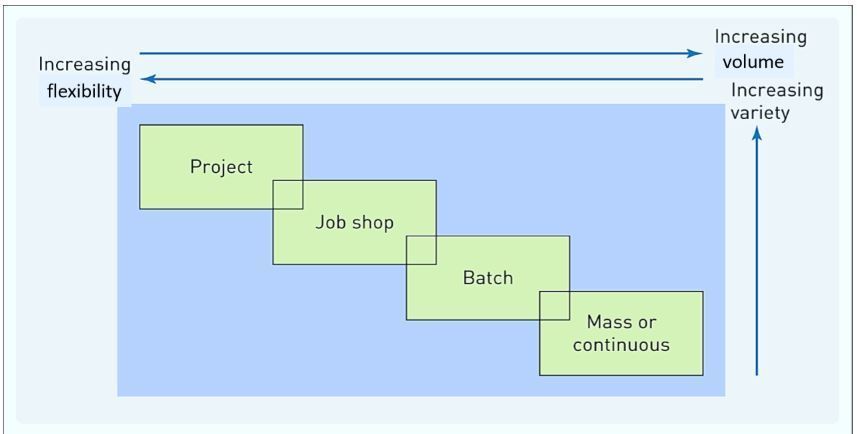
- 165Product Process types:
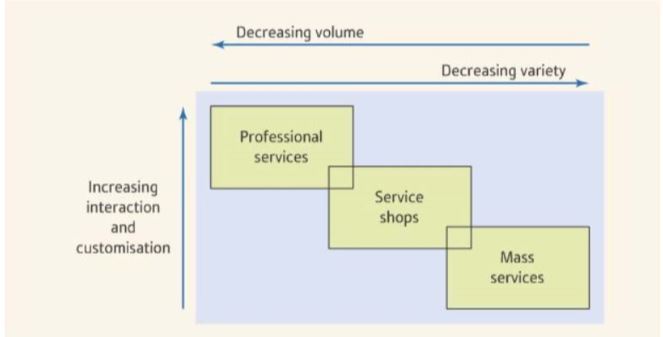
- 166service process types:
- 167process designs-span of processes: variety of processes in company to carry out in-house
-make or buy: range of parts/products that are produced in-house of bought by vendor - 168layout planning Definition:activity that determines best configuration of resources
--> equipment
--> infrastructure
-->people which produce most efficiently
-layout of departments
-layout within departments
-layout of workplace - 169Facility layout (4)1.) fixed position layout
2.) process layout
3.) product layout
4.) Cell or group layout - 170The main activities of operations5 key operation activities to provide Goods & Services to customers:
1.) creating capacity (ability of numerous resources within organisation to deliver product/service
2.) setting standards (quality standards, work performance standard)
3.) materials (ensuring adequate supply, dilemma holding stock (inventory) = expensive
4.) scheduling (coordinating available ressources by time or place)
5.) control (setting objectives, measuring, comparing, acting)
--> no activity operates alone - 171Quality Definition:-no absolute Quality but based on requirements of customer
-any product, which does what customer wants of it, can be considered as a quality product
-most importantly, define and understand what customers expect and deliver that
--> meeting or exceeding expectations? - 172Features of Quality (6)-functionality
-performance
-reliability (consistency over a time)
-durability (robust)
-customization
-appearance (look)
-image (brand) - 173Additional elements of service quality-responsiveness (willingness to help customer)
-assurance (inspire confidence)
-empathy (shown to customer) - 174Order-winning criteria:key reason for customer to buy product/service. Improving these elements will directly affect the business that is won
less key to win business but will play a part in losing it. if it is not present at a specific level it may disqualify the product or service from consideration by the customer - 175quality systems and procedures (3 documentations)1.) company quality manual: document provides a summary of quality management policy
2.)procedures manual: description of function, structure, responsibilities of each department
3.) detail work instructions, specifications, standards, methods - 176Supply chain management Definition:"The process from the initial raw materials to the ultimate consumption of the finished product linking across supplier - user companies."
--> involves planning/design/flow of material/info and finance
superior value to end customer in effective/efficient manner - 177What is supply chain management?-consists of all parties involved
-directly/indirectly
-fulfilling customers requests
-including manufacturer, supplier, transporters, warehouses, retailers, customers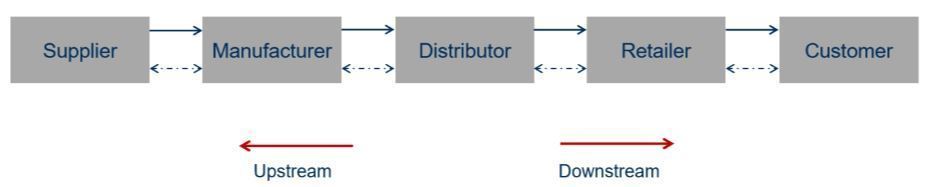
- 178major drivers of supply chain:-production
-inventory
-location
-transportation
-information - 179objectives of supply chain-maximizing overall value enerated
-generated value = product worthiness to customer - cost supply chain incurs in filling the customer's request
--> accurate forecasting to have right inventory in warehouse to reduce costs
--> right products in right quantities at right place in right moment at minimal costs - 1802 processes of supply chain1.) cycle view
2.) pull vs. push view - 181Benefits of global sourcing
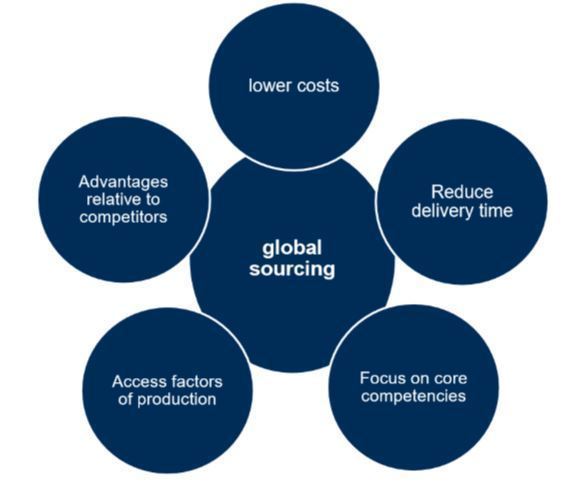
- 182Drivers of global sourcing-technological advances in communication (internet)
-falling costs of international business
-entrepreneurship/innovation, rapid economic transformation in emerging market countries - 183performance controlwhat is control?
process of monitoring activities, ensuring results are in line with plan, acting to correct significant deviations
why control?mistakes are a loss of controll that leads to sub-optimal products - 184Control process- intendent to achieve objectives
-suitable control system to support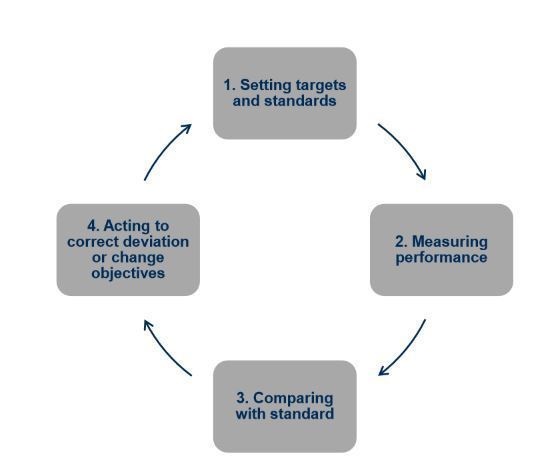
- 185Tactics for Control --> supported by practices1.) direct supervision
2.) organizational structuring
3.) rules and procedures
4.) Management by objectives
5.) Machinery & Automation
6.) HR management
7.) values & benefits - 186Performance Measurement (3 types of performance measurement)1.) input measure: transformation process
2.) process measure: provides info how process is doing
3.) output measure: after operational process is completed - 1875 generic performance objectives
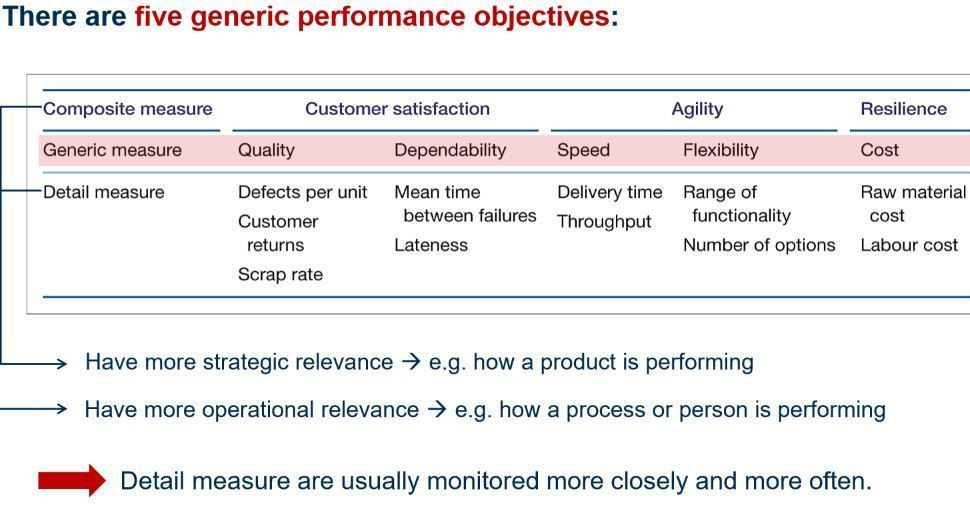
- 188Devising useful performance measure2 Problems:
1.) difficulty in achieving balance of too many or too little detailed measures
--> link between chosen measures
--> strategic objectives of operations have to be in relation to 5 generic performance objectives
2.) setting performance targets that do not create wrong behavior (target is met but the determent of overall operations) - 189Key performance indicator (KPI's)summarized set of most important measures that informs managers how well operation is achieving organizational goal
- 190balanced scorecardmeasurement tool looks at 4 areas:
1.) financial
2.) customer
3.) internal
4.) innovating & learning - 191Finance control: Why study finance & budgetary control?--> finance has major input to organization
--> external and internal reporting systems affect managers and their work (e.g. decision-making, motivation)
--> understanding subjective assumptions beneath data, consider effects of alternative methods - 192comparing a Company's Performance--> compare with competitors
--> compare with previous periods - 193Budgetary ControlPlanning for growth and profit = budget
--> profit has to be planned and controlled to stay in budget
--> becomes part of operational control system
Allocating budget by: function budegting, proect budgeting - 194Decision of budgetif not in budget, decisions has to be taken:
- basis on budget: realistic or be reset?
-work carried out: work has to be done more efficiently?
Functional? resources and processes have to be analyzed
Project? scope has to be reduced - 195Creativity Definition:creativity -> ability to combine ideas to produce something new and useful
- idea alone does not add value
-idea has to meet customers needs
6 distinct resources
-intellectual abilities
-knowledge
-style of thinking
-personality
-motivation
-environment - 196Innovation Definition:process of applying or implementing something new and useful
-adding value by incorporating creative solutions in products and/or implementing changes in organizational processes - 197Innovation 2 typesincremental: small changes in product/project
radical: game changers, alter the competitive landscape
--> effect of an innovation depend on how they are used, what they are replacing and who is evaluating them - 1984P's: Types of Innovation1.) Product
2.) Process
3.) Position
4.) Paradigm - 199organizational factors that can affect InnovationsInnovations can occur: unexpectedly, knowledge push and other internal pressure, market pull and other external pressure
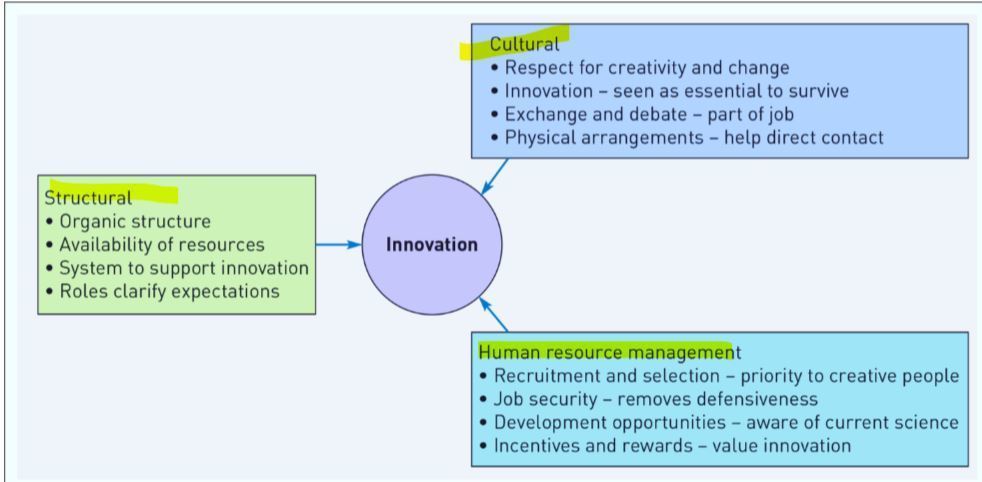
- 2004 S' of Innovation (Organizational features shaping the effectiveness of its innovation process)1.) strategy
2.) structure
3.) style
4.) support
Informações
- Descrição
- International Business & Management Studiengang: International Management
- Criado por
- Ramona Staub
- Visualizações
- 105
- Avaliação