
22175950
Descrição

FlashCards por Evian Chai, atualizado more than 1 year ago

|
Criado por Evian Chai
mais de 6 anos atrás
|
|
| Questão | Responda |
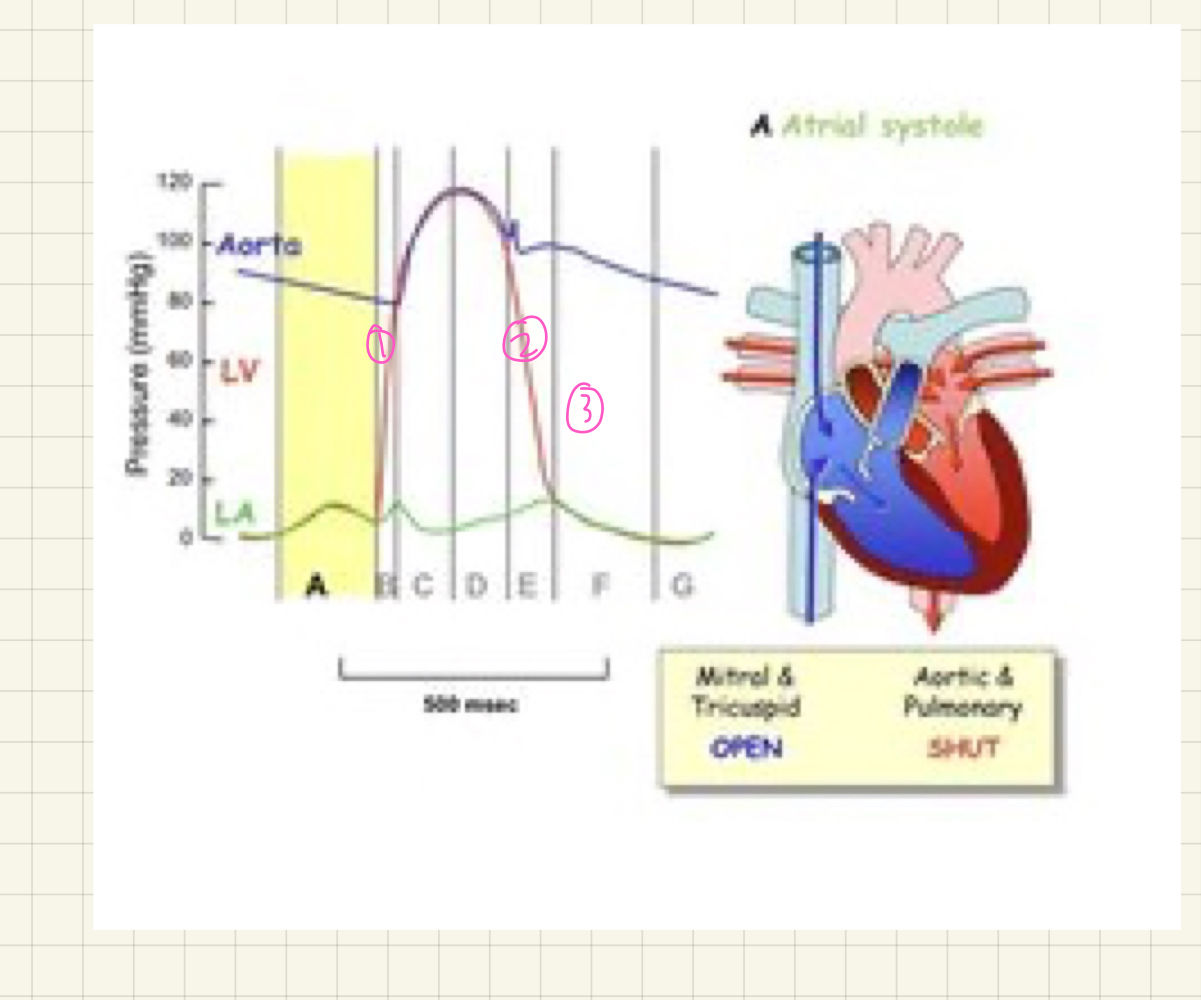
| What the order of events in a single cardiac cycle, starting from atrial systole? | 1. Atrial Systole - blood ejected from atrium 2. Isovolumetric contraction (Ventricular systole) - pressure in ventricle rises, no blood flow 3. Systole Rapid Ejection - Blood ejected from ventricle 4. Systole Reduced Ejection - Redcued outflow of blood 5. Diastole Isometric Relaxation - Ventricles relax, no valaves open 6. Diastole Filling Phase - Inflow from VC/Pulmonary vein - Passive process |
| At what phase does ventricular pressure rise significantly? | Isovolumetric Contraction (Ventricular Systole) |
| What does the peak in LV/Aorta pressure happen after | Systole Rapid Ejection |
| When does ventricular pressure rapidly drop? | Diastole Isovolumetric Relaxation |
| What causes the first sound and when does it happen? | When Tricuspid/Mitral valves close during Systole Isometric Contraction |
| What causes the second sound and when does it happen? | Aortic/Pulmonary Valves CLOSE during Diastole Isovolumetric Relaxation |
| What causes the third sound and when does it happen? | Tricuspid/Mitral Valves open during Diastole Filling Phase |
| What are murmurs caused by? | Turbulence |
| In the case of stenosis (narrowing of vessels), a sound in the mitral valve indicates....murmur and aortic indicates...murmur | 1. Diastolic 2. Systolic |
| In the case of valve incompetance (leakage), a sound in the mitral valve indicates....murmur and aortic indicates...murmur | 1. Systolic Murmur 2. Diastolic Murmur |
| What is endocarditis? | Inflammation of the lining of heart muscle/valves due to bacterial infection |
| What are the 2 major factors affecting stroke volume? | 1) Energy of contraction of the ventricles - Filling pressure of right heart (preload) influencing diastolic stretch (Frank Starling law) - Sympathetic innervation 2) Resistance to outflow from left ventricle - Total peripheral resistance |
| How does sympathetic innvervation impact energy of ventricle contraction? | 1. Increased SNS increases Ca2+ 2. Leads to increased contractility/HR |
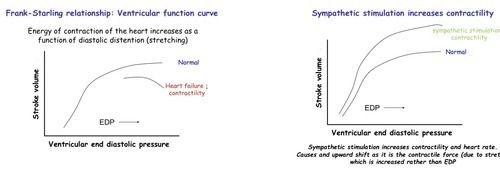
| What does the Frank-Starling Relationship state about energy of ventricle contraction? | That energy of contraction of heart is a function of diastolic stretching (based on preload). Also explains why Left SV will change right SV Eg. Increased End Diastolic pressure (preload) increases stretching at the heart. This increases force-tension of the elastic fibers As they recoil, the contractile force is stronger, so increased stroke volume |
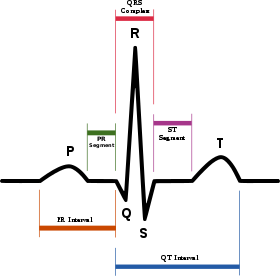
| What does the P in the ECG graph indicate? | Atrial depolarisation |
| What indicates ventricular depolarisation on the ECG? | QRS Complex |
| What indicates Ventricular repolarisation on the ECG | T |
| What is the PR interval impacted by? | AV Node Delay |
| What phase of the ECG shows ventricular systole? | S-T |
| What does the T-P on the ECG indicate? | Diastole |
| What does the ventricular function curve show? | Shows how as End Diastolic Pressure increases, SV does as well |
| How does increased sympathetic innervation impact the ventricular function curve? | Shifts graph up, so increased EDV leads to higher SV (due to increase in contractility/HR) |
| How does heart failure impact the ventricular function curve? | The end of the graph drops (is lower) |
Quer criar seus próprios Flashcards gratuitos com GoConqr? Saiba mais.