
3726162


| Questão | Responda |
| Name the three types of carbohydrates: | Monosaccharaides disaccharides Polysaccharides |
| Name three monosaccharaides: | glucose, fructose and galactose. |
| What bond joins two monosaccharaides? | Glycosidic bond |
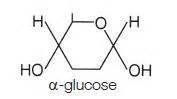
| What does a-glucose look like? | |
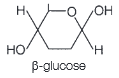
| What does b-glucose look like? | |
| Which carbohydrates are reducing sugars? | All monosaccharaides are reducing sugars and maltose (a disaccharide) is a reducing sugar. |
| What is a reducing sugar? | A sugar that can donate an electron to another chemical. |
| What is the test for reducing sugars? | Benedict's Test Benedict's reagent is added to the sample and heated. If a reducing sugar is present then a red precipitate of copper oxide is formed. |
| What happens when disaccharides are hydrolysed? | They break the glycosidic bond and release their monomers. |
| Which two monomers make maltose? | glucose + glucose = maltose |
| Which two monomers make sucrose? | Glucose + fructose = sucrose |
| What two monomers make lactose? | glucose + galactose = lactose |
| What is the test for non-reducing sugars? | Add HCL to hydrolyse the disaccharides into their monomers. Then add Benedict's reagent - only maltose will form a red precipitate as it is the only reducing one. |
| What properties of polysaccharides make them useful for storage and structural purposes? | large insoluble molecule |
| Where is starch found? | In plants, often as microscopic grains. |
| Describe the structure of starch? | Unbranched chain of a-glucose joined by glycosidic bonds. It forms a helix structure which makes it compact. |
| Which features of starch make it suitable as a storage molecule? | *Insoluble-doesn't affect water potential *Large and insoluble- cannot diffuse across membranes. *Compact- a lot can be stored in a small space. *Easily converted back to a-glucose. |
| What is the test for starch? | Iodine changes from yellow to blue-black. |
| Where is glycogen found? | In animals and bacteria. |
| Where is glycogen often stored? | In the liver and muscles. |
| Describe the structure of glycogen: | Short chain of a-glucose with extensive branching |
| What features make glycogen suited to its role? | *Insoluble: doesn't affect water potential *Compact *Highly branched: so enzymes easily attach and broken down into a-glucose quicker. |
| Where is cellulose found? | In plant cell walls |
| Describe the structure of cellulose: | Long, straight, unbranched chain of b-glucose that are parallel. Allowing hydrogen bonds to form between the chains. B-glucose is similar to a-glucose just the OH and H are inverted on the first carbon. |
| What is the function of cellulose in plants? | Cellulose group to make microfibrils, these then group to from fibres, which reinforce strength. |
Quer criar seus próprios Flashcards gratuitos com GoConqr? Saiba mais.