
Flashcards
C2 - Covalent Compounds and Separation Techniques
Flashcards do conjunto (14)
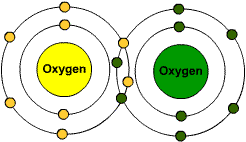
- 1What are Covalent Bonds?They occur between non metals only, and are where atoms share electrons rather than lose or gain them.
Results in the formation of molecules between atoms of the same or different elements - 2What's the difference between a single or double Covalent bond?A single is where two atoms share one pair of electrons - each atom shares one
A double is where two pairs of electrons are shared - each atom shares two of its electrons - 3What is a Diatomic Molecule?It is a molecule consisting of only two atoms.
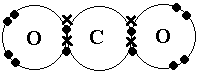
It can be two of the same element or two of different elements. - 4How does CO₂ form?The O₂ atoms need to electrons each and Carbon needs 4, so they form in a Double Covalent bond.
- 5What are the properties of Simple Covalent Bonds?Small molecules with relatively few atoms.
Strong Covalent bonds within molecules atoms but weak inter-molecular forces of attraction between other molecules.
They have low melting and boiling points and no overall charge so can't conduct electricity.
Many substances exist as gases at room temperature. - 6How are atoms joined in Giant Molecules?There are many atoms joined to each other covalently throughout.
They therefore have different properties to Simple molecules, such as high melting and boiling points. - 7What are the properties of Diamond? (Form of Carbon)Giant rigid covalent LATTICE
Each Carbon atom forms 4 covalent bonds with other Carbon atoms
High M&B points
Can't conduct electricity
Very hard - good for cutting tools - 8What are the properties of Graphite? (Form of Carbon)Giant, covalent, LAYERED structure
High M&B points
Soft/Slippery - Layers slide over others - weak forces of attraction between layers as atoms only form 3 covalent bonds to other, so one electron can be delocalised from each atom
Conducts heat and electricity
Used to make electrodes and lubricants - 9Suggest a test to demonstrate the differences between an Ionic and Covalent substance?1. Try melting using a Bunsen Burner
2. Timing how long it takes for a substance to dissolve
3. Put electrodes in a substance sample to see if it conducts electricity in different states i.e. Solid, Liquid - 10When can filtration be used? When can a separating funnel be used?If solids form a mixture and one is soluble in water
When you mix two substances that can't be mixed (they're immiscible) and form distinct separate layers
Such as water and oil - 11What is Chromatography used for? Give examplesTo identify an unknown substance, by comparing it to other known substances.
Can be used to check food stuff for additives or contaminants.
Can be used in forensic exams to identify chemicals. - 12How is Chromatography set up?The substance sample, along with other know substance samples, is put on filter paper, which is then dipped in solvent, such as water or Ethanol.
The solvent is absorbed by the paper and dissolves the samples, carrying them up the paper at different rates, because of different solubility levels. You then compare the unknown to the known samples. - 13What method do you use to separate two liquids that are miscible?You use distillation, or fractional distillation
E.g. Liquid Air - Oxygen and Nitrogen can both be obtained using this method
Oxygen is used in steel making, Nitrogen for freezing food. - 14What is the process of Distilling Liquid Air?1. The air is pumped in and cooled
2. CO₂ and Water Vapour removed as solids
3. Air is compressed and then cooled
4. Air is expanded. As it cools, some air turns to liquid (Neon & Helium removed here)
5. In the chamber, air is heated at bottom, and rises in fractions: N₂ (top), Argon, O₂, Krypton and Xenon (bottom)