
Mapa mental
Chemistry - Bonding Structure & Properties of matter

Conteúdo do mapa
Chemistry - Bonding Structure & Properties of matter
STRONG Chemical bonds
- IONIC BONDING
- Occurs in compounds formed between METAL & NON- METALS
- Particles produced are oppositely charged ions
- Only electrons in outer shell of METAL are TRANSFERRED
- Metals - LOSE ELECTRONS - become +ly charged ions/ non metals GAIN ELECTRONS- become -ly charged ions
- Ions produced by group 1+ 2 metals - and group 6+7 non metals - has electronic structure of NOBLE GAS ( group 0 - full outer shell)
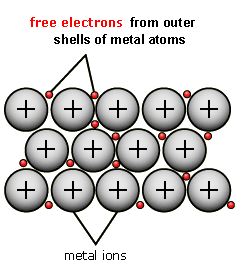
- METALLIC BONDING
- Occurs in metallic ELEMENTS & ALLOYS
- Atoms have DELOCALISED electrons
- FOUND ON THE OUTER SHELL- delocalised electrons are free to move through WHOLE STRUCTURE
- Metals are giant atomic structures arranged in a REGULAR pattern
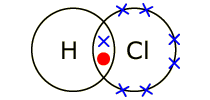
- COVALENT BONDING
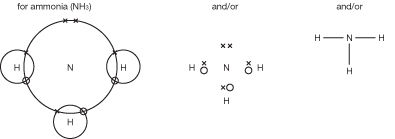
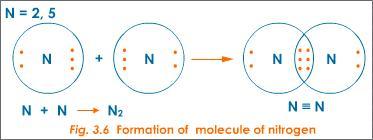
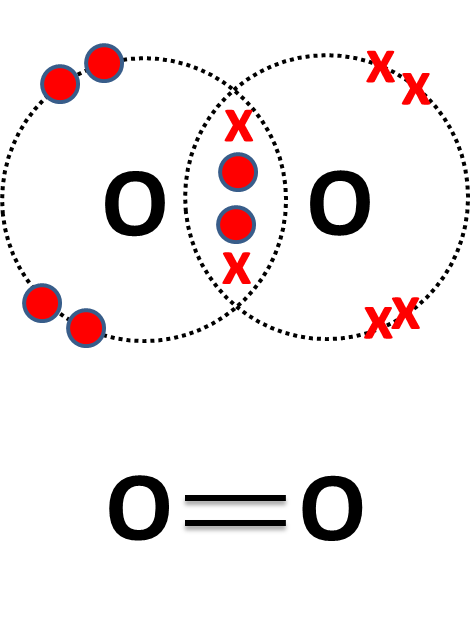
- Atoms SHARE PAIRS of electrons- covalent bonds are STRONG
- Occurs in NON metallic elements and compounds of NON elements
- Covalent bonded structures - either small molecule, polymers ( large molecules) or giant covalent structures ( i.e diamond/silicon dioxide)
- IONIC BONDING
PROPERTIES OF SUBSTANCES
- Limitations of particle theory-/ simple model - NO FORCES / all particles are shown as SOLID SPHERE
- STATES SYMBOLS - (s) - solid / (l) liquid / (g) gas/ (aq) aqueous solution - where the solvent is water
- PROPERTIES OF IONIC COMPOUNDS
- Ionic compounds = regular structures/ lattices -have strong electrostatic forces of attraction- in all directions = HIGH BPT + MPT- lots of energy needed to break many strong bonds
- Ionic compounds CAN CONDUCT ELECTRICITY when melted or dissolved in water- IONS MOVE & CHARGE CAN FLOW
- PROPERTIES OF ALLOYS & METALS
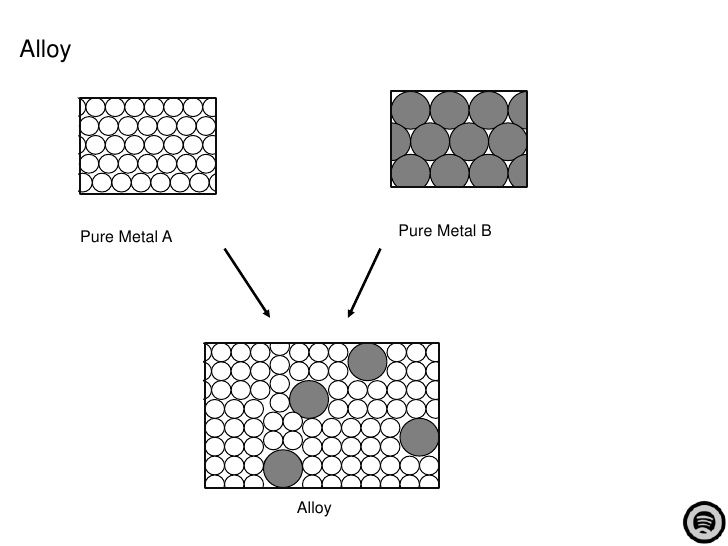
- Pure metals = are ARRANGED IN LAYERS- so can be BENT/ SHAPED
- But PURE METALS - too soft for many uses - so are mixed with OTHER metals - to make HARDER ALLOYS
- Alloys have a DISORDERLY ARRANGEMENT due to different size of atoms
- METALS AS CONDUCTORS
- Metals - good electrical conductors - delocalised electrons can carry electric charge through metal
- Metals = good thermal conductors- energy transferred via delocalised electrons
- Most metals - have HIGH BPT + MPT - due to srong metallic bonds
- PROPERTIES OF GIANT COVALENT STRUCTURES
- Giant covalent structures = SOLIDS w/ VERY HIGH MPT
- Atoms are joined by strong covalent bonds - that need to be overcome to melt/boil substances- i.e carbon allotropes ( silica/diamond)
- PROPERTIES OF POLYMERS
- Polymers - have v. LARGE molecules- the I.M.F( INTERMOLECULAR FORCES) between polymers are STRONG so substances are SOLID at room temp
- Atoms in polymers - linked to other atoms via STRONG COVALENT BONDS
- PROPERTIES OF SMALL MOLECULES
- Substamces made up of SMALL molecules - usually GASES/LIQUIDS- low MPT +BPT
- Only have week I.M.F forces in between molecules- these IMF and not covalent bonds are broken when substance melt/boils.
- Note : IMF increases with SIZE of molecules - larger molecules = higher mpt + bpt
- DON'T conduct ELECTRICITY -molecules don't have overall charge
IONIC COMPOUNDS
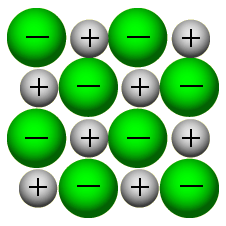
- Ionic compound = GIANT structure of ions ( shows IONIC bonding)
- Held together via Strong ELECTROSTATIC FORCES OF ATTRACTION between oppositely charged ions
- Electrostatic forces - act is ALL directions -forming a LATTICE
- EMPIRICAL FORMULA
- EXAMPLE- Mg- 2e / Cl+2e - gives the empirical formula of MgCl2
CARBON STRUCTURES/ ALLOTROPES
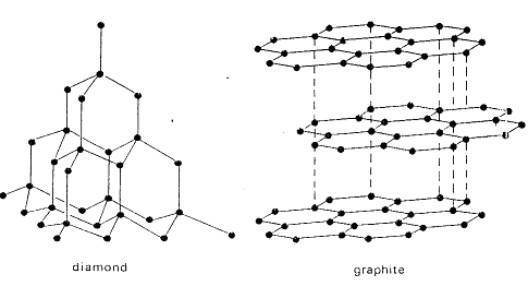
- DIAMOND - each carbon atoms forms 4 COVALENT BONDS with other carbon atoms - giant covalent structure- Diamond is VERY HARD/ HIGH MPT/ DOESN'T CONDUCT ELECTRICITY
- GRAPHITE - carbon atom form 3 COVALENT bonds w/ 3 other carbon atoms- form HEXAGONAL rings - NO COVELENT BONDS BETWEEN LAYERS
- Graphite - has 1 DELOCALISED ELECTRON from each carbon atom - so a similar to metals in this way
- GRAPHENE - single layer of graphite- used in electronics/composites
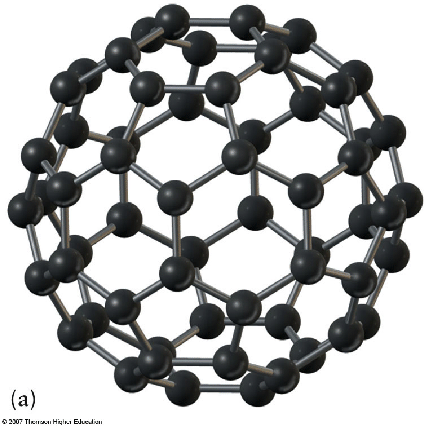
- FULLERENES
- Fullerenes are molecules of carbon atoms w/ HOLLOW SHAPES- are made from hexagonal rings of carbona toms - may contain ring with 5 or 7 carbon atoms too - i.e Buckminister Fullerene (C60)- it is a sphere
- CARBON NANOTUBES
- ARE CYLINDRICAL fullerenes - have a HIGH length to diameter ratio - properties make them USEFUL for nanotechology/materials/electronics/cosmetics/catalysts
- (NANO PARTICLES) Approx.1-100nm in diameter- so have higher SA:VOL ratio - smaller quantities are needed for it to be effective than normal size particles
- ARE CYLINDRICAL fullerenes - have a HIGH length to diameter ratio - properties make them USEFUL for nanotechology/materials/electronics/cosmetics/catalysts
- FULLERENES
LIMITATIONS OF DOT + CROSS/ BALL AND STICK DIAGRAMS
- Ball + stick - pros - shows charges on ions/ numer of atoms / 3D arrangement/ cons - ions are closer together/ false image of bond direction
- Melting & freezing happen at mpt / boiling and condensing happen at bpt
3 STATES OF MATTER
- The energy required to change states - depends on strength of forces between particles and type of bonding/strucutrw - stronger bonging/forces = higher bpt & mpt
Imagens e arquivos do mapa
Informações
- Descrição
- GCSE Chemistry Mapa Mental sobre Chemistry - Bonding Structure & Properties of matter, criado por Susu1001 A em 04-11-2017.
- Criado por
- Susu1001 A
- Visualizações
- 270
- Avaliação