
Mapa mental
pregnancy
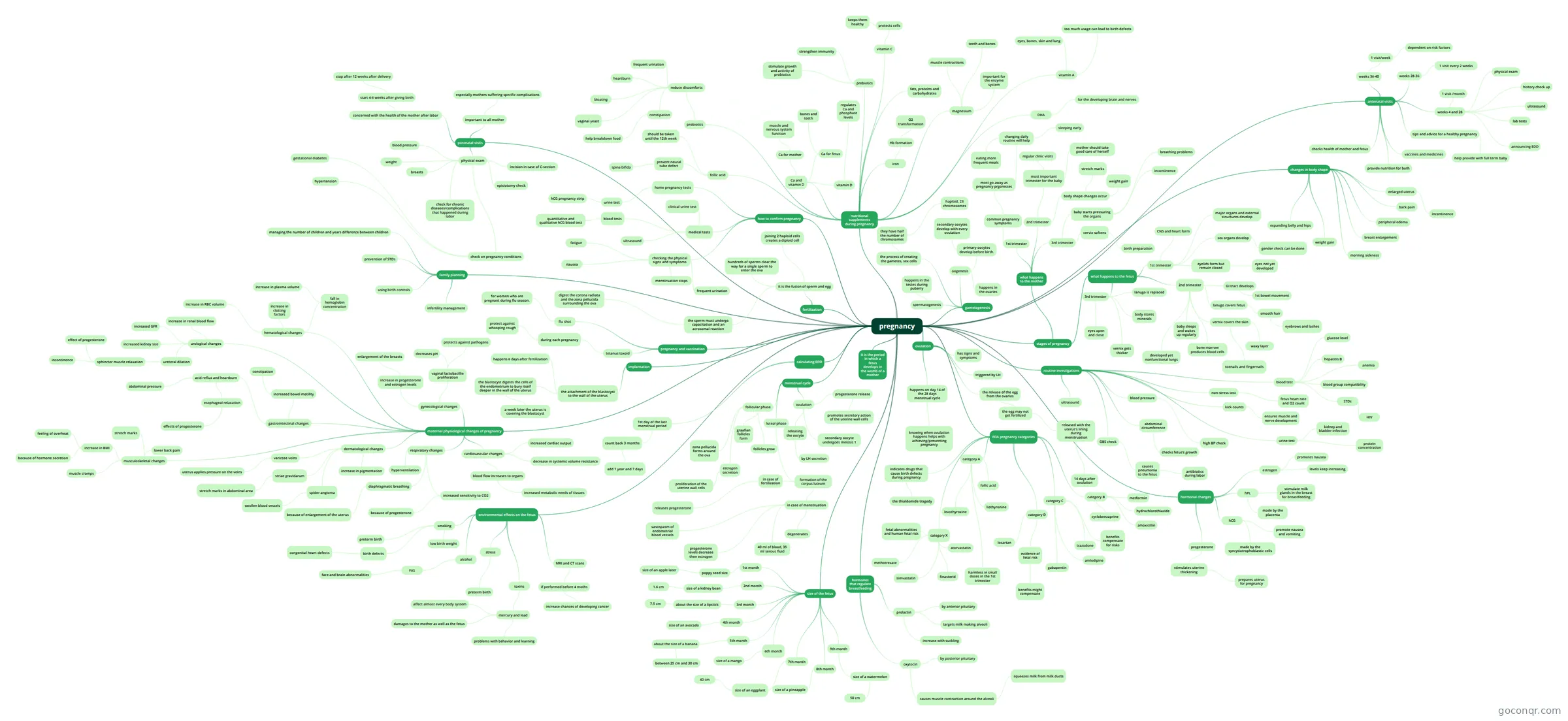
Mind map: pregnancy
Conteúdo do mapa
pregnancy
it is the period in which a fetus develops in the womb of a mother
gametogenesis
- oogenesis
- happens in the ovaries
- primary oocytes develop before birth.
- secondary oocytes develop with every ovulation
- spermatogenesis
- happens in the testes during puberty
- the process of creating the gametes, sex cells
- they have half the number of chromosomes
- haploid, 23 chromosomes
- they have half the number of chromosomes
- oogenesis
fertilization
- it is the fusion of sperm and egg
- joining 2 haploid cells creates a diploid cell
- the sperm must undergo capacitation and an acrosomal reaction
- digest the corona radiata and the zona pellucida surrounding the ova
- hundreds of sperms clear the way for a single sperm to enter the ova
- it is the fusion of sperm and egg
ovulation
- the release of the egg from the ovaries
- the egg may not get fertilized
- released with the uterus's lining during menstruation
- 14 days after ovulation
- released with the uterus's lining during menstruation
- the egg may not get fertilized
- happens on day 14 of the 28 days menstrual cycle
- knowing when ovulation happens helps with achieving/preventing pregnancy
- triggered by LH
- has signs and symptoms
- the release of the egg from the ovaries
implantation
- the attachment of the blastocyst to the wall of the uterus
- happens 6 days after fertilization
- the blastocyst digests the cells of the endometrium to bury itself deeper in the wall of the uterus
- a week later the uterus is covering the blastocyst
- the attachment of the blastocyst to the wall of the uterus
menstrual cycle
- follicular phase
- follicles grow
- zona pellucida forms around the ova
- estrogen secretion
- proliferation of the uterine wall cells
- graafian follicles form
- ovulation
- releasing the oocyte
- by LH secretion
- secondary oocyte undergoes meiosis 1
- progesterone release
- promotes secretory action of the uterine wall cells
- releasing the oocyte
- luteal phase
- formation of the corpus luteum
- in case of fertilization
- releases progesterone
- in case of menstruation
- degenerates
- progesterone levels decrease then estrogen
- vasospasm of endometrial blood vessels
- 40 ml of blood, 35 ml serous fluid
- in case of fertilization
- formation of the corpus luteum
- follicular phase
hormonal changes
- hCG
- promote nausea and vomiting
- made by the syncytiotrophoblastic cells
- hPL
- made by the placenta
- stimulate milk glands in the breast for breastfeeding
- estrogen
- levels keep increasing
- promotes nausea
- progesterone
- stimulates uterine thickening
- prepares uterus for pregnancy
- stimulates uterine thickening
- hCG
how to confirm pregnancy
- home pregnancy tests
- urine test
- hCG pregnancy strip
- urine test
- medical tests
- blood tests
- quantitative and qualitative hCG blood test
- ultrasound
- clinical urine test
- blood tests
- checking the physical signs and symptoms
- fatigue
- nausea
- frequent urination
- menstruation stops
- home pregnancy tests
stages of pregnancy
- what happens to the mother
- 1st trimester
- common pregnancy symptoms
- most go away as pregnancy prgoresses
- changing daily routine will help
- sleeping early
- eating more frequent meals
- changing daily routine will help
- most go away as pregnancy prgoresses
- common pregnancy symptoms
- 2nd trimester
- most important trimester for the baby
- regular clinic visits
- mother should take good care of herself
- body shape changes occur
- stretch marks
- weight gain
- most important trimester for the baby
- 3rd trimester
- baby starts pressuring the organs
- breathing problems
- incontinence
- cervix softens
- birth preparation
- baby starts pressuring the organs
- 1st trimester
- what happens to the fetus
- 1st trimester
- CNS and heart form
- major organs and external structures develop
- sex organs develop
- gender check can be done
- eyelids form but remain closed
- eyes not yet developed
- 2nd trimester
- GI tract develops
- 1st bowel movement
- lanugo covers fetus
- smooth hair
- eyebrows and lashes
- smooth hair
- vernix covers the skin
- waxy layer
- toenails and fingernails
- bone marrow produces blood cells
- baby sleeps and wakes up regularly
- developed yet nonfunctional lungs
- GI tract develops
- 3rd trimester
- eyes open and close
- lanugo is replaced
- body stores minerals
- vernix gets thicker
- 1st trimester
- what happens to the mother
routine investigations
- blood pressure
- high BP check
- urine test
- kidney and bladder infection
- protein concentration
- blood test
- STDs
- HIV
- hepatitis B
- anemia
- blood group compatibility
- glucose level
- STDs
- GBS check
- causes pneumonia to the fetus
- antibiotics during labor
- causes pneumonia to the fetus
- abdominal circumference
- checks fetus's growth
- ultrasound
- non-stress test
- fetus heart rate and O2 count
- kick counts
- ensures muscle and nerve development
- blood pressure
FDA pregnancy categories
- indicates drugs that cause birth defects during pregnancy
- the thialdomide tragedy
- category A
- harmless in small doses in the 1st trimester
- levothyroxine
- follic acid
- liothyronine
- category B
- metformin
- cyclobenzaprine
- amoxicillin
- hydrochlorothiazide
- category C
- benefits compensate for risks
- gabapentin
- amlodipine
- trazodone
- category D
- evidence of fetal risk
- benefits might compensate
- losartan
- evidence of fetal risk
- category X
- fetal abnormalities and human fetal risk
- atorvastatin
- simvastatin
- methotrexate
- finasterid
- indicates drugs that cause birth defects during pregnancy
pregnancy and vaccination
- flu shot
- for women who are pregnant during flu season.
- tetanus toxoid
- during each pregnancy
- protect against whooping cough
- during each pregnancy
- flu shot
calculating EDD
- 1st day of the last menstrual period
- count back 3 months
- add 1 year and 7 days
- count back 3 months
- 1st day of the last menstrual period
nutritional supplements during pregnancy
- follic acid
- should be taken until the 12th week
- prevent neural tube defect
- spina bifida
- Ca and vitamin D
- Ca for mother
- muscle and nervous system function
- Ca for fetus
- bones and teeth
- vitamin D
- regulates Ca and phosphate levels
- Ca for mother
- iron
- Hb formation
- O2 transformation
- Hb formation
- prebiotics
- stimulate growth and activity of probiotics
- strengthen immunity
- fats, proteins and carbohydrates
- probiotics
- reduce discomforts
- constipation
- help breakdown food
- vaginal yeast
- bloating
- heartburn
- frequent urination
- constipation
- reduce discomforts
- vitamin C
- protects cells
- keeps them healthy
- protects cells
- magnesium
- teeth and bones
- muscle contractions
- important for the enzyme system
- DHA
- for the developing brain and nerves
- vitamin A
- eyes, bones, skin and lung
- too much usage can lead to birth defects
- follic acid
maternal physiological changes of pregnancy
- hematological changes
- fall in hemoglobin concentration
- increase in plasma volume
- increase in clotting factors
- increase in RBC volume
- fall in hemoglobin concentration
- musculoskeletal changes
- increase in BMI
- feeling of overheat
- because of hormone secretion
- stretch marks
- lower back pain
- muscle cramps
- increase in BMI
- dermatological changes
- increase in pigmentation
- varicose veins
- uterus applies pressure on the veins
- spider angioma
- swollen blood vessels
- striae gravidarum
- stretch marks in abdominal area
- respiratory changes
- hyperventilation
- diaphragmatic breathing
- because of enlargement of the uterus
- increased sensitivity to CO2
- because of progesterone
- cardiovascular changes
- increased cardiac output
- decrease in systemic volume resistance
- blood flow increases to organs
- increased metabolic needs of tissues
- gynecological changes
- increase in progesterone and estrogen levels
- enlargement of the breasts
- vaginal lactobacillie proliferation
- decreases pH
- protects against pathogens
- increase in progesterone and estrogen levels
- urological changes
- increase in renal blood flow
- increased GFR
- increased kidney size
- ureteral dilation
- sphincter muscle relaxation
- effect of progesterone
- incontinence
- sphincter muscle relaxation
- gastrointestinal changes
- increased bowel motility
- constipation
- acid reflux and heartburn
- abdominal pressure
- esophageal relaxation
- effects of progesterone
- increased bowel motility
- hematological changes
size of the fetus
- 1st month
- poppy seed size
- size of an apple later
- poppy seed size
- 2nd month
- size of a kidney bean
- 1.6 cm
- size of a kidney bean
- 3rd month
- about the size of a lipstick
- 7.5 cm
- about the size of a lipstick
- 4th month
- size of an avocado
- 5th month
- about the size of a banana
- between 25 cm and 30 cm
- about the size of a banana
- 6th month
- size of a mango
- 7th month
- size of an eggplant
- 40 cm
- size of an eggplant
- 8th month
- size of a pineapple
- 9th month
- size of a watermelon
- 50 cm
- size of a watermelon
- 1st month
environmental effects on the fetus
- smoking
- preterm birth
- low birth weight
- birth defects
- congenital heart defects
- alcohol
- FAS
- face and brain abnormalities
- FAS
- stress
- preterm birth
- MRI and CT scans
- if performed before 4 moths
- increase chances of developing cancer
- if performed before 4 moths
- toxins
- mercury and lead
- affect almost every body system
- damages to the mother as well as the fetus
- problems with behavior and learning
- mercury and lead
- smoking
hormones that regulate breastfeeding
- prolactin
- by anterior pituitary
- targets milk making alveoli
- increase with suckling
- oxytocin
- by posterior pituitary
- causes muscle contraction around the alveoli
- squeezes milk from milk ducts
- prolactin
family planning
- managing the number of children and years difference between children
- using birth controls
- prevention of STDs
- infertility management
changes in body shape
- expanding belly and hips
- weight gain
- breast enlargement
- peripheral edema
- enlarged uterus
- incontinence
- morning sickness
- back pain
postnatal visits
- concerned with the health of the mother after labor
- start 4-6 weeks after giving birth
- stop after 12 weeks after delivery
- start 4-6 weeks after giving birth
- important to all mother
- especially mothers suffering specific complications
- physical exam
- weight
- blood pressure
- breasts
- incision in case of C-section
- episiotomy check
- check on pregnancy conditions
- hypertension
- gestational diabetes
- check for chronic diseases/complications that happened during labor
- concerned with the health of the mother after labor
antenatal visits
- checks health of mother and fetus
- provide nutrition for both
- vaccines and medicines
- tips and advice for a healthy pregnancy
- help provide with full term baby
- weeks 4 and 28
- physical exam
- history check up
- lab tests
- ultrasound
- announcing EDD
- 1 visit /month
- weeks 28-36
- 1 visit every 2 weeks
- weeks 36-40
- 1 visit/week
- dependent on risk factors
- 1 visit/week
Informações
- Descrição
- Mapa Mental sobre pregnancy, criado por Hala Mesmar em 10-09-2020.
- Criado por
- Hala Mesmar
- Visualizações
- 1
- Avaliação