Mapa mental
Behavioural Model of Abnormality
Conteúdo do mapa
Behavioural Model of Abnormality
Definition: Abnormality is a learn behaviour (We are all born as clean slates (Tabula Rasa)
- Definition: Classical Conditioning, Social Learning and Operant Conditioning
- Definition: If abnormal behaviour is REINFORCED, it will be repeated. If it is punished, it will stop. REINFORCED, REPEATED, REWARDED.
- Evaluation
- Strengths
- Explains media Influence eg Anorexia and the "perfect model"
- Convincing explanations to some disorders ie Phobia (use study to support)
- Has led to successful behavioural therapies ie SD
- Weaknesses
- Reductionist and ignores other explanations ie schizophrenia which has biological explanations
- Findings on animals cannot be generalised
- Strengths
- Evaluation
- Definition: If abnormal behaviour is REINFORCED, it will be repeated. If it is punished, it will stop. REINFORCED, REPEATED, REWARDED.
- Definition: Classical Conditioning, Social Learning and Operant Conditioning
Classical Conditioning
- Learning occurs through associations
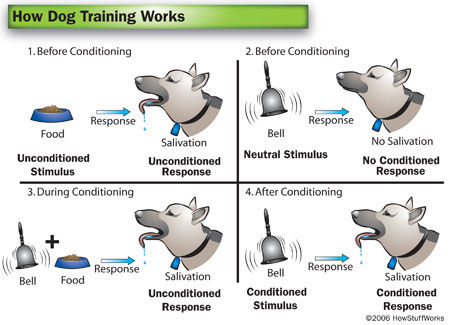
- Unconditional (Natural) Stimuli are ASSOCIATED with behaviours which were PREVIOUSLY NEUTRAL (NS), so when the novel situation is encountered, the same response (CS) is portrayed
- PAVLOV'S DOG (1927)
- WATSON AND REYNER (1920)
- LITTLE ALBERT
- WATSON AND REYNER (1920)
- PAVLOV'S DOG (1927)
- Unconditional (Natural) Stimuli are ASSOCIATED with behaviours which were PREVIOUSLY NEUTRAL (NS), so when the novel situation is encountered, the same response (CS) is portrayed
- Learn to have abnormal responces to previous stimuli
- Learning occurs through associations
Operant Conditioning
- Learning occurs through reinforcemrnt
- Responses which are rewarded (reinforced) will therefore be repeated due to gaining pleasure from them. If punished behaviours will be avoided.
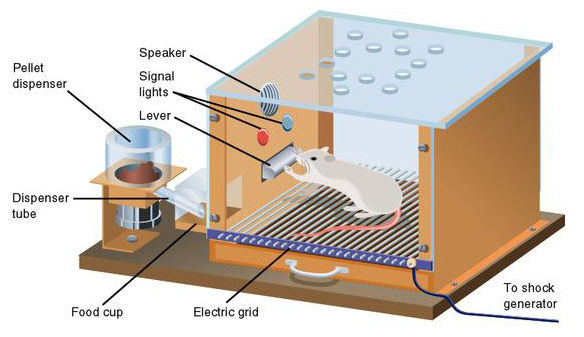
- RAT IN SKINNER'S BOX
- Responses which are rewarded (reinforced) will therefore be repeated due to gaining pleasure from them. If punished behaviours will be avoided.
- If maladaptive behaviours are rewarded, psychological disorders emerge.
- Learning occurs through reinforcemrnt
Social Learning
- Learning occurs through observations
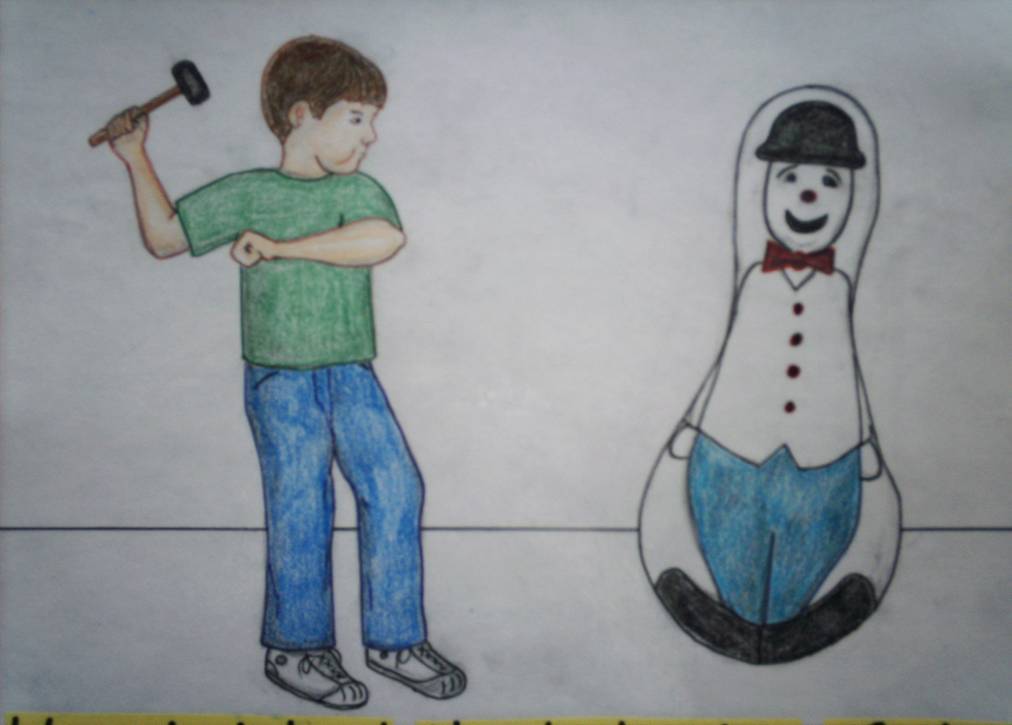
- Bandura's Bobo Doll (1961)
- Found that children imitated aggressive behaviours that they observed.
- Especially if behaviours go without punisment
- Found that children imitated aggressive behaviours that they observed.
- Bandura's Bobo Doll (1961)
- Learning occurs through observations
Behavioural Treaments
- SYSTEMATIC DESENSITISATION
- 1. Relaxation Training
- 2. Anxiety Hierachy
- 3. Reciprocal Inhibition
- 4. Progression
- 5. Complete Treatment
- Evaluation
- Weaknesses
- Flooding/ Immersion therapy is cheaper, quicker and just as successful as SD
- Only cures symptoms, not underlying problem, so it's possible another abnormal behaviour will take it's place = Symptom substitution
- Strengths
- Less Effort than some therapies. McGrath et al (1990) said that 75% of patients with phobias responded well to SD.
- Emmelkamp (1994) found that imagined stressful situations can reduce anxiety in real life situations
- Weaknesses
- Helps individual face phobia without letting fear take over (Based on Classical Conditioning)
- SYSTEMATIC DESENSITISATION