
Mapa mental
Data Warehousing and Mining
Conteúdo do mapa
Data Warehousing and Mining
Data Warehousing
- Increased corporate productivity.
- Competitive advantage.
- Potential for high ROI.
- Extremely high initial costs (£50k+)
- Long development time (3 years +/-)
- High demand for memory.
- High maintenance costs.
- Problems with source data (extraction, cleaning, loading).
Building a Data Warehouse Database (Dimensionality Modelling)
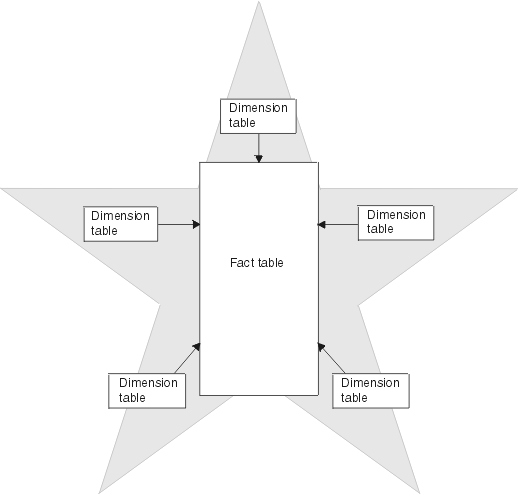
- Fact Tables
- Contains facts generated by events in the past.
- Data in tables should be regarded as read only.
- Tables are often very large.
- Dimension Tables
- Contains descriptive textual data.
- Simple primary keys.
- Gives a characteristic star scheme or star join.
- Fact Tables
Star Schema
- De-normalising reference data can speed up query performance.
- Main aim is to avoid data redundancy.
- This achieved in part via the process of normalisation.
OTLP System
- Automating business saves money.
- Data could be useful in organisations future operations.
- Information too detailed.
- May require information from more than one OTLP system.
- Difficult to extract information.
Snowflake Schema
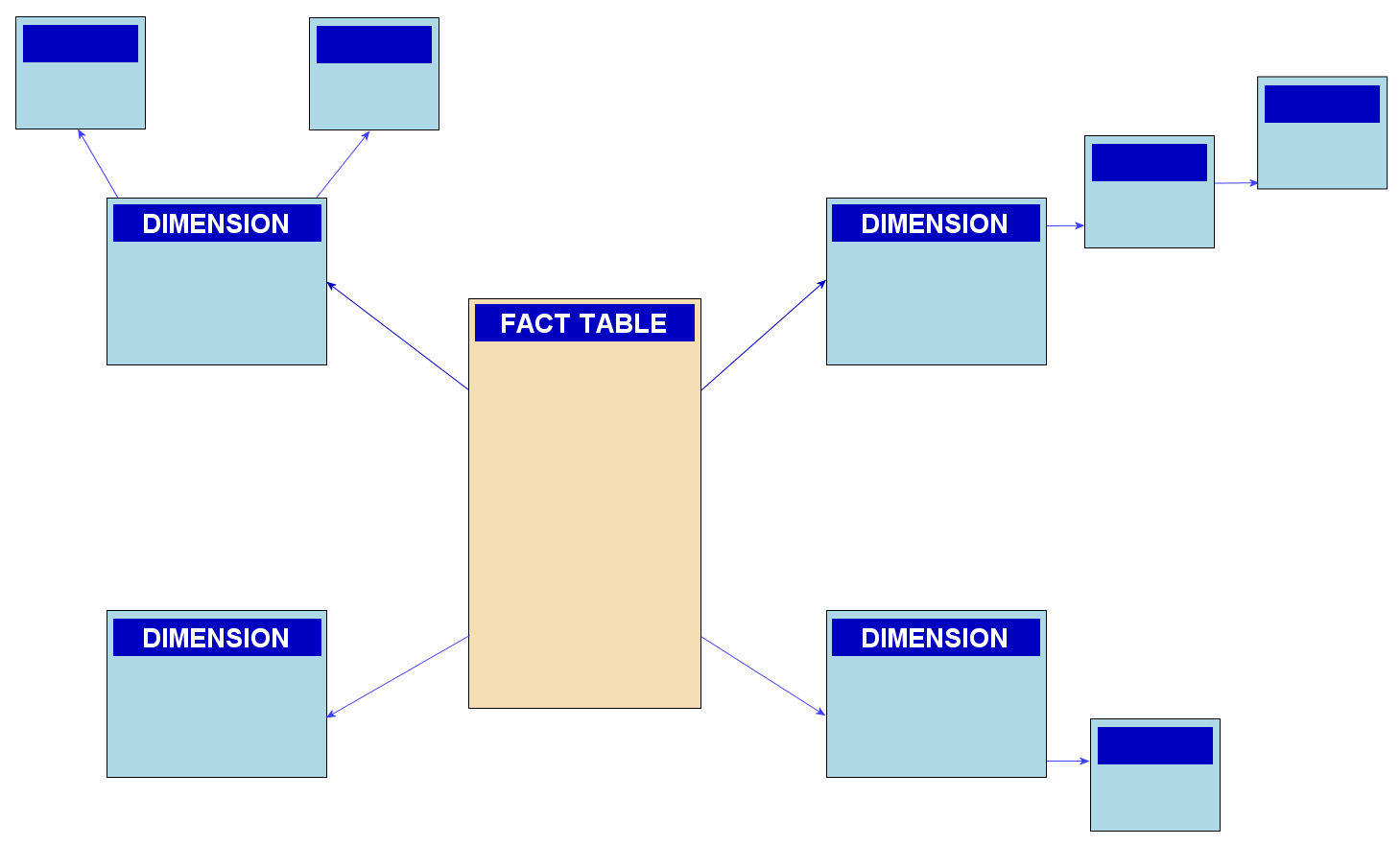
- Variant of Star Schema where dimension tables do not contain de-normalised data.
- Dimension tables have other dimension tables linked to them via foreign keys.
- More than one dimension table can share these "dimension of a dimension" tables.
Starflake Schema
- Hybrid structure that contains a mixture of star and snowflake schema's.
- Contains both normalised and de-normalised data.
- Some dimension tables may be present in both normalised and de-normalised forms.
OLAP Analytical Operations
- Consolitation
- Involves the aggregation of data, such as "roll ups" e.g. branches can be rolled up to cities, cities to countries etc.
- Drill-down
- Reverse of consolidation.
- Involves displaying the detailed data that compromises the consolidated data.
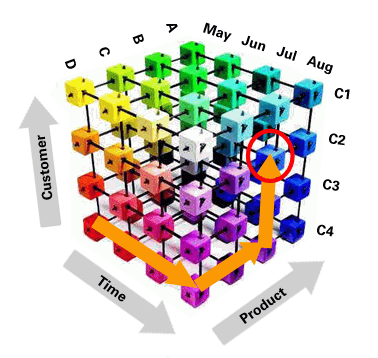
- Slicing and Dicing (aka pivoting)
- Ability to view data from different viewpoints.
- One slice may display revenue by type of property within cities.
- Another slice may display revenue by branch office within city.
- Often performed along a time axis to find patterns and trends.
- Consolitation
Data Mining Operations and Techniques
- Predictive Modelling
- Reflect human experience using observations to form a model of the important characteristics of some phenomenon.
- Model developed using a two-phase supervised learning approach.
- The training phase uses a large sample of historical data called a training set to build a model of the important characteristics.
- The testing phase tests the accuracy and performance of the model on new data.
- Used in credit approval, customer retention management, direct marketing.
- Database Segmentation
- Partition database into an unknown number of segments or clusters of similar records.
- Results can be displayed on scatterplot.
- Used in customer profiling and direct marketing.
- Link Analysis
- Aims to discover links (called associations) between individual records or groups of records in a database.
- Anomaly Detection
- Identifies outliers (expressions of deviation from previously known expectations and norms).
- Used in detection of credit card and insurance fraud, quality control and defects tracing.
- Predictive Modelling
Imagens e arquivos do mapa
Informações
- Descrição
- Revision mind map for Data Warehousing and Mining.
- Criado por
- i7752068
- Visualizações
- 274
- Tags
- Avaliação