
Mapa mental
Island Biography
Conteúdo do mapa
Island Biography
speciation seperating of two sub groups of a species by reproductive isolation
- this is caused by constant splitting of genes by mutations and a blockage between the species, meaning they drift apart better known as genetic drift
- allopatric speciation - isolation due to geographical changes and barriers
- this can be due to alter sealevels glaciaers, earth quakes any sort of natural changes
- changes in genotypic or/and phenotypic divergence
- -they become subject to different selective pressures - undergo genetic drift (independently) - different mutations arise
- cant interbreed if the barrier is removed
- Interbreeding within subgroups + mutations - Interbreeding between subgroups = two new species or populations
- Sympatric speciation - changes in mate selection due to behaviour or gentic change
- mating is no longer random causing genetic difrt between the two populations - two populations with out barriers
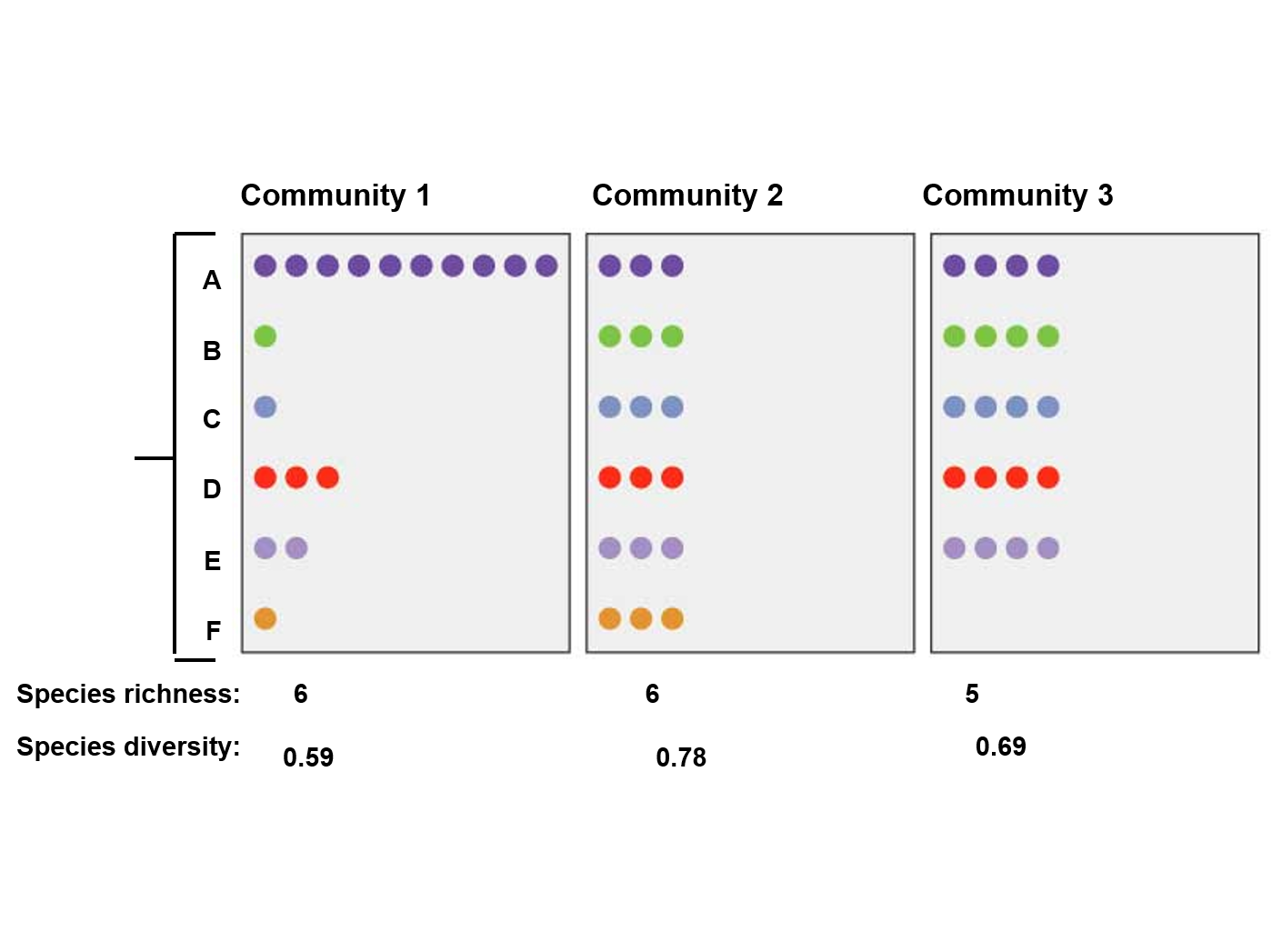
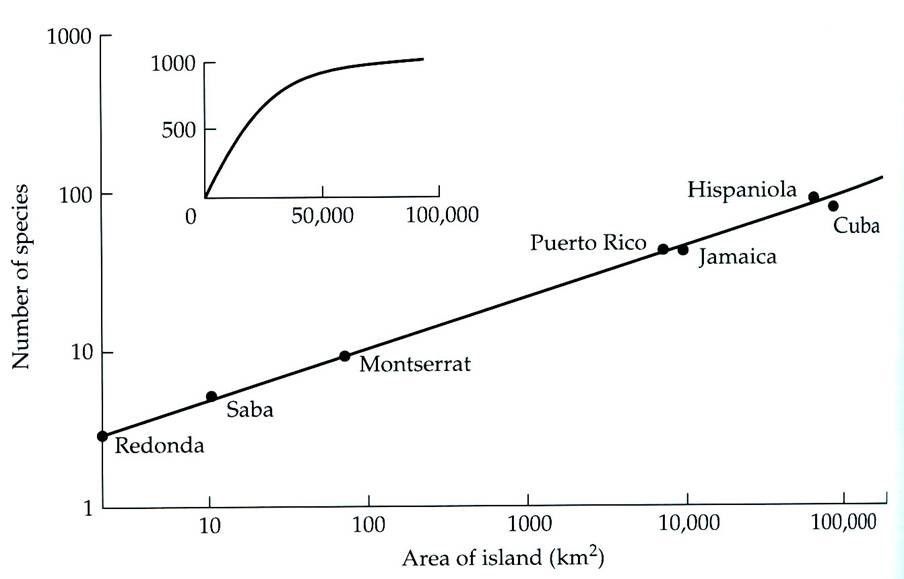
very early on its been noted islands have a lower biodiversity with bigger islands having more then lower ones
- there is a thing called the island effect - islands are therefore more of a conept of major isolation
- oceanic islands are the most obvious as many of the animals are cut off by the ocean matrixs
- tops of mountains can also be classed as an island due to be cut via differences in properties between the valley below
- lakes can also be classed as island as they are marine environments cut off by a land matrix
- theory of island biology was devised
- habitat diverstiy
- the bigger the island the more hibtats are avialable so more organisms can use them
- early work was done on birds but there high dispersal rate wasnt taken into acount
- equilibrium theory - MacArthur and Wilson 1967
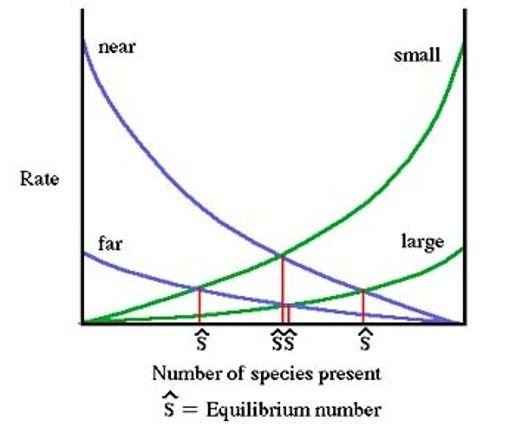
- many things effect the species level of an island the main two are arivals and deaths when these level out there becomes a constant number of species present
- evolutionary aproach
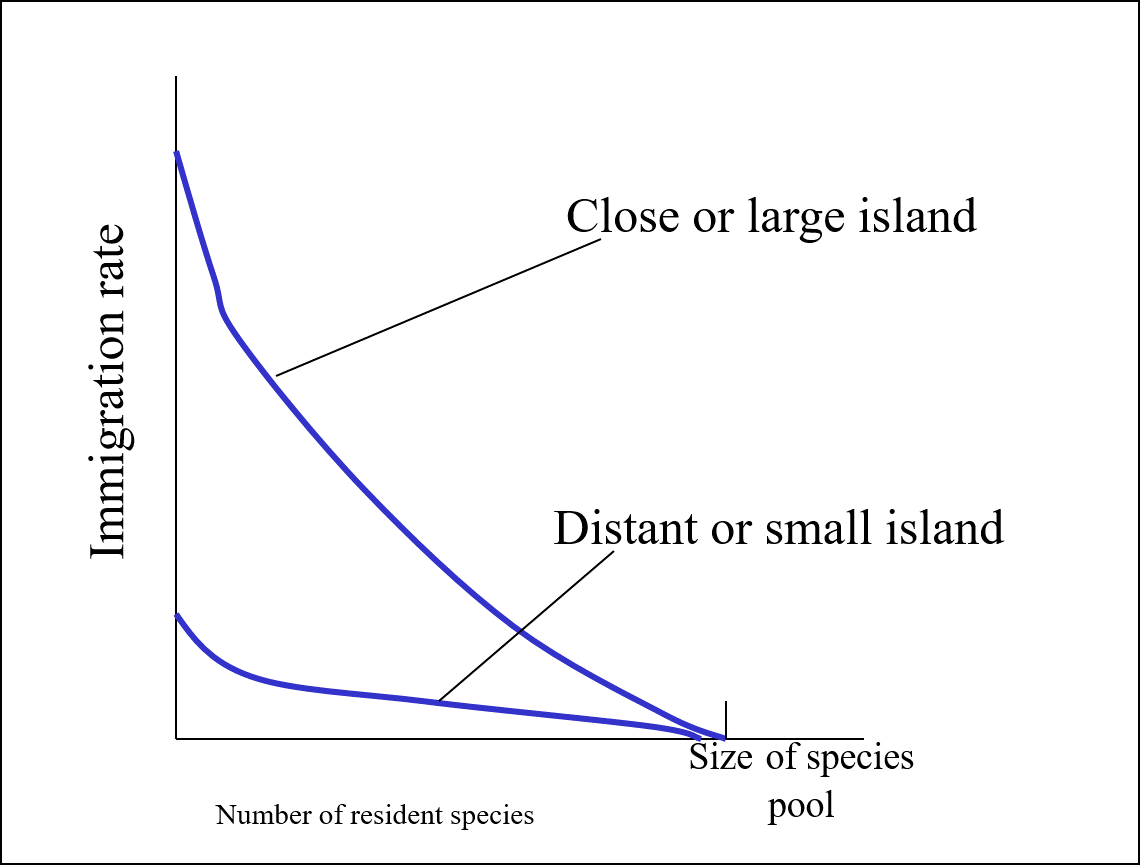
- Immigration - a key processes
- form the graph attached you can see that when a new island is found there is a increase in the amount of species that can travel there
- the bigger the island and the closer the higher the probability of species breeding here
- dispersal rate
- many closely related species have very different dispersal rates such as Nucella lapillus and Litterina littorea, this shows that diversity also must be contorled by the idivduals dispersal rates
- Holloway, 1977
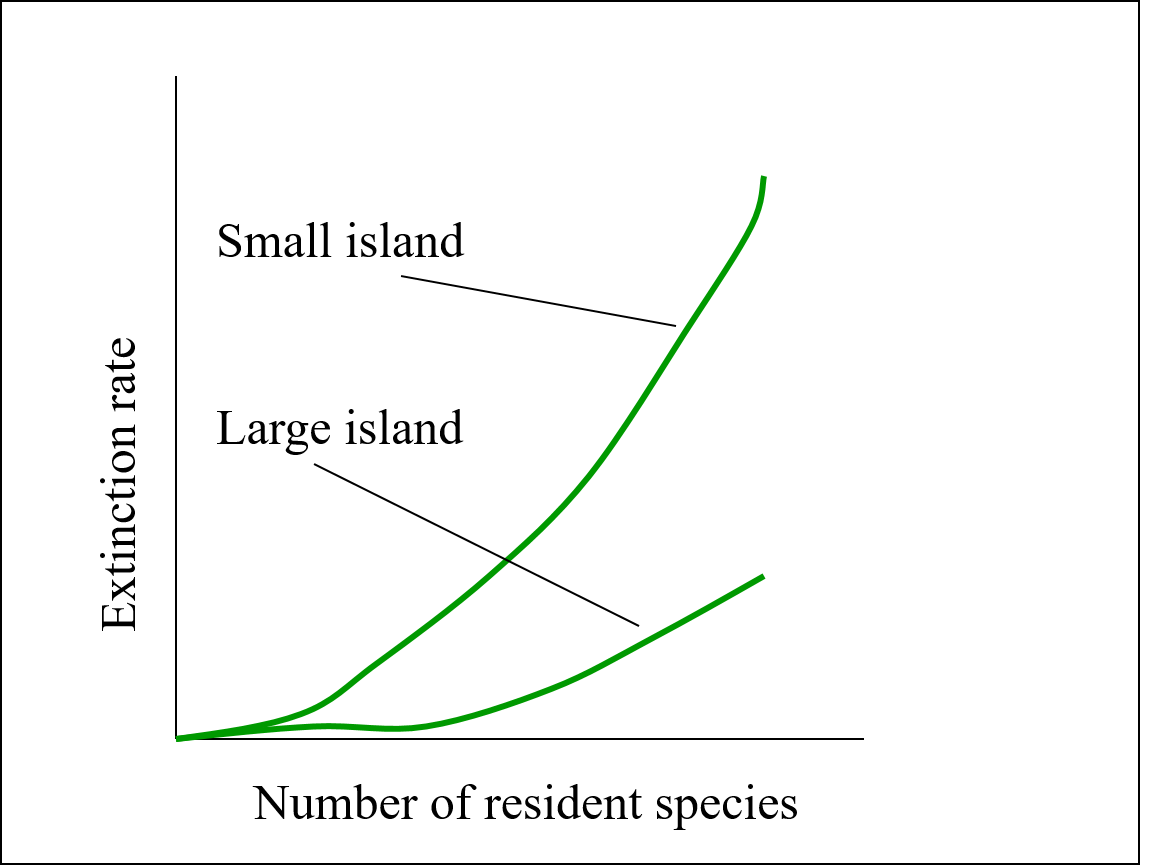
- extinctions rate
- as more animals come into the island there is more competition for niches and so forth so weaker animals die out - this is higher on smaller islands due less resources
- the result of this theory is that there is a set turnover rate for each island and its factors seen within the graph there is a difference in the key number of species
- tonn and magnusome 1982
- fish in the westconsen lake
- simbulof and willson
- location
- location is important such as logitude and latitude, hieght on the shore and environmental stress and is it in the pathway of potential species ir currents and hydrodynamics
- effected by many different factors
- size of the unit of habitat
- variety of niches or micro-habitats available
- distance to source-pool of species
- habitat diverstiy
- there is a thing called the island effect - islands are therefore more of a conept of major isolation
METAPOPULATIONS
- This was developed in the late 70s - basically its a group of populations that interact on a certain level - so locals might become extinct but other populations will not be effect
- rescue effect from other populations - source-sink dynamics
applied in the marine sector
- much less studies, larva; and propagule exchange
- due to the differences between terrestrial and marine habitats this needs more indepth sudy
- whats is the link?? what rols does biodiversity play in the functions of an ecosystem
- Mussels
- these mussel beds can be used to study all aspects that are effected by islances - like parameters and size and stress, location and age
- much less studies, larva; and propagule exchange
Conservation
- is it better to have one big protected are or many small protected area - this is still an on going debate
- heterogenity plays a part in conservation areas
- is it better to look after the main animals
- Banks Et al 2005
Imagens e arquivos do mapa
Informações
- Descrição
- stage 2 Newcastle University Marine science Marine ecology module - island Biogeography lecture and notes plus the extra reading in the form of inputted data
- Criado por
- chloe allen
- Visualizações
- 37
- Tags
- Avaliação