
Mapa mental
Probability 2
Conteúdo do mapa
Probability 2
The Multiplication Law.
- If two events happen one after the other then the probability that A happens followed by B is given by P(A n B) = P(A) . P(B|A)
- This means that the probability that A and then B happen is the product of the probability that A happens and the probability that B happens (given that A happened first)
- For example if you picked a card out of a deck and didn't replace it and what is the probability that you get a King followed by a Queen
- Probability (King then a Queen) = P(King) . P(Queen| First card was a King)
- 4/52 X 4/51 = 4/663
- Probability (King then a Queen) = P(King) . P(Queen| First card was a King)
- For example if you picked a card out of a deck and didn't replace it and what is the probability that you get a King followed by a Queen
- This means that the probability that A and then B happen is the product of the probability that A happens and the probability that B happens (given that A happened first)
- This is an extenstion to the multiplication of counting.
- If two events happen one after the other then the probability that A happens followed by B is given by P(A n B) = P(A) . P(B|A)
Independent Events
- This is when the occurrence of one event in no way affects the likelihood of occurrence of the other.
- For Example if you flip a coin and then rolled a dice. The fact that you get a head on the coin has no baring on the number you will roll on the dice
- A and B are independent if:
- P(A) = P(A|B)
- P(B) = P(B|A)
- P(A n B) = P(A)P(B)
- This is when the occurrence of one event in no way affects the likelihood of occurrence of the other.
Expected Value
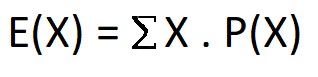
- This is for when you want to decide is a bet is fair, bad or good.
- Fair = 0
- Good = >0
- Bad = <0
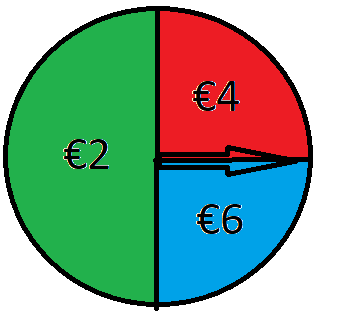
- For Example
- E(X) = 2(1/2) + 4(1/4) + 6(1/4)
- = €3.50
- This means if you paid €5 its a bad bets as the result is €-1.50
- = €3.50
- E(X) = 2(1/2) + 4(1/4) + 6(1/4)
- This is for when you want to decide is a bet is fair, bad or good.
Binomial Distribution : Bernoulli Trials
- A binomial trial is a trail whose outcome is random and is one of just two possibilities which are called success and failure. Each trail is often referred to as a Bernoulli trial after the Swiss mathematician Jakob Bernoulli.
- This is for when you want a number of sucess and a number of failures but its does not matter the order in which they resulted in.
- Must fit these criteria
- There must be a finite number of trials
- There are only 2 outcomes: Success and Failure
- Trails are independent of each other
- The Probability of Success (p) is the same for each trial.
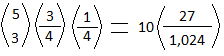
- For Example: There are 300 girls are 100 boys in a school, each day a teacher chooses one to make the morning announcements. What is the probability that in a given weeek she chooses 3 girls are 2 boys.
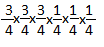
- You might think that its
- This would be wrong as it only accounts for GGGBB
- While there is a range of solutions such as GGBGB or BBGGG or GBGBG
- This would be wrong as it only accounts for GGGBB
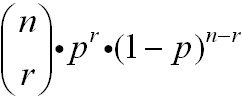
- The correct solutions is
- You might think that its
- p = probability of sucess
- n = no. of experiments
- r = No. of wanted successes
- n = no. of experiments
- Must fit these criteria
- Binomial Distribution Extended
- This is for when you want to end within a certain period of time.
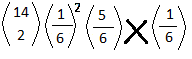
- For Example you trow a dice until 6 is thrown 3 times. What is the probability that this takes 15 throws
- Solution
- Solution
- A binomial trial is a trail whose outcome is random and is one of just two possibilities which are called success and failure. Each trail is often referred to as a Bernoulli trial after the Swiss mathematician Jakob Bernoulli.
Normal Distribution
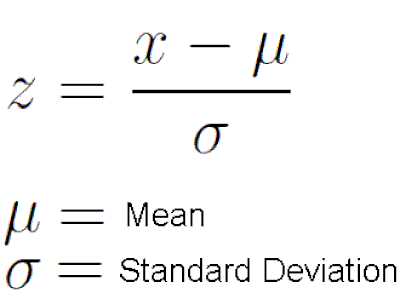
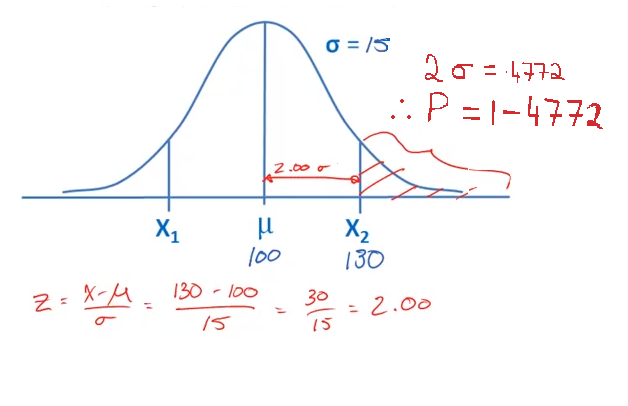
- Use your formula book to find out the probability from the normal.
Imagens e arquivos do mapa
Informações
- Descrição
- Leaving Certificate Mathematics Mapa Mental sobre Probability 2, criado por Ciara Stynes em 04-01-2018.
- Criado por
- Ciara Stynes
- Visualizações
- 1
- Avaliação