
Mapa mental
Networks - Link Layer
Conteúdo do mapa
Networks - Link Layer
·
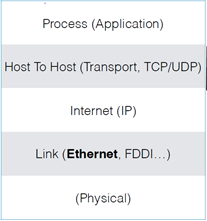
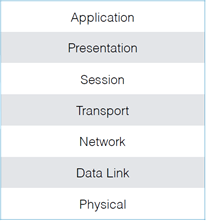
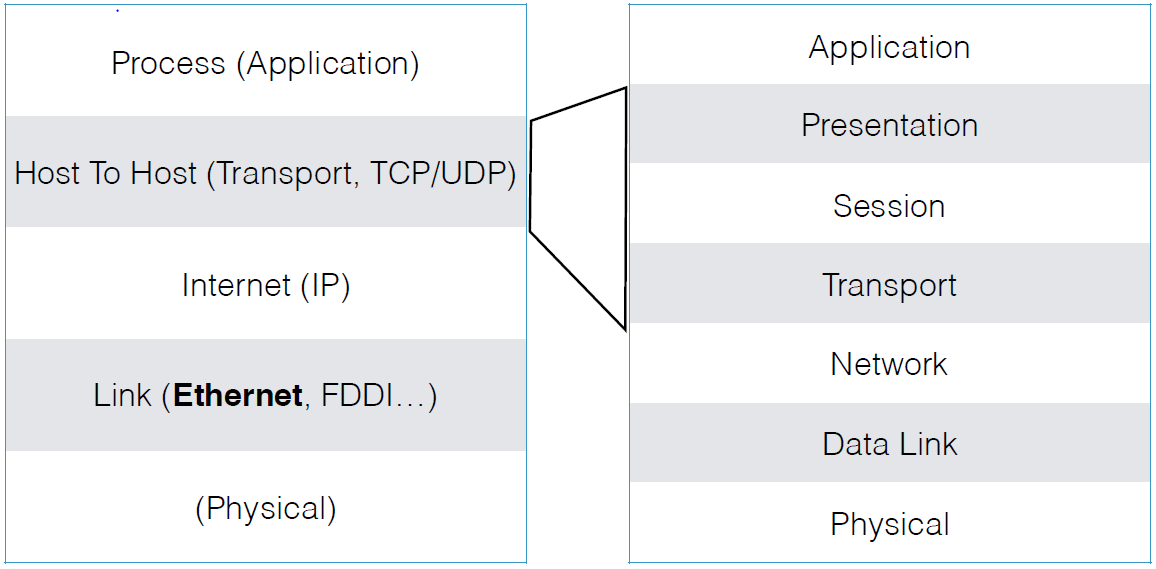
- Network Stack
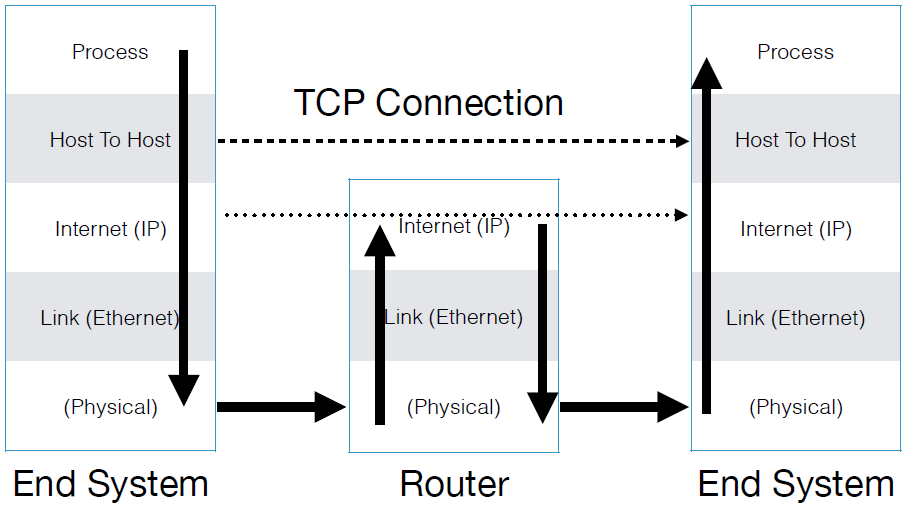
- 1. Layers can be easily swapped and updated 2. Layers provide services to above 3. Layers allow programs to operate over different networks without updates 4. Travelling down the stack gets you closer to the wire
- OSI
- Presentation
- Presentation Layer
- Was intended to handle data encoding E.g. Converting data into a neutral format Pointless layer
- Session
- Session Layer
- .Was intended to handle the relation between multiple connections. E.g. Restoring a failed transfer.
- Tried to be too general, different applications have different requirements
- Presentation
- TCP/IP (DoD)
- TCP/IP (DoD) 1. Was based on successful implementations 2. Only 1 network Layer
- Application
- Network
- IP
- IP - RFC 791 https://tools.ietf.org/html/rfc791
- 1. Best Effort - Unreliable, unsequenced datagram service 2. Works with any transport and any link layer 3. Easy to implement 4. Packets sent on link routers think is closer to destination
- IPv4
- IP Header
- Header 1. 32 Bit (4 bytes) row length 2. Usually 5 rows due to Options being optional
- Header Checksum Checksum only covers header and not data. Data protection is done by upper layers Checksum recomputed TTL changes
- Time to live/Hop Count 1. Usually 30-60 2. Decreases every time the packet is processed by a router and each second its held after which its discarded 3. When decremented checksum must be recalculated. Checksum is not secure so there are fast algorithms for computing the new checksum based on change
- IPs written as 4 decimal numbers due to hexidecimal not invented
- Class A
- Given to large companies Networks are sparsely populated due to large number of host addresses
- Begin with 0
- 7 Bits for Network
- 128 Class A IPs (Networks)
- 24 Bits for Host
- 16 million host per network
- 7 Bits for Network
- 255.2555.255.0 /8
- Class B
- Given to smaller companies + universities Networks are sparsely populated due to large number of host addresses
- 255.255.0.0 /16
- Begins with 10
- 14 Bits for Network
- 2^14 address
- 16 Bits for host
- 2^16 host per network
- 14 Bits for Network
- Class C
- available to anyone
- 255.0.0.0 /24
- Begin with 110
- 21 bits for Network
- 2^21 addresses
- 8 Bits for host
- 256 host per network
- 21 bits for Network
- Class A
- Netmask
- Allows subnetting by dividing network part into network and subnet Used to find host part of network
- Non-byte aligned mask are not classful
- CIDR
- Classless Inter Domain Routing Replaced classful addressing Every network now has a netmaskAllowed more blocks of IPs to be assigned reducing IP wasteNotation = IP + netmask (slash notation)
- Allowed supernetting - A single routing table entry to point towards multiple networks Not as useful due to routers having more memory
- Allocation Methods
- Static Allocation
- Bootp
- DHCP
- Relaying
- Security
- IP Header
- IPV6
- IP
- Transport
- 1. Moves data between endpoints 2. Separates data between different applications using ports 3. Breaks data into segments 4. Guarantees reliable and sequenced data to the application 5. Uses TCP for streams and UDP for packets 6. Segments are units of data in the Transport Layer
- Link
- ARP
- Address Resolution Protocol
- Used to send packets down the correct link associated with the IPv4 address
- 1. Broadcast an IP request packet so see who knows about the IPv4 Address 2. The packet is sent to the machine that replies. This could be owner or a router. 3.
- Fast machines can steal all traffic by replying to the broadcast first Packets can be sent down a link or tunnel Tunneling - Encapsulating a packet within another packet
- ARP
- Physical
Hardware
- Switches
- Hubs
- Bridges
- Dumb
- Filter/Learning
- Routers
- Host
- Planes
- Management
- Control
- Data
- Switches
·
- Data Transfer
- Packet Switching
- 1. Data is divided into segments, each with source/destination addresses 2. Segments are switched over networks 3. Multiplexes over time domain
- Virtual Circuit - 5
- 1. Endpoint tells network to establish connection 2. Network decides on a route to connect the endpoints 3. Network gives endpoints a token to identify the circuit 4. Packets are sent with token to identify the token 5. Virtual Circuit town down
- Advantages - 4
- 1. Ordered Packets - Packets follow same route hence arrive in order 2. Reliable - Network handles packet loss/duplication 3. Less overhead - packets do not need full address 4. Network stack simplified
- Disadvantages - 2
- 1. Networks must keep track or connections crossing it 2. Complex routers - Scale with bandwidth, number of circuits and rate of creation/destruction
- Datagram service
- 1. Packets are processed individually 2. Endpoints handle packet loss, duplication and reordered 3. Packets unlikely to follow same route 4. Connectionless - Packets can be sent without prior arrangement 5. Best effort - Attempts to deliver with no guarantees 6. Can use a virtual circuit as a link
- ln
- Disadvantage - 1
- Packets can get lost, reordered or duplicated
- 4 Advantages
- 1. Easy to multiplex over time domain 2. Data is not being sent when connection is not in use 3. Statistical gain due to being able to serve more customers 4. Can reroute data around failed switches
- 3 Disadvantages
- 1. Packets can be lost or reordered 2. Introduces latency 3. Packets must be stuck back together
- Circuit Switching
- 1. A dedicated communications channel is created. 2. Multiplexes over frequency domain
- Was used for telephones 1. Circuit was created through exchanging and linking wires 2. Electrical signals sent using multi-plexors and amps
- 3 Disadvantages
- 1. Dedicated channel means resources being consumed even when not in continuous use. E.g. When no one is talking during a call. 2. Expensive 3. Hard to filter over frequency domain
- 1 Advantange
- Less latency
Types
- LAN
- WAN
- MAN
Imagens e arquivos do mapa








Informações
- Descrição
- Computer Science Mapa Mental sobre Networks - Link Layer, criado por Daniel Annan em 16-01-2018.
- Criado por
- Daniel Annan
- Visualizações
- 1
- Histórico
-
- Criado por Daniel Annan · 11 dez 2017
- Copiado por Daniel Annan · 16 jan 2018
- Copiado por Daniel Annan · 16 jan 2018
- Avaliação