
Mapa mental
Cell Fractionation
Conteúdo do mapa
Cell Fractionation
Requirements of the solution?
- Cold- Reduce enzyme activity that might break down the ogranelles
- Isotonic- Prevents organelles bursting or shrinking as a result of osmotic gain or loss of water.
- Has the same water potential as the original tissue.
- Buffered- Maintain a constant pH.
Homogenation
- Cells are broken up by a homogeniser to release the organelles from the cell.
- The resultant fluid is known as the homogenate
- This is filtered to remove and complete cells and large pieces of debris
Process where cells are broken up and the different organelles separated out
- The techniques of cell fractionation and ultracentrifugation enables considerable advances in biological knowledge. They allowed a detailed study of the structure and function of organelles.
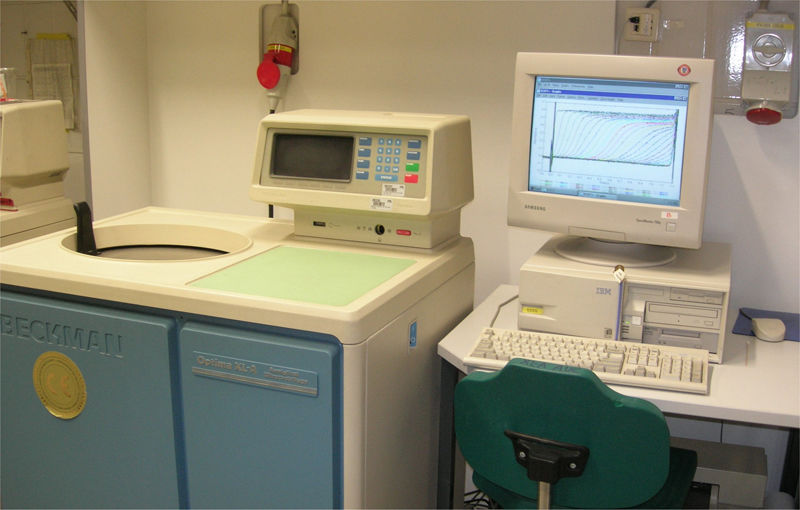
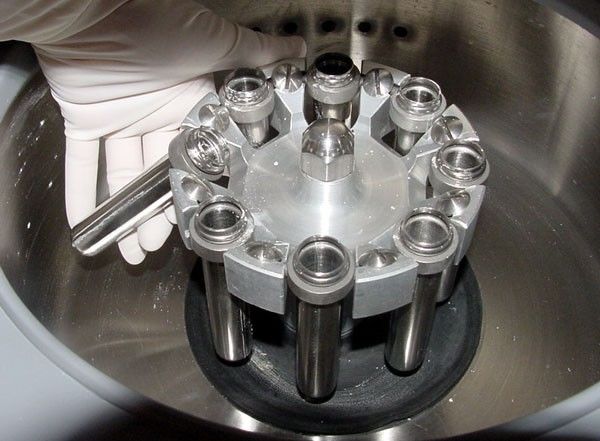
ULTRACENTRIFUGATION
- Process in which the homogenate is spun at a high speed to create a centrifugal force.
- 1) Tube of filtrate is spun at low speed.
- 2) Heaviest organelles, the nuclei, are forced to the bottom to form a thin sediment pellet.
- 3) Supernatant is removed, leaving the sediment of nuclei.
- 4) Supernatant is transferred to another tube, and spun in the centrifuge at a faster speed.
- ~PROCESS IS REPEATED~
- 4) Supernatant is transferred to another tube, and spun in the centrifuge at a faster speed.
- 3) Supernatant is removed, leaving the sediment of nuclei.
- 2) Heaviest organelles, the nuclei, are forced to the bottom to form a thin sediment pellet.
- 1) Tube of filtrate is spun at low speed.
- Process in which the homogenate is spun at a high speed to create a centrifugal force.
Order of separation of organelles (and speed of centrifugation)
- Nuclei- 1 000
- Mitochondria- 3 500
- Lysosomes- 16 500
- Ribosomes- 100 000
- Lysosomes- 16 500
- Mitochondria- 3 500
- Nuclei- 1 000
Imagens e arquivos do mapa
Informações
- Descrição
- Mind map covering Cell Fractionation
- Criado por
- Olivia Farrow
- Visualizações
- 159
- Tags
- Avaliação