
Mapa mental
Homeostasis and Excretion
Conteúdo do mapa
Homeostasis and Excretion
HOMEOSTASIS: The process in which the body's internal conditions are regulated
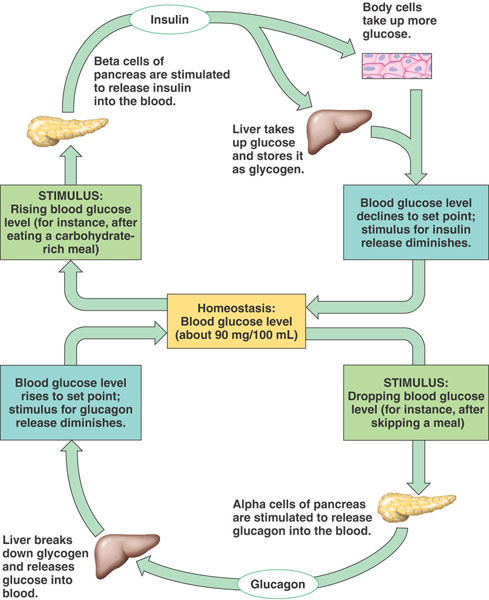
- Sugar Control
- Insulin: This is the hormone produced by the pancreas that regulates glucose levels in the blood.
- NEGATIVE FEEDBACK LOOP: A negative feedback control system responds when conditions change from the ideal or set point and returns conditions to this set point. There is a continuous cycle of events in negative feedback..
- NEGATIVE FEEDBACK LOOP: A negative feedback control system responds when conditions change from the ideal or set point and returns conditions to this set point. There is a continuous cycle of events in negative feedback..
- Insulin: This is the hormone produced by the pancreas that regulates glucose levels in the blood.
- Water Control
- THE NEPHRON:
- ULTRAFILTRATION: The process that occurs at the barrier between the blood and the filtrate in the bowman's capsule in the kidneys
- BOWMAN'S CAPSULE: It is a hollow cup-like sac at the start of the nephron.
- GLOMERULUS: This is a ball of blood capillaries in the Bowman's capsule. This is where the blood is filtered. The pressure in the glomerulus is very high in order to force all the small molecules through the basment membrane
- BASEMENT MEMBRANE: This membrane is located in the glomerulus between the capillary wall and the wall of the capsule. These act like a filter which allows only small molecules to pass through.
- GLOMERULUS: This is a ball of blood capillaries in the Bowman's capsule. This is where the blood is filtered. The pressure in the glomerulus is very high in order to force all the small molecules through the basment membrane
- BOWMAN'S CAPSULE: It is a hollow cup-like sac at the start of the nephron.
- SELECTIVE REABSORBTION: The process in which only required molecules are allowed back into the blood stream.
- DISTAL CONVOLUTED TUBULE: This is where the final adjustments are made. Here selective reabsorbtion takes place allowing for small adjustments to be make between the presence of potassium and sodium.
- PROXIMAL CONVOLUTED TUBULE: This is where glucose, water, salts and amino acids are reabsorbed back into the capillaries.
- LOOP OF HENLE:
- DESCENDING LIMB: This is the area which is only permeable to nutrients and salts but not to water. This helps to concentrate the urine
- ASCENDING LIMB: This is the area of the loop of henle which is permeable to water but not other nutrients. The water is then reabsorbed into the loop of henle through active transport.
- ULTRAFILTRATION: The process that occurs at the barrier between the blood and the filtrate in the bowman's capsule in the kidneys
- ANTiDIURETIC HORMONE (ADH): It is released by the pituitary gland in the brain near the hypothalamus. This hormone's function is to prevent the production of dilute urine.
- THE NEPHRON:
- THERMOREGULATION
- TOO HOT
- SWEATING: sweat glands in the skin release more sweat when we get too hot. This evaporates, removing heat energy from the skin.
- VASODILATION: Blood vessels leading to the skin capillaries become wider (dilate) allowing more blood to flow through the skin, and more heat to be lost.
- TOO COLD
- MUSCLE CONTRACTION: muscles contract rapidly and we shiver when we're cold. These contractions need energy from respiration, and some of this is released as heat.
- VASOCONSTRICTIONS - blood vessels leading to the skin capillaries become narrower (constrict) letting less blood flow through the skin and conserving heat in the body.
- The hairs on the skin also help to control body temperature. The hairs trap a layer of air above the skin, which helps to insulate the skin against heat loss
- EPIDERMIS: This is the first layer of the skin and consists of the dead cells that stop water loss.
- HYPODERMIS: This is the third and fattiest layer of the skin. It insulates the body against heat loss and is a store for energy.
- DERMIS: This is the middle layer of the skin which contains the sensory receptors and is the location of the sweat glans as well as hair follicles and many small blood vessels
- TOO HOT
- Sugar Control
EXCRETION: It is the process by which waste products of metabolism are removed from the body
- NITROGENOUS WASTE: These are waste substances that contain the element nitrogen. Example: Urea and Ammonia
- THE URINARY SYSTEM
- THE BLADDER: A muscular bag that stores urine.
- URETHRA: A tube connected to the bladder which leads to the outside.
- SPHINCTERS: The are two ring-like muscles on the wall of the urethra. They contract to close the urethra and hold back the urine. The lower sphincter muscle is constantly controlled while the upper one is involuntary - it automatically relaxes when the bladder is full
- URETERS: The two tubes from which urine passes out of the kidneys and into the bladder
- URETHRA: A tube connected to the bladder which leads to the outside.
- THE KIDNEYS: The organ that removes excess organic molecules from the blood
- THE CORTEX: This is the darker outer region of the kidney
- THE NEPHRON:
- THE MEDULLA: This is the middle layer of the kidney
- THE PYRAMIDS: These are the bulges that point inwards towards the concave side of the kidney.
- PELVIS: This is where the urine is emptied out by the pyramid through the medulla.
- URETERS: The two tubes from which urine passes out of the kidneys and into the bladder
- PELVIS: This is where the urine is emptied out by the pyramid through the medulla.
- THE PYRAMIDS: These are the bulges that point inwards towards the concave side of the kidney.
- RENAL ARTERY: This is the artery that supplies blood to both kidneys. This leads straight from the body's main artery i.e. the Aorta.
- RENAL VEIN: The 'clean' blood passes out through each renal vein to the main vein i.e. the Vena Cava.
- THE BLADDER: A muscular bag that stores urine.
Imagens e arquivos do mapa
Informações
- Descrição
- Mapa Mental sobre Homeostasis and Excretion, criado por Hania Azraa Sohawon em 13-02-2015.
- Criado por
- Hania Azraa Sohawon
- Visualizações
- 77
- Tags
- Avaliação