
Mapa mental
Diabetes mellitus
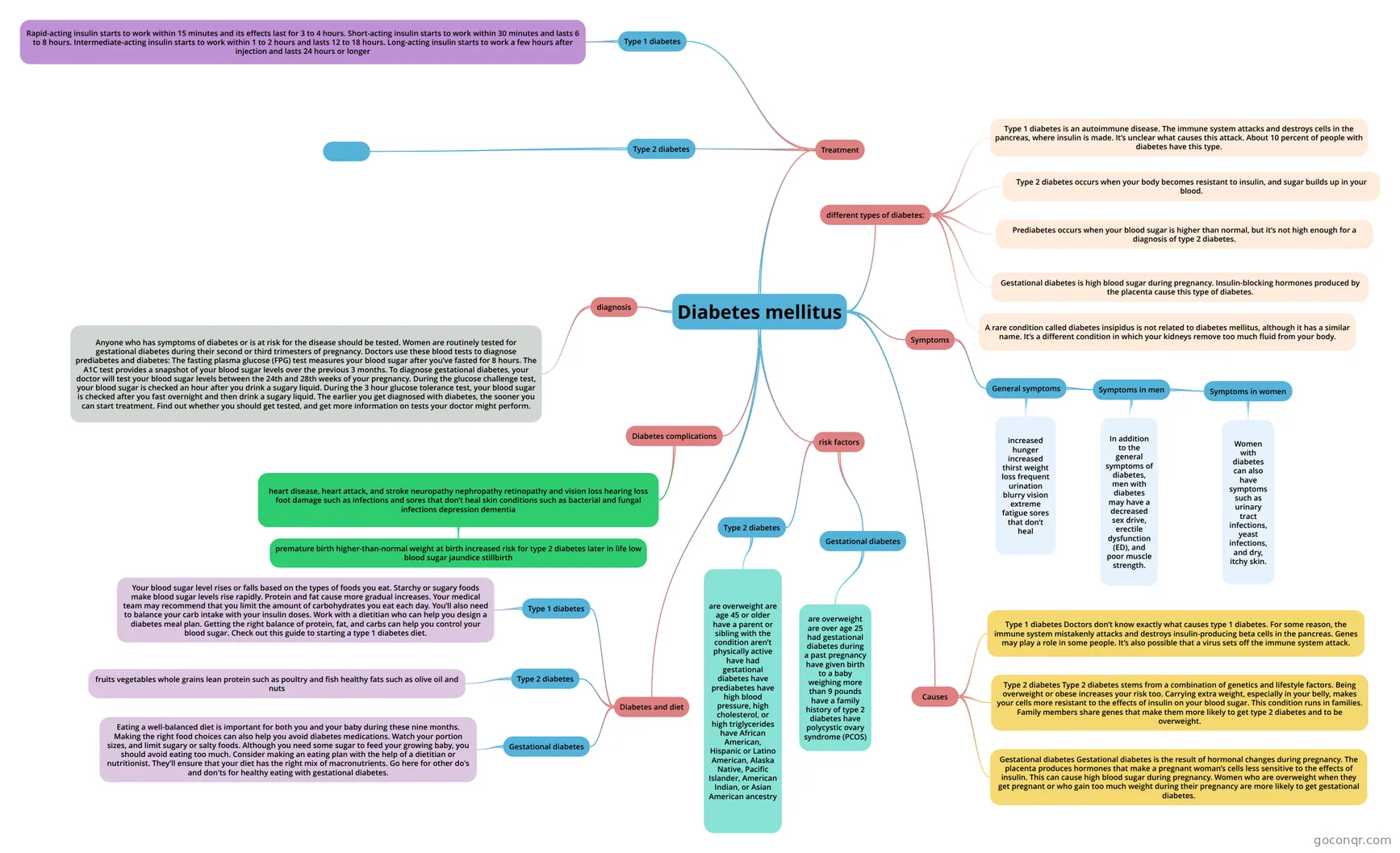
Mind map: Diabetes mellitus
Conteúdo do mapa
Diabetes mellitus
different types of diabetes:
- Type 1 diabetes is an autoimmune disease. The immune system attacks and destroys cells in the pancreas, where insulin is made. It’s unclear what causes this attack. About 10 percent of people with diabetes have this type.
- Type 2 diabetes occurs when your body becomes resistant to insulin, and sugar builds up in your blood.
- Prediabetes occurs when your blood sugar is higher than normal, but it’s not high enough for a diagnosis of type 2 diabetes.
- Gestational diabetes is high blood sugar during pregnancy. Insulin-blocking hormones produced by the placenta cause this type of diabetes.
- A rare condition called diabetes insipidus is not related to diabetes mellitus, although it has a similar name. It’s a different condition in which your kidneys remove too much fluid from your body.
Symptoms
- General symptoms
- increased hunger increased thirst weight loss frequent urination blurry vision extreme fatigue sores that don’t heal
- Symptoms in men
- In addition to the general symptoms of diabetes, men with diabetes may have a decreased sex drive, erectile dysfunction (ED), and poor muscle strength.
- Symptoms in women
- Women with diabetes can also have symptoms such as urinary tract infections, yeast infections, and dry, itchy skin.
- General symptoms
Causes
- Type 1 diabetes Doctors don’t know exactly what causes type 1 diabetes. For some reason, the immune system mistakenly attacks and destroys insulin-producing beta cells in the pancreas. Genes may play a role in some people. It’s also possible that a virus sets off the immune system attack.
- Type 2 diabetes Type 2 diabetes stems from a combination of genetics and lifestyle factors. Being overweight or obese increases your risk too. Carrying extra weight, especially in your belly, makes your cells more resistant to the effects of insulin on your blood sugar. This condition runs in families. Family members share genes that make them more likely to get type 2 diabetes and to be overweight.
- Gestational diabetes Gestational diabetes is the result of hormonal changes during pregnancy. The placenta produces hormones that make a pregnant woman’s cells less sensitive to the effects of insulin. This can cause high blood sugar during pregnancy. Women who are overweight when they get pregnant or who gain too much weight during their pregnancy are more likely to get gestational diabetes.
risk factors
- Type 2 diabetes
- are overweight are age 45 or older have a parent or sibling with the condition aren’t physically active have had gestational diabetes have prediabetes have high blood pressure, high cholesterol, or high triglycerides have African American, Hispanic or Latino American, Alaska Native, Pacific Islander, American Indian, or Asian American ancestry
- Gestational diabetes
- are overweight are over age 25 had gestational diabetes during a past pregnancy have given birth to a baby weighing more than 9 pounds have a family history of type 2 diabetes have polycystic ovary syndrome (PCOS)
- Type 2 diabetes
Diabetes complications
- heart disease, heart attack, and stroke neuropathy nephropathy retinopathy and vision loss hearing loss foot damage such as infections and sores that don’t heal skin conditions such as bacterial and fungal infections depression dementia
- premature birth higher-than-normal weight at birth increased risk for type 2 diabetes later in life low blood sugar jaundice stillbirth
- heart disease, heart attack, and stroke neuropathy nephropathy retinopathy and vision loss hearing loss foot damage such as infections and sores that don’t heal skin conditions such as bacterial and fungal infections depression dementia
Diabetes and diet
- Type 1 diabetes
- Your blood sugar level rises or falls based on the types of foods you eat. Starchy or sugary foods make blood sugar levels rise rapidly. Protein and fat cause more gradual increases. Your medical team may recommend that you limit the amount of carbohydrates you eat each day. You’ll also need to balance your carb intake with your insulin doses. Work with a dietitian who can help you design a diabetes meal plan. Getting the right balance of protein, fat, and carbs can help you control your blood sugar. Check out this guide to starting a type 1 diabetes diet.
- Type 2 diabetes
- fruits vegetables whole grains lean protein such as poultry and fish healthy fats such as olive oil and nuts
- Gestational diabetes
- Eating a well-balanced diet is important for both you and your baby during these nine months. Making the right food choices can also help you avoid diabetes medications. Watch your portion sizes, and limit sugary or salty foods. Although you need some sugar to feed your growing baby, you should avoid eating too much. Consider making an eating plan with the help of a dietitian or nutritionist. They’ll ensure that your diet has the right mix of macronutrients. Go here for other do's and don'ts for healthy eating with gestational diabetes.
- Type 1 diabetes
Treatment
- Type 1 diabetes
- Rapid-acting insulin starts to work within 15 minutes and its effects last for 3 to 4 hours. Short-acting insulin starts to work within 30 minutes and lasts 6 to 8 hours. Intermediate-acting insulin starts to work within 1 to 2 hours and lasts 12 to 18 hours. Long-acting insulin starts to work a few hours after injection and lasts 24 hours or longer
- Type 2 diabetes
- Type 1 diabetes
diagnosis
- Anyone who has symptoms of diabetes or is at risk for the disease should be tested. Women are routinely tested for gestational diabetes during their second or third trimesters of pregnancy. Doctors use these blood tests to diagnose prediabetes and diabetes: The fasting plasma glucose (FPG) test measures your blood sugar after you’ve fasted for 8 hours. The A1C test provides a snapshot of your blood sugar levels over the previous 3 months. To diagnose gestational diabetes, your doctor will test your blood sugar levels between the 24th and 28th weeks of your pregnancy. During the glucose challenge test, your blood sugar is checked an hour after you drink a sugary liquid. During the 3 hour glucose tolerance test, your blood sugar is checked after you fast overnight and then drink a sugary liquid. The earlier you get diagnosed with diabetes, the sooner you can start treatment. Find out whether you should get tested, and get more information on tests your doctor might perform.
Informações
- Descrição
- Mapa Mental sobre Diabetes mellitus, criado por shaikha alzaabi em 29-02-2020.
- Criado por
- shaikha alzaabi
- Visualizações
- 1
- Avaliação