
Mapa mental
Stroke
Conteúdo do mapa
Stroke
Complications
Pathology
Treatment
- Prevention
- Non-modifiable
- Age (>55), male, African-American, family history
- Modifiable
- Lifestyle
- Incorporate exercise, decrease sodium intake, decrease alcohol consumption, smoking cessation
- heart conditions (atrial fibrillation), conditions of coagulability, hypertension, diabetes, obesity
- Lifestyle
- Non-modifiable
- Drug Therapy
- TIA
- antiplatelet medications; ASA (aspirin)
- statins; lsimvastatin (zocor), ovastatin
- TIA with AF
- apixaban (Eliquis), rivaroxaban (Xarelto), dabigatran (Pradaxa)
- Ischemic
- recombinant tissue plasminogen activator (tPA), tPA can place pt at risk of hemorrhage
- Hemorrhagic
- antihypertensives, seizure prevention
- Hemorrhagic (SAH)
- Ca channel blockers; nimodipine (Nimotop)
- vasodilators; IV milrinone
- TIA
- Surgical
- TIA
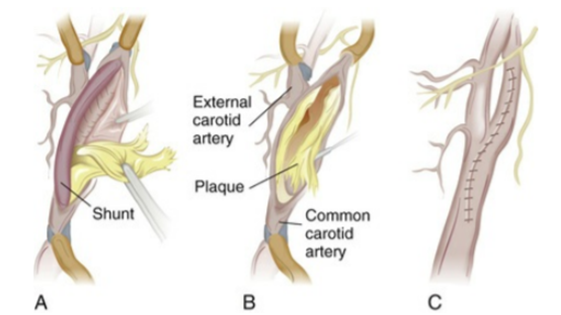
- carotid endarterectomy, extracranial-to-intracranial artery bypass, transluminal angioplasty
- Ischemic
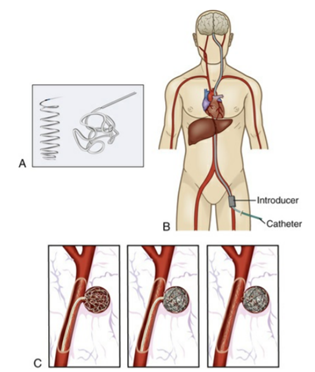
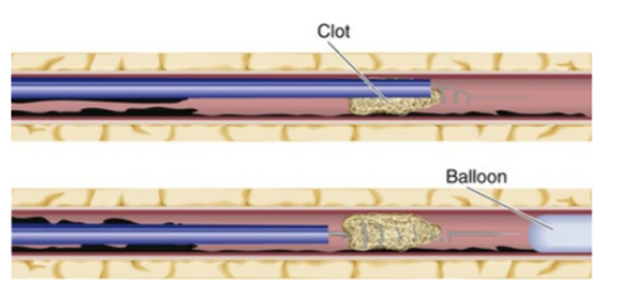
- endovascular treatment (via catheter and wire)
- Hemorrhagic
- Guglielmi detachable coil
- TIA
- Acute Care
- Prevent increased ICP
- CSF drainage
- osmotic agents; mannitol (Osmitrol)
- surgical; bone flap removal
- seizures; phenytoin (Dilantin), levetiracetam (Keppra),
- core body temperature; acetaminophen
- assessment and diagnostics within 4.5 hours of admission, airway, breathing, circulation, pt will receive (tPA) within an hour if ischemic, supplemental oxygen (if needed), monitor for neurological deficits, hydralazine, labetolol (if BP >220/120), supplemental IV fluids (monitor electrolytes to avoid hyperglycemia)
- Prevent increased ICP
- Rehabilitation
- once patient is stable
- Prevention
Diagnostic Studies
- Other: CSF analysis, Coagulation studies, CBC, Electrolytes, blood glucose, Hb A1C, Lipid profile, renal and hepatic studies
- Diagnosis of Stroke: CT scan, CT angiography, MRA, MRI
- Cardiac Assessment: Cardiac markers [Troponin, Creatine-kinase-MB, Chest radiograph, Echocardiography, Electrocardiogram]
- Cerebral Blood Flow: carotid angiography, carotid duplex scanning, cerebral angiography, digital subtraction angiography, transcranial Doppler ultrasonography
Nursing Management
- Nursing Diagnoses
- risk for aspiration, impaired physical mobility, impaired verbal communication, unilateral neglect, impaired swallowing, impaired urinary eliminatio, situational low self-esteem, decreased intracranial adaptive capacity
- Nursing Assessment
- Primary Assesment:
- Subjective Data: Past health history, medications, symptoms
- Objective Data: General, respiratory, cardiovascular, Gastro-intestinal, Urinary, Neruological, Diagnostic Test
- Secondary Assessment
- Comprehensive Neurological Exam - Level of consciousness -cognition -motor abilities -cranial nerve function -sensation -proprioception -cerebellar function -deep tendon reflexes
- Primary Assesment:
- Planning
- Patient, Nurse & Family Establish Goals:
- Maintain stable/improved LOC, attain maximum physical functioning, attain maximum self-care abilities and skills, maintain stable body functions, maximize communication abilities, maintain adequate nutrition, avoid complications of stroke, maintain effective personal and family coping skills
- Patient, Nurse & Family Establish Goals:
- Implementation
- Health Promotion, Acute Intervention,
- Manage HTN with antihypertensives, control of blood glucose in diabetes cases, treat AF with anticoagulants, smoking cessation,
- Neurological
- Monitor signs of stroke extension, use of The Canadian Neurological Scale for monitoring, changes in LOC, monitor ICP and cranial perfusion pressure
- Respiratory
- Decreased muscle strength, risk of atelectasis and pneumonia, dysphagia leading to aspiration pneumonia or airway obstruction, may require enteral feeding and/or artificial airway
- Cardiovascular
- Manage secondary cardiac diseases, Fluid retention leading to increased ICP (monitor IV fluids, fluid intake and output), Monitor cardiac rhythms, vitals, pulmonary congestion,, orthostatic hypertension, deep-vein thrombosis (ROM exercises, compression devices, low-molecular-weight heparin)
- Musculo-Skeletal
- Prevent muscular atrophy and joint contractures, ROM exercises, positioning, joints positioned higher than proximal joint (prevent edema), use of slings and splints on extremities
- Integumentary
- Manage loss of sensation, repositioning (20 minutes per side), cushions, skin hygiene, mobility
- Nutrition care outlined by SLP or OT, test of gag reflex, chewing, and swallowing
- GI/Urinary
- Manage constipation with stool softeners/fibre, laxatives, suppositories, monitor fluid intake,
- prevent incontinence, limit use of catheter, adequate fluid intake, scheduled toileting
- Patient may experience aphasia, a nurse should speak in simple sentences, use calm tone, and hand gestures or assistive devices
- Homonymous hemianopia/neglect syndrome may effect patients ability to interact with the environment
- Evaluation
- Ambulatory & Home Care
- Interdisciplinary and family-centered
- Eating, toileting, and walking, prevention of additional muscle loss, muscle spasticity and regaining voluntary control, balance training, posture control, use of walkers, wheelchairs, or splints
- Monitor patients weight and activity level, signs of malnutrition/dehydration, use of assistive devices. Regular bowel elimination, possibly with the use of stool softener/suppository. Assess for urinary retention, reduction in the need for incontinence products
- Sensory-perceptual deficits require a clear environment and increased use of paralyzed side
- Affect and coping should be monitored look for signs of maladjustment, Patient should begin reintegrating into community
- Ambulatory & Home Care
- Nursing Diagnoses
Clinical Manifestations
- Motor Function
- Communication:
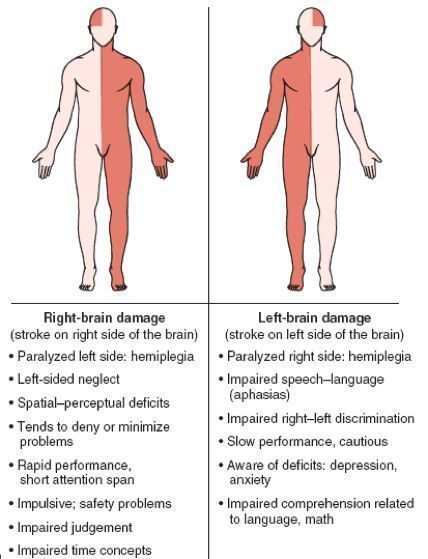
- Aphasia
- expressive aphasia, receptive aphasia, anomic aphasia and global aphasia
- Dysarthria
- Aphasia
- Mood and Affect: exaggerated or unpredictable emotional responses, frustration due to mobility and communication deficits, depression associated with body image and loss of independence
- Spatial-Perceptual: Alterations
- Typically associated with right-brain stroke
- Incorrect perception of self & illnnes, unilateral neglect, agnosia, apraxia
- Typically associated with right-brain stroke
- Elimination (temporary)
- Urination & BM: frequency, urgency, incontinence and constipation.
- Patient & Caregiver Teaching Guide
- Motor Function
Imagens e arquivos do mapa
Informações
- Descrição
- Mapa Mental sobre Stroke, criado por Aviva Doc em 27-03-2020.
- Criado por
- Aviva Doc
- Visualizações
- 10
- Histórico
-
- Criado por Aviva Doc · 26 mar 2020
- Copiado por Ella A · 27 mar 2020
- Copiado por Aviva Doc · 27 mar 2020
- Avaliação