Mapa mental
Force
Conteúdo do mapa
Force
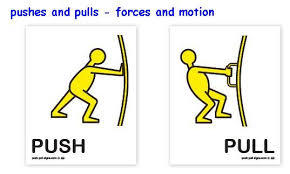
A push or a pull
- Described by its strength and direction in which it acts
- Strength and direction can be represented by an arrow which points in the direction of a force, and the length of the are shows the strength of the force, the longer the stronger
- Strength measured in the SI unit called newton (N) named after Isaac Newton
- Strength and direction can be represented by an arrow which points in the direction of a force, and the length of the are shows the strength of the force, the longer the stronger
- Described by its strength and direction in which it acts
Net force
- The combination of all forces acting on an object
- Determines whether an object moves and which direction it moves
- Balanced forces
- Equal forces acting on an object in opposite directions, there is NO net force
- No change in the object's motion
- Equal forces acting on an object in opposite directions, there is NO net force
- Unbalanced forces
- Whenever the forces on an object are unbalanced, there is A net force
- Change in the object's motion
- Whenever the forces on an object are unbalanced, there is A net force
- The combination of all forces acting on an object
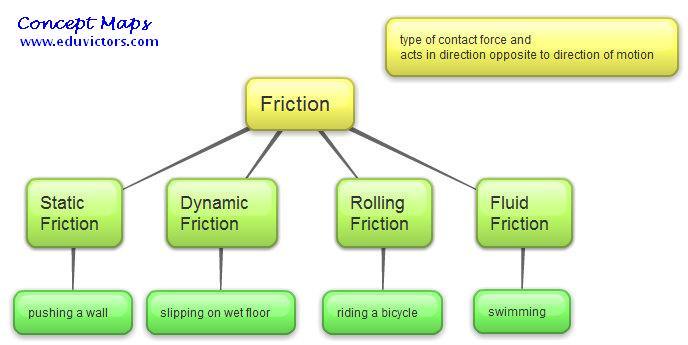
Friction
- The force that two surfaces exert on each other when they rub against each other
- The strength of the force of friction depends on two factors
- How hard the surfaces push together
- Types of surfaces involved
- The strength of the force of friction depends on two factors
- Four types of friction
- Static Friction
- Friction that acts on objects that are not moving
- Sliding Friction
- Two solid surfaces slide over each other
- Rolling Friction
- When an object rolls across a surface
- Fluid Friction
- When a solid object moves through a fluid
- Static Friction
- The force that two surfaces exert on each other when they rub against each other
Gravity
- A force that pulls objects towards each other
- The strength of the gravitational attraction between objects depends on two factors
- Mass
- Measure of the amount of matter in an object
- Weight is the force of gravity on a person or object on the surface of a planet
- More mass greater gravitational pull
- Measure of the amount of matter in an object
- Distance
- Less distance greater gravitational pull
- Mass
- The strength of the gravitational attraction between objects depends on two factors
- Universal Gravitation
- Law made by Newton that stated force of gravity acts between all objects in the universe
- Isaac Newton
- Free Fall
- When the only force acting on an object is gravity, the object is said to be in free fall
- In free fall the force of gravity is unbalanced, which causes an object to accelerate
- All objects in free fall accelerate at the same rate regardless of masses
- It does not seem like it because all objects falling through air experience air resistance
- Air resistance is a fluid friction
- It does not seem like it because all objects falling through air experience air resistance
- Terminal Velocity
- The greatest velocity a falling object reaches
- All objects in free fall accelerate at the same rate regardless of masses
- Projectile
- An object object that is thrown is called a projectile
- A force that pulls objects towards each other
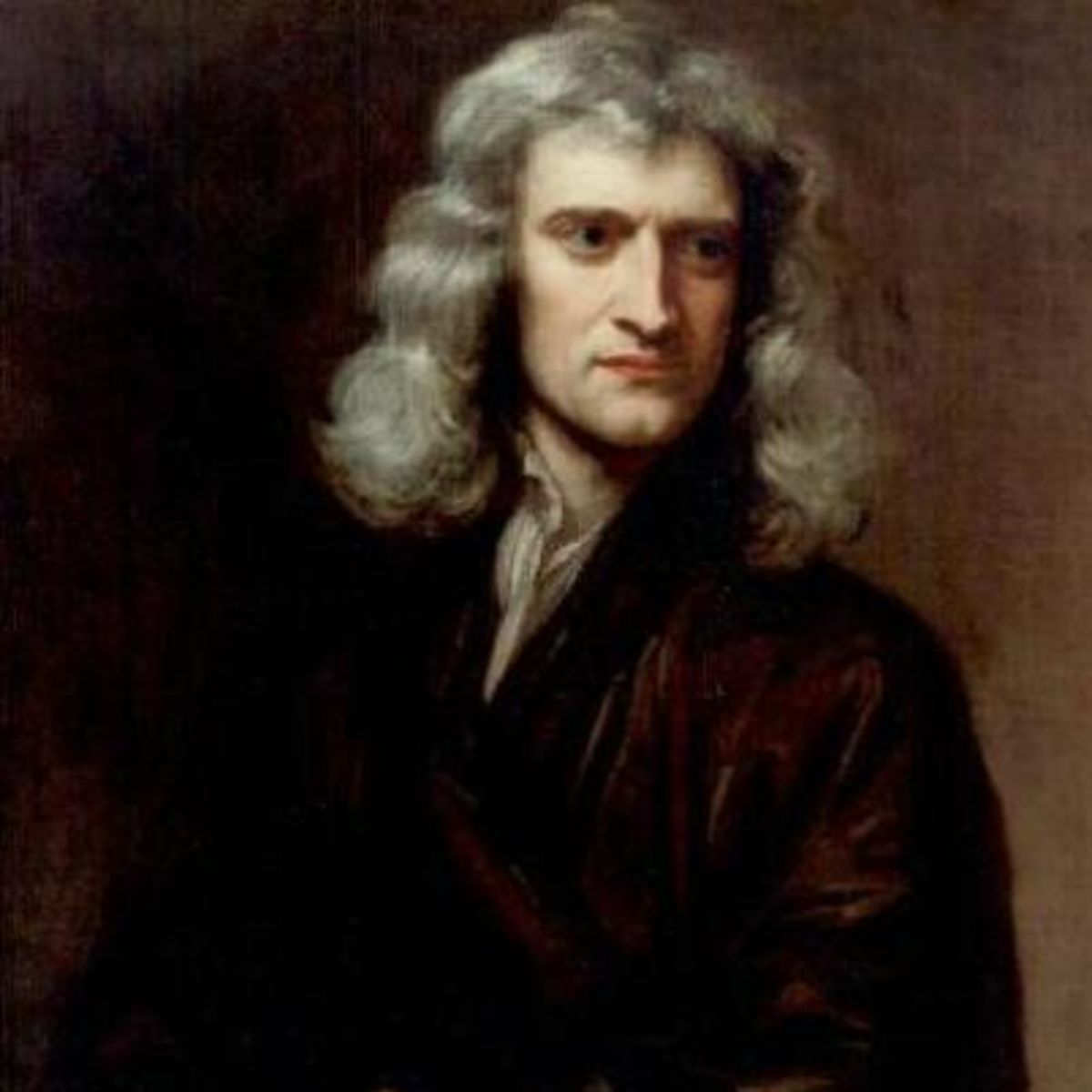
Isaac Newton
- Newton had three laws of motion
- The Second Law of Motion
- The second law states that acceleration depends on the object's mass and on the net force acting on the object
- Acceleration= Net Force/ Mass
- The second law states that acceleration depends on the object's mass and on the net force acting on the object
- The Third Law of Motion
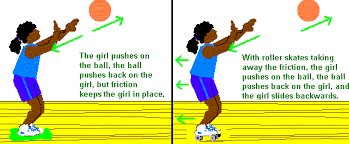
- The third law states that if one object exerts a force on another object, then the second object exerts a force of equal strength in the opposite direction on the first object
- Basically meaning for ecery action there is an equal but opposite reaction
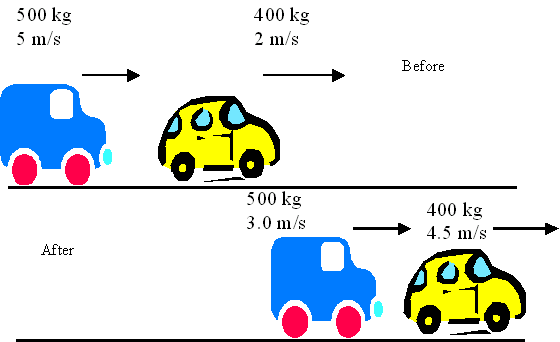
- Momentum
- What Newton called "quantity of motion", it is a characteristic of a moving object related to the mass and velocity of the object
- Momentum=Mass x Velocity
- Law of conservation of momentum
- The total momentum of any group of objects remains the same, or is conserved, unless outside forces act on the objects
- What Newton called "quantity of motion", it is a characteristic of a moving object related to the mass and velocity of the object
- The third law states that if one object exerts a force on another object, then the second object exerts a force of equal strength in the opposite direction on the first object
- The First Law of Motion
- The first law states that an object at rest will remain at rest, and an object moving at a constant velocity will continue moving at a constant velocity, unless it is acted upon by an unbalanced force
- This law is also called the law of inertia
- Inertia is the tendency of an object to resist a change in motion
- Inertia depends on mass
- Inertia is the tendency of an object to resist a change in motion
- This law is also called the law of inertia
- The first law states that an object at rest will remain at rest, and an object moving at a constant velocity will continue moving at a constant velocity, unless it is acted upon by an unbalanced force
- The Second Law of Motion
- Newton had three laws of motion