
Mapa mental
Atomic Models
Conteúdo do mapa
Atomic Models
John Dalton's atomic model
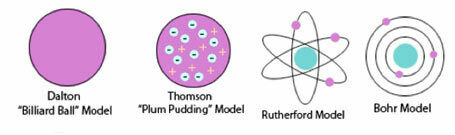
- John Dalton came up with the idea that all matter is made up of very small things. He called these particles atoms and formed an atomic theory. In this theory he states that:
- All matter is made of atoms. Atoms are indivisible and indestructible All atoms of a given element are identical in mass and properties. Compounds are made up of a combination of two or more different types of atoms. A chemical reaction is a rearrangement of atoms.
- John Dalton came up with the idea that all matter is made up of very small things. He called these particles atoms and formed an atomic theory. In this theory he states that:
Rutherford's model of the atom
- Rutherford proposed that atoms have a central nucleus where the largest percentage of its mass is found. Furthermore, according to this theory, this nucleus has a positive electric charge and is orbited by particles with the opposite charge and smaller size (electrons).
- Rutherford was the first to suggest that Thomson's raisin pudding model was incorrect. There are still some important ones problems with this model.
- Rutherford proposed that atoms have a central nucleus where the largest percentage of its mass is found. Furthermore, according to this theory, this nucleus has a positive electric charge and is orbited by particles with the opposite charge and smaller size (electrons).
Bohr's model of the atom
- Bohr proposed for the hydrogen atom, a nucleus formed by a positive particle, and revolving around it, an electron.
- The normally occupied energy level of the electron is called the ground state. The electron can move to the less stable level by absorbing energy. This higher energy level is called the excited state. The electron can return to its original level by releasing the energy.
- Bohr proposed for the hydrogen atom, a nucleus formed by a positive particle, and revolving around it, an electron.
J.J. Thomson's atomic model
- In this model, atoms were known to consist of negatively charged electrons, however the atomic nucleus had not been discovered yet. Thomson knew that atom had an overall neutral charge. He thought that there must be something to counterbalance the negative charge of an electron.
- He came up with an idea that negative particles are floating within a soup of diffuse positive charge. His model is often called the plum pudding model, because of his similarity to a popular English dessert.
- In this model, atoms were known to consist of negatively charged electrons, however the atomic nucleus had not been discovered yet. Thomson knew that atom had an overall neutral charge. He thought that there must be something to counterbalance the negative charge of an electron.
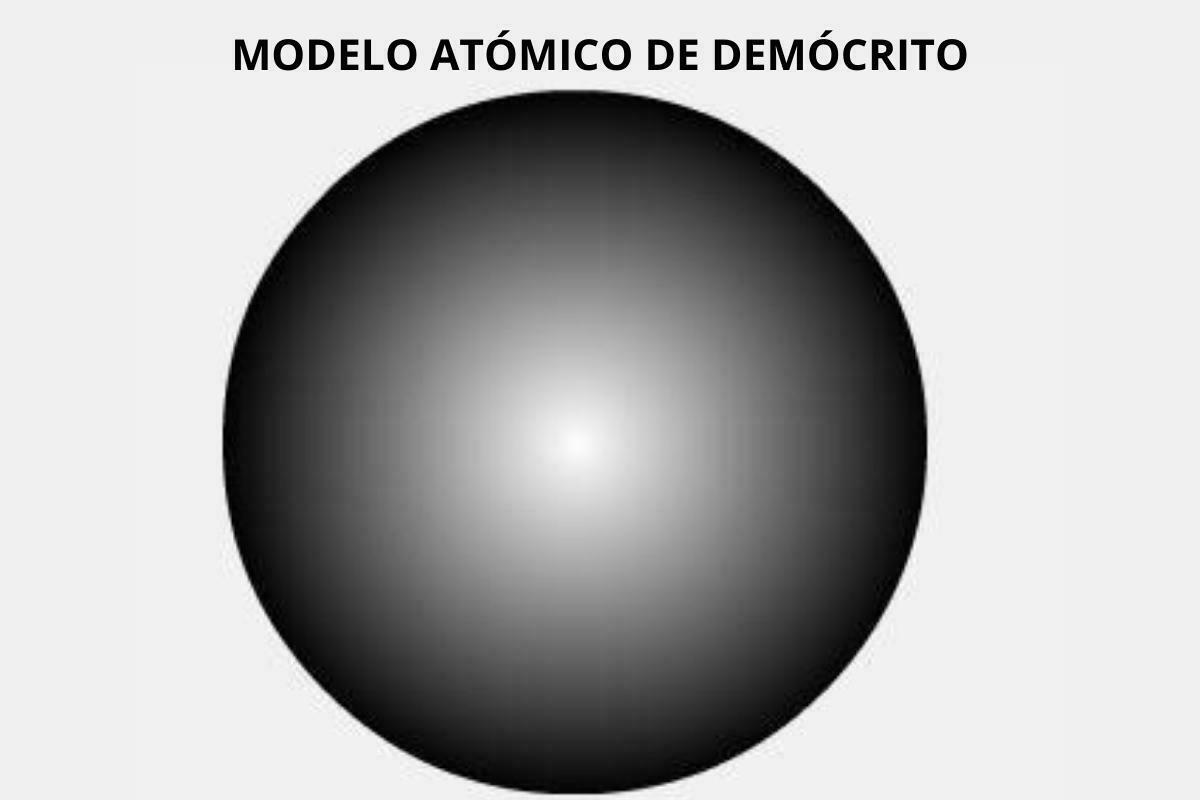
Democritus Atomic model
- Democritus proposed that the world was made up of very small particles indivisible, eternally existent, homogeneous and incompressible, whose The only differences were in shape and size. never inner workings.
Imagens e arquivos do mapa
Informações
- Descrição
- Segundo Física Mapa Mental sobre Atomic Models, criado por Danna Selene Ibarra Ayala em 21-05-2023.
- Criado por
- Danna Selene Ibarra Ayala
- Visualizações
- 11
- Avaliação