Mapa mental
Aphasia
Conteúdo do mapa
Aphasia
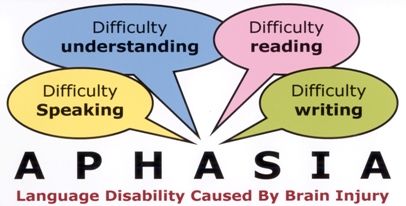
Aphasia is a language disorder that negatively affects a person's ability to talk, understand the spoken word and also their reading and writing
- Broca's Aphasia (expressive) When a stroke injures the frontal regions of the left hemisphere, different kinds of language problems can occur. This part of the brain is important for putting words together to form complete sentences. Injury to the left frontal area can lead to what is called Broca’s aphasia.
- Survivors with Broca's aphasia: Can have great difficulty forming complete sentences. May get out some basic words to get their message across, but leave out words like “is” or “the.” Often say something that doesn’t resemble a sentence. Can have trouble understanding sentences. Can make mistakes in following directions like “left, right, under, and after.”
- Wernicke's Aphasia (receptive) People with serious comprehension difficulties have what is called Wernicke’s aphasia
- Often say many words that don’t make sense. May fail to realize they are saying the wrong words; for instance, they might call a fork a “gleeble.” May string together a series of meaningless words that sound like a sentence but don’t make sense. Have challenges because our dictionary of words is shelved in a similar region of the left hemisphere, near the area used for understanding words.
- Conduction a type of fluent aphasia with a prominent impairment with repetition. Damage typically involves the arcuate fasciculus and the left parietal region. The patient may be able to express him- or herself fairly well, with some word-finding issues, and comprehension can be functional. However, the patient will show significant difficulty repeating phrases, particularly as the phrases increase in length and complexity and as they stumble over words they are attempting to pronounce. This type of aphasia is rare.
- Anomic A mild form of aphasia. The most prominent difficulty is in word-finding, with the person using generic fillers in utterances, such as nonspecific nouns and pronouns (e.g., "thing"), or circumlocution, where the person describes the intended word. Comprehension and repetition of words and sentences is typically good; however, the person may not always recognize that a word they have successfully retrieved is the correct word, indicating some difficulty with word recognition.
- Transcortical Sensory: A type of fluent aphasia similar to Wernicke's with the exception of a strong ability to repeat words and phrases. The person may repeat questions rather than answer them ("echolalia").
- Transcortical Motor: A type of nonfluent aphasia similar to Broca's aphasia, but again with strong repetition skills. The person may have difficulty spontaneously answering a question but can repeat long utterances without difficulty.
- Mixed Transcortical: A combination of the two transcortical aphasias where both reception and expression are severely impaired but repetition remains intact.
- Transcortical Motor: A type of nonfluent aphasia similar to Broca's aphasia, but again with strong repetition skills. The person may have difficulty spontaneously answering a question but can repeat long utterances without difficulty.
- Broca's Aphasia (expressive) When a stroke injures the frontal regions of the left hemisphere, different kinds of language problems can occur. This part of the brain is important for putting words together to form complete sentences. Injury to the left frontal area can lead to what is called Broca’s aphasia.
Originating from the Greek word "aphatos" which means speechless
aphasia is a symptom resultant of pre-existing brain damage, such as Alzheimer's disease or stroke (with over 30% of stroke victims suffering aphasia to some degree).