
Mapa mental
CHEMISTRY Y7 - Particles & Solutions
Conteúdo do mapa
CHEMISTRY Y7 - Particles & Solutions
Seperating Mixtures
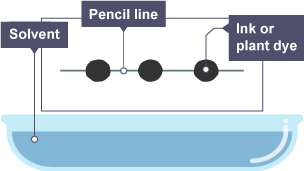
- Chromatography
- Separates different coloured substances - others are more soluble and travel further up the paper
- Separates different coloured substances - others are more soluble and travel further up the paper
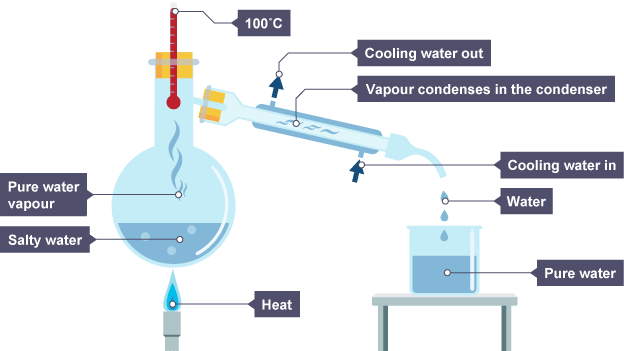
- Distillation
- Separates 2 liquids or liquid from a solution - liquid with highest boiling point evaporates then condenses into another beaker
- Separates 2 liquids or liquid from a solution - liquid with highest boiling point evaporates then condenses into another beaker
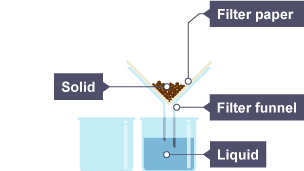
- Filtration
- Separates an insoluble solid from a liquid - liquid is the filtrate and the solid is the residue
- Separates an insoluble solid from a liquid - liquid is the filtrate and the solid is the residue
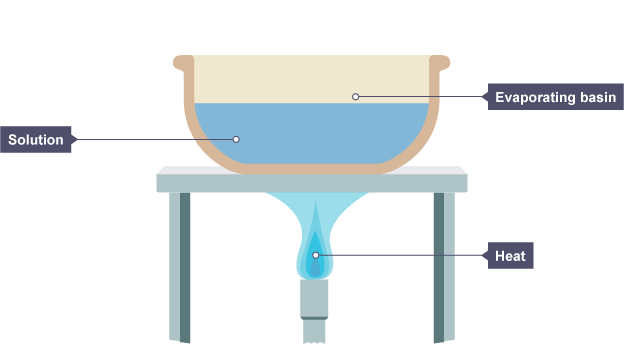
- Evaporation
- Separates a soluble solid from a liquid - liquid evaporates at a certain temperature and the result is the solid
- Separates a soluble solid from a liquid - liquid evaporates at a certain temperature and the result is the solid
- Chromatography
Solvents & Solutions
- Solvent
- A liquid substance in which a solute dissolves into
- Solute
- A solid substance that dissolves into a solvent
- Solution
- A mixture formed when a solute has dissolved into a solvent
- Soluble
- Describes a substance that will dissolve
- Insoluble
- Describes a substance that will not dissolve
- Saturated
- A solution in which no more solvent can be dissolved
- Solvent
States of Matter
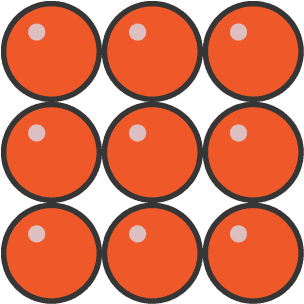
- Solid
- > Regular Arrangement > Vibrate in a fixed position > Very close (cannot be compressed) > Strong bonds
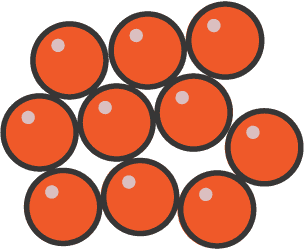
- Liquid
- > Random Arrangement > Move around (can flow) > Close (cannot be compressed) > Weak bonds
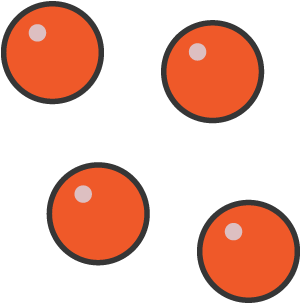
- Gas
- > Random Arrangement > Move quickly in all directions > Far apart(can be compressed) > No bonds
- Changes of State
- Losing Energy
- Condensing: Gas to Liquid
- Stop moving quickly in all directions can only move around eachother
- Freezing: Liquid to Solid
- Stop moving around eachother and only vibrate on the spot
- Condensing: Gas to Liquid
- Gaining Energy
- Melting: Solid to Liquid
- Start moving around eachother
- Evaporating/ Boiling: Liquid to Gas
- Start moving quickly in all directions
- Melting: Solid to Liquid
- Losing Energy
- Solid
Atoms, Elements, Compounds & Mixtures
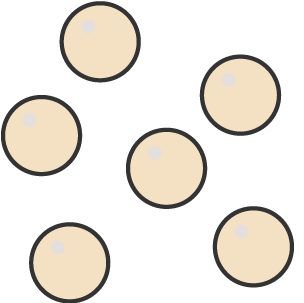
- Atoms
- Atoms are an example of composite particles and are composed 3 sub-particles: electrons, protons, neutrons.
- They are like tiny balls
- They are like tiny balls
- Atoms are an example of composite particles and are composed 3 sub-particles: electrons, protons, neutrons.
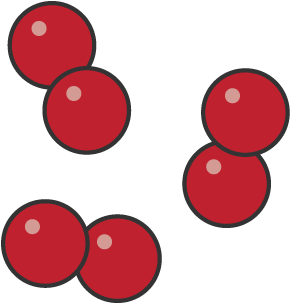
- Elements
- Atoms in a particular element are always the same as eachother
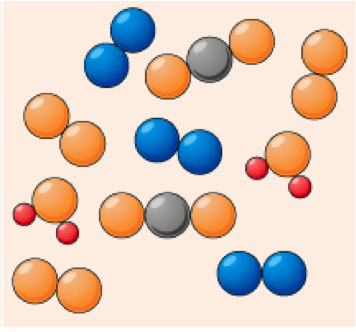
- Atoms in an element which are chemically joined are named molecules
- Oxygen Molecule: 2 oxygen atoms chemically joined
- Helium: Made of pure helium atoms
- Atoms in an element which are chemically joined are named molecules
- Atoms in a particular element are always the same as eachother
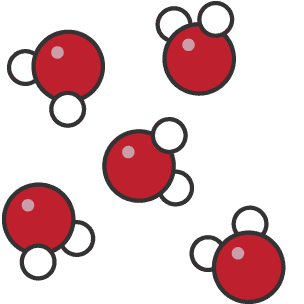
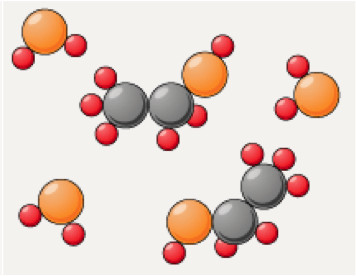
- Compounds
- Compounds contains atoms of 2+ more different elements that are chemically joined
- Water Molecule of compound: 1 oxygen & 2 hydrogen atoms chemically joined
- Compounds contains atoms of 2+ more different elements that are chemically joined
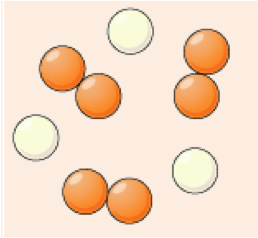
- Mixtures
- Mixtures contain 2+ more different elements or compounds that are not chemically joined together
- Mixture of Elements
- Mixture of Compounds
- Mixture of Elements & Compounds
- Mixtures contain 2+ more different elements or compounds that are not chemically joined together
- Atoms
Density
- Measure of Compactness
- Density (g/cm3) = mass / volume
- Solid
- High Density - tightly packed
- Liquid
- Slightly High Density - close together
- Gas
- Low Density - far apart
- Floating
- When object is less dense than liquid
- Sinking
- When object is more dense than liquid
·
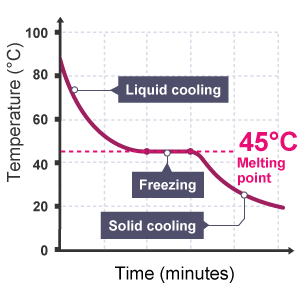
- Cooling Curve
Imagens e arquivos do mapa
Informações
- Descrição
- Includes Y7 Topics: Forces & Magnets, Cells & Reproduction, Fit & Healthy, Particles & Solutions
- Criado por
- Charisse Villarino
- Visualizações
- 290
- Tags
- Avaliação