
Mapa mental
Section 1- Principles of Chemistry (part 3)
Conteúdo do mapa
Section 1- Principles of Chemistry (part 3)
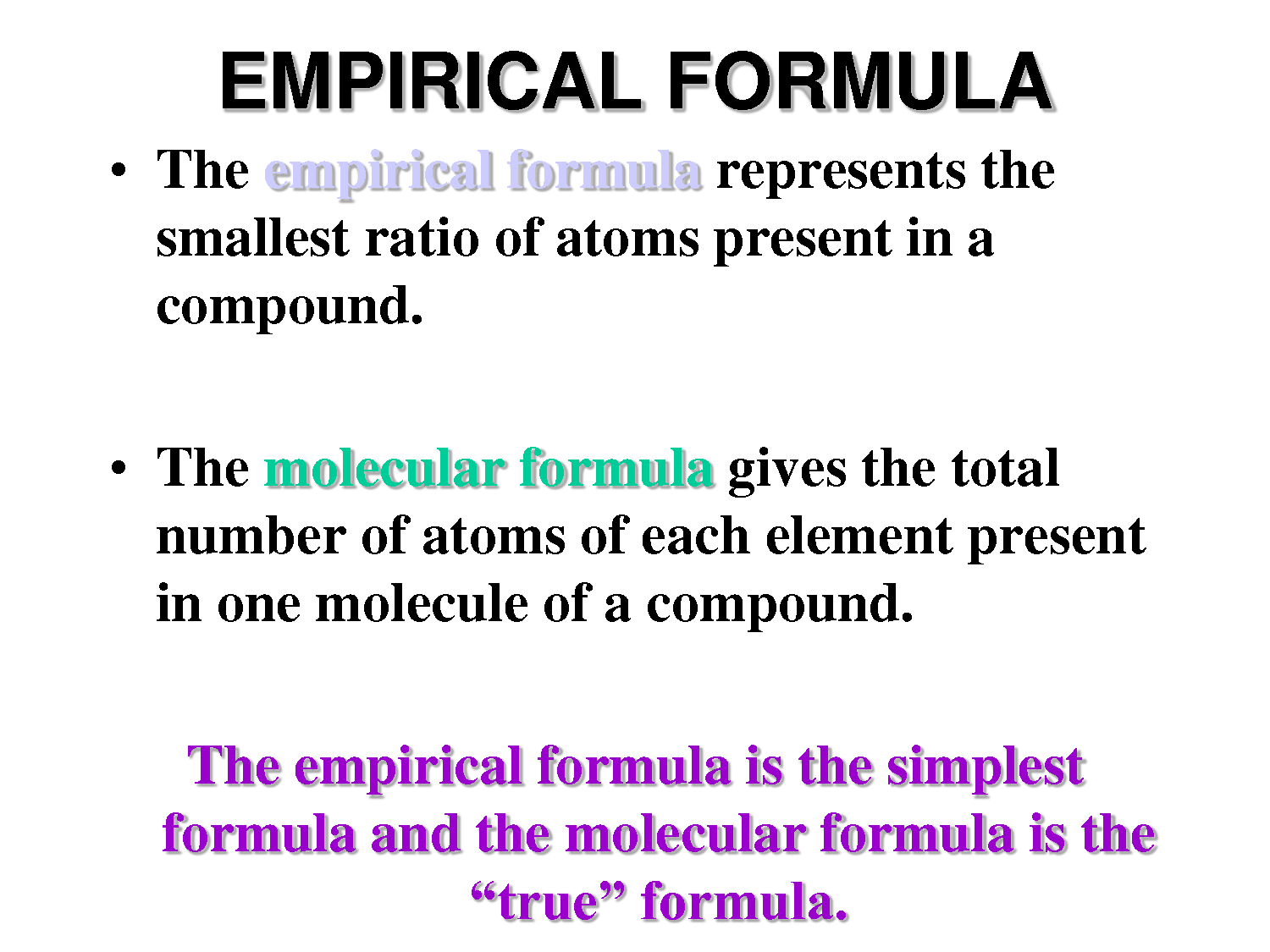
Empirical Formula
- Empiricle formula is the simplest formula of a compound or molecule that you can get.
- E.g. 'find the empiricle formula of the iron oxide used'
- Mass of empty container= 32g Mass of container+iron oxide= 96g Mass of container+iron= 76.8g
- Fe= 76.8 - 32 = 44.8g
- O= 96 - 76.8 = 19.2g
- 1. find amounts of each in Q
- 2. Find their atomic mass from periodic table
- Fe= 56g
- O= 16g
- 3. Amount in Q / Atomic mass
- Fe= 44.8 / 56 = 0.8g
- O= 19.2 / 16 = 1.2g
- 4. Work out ratios
- 0.8 / 1.2 = 2/3
- 2:3
- 0.8 / 1.2 = 2/3
- 5. Apply it to the empiricle formula
- Fe2O3
- Mass of empty container= 32g Mass of container+iron oxide= 96g Mass of container+iron= 76.8g
Calculating masses in reactions
- 1. Write out the balanced equation
- 2Mg + O2 --> 2MgO
- Q= Calculate the maximum mass of magnesium oxide that could be produced in the reaction when 10g of magnesium is burnt in air.
- 2. For the bit you want (in Q), put a ? under it and work out all relative formula masses. Then divide the known side by amount in Q (10) and do the same with the answer to the unknown.
- 2Mg= 48g O2= 32g 2MgO= 80g
- 80 / 4.8= 16.67g
- (put ? under this as 2MgO is the unknown in the Q)
- 48 / 10= 4.8
- (10 from Q)
- 80 / 4.8= 16.67g
- 2Mg= 48g O2= 32g 2MgO= 80g
- Percentage Yield= actual yield (g) / theoretical yield (g) x100
- 1. Write out the balanced equation
Moles
- The mole is simply the name given to a certain number
- a mole= 602, 300, 000, 000, 000, 000, 000, 000 or 6.023 x 10^23
- Mr= compound relative atomic mass Ar= element relative atomic mass
- Carbon has an Ar of 12, so one mole of carbon weighs exactly 12g
- Nitrogen gas has an Mr of 28 (2x14) so one mole of N2 weighs exactly 28g
- One mole of an atom or molecules of any substance will have a mass in grams equal to the relative formula mass (Ar or Mr) for that substance.
- Number of Moles=
- Mass in g (of element or compound) ------------------------------------------------------------- Mr (of element or compound)
Water of Crystalisation
- All solid salts consist of a lattice of positive and negative ions
- In some salts, water molecules are incoorperated in the lattice too
- Salts can be anhydrous (doesn't contain water) or hydrated (contains water)
- In some salts, water molecules are incoorperated in the lattice too
- A student removed the water of crystalisation from MgSO4xH2O to produce anhydrous salt MgSO4.
- Mass of empty crucible= 42.000g Mass of crucible+MgSO4xH2O= 45.210g Mass of crucible+MgSO4= 43.567g
- Calculate mass of hydrated salt MgSO4xH2O: 45.210 - 42= 3.21g
- Calculate the mass of the anhydrous salt MgSO4: 43.567 - 42= 1.567 3.21 - 1.567= 1.643g
- Work out the value of x in the formula MgSO4xH2O
- (Q weights) MgSO4= 1.567g
- (Periodic Table) 24+32+16+16+16= 120g
- (ratio) 1.567 / 120 = 0.013
- 1:7 ---> x=7
- (ratio) 1.567 / 120 = 0.013
- (Periodic Table) 24+32+16+16+16= 120g
- (Q weights) H2O= 1.643g
- (periodic Table) 1+1+16= 18g
- (ratio) 1.643 / 18 = 0.091
- 1:7 ---> x=7
- (ratio) 1.643 / 18 = 0.091
- (periodic Table) 1+1+16= 18g
- (Q weights) MgSO4= 1.567g
- Mass of empty crucible= 42.000g Mass of crucible+MgSO4xH2O= 45.210g Mass of crucible+MgSO4= 43.567g
- All solid salts consist of a lattice of positive and negative ions
Moles and concentration
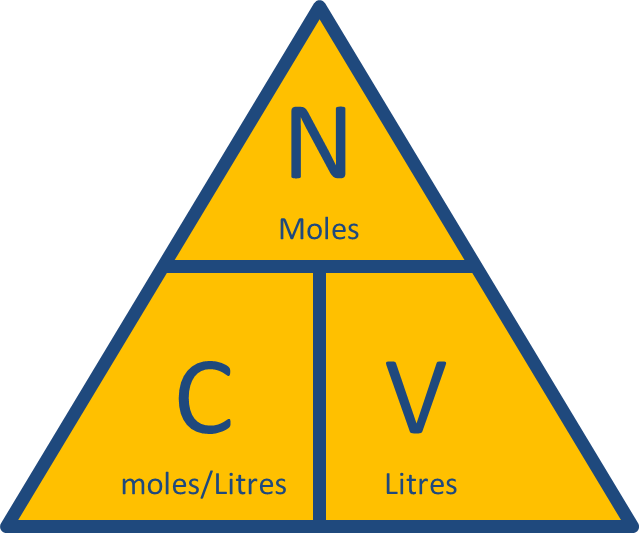
- Concentration is the amount of stuff per unit of volume
- Concentration= no. of moles / volume
- E.g. What's the concentration of a solution with 2 moles of potassium iodide in 500cm3?
- 2 moles of potassium iodide and 500cm3= 0.5 sm3
- Concentration= 2 / 0.5 = 4 mol/dm3
- 2 moles of potassium iodide and 500cm3= 0.5 sm3
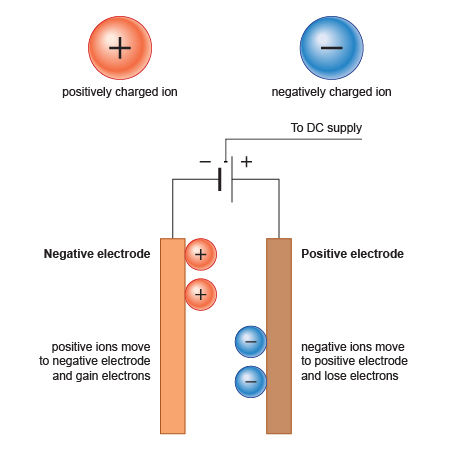
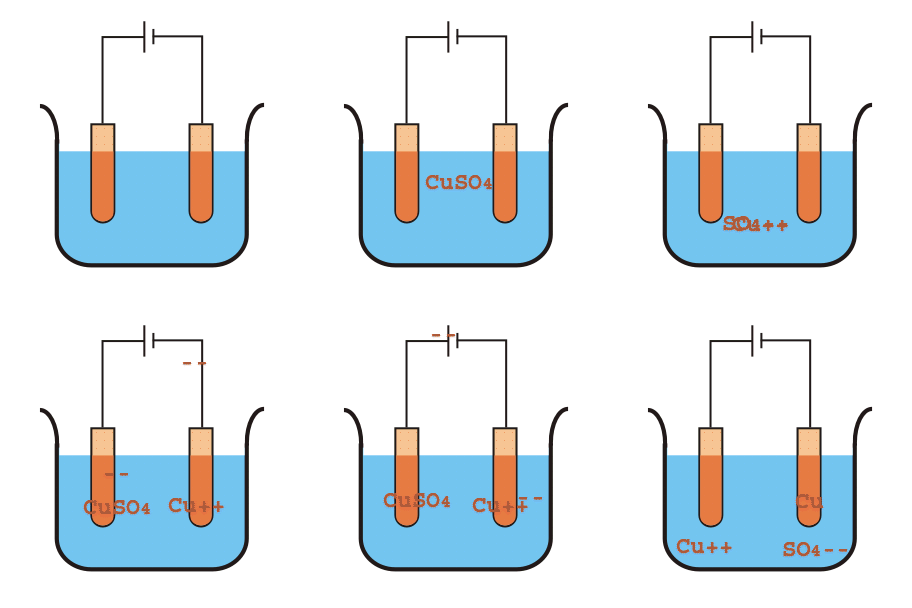
Electrolysis
- Splitting using electricity
Imagens e arquivos do mapa
Informações
- Descrição
- Cambridge IGCSE Chemistry (Section 1- Principles of Chemistry) Mapa Mental sobre Section 1- Principles of Chemistry (part 3), criado por beccalaw7 em 07-06-2014.
- Criado por
- beccalaw7
- Visualizações
- 63
- Avaliação