
Notas
Solutions, Concentration and Limestone
Conteúdo das notas (2)
Página 1
When a substance is dissolved in a suitable liquid a solution is formed
- substance that is dissolved = solute
- substance that dissolves solute = solvent
there is a limit to how much solute can be dissolved in a particular solvent (amount varies with temperature)
- when a solvent has dissolved as much solute as it can it is saturated
solubility of a substance depends on:
- nature of solute
- nature of solvent
- temperature
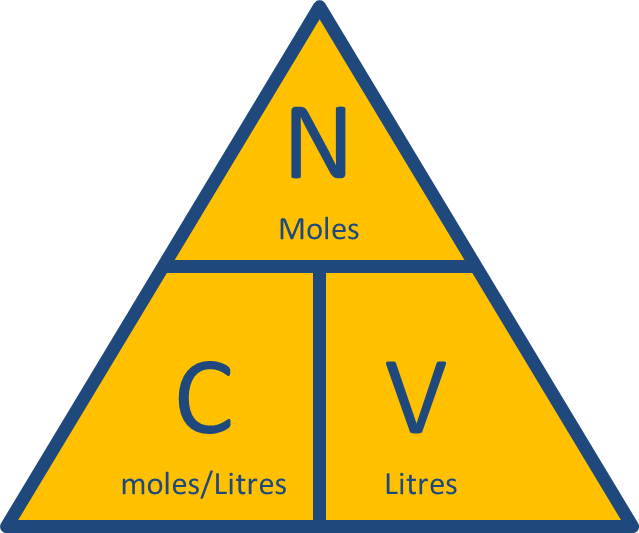
litres = dm3
number of moles/molarity = volume in dm3
1dm
1dm3 = 1000cm3
1cm3 = .001dm3
if
if given mass of solute use molar mass to figure out how many moles there are
then use the volume or molarity to figure out the unknown molarity/volume
don't forget about empirical formula when figuring out how many moles there are
- form of calcium carbonate
- other forms: chalk, marble, calcite
- has many uses and can be converted into other calcium compounds
Uses:
- neutralize acid soils
- stone sculptors use it because:
= it carves really well
= beautiful
= lasts for a really long time
construction:
- glass,
- concrete
- cement
Medicine
Toothpaste
Added to Bread
Vital in Extraction of Iron
Made from remains of cells of sea creatures
formed under the sea
acid + calcium carbonate = neutral solution
finding an alternative as good as limestone is difficult
calcium carbonate can be processed
decomposes into carbon dioxide and calcium oxide
calcium oxide is used in the manufacturing of steel
Rea
1. Calcium Carbonate is heated
= CaO (+ CO2)
2. Water is added to the product
CaO + H2O = Ca(OH)2
3. Carbon dioxide is bubbled through the limewater
Ca(OH)2 + CO2 = CaCO3 + H2O
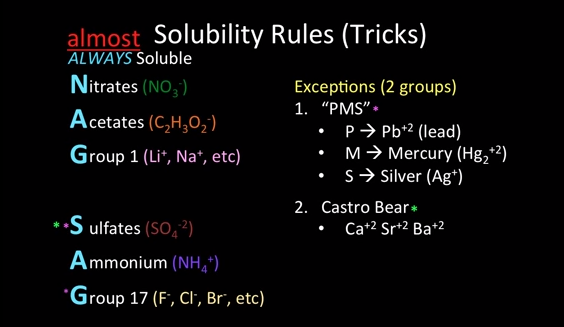
First, memorize that all common Group 1A metal ionic compounds (that which contain Li, Na, K, Rb, or Cs) are soluble.
First, memorize that all common Group 1A metal ionic compounds (that which contain Li, Na, K, Rb, or Cs) are soluble.
Then memorize that all common NH4 (ammonium) ionic compounds are also soluble in water. Compounds with an H+ cation (like HCl, hydrochloric acid) also tend to be soluble, as these are generally acids.
N
http://www.youtube.com/watch?v=dCIRAPzHTfA
http://www.youtube.com/watch?v=dCIRAPzHTfA
Solutions
Concentration of Solutions
Limestone
Solubility
Página 2
Informações
- Descrição
- A level Chemistry Notas sobre Solutions, Concentration and Limestone, criado por Diana BOUZID em 09-07-2018.
- Criado por
- Diana BOUZID
- Visualizações
- 8
- Tags
- Histórico
-
- Criado por ShreyaDas · 2 abr 2014
- Copiado por Diana BOUZID · 9 jul 2018
- Avaliação