
Notas
Plate Tectonics
Conteúdo das notas (1)
Página 1
Plate Tectonics
Alfred Wegener
First proposed hypothesis, 1915
Origin of continents and Oceans - 1912
Continental drift hypothesis
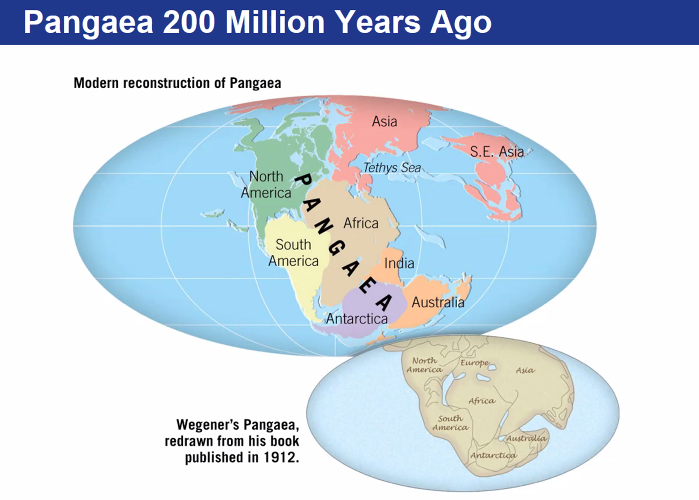
Supercontinent called Pangea began breaking apart about 200 million years ago
Continents broke through the ocean crust
An Idea before its time:
Wegener's continental drift hypothesis
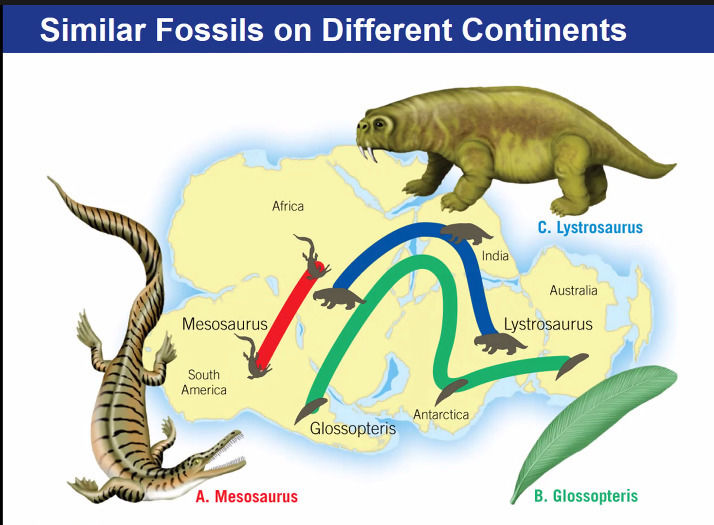
Evidence used by Wegener
Fit of South America and Africa
Fossils match across the seas
Rock types and structure math
Ancient climates
The Great Debate
Rejection of the drift hypothesis
Main objection to Wegener's proposal its inability to provide a mechanism.
Theory of Plate Tectonics
More encompassing than continental drift
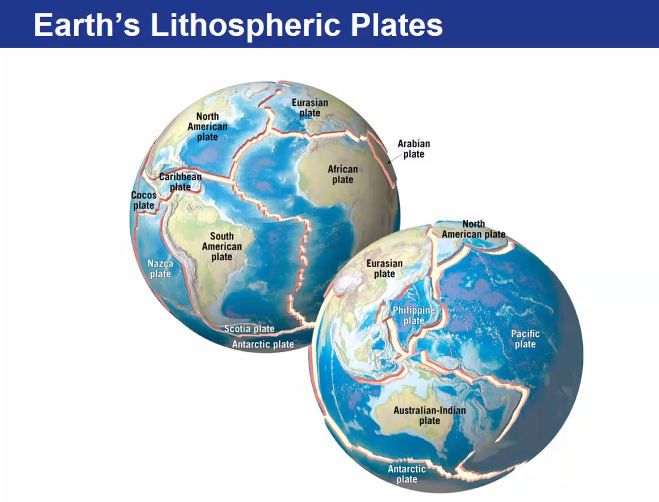
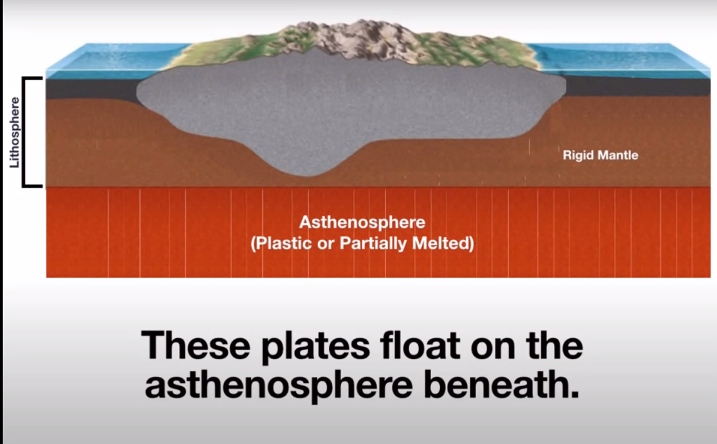
Associated with Earth's rigid outer shell
Called the lithosphere
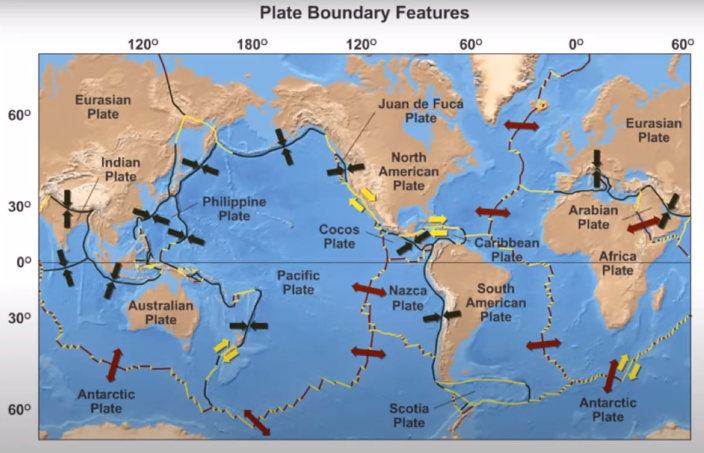
Consists of several plates
Plates are moving slowly
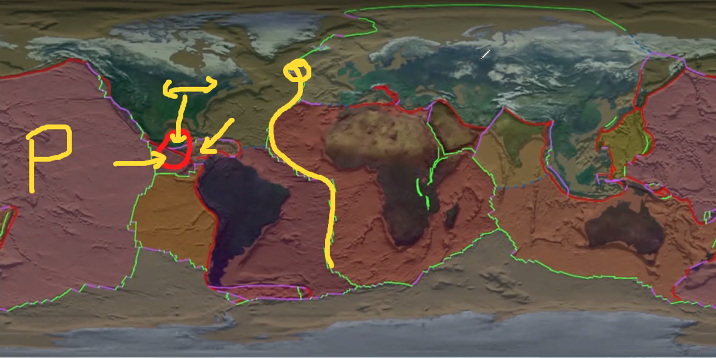
Largest plate is the pacific plate
Plates are mostly beneath the ocean
Theory of Plate Tectonics
Asthenosphere
Exist beneath the lithosphere
Hotter and weaker than lithosphere
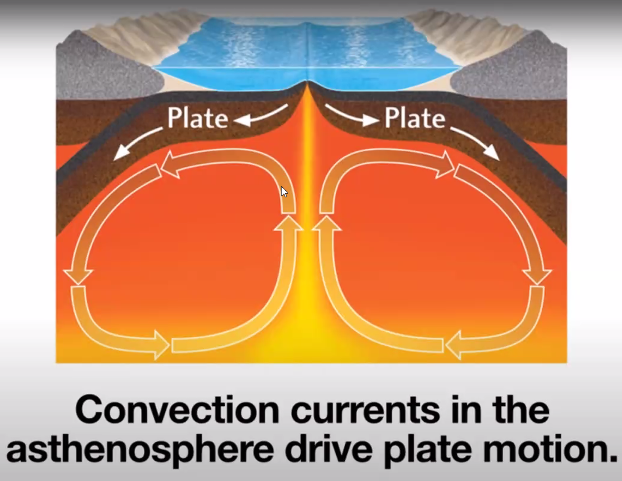
Allows for motion of litosphere
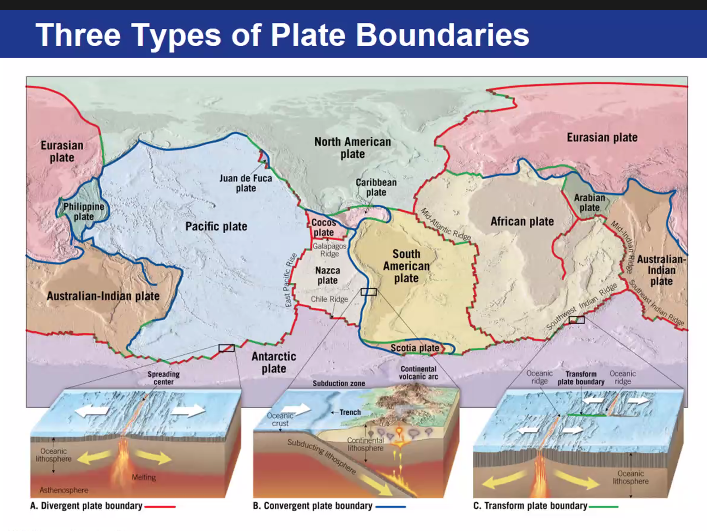
Plate Boundaries
Divergent plate bundaries (constructive margins)
Two plates move apart
Mantle material upwells to create new seafloor
Ocean ridges and seafloor spreading
Oceanic ridges develop along well-developed boundaries
Along ridges, seafloor spreading creates new seafloor
Continental rifts form at spreading centers within a continent
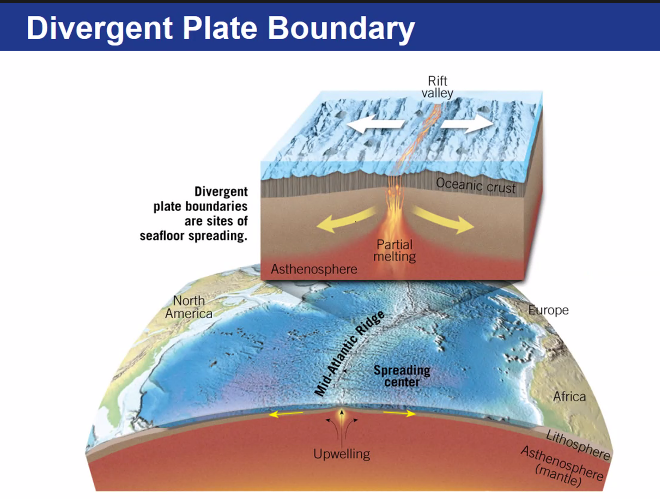
Hess proposes sea-floor spreading
1960
With the discovery of plate tectonics and the mapping of the earth into about 12 plates, plus the understanding that plates’ movement caused earthquakes, Alfred Wegener's idea of "continental drift" looked less ludicrous than his contemporaries had thought. There still seemed to be no way that continents could plow through the earth's surface on their own, but perhaps something else could explain how the land masses had once been joined.
Harry Hess was a geologist and Navy submarine commander during World War II. Part of his mission had been to study the deepest parts of the ocean floor. In 1946 he had discovered that hundreds of flat-topped mountains, perhaps sunken islands, shape the Pacific floor. The discovery of the Great Global Rift in the 1950s inspired him to look back at his data from years before. After much thought, he proposed in 1960 that the movement if the continents was a result of sea-floor spreading. In 1962, he added a geologic mechanism to account for Wegener's moving continets. It was possible, he said, that molten magma from beneath the earth's crust could ooze up between the plates in the Great Global Rift. As this hot magma cooled in the ocean water, it would expand and push the plates on either side of it -- North and South America to the west and Eurasia and Africa to the east. This way, the Atlantic Ocean would get wider but the coastlines of the landmasses would not change dramatically. (If, as Georges LeMaitre suggested for visualizing the early universe, you play the "film" of this phenomenon backwards, the continents come closer together until Brazil fits right into the Gulf of Guinea.)
Hess proved Wegener's basic idea right and clarified the mechanism that broke the once- joined continents into the seven with which we are familiar. The continents are attached to the plates and do not move independently of them. But the plates themselves shift and change shape, carrying the continents.
The age of the seafloor rock increases as you get further away from the mid-ocean ridge.
The thickness of the layer of sediments deposited on the ocean floor increases ay you get further away from the mid-ocean ridge.
Informações
- Descrição
- Notas sobre Plate Tectonics, criado por Georgina Osorio Hegel em 18-03-2021.
- Criado por
- Georgina Osorio Hegel
- Visualizações
- 9
- Avaliação