
Notas
From War to Peace 1919-1920
Conteúdo das notas (3)
Página 1
Post World War One Environment
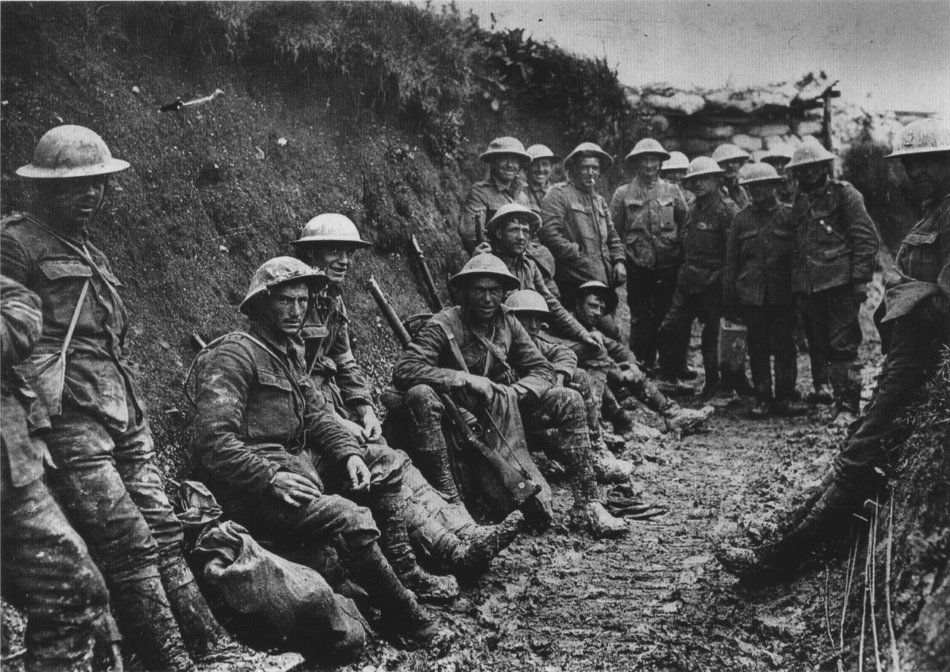
The aftermath of World War One left more than 40 million dead or injured and resulted in the need for political leaders around the world to develop measures for the prevention of war in the future.
Thus, modern politics began to move from nationalism (states acting in self-interest) to internationalism (states cooperating with each other).
This began with the discussion of post war treaties at the Paris Peace Conference in 1919.
Página 2
The Paris Peace Conference 1919-1920
Held in the Palace of Versailles just outside Paris
Negotiations lasted for period of 12 months
27 separate delegations were represented here, but none of the defeated nations were invited
Five treaties were drawn up in total - the Treaty of Versailles (Germany) and four other treaties to deal with Germany's allies (Austria-Hungry, Turkey and Bulgaria)
The 'Big Three' - Woodrow Wilson (USA President), Georges Clemenceau (French PM) and Lloyd George (British PM) made the big decisions regarding Germany
Wilson's Way Forward - 14 Points
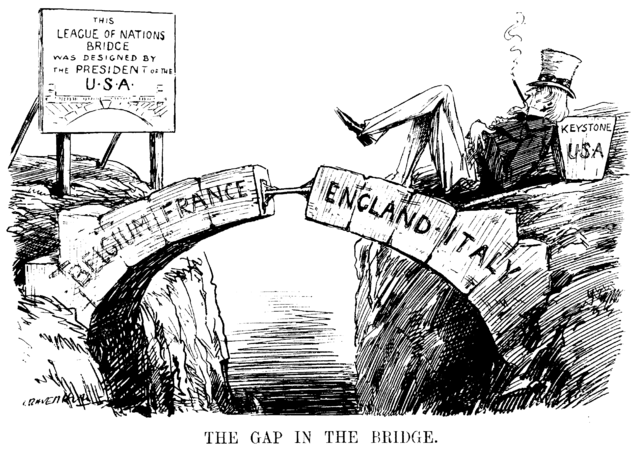
Woodrow Wilson (1856-1924) was a former university professor before becoming the president of the United States in 1912. His vision after World War One was outlined by his Fourteen Point Plan - a basis to end war justly and to avoid potential future wars. The main points were:
No secret treaties
Free trade and free access to seas in times of war and peace
Disarmament - reduce the build up of weapons
Self-determination - countries have a right to rule themselves and be independent of rule from empires
League of Nations - act as an international police force
Página 3
'The Big Three' and the Treaty of Versailles
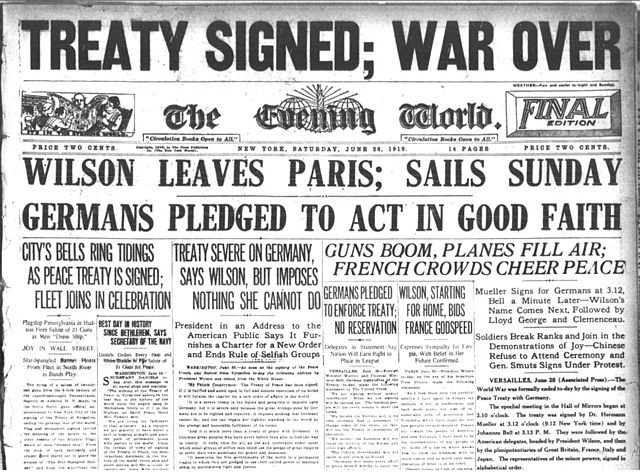
Woodrow Wilson, Georges Clemenceau and Lloyd George cooperated together to come up with a treaty to deal with Germany, although none of them were fully satisfied with the terms of the treaty. Each delegate clashed on certain matters, for example, George wanted an economically strong Germany for guaranteed reparation payments, while Clemenceau preferred the Germans remain weak for France to grow in strength. Therefore, compromises were drawn to reach the Treaty of Versailles on June 28, 1919.
Informações
- Descrição
- This study note, part of a series on the inter war period, looks at the attempts immediately post World War 1 to establish structures and agreements. There was an attempt to create a move from nationalism (states acting in self-interest) to internationalism (states cooperating with each other). We look at the Paris Peace Conference, Wilsons 14 point plan and the establishment of the Treaty of Versailles.
- Criado por
- Andrew Burke
- Visualizações
- 126
- Tags
- Avaliação