
Notas
Atomic Structure
Conteúdo das notas (6)
Página 1
Quantum Theory
Development of the Atomic Theories of Matter
Democritus - first had the theory, Greek philosopher
Dalton - revived the idea
J.J. Thompson - found positive and negative areas of the atom, using a cathode ray
Rutherford - found the nucleus, using alpha particles and gold foil (some bounced back)
Electromagnetic Spectrum
light behaves as a wave (moving through space) and a particle (interacting with matter)
as frequency increases, wavelength decreases
v = 3.0 x 10^8 m/s
v = λf
Planck's Theory
explaining line spectrums that come from heating gases
energy is absorbed/emitted in quanta (fixed amounts)
each colour of light corresponds to a quantum
higher frequency light has more energy than lower frequency light
Photoelectric Effect
when light shines on metal, electrons are ejected
requites a minimum frequency of light
light energy in photons - carries a specific amount of energy determined by frequency
photons transfer energy to electrons on surface - either all or none, one photon per electron
Página 2
The Dual Nature of Atoms
Bohr Model of Hydrogen
electrons "jump" up the quanta
when they fall down, they release quantized energy as photons of that particular wavelength (light)
problems - didn't account for repulsion between electrons
Matter Waves
matter has a dual nature, like light - exhibits wavelength
Heisenberg's Uncertainty Principle
position and momentum cannot be simultaneously measured and known exactly
Página 3
Quantum Model of the Atom
Quantum Model
models probability of location/speed of electron
The energy of electrons is quantized
Electrons exhibit wavelike behaviour
Cannot know exact position and momentum at the same time
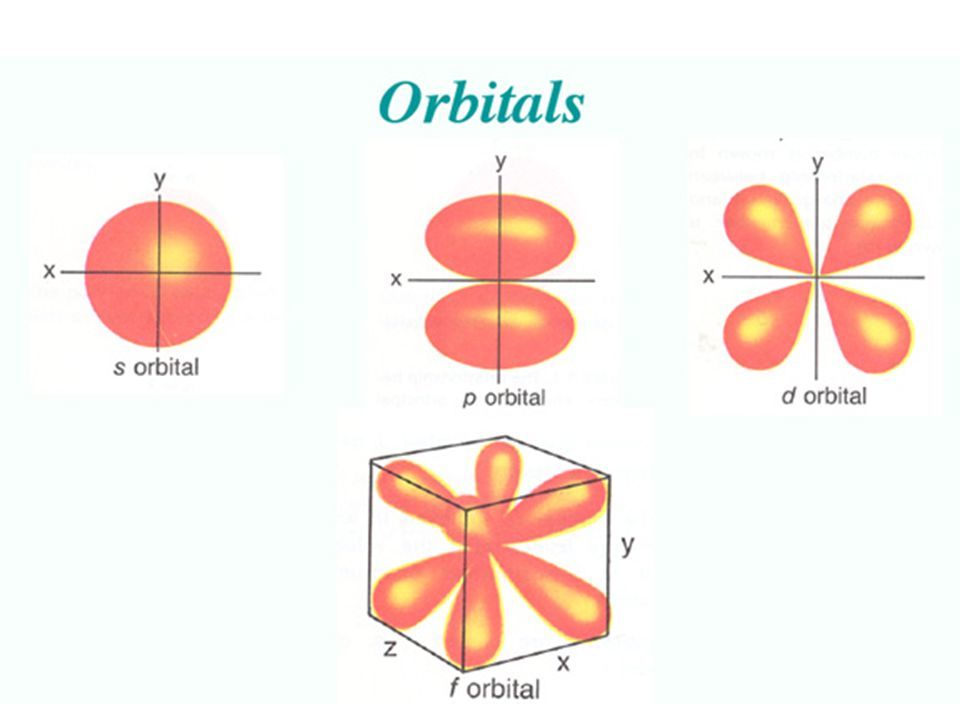
Orbitals
no precise orbits - probability of finding an electron with a given energy level in an area around the nuclues
orbit - actual path electron follows
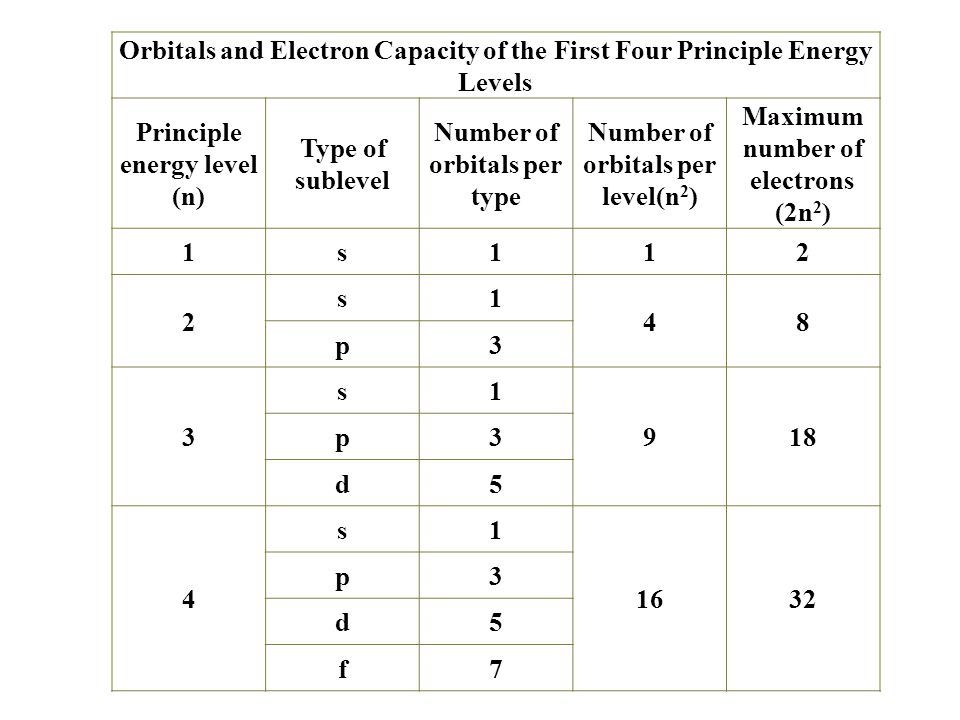
see charts/diagrams
Electron Spin
either clockwise or counterclockwise
creates magnetic field
Página 4
Electron Arrangement in Atoms
electron configuration - arrangement of electrons among the orbitals of an atom
The Aufbau Principle - electrons are added one at a time to lowest energy orbitals available
The Pauli Exclusion Principle - orbitals can hold a maximum of two electrons, must spin in opposite directions
Hund's Rule - only pair electrons once all the spots in the orbital have been filled
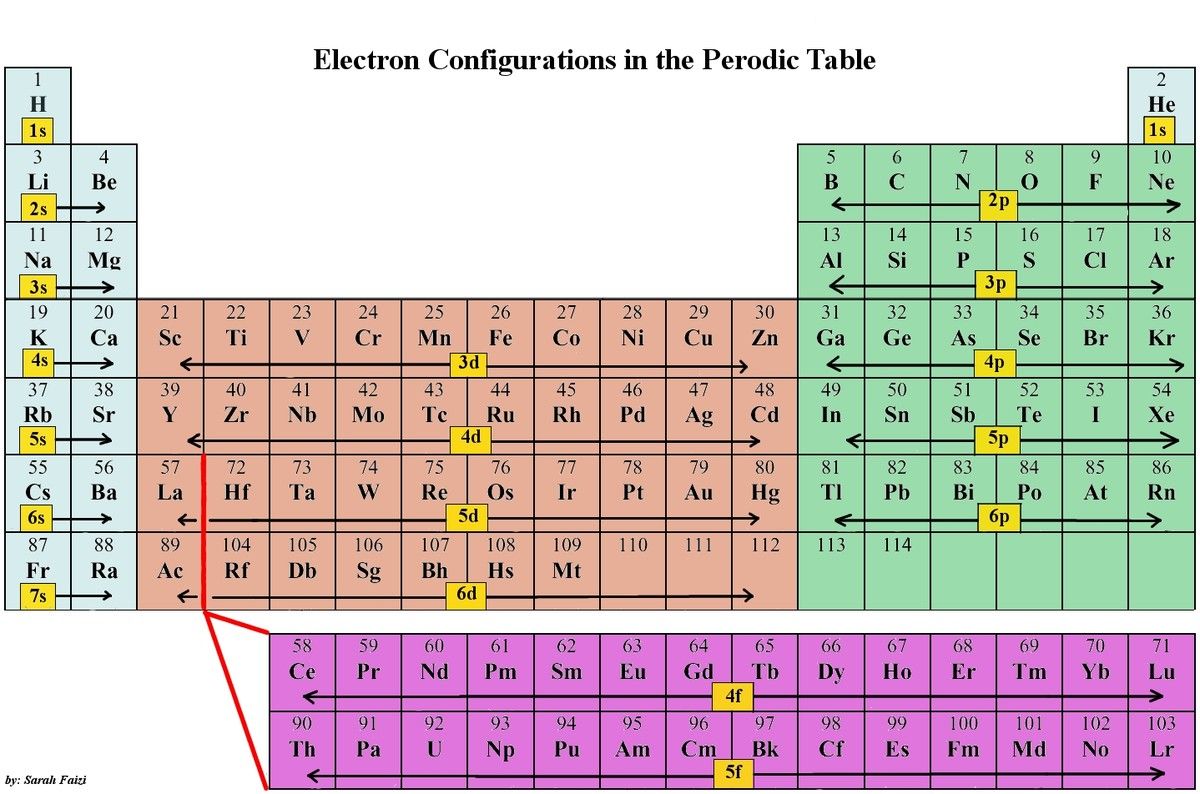
Sublevel Notation - 1s2 2s2 2p2, etc.
Página 5
Periodic Table Revisited
Basic Organization
atoms arranged in order of increasing atomic number
similar properties in vertical columns (groups); horizontal rows (periods)
Metals
all solid at room temperature, except mercury
shiny, malleable, ductile
good conductors
Non-Metals
many gases at room temperature, some solids, bromine is liquid
dull, brittle, hard or soft
poor conductors
Metalloids - some properties of each, or between
Valence Electrons
electrons that occupy the highest principal energy level are the valence electrons
elements in the same group have similar properties because the have valence electrons in similar configurations
Noble Gas Notation
atom's inner electrons are represented by the symbol for the nearest (lower) noble gas
eg. Lithium - [He]1s2
Página 6
Trends in the Periodic Table
Atomic Radius
distance from centre of radius to outermost electron
increases down - because principal energy level of outermost electrons increases - orbitals getting farther away
increases left - because amount of protons decrease, meaning weaker pull - larger radius
Ionic Size
losing electrons (positively charged) - atom becomes smaller
because - loss of valence electrons means outer orbitals are empty; loss of electrons means that there is more of a positive pull towards nucleus, less repulsive force between electrons
gaining electrons (negatively charged) - atom becomes bigger
because increase of repulsive force pushes electrons further apart
Ionization Energy
energy needed to remove one of its electrons
increases up and right, because further away from the nucleus means a weaker pull on the electrons being removed, and vice versa
every time an electron is removed, the next one is much harder
Electronegativity
how attractive an atom is to electrons
in general, increases up and right
non-polar covalent bond - sharing electrons basically equally, <0.4
polar covalent bond - one atom has a significantly higher EN than the other, causes partial chargers (delta +/-), 0.4 - 2.0
ionic - gives/takes, >2.0
Informações
- Descrição
- Quantum Theory, Electron Configuration, Periodic Trends
- Criado por
- Bronwyn Rempel
- Visualizações
- 7
- Avaliação