
Notas
HPLC - created from Mind Map
Conteúdo das notas (1)
Página 1
ADVANTAGES
DISADVANTAGES
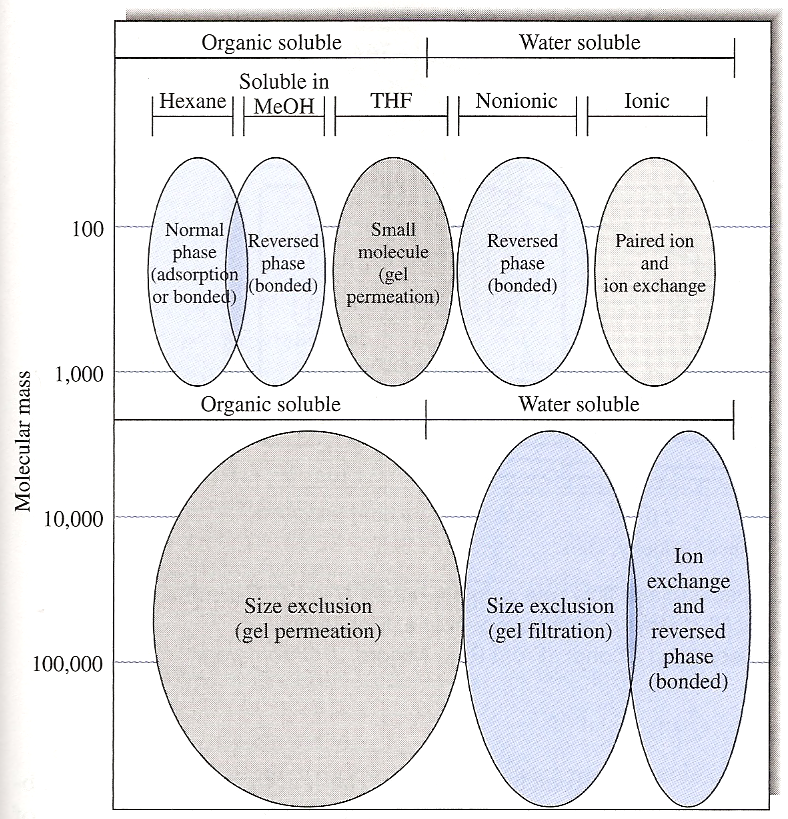
Selection of LC modes
HPLC HARDWARE
GENERAL STRUCTURE
DETECTORS
SENSITIVE
CAN BE AUTOMATED
QUANT ANALYSIS
GOOD AT SEPARATING VOLATILE/THERMALLY LABILE COMPOUNDS
WIDE RANGE OF SUBSTANCES: in/organic, metals, ions, proteins, aa,etc.
SEPARATE ON SIZE, CHARGE, POLARITY, SOLUBILITY
CHIRAL SEPARATIONS
+ WIDE RANGE OF DETECTORS
RECOVER SAMPLES
EXPENSIVE, IMPURITY FREE SOLVENT USED.
MOVING PARTS & CONNECTIONS
OPTIMAL PERFORMANCE = KEEP IT RUNNING REGULARLY
Mixing controller
Injector
Columns
Mix difft solvents in precise ratios
reqd for: ISOCRATIC= constant solvent composition. GRADIENT= changing solvent composition
mix diffnt solvents in precise ratios
make sure that solvents are miscible
loop & valve configuration
load & inject positions
flat ended syringe - manual injection
ensure the loop is entirely filled - inject sample in 1 plug (~ 3 rinses)
generally = stainless steel
typical: 5-25 cm long | 4-5 mm internal diameter | 3,5 or 10 microm dp | 40000- 60000 plates
Microbore or 'rocket'
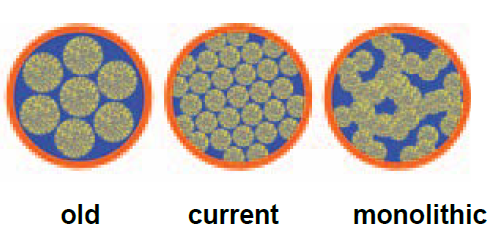
what's inside?
Monolithic (single crystal)
How do you choose?
short (30-75mm), thin (<4.6mm ID), small particles (3um) = faster
normal p.: polar stat, n-polar solvent (Si stst p.), 1:9 EtOAc:hexane mob p.
reverse p.: n-polar stat, polar solvent. (C18 stat p.), 15:85 MeOH:H2O mob p.
Polymer based, porous core, can control pore size
can run under lower pressure condition
better resolution, speed.
useful for larger mols.
partition Chrom.
adsorption chrom.
Ion Chrom
Size exclusion C. (gel permeation c.)
Affinity
Bonded Phases
OPTIMISING CONDITIONS (3 parameters)
stat. p. is a 2nd liquid immiscible w liq mob. p
nonionic, polar w low/moderate mol mass. (ionic cmpds w derivatization &ion pairing)
change mob. p. composition = enhance separation
SOLVENT STRENGTH
Normal Phase : k2/k1 = 10 ^(P'1-P'2)/2
if the ratio k2/k1 is large, need o have a big k2. if its small, - not resolved
k2: final retention factor
k1: initial "
Rev Phase: k2/k1 = 10 ^(P'2-P'1)/2
EFFECT OF MOB. P. ON α.
ION PAIR CHROM. (ANALYSTES THAT MAY EASILY IONISE) -org acids, amines.
CHIRAL SEPARATIONS
N : plate number
k : retention factor (strongly dependent upon make-up of mob. p.)
ideal range of k:2-10
complex mix: 0.5 - 20
α : can be changed by choosing diff column packing
α: selectivity factor
Strong solvent: interacts strongly w solutes (often polar)
Polarity index (P') - based upon solubility in 3 separate solvents, -a measure of relative polarity, -higher P' = stronger
Mixed solvent
P(AB)' = *AP'(A) + *BP'(B) *A= volume fraction of solvent A
manipulate chemi nature: - proton acceptor, proton donor, dipolar interactions
start to add small amt of acid or base.
in rev p. : aq solns of : THF, acetonitrile, methanol.
+ solvent modifier
2 xplanations
org salt w large org counter ion
added in small conc
counter ion pairs w analyte ion & this pair partition into stat. phase.
counter ion retained by the neutral stat. phase giving it a charge & get reversible ion-pair interactions w charged analyte
ceramic Mg silicate
cyclodextrin
Pirkle type chiral stat. phase. Works on π acceptor/ π donor interactions some H bonding.
separate chiral compounds - enantiomers
either mob/stat phase reqd to be chiral.
complexation btwn chiral resolving agent w one of the isomers results in separation.
active sites for cation exchange: sulfonate (strong acid) & carboxylic acid gp (weak)
Anionic exchangers - strongly basic tertiary amine gps / weak basic primary amine groups.
sulfonate based cationic resin equilibrated w NaOAc -injection of amines & alcohol
base materials: silica/zirconium/ organic polymer
with polymer columns: -know the pressure limitations of the packing, - packing may swell/contract in different solvents.
high mol mass sp.
packings (~10um) silica/polymer particles - a network of uniform pores
most stat. phases are crosslinked polymers
polymers may expand/contract in diffnt solvents.
Vtot = Vg + Vi + Vo
Vg= vol occupied by stat p.
Vi= vol of solvent held in pores
Vo= exclusion vol (vol solvent req to elute cmpnds too big for pores)
Vo = largest mol, Vi + Vo = smallest mols, Ve=Vo + KVi = intermediate mols (assume theres no mixing)
KVi : measure of th efraction of mols in the pores (K = Cs/Cm)
get finer separation by connecting columns in series. problems??
bond an affinity ligand to a neutral solid support
ligand reversibly and selectively bind to analyte (Ab, enz inhibitor)
mobile phase hv dual roles:
can wash out by changing ionic strength or changing pH
promote strong binding (analyte & affinity ligand)
release bound sp. when other cmpds hv been eluted
PHENYL ETHER (extremely polar aromatics)
SILICA
NITRO (aromatics & double bonds)
PHENYL HEXYL (aromatics)
SULFONIC ACID (weak bases)
QUATERNARY AMINE (nucleotides, nucleosides, organic acids)
DIOL (rev: gel filtration of peptides & proteins) (normal: = to silica, x deactivated by H2O)
CYANO (slightly polar)
AMINO (normal: alternate selectivity to silica) (rev: carbs) (ion xchange: anions & org'c acids)
IDEAL REQMNTS
3 basic types: optical, electrochemical, mass
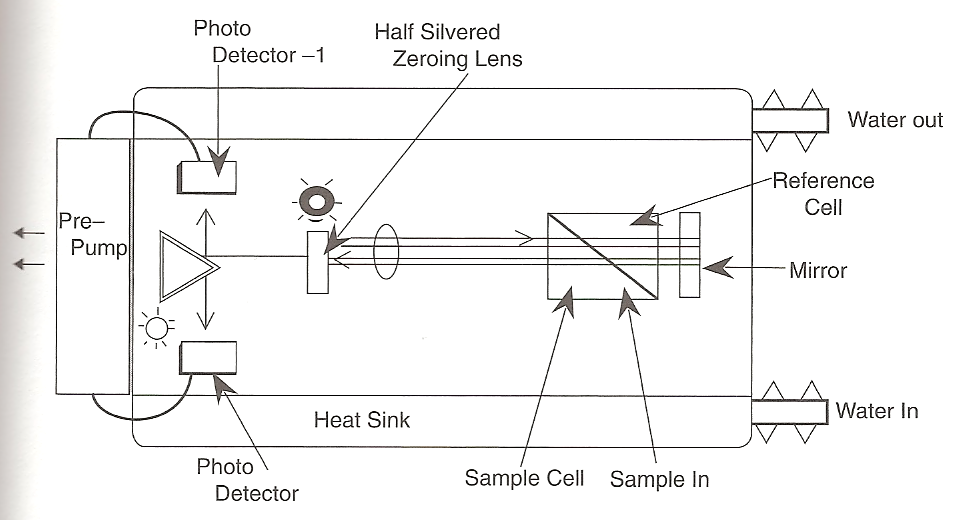
1) REFRACTIVE INDEX
2) EVAPORATIVE LIGHT SCATTERING DETECTORS (ELSD)
3) FLUORESCENCE
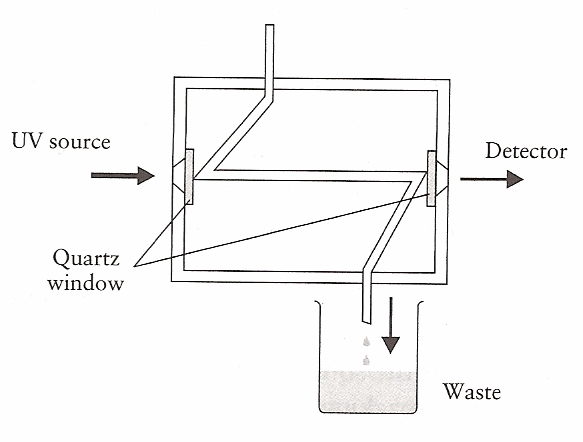
4) UV & UV-VISIBLE (190-900nm)
5) PHOTODIODE ARRAY (PDA)
6) ELECTROCHEMICAL
7) MASS SPEC
adequate sensitivity
stable & reproducible
linear response over several orders of magnitude
short response time, independent of flow rate
similarity in response to all possible analytes
non-destructive
minimum internal volume
compatible w liquid flow
changes in DENSITY when analytes comesthrough cell
sensitive to turbulence, temp, solvent changes
used w isocratic systems only
fragile flow cells
effluent nebulised into fine mist -- through laser & scattered radiation detected at right angle to laser
volatile mob. phase.
evaportn tube is heated, but temp kept low - labile cmpds not degraded
sample excited by radiation from source (Hg, Xe, laser)
resulting fluorescence detected at 90° to excitn beam
can derivatise sample (add fluoro tag)
filter variable, fixed wavelength, wavelength variable
UV-VIS needs 2 lamps: a UV lamp - Hg, a visible lamp - tungsten
individual photosensitive elements : small silicon photodiodes (consist of a reversed-biased pn junction
4 electrochemical techniques: amperometry, voltammetry, coulometry, conductometry
Specific applications
respond to sp that can be red/ox
output is electron flow generated
3 electrodes : working, auxillary, reference
common ionisation sources : electrospray ionisation (ESI), Atmospheric Pressure Chemical Ionisation (APCI)




Informações
- Descrição
- Chemistry Notas sobre HPLC - created from Mind Map, criado por nur zahidah em 14-12-2019.
- Criado por
- nur zahidah · dez 2019
- Atualizado
- 14 dez 2019
- Visualizações
- 1
- Histórico
-
- Criado por chaz_id89 · 14 dez 2019
- Copiado por nur zahidah · 14 dez 2019
- Copiado para Nota por nur zahidah · 14 dez 2019
- Avaliação