
Quiz
Biological Molecules
Crie uma conta grátis para terminar este quiz
Salve seu progresso e veja sua nota final.
Já tem uma conta? Inicie sessão
Perguntas do quiz (20)
1Which of the following terms best describes this molecule?
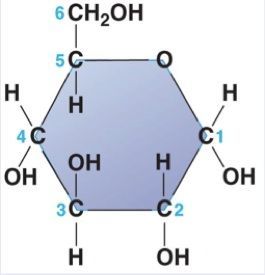
- AAmino Acid
- BMonosaccharide
- CMonomer
- DMore than one of these terms is appropriate
2What is the function of this molecule?
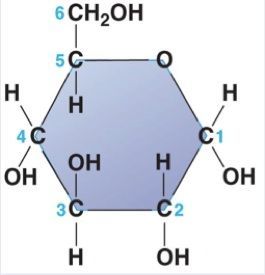
- AIt makes up the cell wall of plant cells.
- BIt is the monomer of proteins.
- CIt makes up cell membranes.
- DIt is an energy source for cells.
3Which of the following molecules are made of this type of monomer?
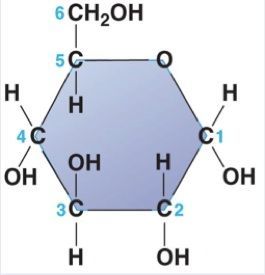
- AGlycogen
- BCellulose
- CStarch
- DAll of these molecules are made of this type of monomer
4What process is occurring in this image?
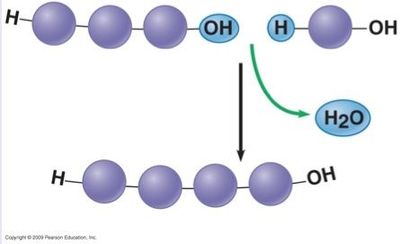
- ADigestion
- BHydrolysis
- CDehydration synthesis
- DCatalysis
5In this image, a ________________________ is being produced through the process of _______________________________________.
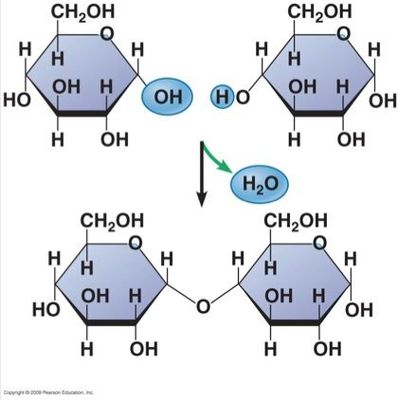
- ADisaccharide ... dehydration synthesis
- BDisaccharide ... hydrolysis
- CPolysaccharide ... dehydration synthesis
- DPolysaccharide ... hydrolysis
6What do these molecules have in common?
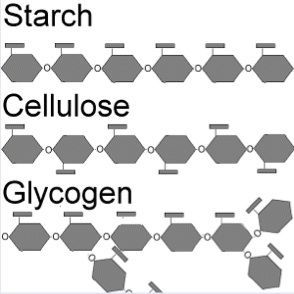
- AThey are all polysaccharides.
- BThey all have the same function.
- CThey all can be digested by humans and other animals.
- DAll of these statements are true.
7What do all lipids have in common?
- AThey are all found in cell membranes.
- BThey are all at least partially hydrophobic (nonpolar).
- CThey all contain three hydrocarbon fatty acid chains.
- DAll of these statements are true.
8What is this molecule?
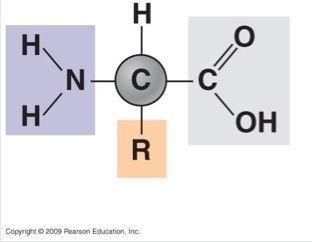
- AA monosaccharide
- BA lipid
- CAn amino acid
- DA protein
9What is the difference between 'A' and 'B'?
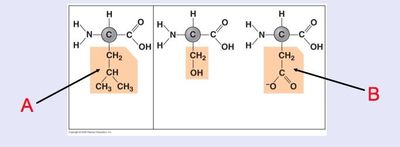
- A'A' would be found in a protein, but 'B' would not.
- B'A' is a sugar and 'B' is an amino acid.
- C'A' would be involved in secondary structure, and 'B' would be involved in tertiary structure.
- D'A' would be involved in different tertiary structure interactions than 'B'.
10Which level of protein structure is shown in this image?
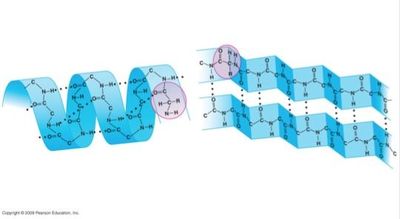
- APrimary
- BSecondary
- CTertiary
- DQuaternary
11Why does a protein take on the shapes shown in this image?
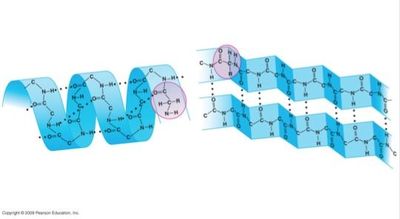
- ABecause it contains amino acids
- BBecause nonadjacent R groups interact with each other
- CBecause the backbone of the protein is polar
- DBecause it looks fabulous
12Which statement best explains why proteins can serve so many different functions?
- AThey are soluble in water.
- BThey vary in terms of chain length (i.e., the number of amino acids present).
- CThey contain sulfur.
- DThey have different shapes.
13A mystery molecule contains nitrogen. What is the molecule most likely to be?
- ACellulose
- BA steroid
- CA protein
- DA trigylceride
14A mystery molecule is added to a test tube of water, and it floats to the top. What is the molecule most likely to be?
- AA triglyceride
- BStarch
- CGlucose
- DA protein
15A mystery molecule quickly dissolves in water. It has a relatively low molecular weight (as compared to other biological molecules). What is the molecule most likely to be?
- AA protein
- BA steroid
- CA monosaccharide
- DStarch
16The R group of the amino acid serine is highly polar. The R group of the amino acid leucine is highly nonpolar. Where would you expect to find these amino acids in a globular protein that is normally dissolved in water?
- ABoth serine and leucine would be in the interior of the protein.
- BBoth serine and leucine would be on the exterior of the protein.
- CLeucine would be on the interior, and serine would be on the exterior of the protein.
- DSerine would be on the interior, and leucine would be on the exterior of the protein.
17Which of the following is NOT a monomer?
- AAmino acid
- BMonosaccharide
- CSteroid
- DAll of these are monomers
18Figure 1 illustrates a dipeptide, created through dehydration synthesis. At which bond would water need to be added to achieve hydrolysis of the peptide, back to its component amino acids?
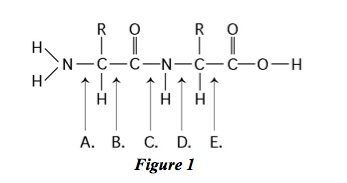
- ABond A
- BBond B
- CBond C
- DBond D
19The functionality of a protein is determined by its shape when in its native conformation. The native conformation of a protein is determined by the set of amino acids that comprise the protein's sequence. A certain protein consists of 325 amino acids. What could be the result if one of the amino acids in this protein were changed?
- AThe primary structure of the protein would not be altered but its tertiary structure and function would be altered.
- BThe tertiary structure would be changed but the protein's function would not be affected.
- CThe primary structure, tertiary structure, and the biological function would be altered.
- DThere would be no change to the structure or the function of the protein.
20Which statement is true of the process shown in this image?
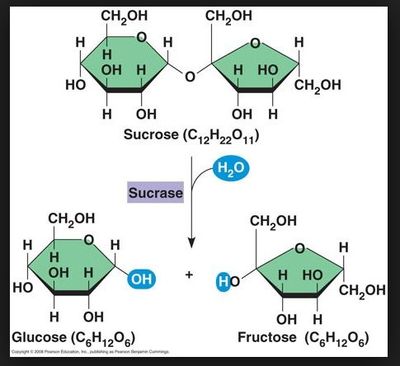
- AA polymer is generated.
- BHydrolysis is occurring.
- CA peptide bond is broken in the process.
- DMore than one of these statements is true.
Informações
- Descrição
- Check understanding of biological molecules and the processes by which they are assembled and disassembled
- Autor
- Usuário eliminado
- Idioma
- English
- Visualizações
- 99
- Histórico
- Criado em 2 nov 2016 · atualizado em 3 nov 2016
- Etiquetas