
Quiz
The Ancient Greece
Crie uma conta grátis para terminar este quiz
Salve seu progresso e veja sua nota final.
Já tem uma conta? Inicie sessão
Perguntas do quiz (25)
1Choose the correct option about THE NATURAL ENVIRONMENT:
(4 sentences are correct)- AThe Greek-speaking world was originally called Hernios.
- BThe Greek-speaking world was originally called Hellas.
- CAncient Greece was a single, unified country.
- DAncient Greece wasn't a single, unified country.
- EIt's a land dry and rocky.
- FIt's a land wet and rocky.
- GEach Greek territory has its own government and laws.
- HEach Greek territory depend on the main government.
2Select correct options about MINOAN CRETE:
(4 options are correct)- ADevelop in Mycenas during the Bronze Age.
- BImportant role in trade across the Mediterranean.
- CDevelop in Crete during the Bronze Age.
- DImportant role in trade across the Ionic Sea.
- ERuled by powerful kings like King Minos.
- FCrete was its most important city.
- GRuled by powerful king like King Knossos.
- HKnossos was its most important city.
3Choose the correct options about MYCENAE:
(2 sentences are correct)- AWas another Bronze Age.
- BAthens was its most important city.
- CWas another Gold Age.
- DMycenae society was dominated by warriors.
4Select correct sentences about THE DARK AGE:
(2 sentences are correct)- AMycenaean civilisation desappeared in about 1150 BC.
- BWe know much about this period.
- CMycenaean civilisation desappeared in about 1510 BC.
- DWe don't know mucho about this period.
5Choose correct options about POLEIS:
(5 sentences are correct)- AThe Greeks lived in city-sates or polis.
- BIt wasn't a region with own government, laws and army.
- CThe Greeks lived in cities called villages.
- DAthens, Sparta, Istambul and Crete are mainly poleis.
- EIt was a region with own government, laws and army.
- FAthens, Sparta, Corinth and Thebes are mainly poleis.
- GAristocracy was form by cultural minority. Sparta was the principal city.
- HDemocracy replaced aristocracy in some poleis. It had assemblies and councils. Crete was the principal city.
- IAristocracy was form by privileged minority. Sparta was the principal city.
- JDemocracy replaced aristocracy in some poleis. It had assemblies and councils. Athens was the principal city.
6Select correct options about the reasons to create colonies:
(2 options are correct)- AThe social development
- BOverpopulation
- CThe increase of taxes
- DThe spread of religion
- EThe economy
7Choose correct options about dates of GREEK EXPANSION:
(2 sentences are correct)- A700-650 BC To the west
- B750-650 BC To the west
- C650-550 BC To the east
- D650-500 BC To the east
8Select correct options about WEST EXPANSION:
(5 sentences are correct)- AOn the islands and coast of the Doric Sea.
- BLibya in northern Asia.
- CMalta, southern Italy.
- DSouthern Iberian Peninsula.
- EThe east coas of the Germany.
- FOn the islands and coast of the Ionian Sea.
- GLibya in northern Africa.
- HSicily, southern Italy.
- ISouthern France.
- JThe east coast of the Iberian Peninsula.
9Choose the correct option about EAST EXPANSION:
- AColonies were founded in the east, around the Caspian Sea.
- BColonies were founded in the east, arount the Black Sea.
- CColonies were founded in the east, around the Ionic Sea.
10The Greeks came into contact with other people (Phoenicians, Etruscans and Egyptians)
- ATrue
- BFalse
11Select correct options about THE CLASSICAL AGE:
(3 sentences are correct)- AThe poleis of Athens and Sparta were the dominant powers.
- BThere were wars between the Greeks and the Persians, and between the Greek poleis.
- CThe poleis of Athens and Thebes were the dominant powers.
- DThere were wars between the Greeks and the Asians, and between the Greek poleis.
- EThis was a period of outstanding economical achievement (Pericles was news taxes).
- FThis was a period of outstanding cultural achievement (Pericles was rebuilt the Acropolis).
12Select correct options about DEMOCRACY IN ATHENS:
(3 sentences are correct)- ALawmakers like Pericles introduced political reforms in Athens.
- BAthens became an oligarchy, which means "rule by the people".
- CAll mens participated in political life.
- DOnly citizens (men) participated in political life.
- EAthens became a democracy, which means "rule by the people".
- FLawmakers like Solon introduced political reforms in Athens.
13Choose correct options about OLIGARCHY IN SPARTA:
(3 sentences are correct)- AOligarchy, which means "rule by the people".
- BThey spend most of their time preparing for warfare.
- CSparta wasn't the great rival of Athens.
- DOligarchy, which means "rule by the few".
- EThey spend most of their money preparing for cultural life.
- FSparta was the great rival of Athens.
14Complete the sentences about THE PERSIAN WAR (499-479 BC):
The Persians conquered many of the poleis (__1__).
In __2__, these cities __3__ Persians, and other poleis supported them.
First Persian War. Finished when __4__ defeated the Persians (Battle of __5__ in __6__).
Second Persian War (__7__). __8__ of Persia invaded Greece, but defeated (Battle of __9__).- A1.- 5th / 2.- 498 BC / 3.- rebelled / 4.- wariors / 5.- Salamis / 6.- 490 BC / 7.- 480 BC / 8.- Queen / 9.- Marathon
- B1.- 6th / 2.- 499 BC / 3.- rebelled / 4.- hoplites / 5.- Marathon / 6.- 490 BC / 7.- 480 BC / 8.- King / 9.- Salamis
- C1.- 5th / 2.- 495 BC / 3.- rebelled / 4.- hoplites / 5.- Marathon / 6.- 490 BC / 7.- 485 BC / 8.- King / 9.- Salamis
15Choose the correct option to complete the next sentences about THE PELOPONNESIAN WAR (431-404 BC):
Delian League (__1__) to defend the city-states against future __2__ attacks.
Economical, political and cultural domination of __3__.
Peloponnesian League (__4__).
Peloponnesian War. __5__ won the war and became the leading polis.
The Greek city-states were __6__ than before.- A1 Athens / 2 Italian / 3 Sparta / 4 Sparta / 5 Athens / 6 much poor
- B1 Sparta / 2 Persian / 3 Athens / 4 Sparta / 5 Athens / 6 much weaker
- C1 Athens / 2 Persian / 3 Athens / 4 Sparta / 5 Sparta / 6 much weaker
16Choose the correct option to complete next sentences about ALEXANDER THE GREAT:
__1__. Mountainous kingdom in the north of Greece.
They were strongly influenced by Greek culture.
__2__ conquered nearly all the poleis (__3__ century BC).
Alexander the Great continued his conquests. He defeather the __4__.- A1.- Macedon / 2.- Philip II of Macedon / 3.- 4th / 4.- Persian Empire
- B1.- Albanian / 2.- Philip IV of Macedon / 3.- 3th / 4.- Persian Empire
- C1.- Macedon / 2.- Philip V of Macedon / 3.- 4th / 4.- Persian Empire
17Choose the correct option to complete next sentences about HELLENISM:
__1__ founded many cities in the conquered territories, like __2__.
Greek culture + Eastern ideas = Hellenism.
When Alexander died, his generals __3__ the empire into __4__.- A1 Philip / 2 Alexandria / 3 divided up / 4 separate kingdoms
- B1 Alexander / 2 Crete / 3 divided down / 4 unique kingdom
- C1 Alexander / 2 Alexandria / 3 divided up / 4 separate kingdoms
18Select the correct option to complete next sentences about SOCIETY:
__1__. It's a minority of only adult men. They took part in politics, full rights and paid taxes.
__2__. They don't have full rights.
__3__. No political rights and no go to public shows. Under the authority of man.
__4__. Paid taxes and fought in the army. Not allowed to own land.
__5__. Prisioners of war or they children.- A1 Citizens / 2 Non-citizens / 3 Women / 4 Metics / 5 Slaves
- B1 Citizens / 2 Non-citizens / 3 Metics / 4 Slaves / 5 Women
- C1 Citizens / 2 Non-citizens / 3 Slaves / 4 Metics / 5 Women
19Choose the correct option to complete next sentences about ECONOMIC ACTIVITIES:
AGRICULTURE. The land was __1__ in many regions. Main products: __2__.
LONG DISTANCE TRADE. Trade acroos the __3__. Imported food, wood and copper. They used __4__ coins called drachmas.
LOCAL COMMERCE. Crafstmen sold their products in their workshops. They often exchanged products.
CRAFTS. The Greeks made excellent __5__, which they exported to other regions. They also manufactured textiles and leather.- A1 poor / vines, wheat and olives / 3 Mediterranean / 4 gold / 5 textiles
- B1 rich / 2 vines, wheat and olives / 3 Ionic / 4 gold / 5 pottery
- C1 poor / 2 vines, wheat and olives / 3 Mediterranean / 4 silver / 5 pottery
20Select the correct option to complete next sentences about RELIGION:
The Greeks were __1__. Each city had a god that gave it special protection.
__2__. They were born from the union of a god and a human.
__3__. They were immortal, but looked human.
__4__. They were colourful stories about all these gods and heroes.
__5__. They were messages from the gods, and were usually interpreted by a prest.
__6__. The homes of the gods, and priests and priestesses were their servants.- A1 Polytheistics / 2 Gods / 3 Heroes / 4 Greeks myths / 5 Temples / 6 Oracles
- B1 Polytheistics / 2 Heroes / 3 Gods / 4 Greeks myths / 5 Oracles / 6 Temples
- C1 Polytheistics / 2 Heroes / 3 Gods / 4 Greeks myths / 5 Temples / 6 Oracles
21Select the correct option to complete next sentences about GREEK THEATRE:
__1__ originated in religious celebrations to the god __2__.
Tragedies, comedies and satyr plays were presented in __3__ theatres. All actors were __4__ with masks.- A1 Drama / 2 Dionysus / 3 outdoor / 4 men
- B1 Drama / 2 Heracles / 3 outdoor / 4 women
- C1 Drama / 2 Dionysus / 3 indoor / 4 men
22Choose the correct option to complete next sentences about PHILOSOPHY AND SCIENCE:
Greeks are the first to use __1__ to explain universe.
The leading Greek philosophers lived in __2__.
The greatest Greek __3__: Socrates, Plato and Aristotle.
Important __4__: Pythagoras and Archimedes.
The first __5__: Herodotus and Thucydides.- A1 reason and logic / 2 Athens and Sparta/ 3 mathematics / 4 scientists / 5 politicians
- B1 reason and logic / 2 Athens and Alexandria / 3 philosophers / 4 scientists / 5 historians
- C1 reason and logic / 2 Athens and Sparta / 3 politicians / 4 scientists / 5 historians
23Select the correct option about GREEK TEMPLES:
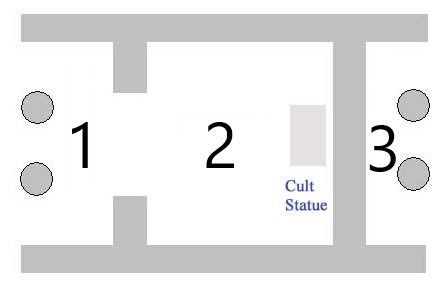
- A1 Opisthodomos / 2 Pronaos / 3 Naos
- B1 Pronaos / 2 Opisthodomos / 3 Naos
- C1 Pronaos / 2 Naos / 3 Opisthodomos
24Select the correct option about THE THREE ORDERS:
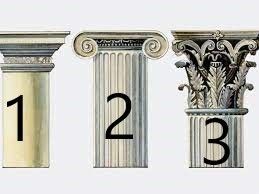
- A1 Doric / 2 Corinthian / 3 Ionic
- B1 Doric / 2 Ionic / 3 Corinthian
- C1 Corinthian / 2 Doric / 3 Ionic
25Select the correct option about PERIODS OF SCULPTURE:
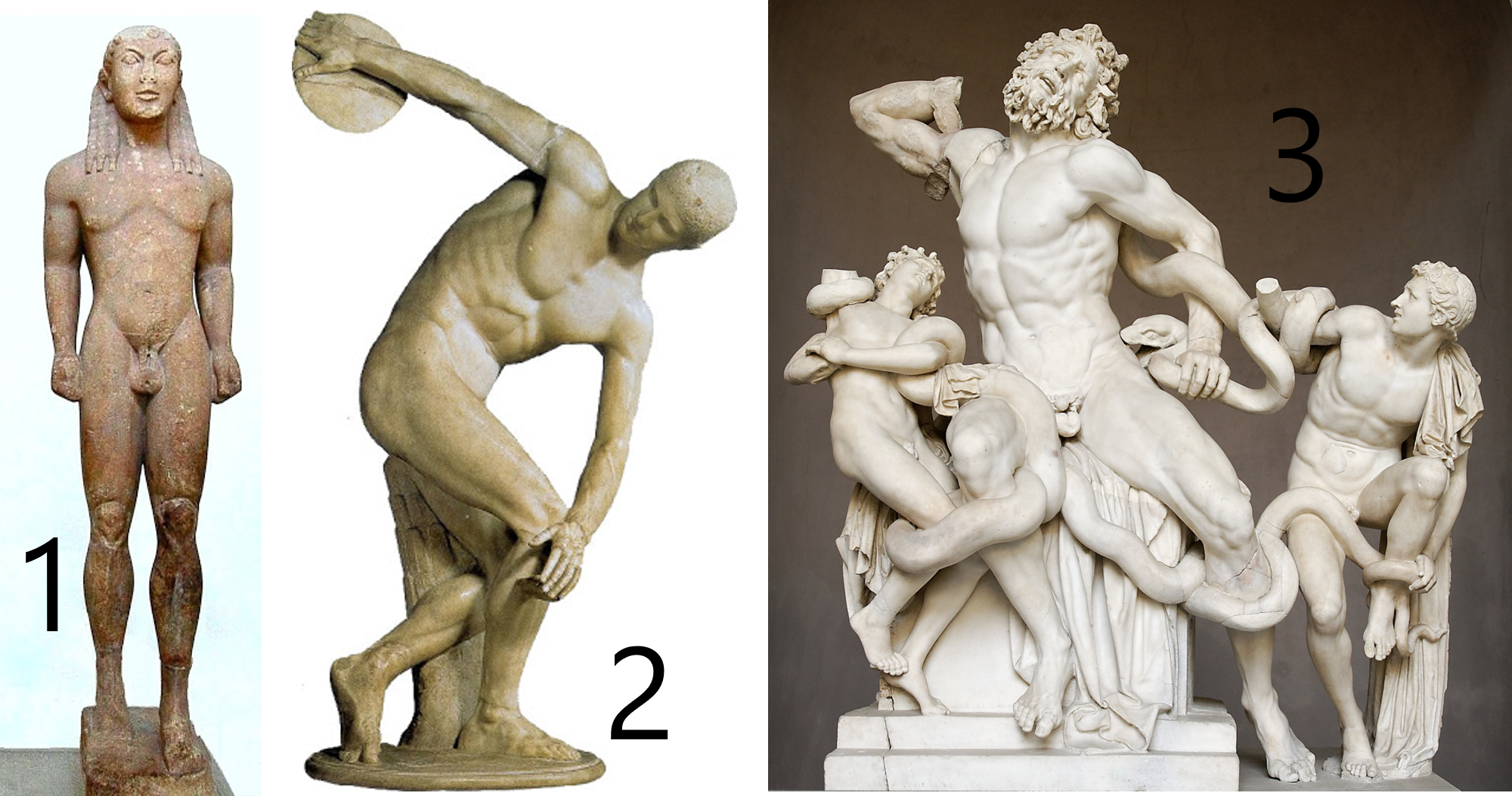
- A1 Classical Period / 2 Archaic Period / 3 Hellenistic Period
- B1 Archaic Period / 2 Hellenistic Period / 3 Classical Period
- C1 Archaic Period / 2 Classical Period / 3 Hellenistic Period
Informações
- Descrição
- Primero Ciencias Sociales Quiz sobre The Ancient Greece, criado por Lourdes Mora Arévalo em 27-03-2021.
- Autor
- Lourdes Mora Arévalo
- Idioma
- Español
- Visualizações
- 30
- Etiquetas
- Avaliação
- Ainda sem avaliações Avalie este quiz