
Quiz
PHSI3011 07-1 Cardiorespiratory adaptation to high altitude
Este quiz tem tipos de pergunta que abrem no player de sempre.
Perguntas do quiz (10)
1Label the following:
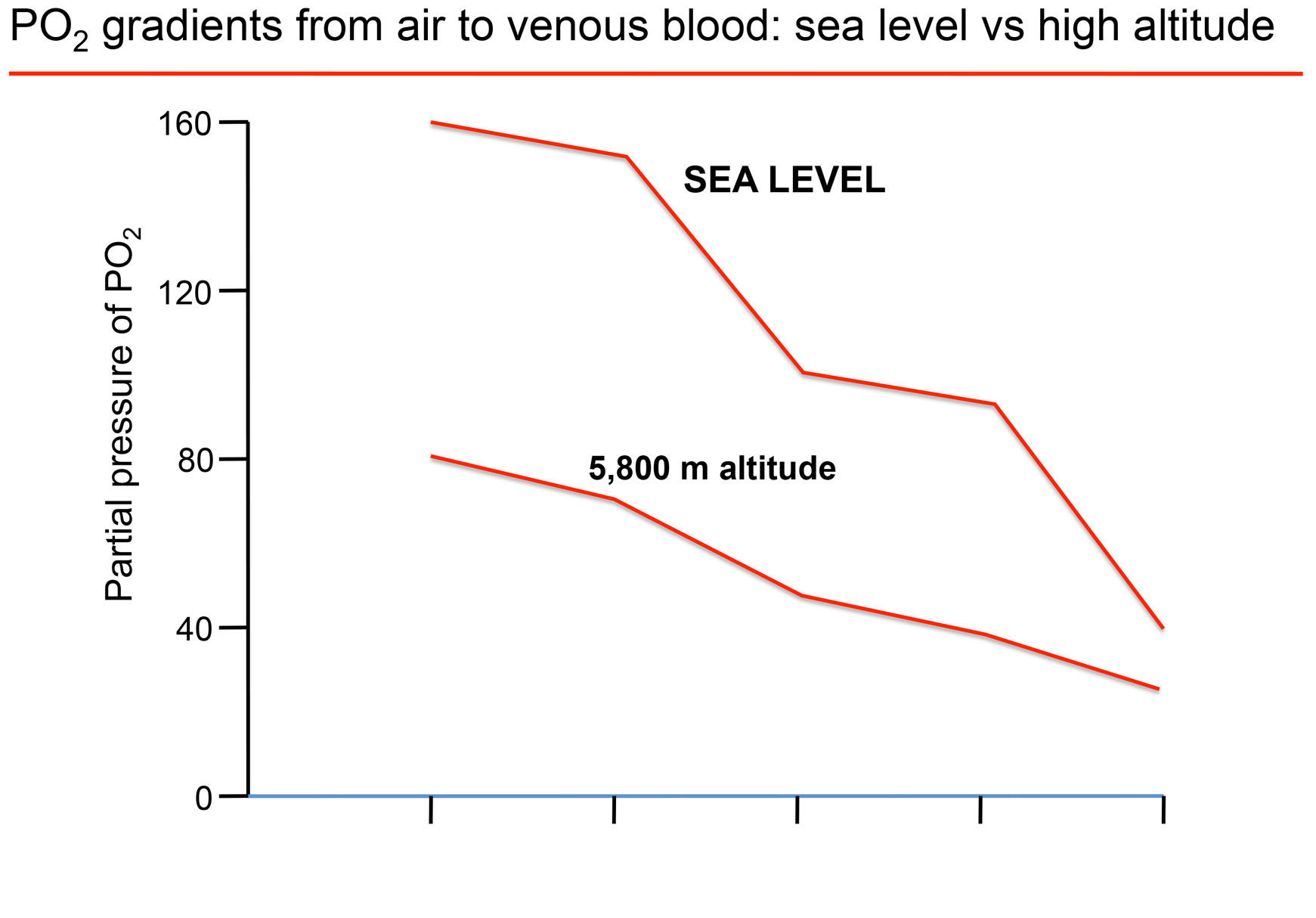
- AAtmospheric air
- BInspired air
- CAlveolar gas
- DArterial blood
- EMixed venous blood
2True or false: Hypoxia (measured in the Carotid artery) triggers an increase in respiratory activity, which in turn increases ventilation. In response to the nasopharyngeal (diving) reflex (yeah, wrong lecture. whatevs), this is absent.
- AVerdadeiro
- BFalso
3True or false: Pulmonary stretch receptors influence the cardiovascular system as part of the Hering-Breuer reflex.
- AVerdadeiro
- BFalso
4Hypoxia causes both EXCITATION (secondarily, from pulmonary stretch receptor activity) and INHIBITION (primarily, from chemoreceptor activity) of HR.
At high altitude altitude, what is the NET effect?- AExcitation
- BInhibition
5Hypoxia causes both EXCITATION (secondarily, from pulmonary stretch receptor activity) and INHIBITION (primarily, from chemoreceptor activity) of Vascular Resistance.
At high altitude altitude, what is the NET effect?- AExcitation (so secondary vasoconstriction)
- BInhibition (so primary vasodilation)
- CExcitation (so primary vasoconstriction)
- DInhibition (so secondary vasodilation)
- EExcitation (so primary vasodilation)
- FInhibition (so primary vasoconstriction)
- GExcitation (so secondary vasodilation)
- HInhibition (so secondary vasoconstriction)
6The NTS is where the quite a few of the baroreceptors and chemoreceptors lead to. What is it, though?
NTS = ??- ANucleus of Solitary Tract (NTS)
- BNucleus Tractus Solitarii (NTS)
7Fill in the two arrows.
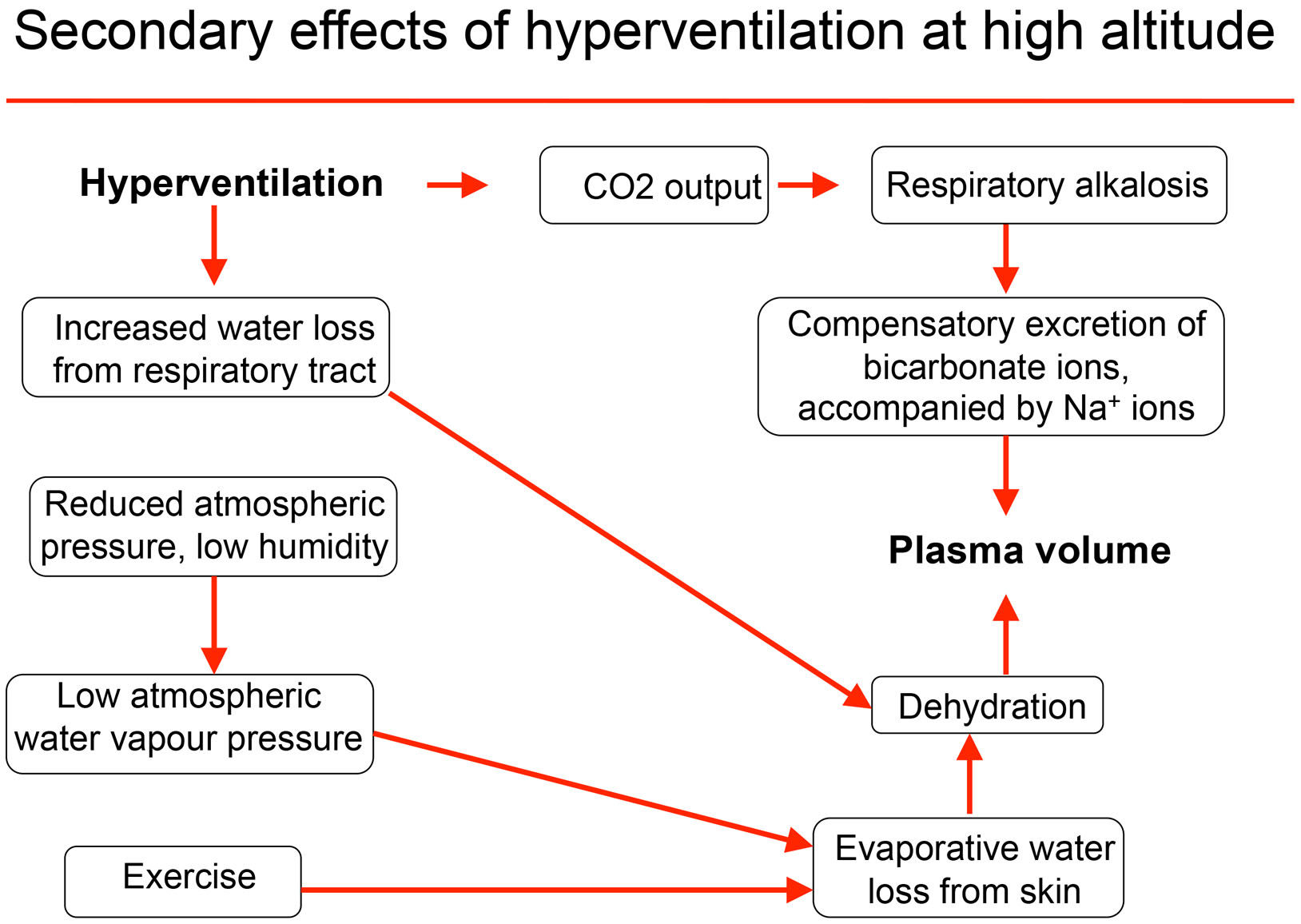
- A↑
- B↓
8What is it that moves the curve to the blue one?
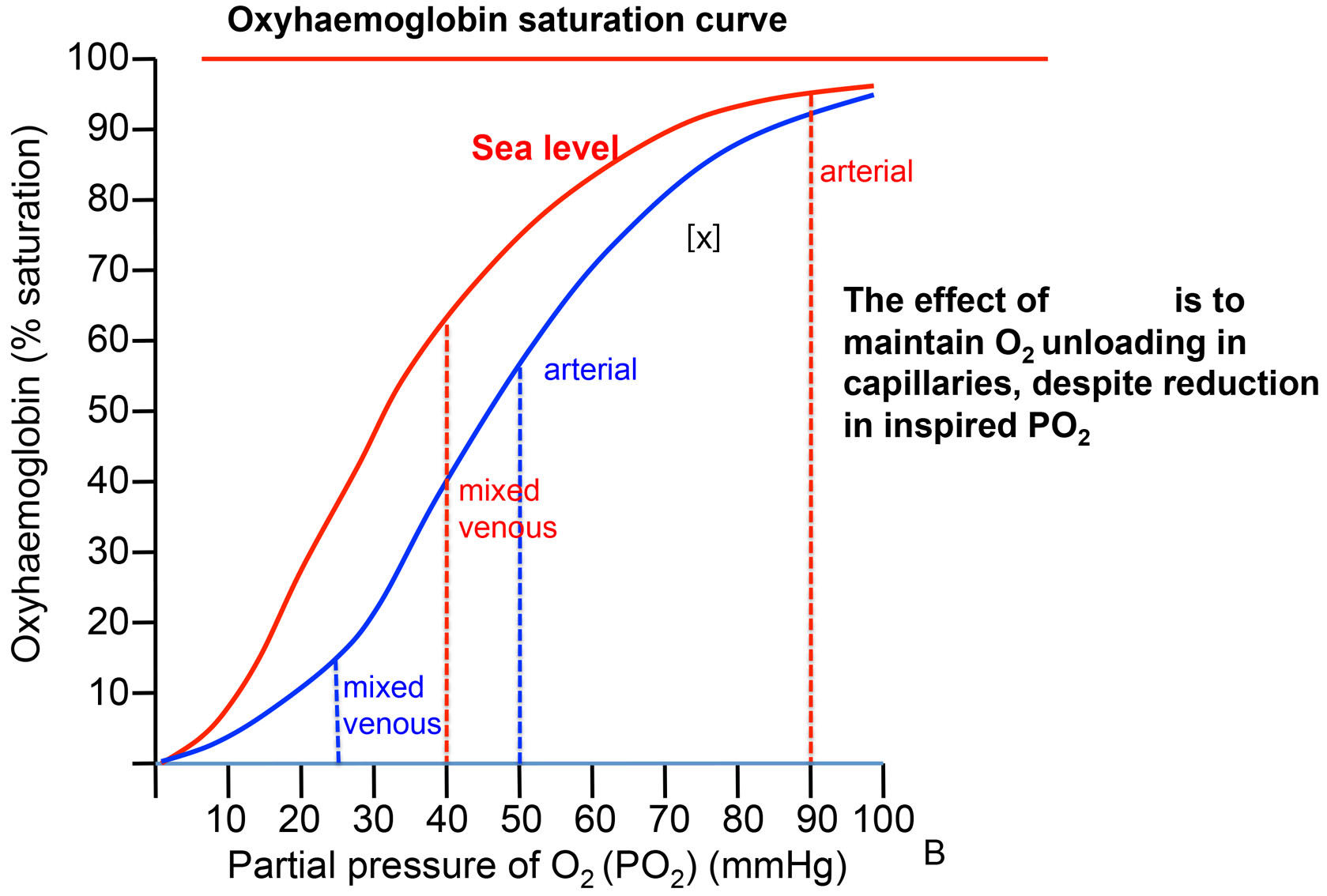
- A2-DPG
- BErythropoietin
9Over prolonged exposure to high altitude (a few days or more), production of __________ increases. The effect of this is to maintain O2 unloading in capillaries, despite reduction in inspired PO2.
- A2-DPG
- B2-BPG
- C2,3-DPG
- D2,3-BPG
- ERBC production
10Hypoxia at high altitude results in [blank_start]__________[blank_end] Blood-brain barrier permeability and Cerebral [blank_start]__________[blank_end].
- AIncreased
- BDecreased
- CVasodilation
- DVasoconstriction
Informações
- Descrição
- PHSI3011 07-1 Cardiorespiratory adaptation to high altitude
- Autor
- Michael Jardine
- Idioma
- English
- Visualizações
- 98
- Histórico
- Criado em 10 nov 2017 · atualizado em 10 nov 2017
- Etiquetas
- Avaliação
- Ainda sem avaliações Avalie este quiz