
Quiz
Microscopy
Este quiz tem tipos de pergunta que abrem no player de sempre.
Perguntas do quiz (9)
1Resolution is the ability of an optical instrument to..
- AMagnify the image of an object up to 20 times its actual size.
- BPenetrate a sample with varying light intensities in order for the viewer to see the image more brightly.
- CProduce an image that represents fine detail in high clarity and definition.
2Label the light microscope.
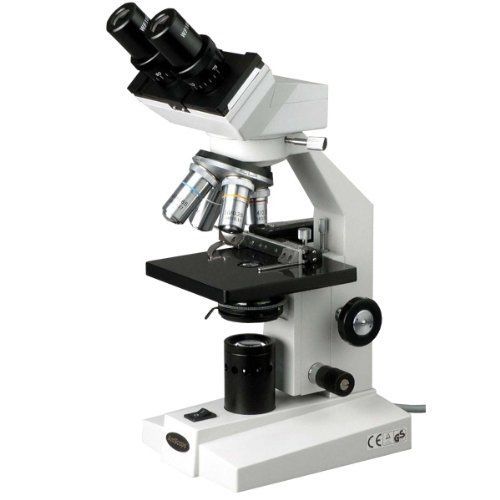
- AEyepiece
- BNosepiece
- CStage
- DCoarse adjustment
- EFine adjustment
- FIris diaphragm
- GLight source
- HEyepiece
- INosepiece
- JStage
- KCoarse adjustment
- LFine adjustment
- MIris diaphragm
- NLight source
- OEyepiece
- PNosepiece
- QStage
- RCoarse adjustment
- SFine adjustment
- TIris diaphragm
- ULight source
- VEyepiece
- WNosepiece
- XStage
- YCoarse adjustment
- ZFine adjustment
- AAIris diaphragm
- ABLight source
- ACEyepiece
- ADNosepiece
- AEStage
- AFCoarse adjustment
- AGFine adjustment
- AHIris diaphragm
- AILight source
- AJEyepiece
- AKNosepiece
- ALStage
- AMCoarse adjustment
- ANFine adjustment
- AOIris diaphragm
- APLight source
- AQEyepiece
- ARNosepiece
- ASStage
- ATCoarse adjustment
- AUFine adjustment
- AVIris diaphragm
- AWLight source
3Select the statement which correctly describes the relationship between magnification, image size, and actual size.
- AMagnification = image size x actual size
- BImage size = magnification x actual size
- CActual size = magnification x image size
4[blank_start]Laser scanning[blank_end] microscopes work by scanning an object with very high resolution using a laser beam, which is analysed by a computer to form an [blank_start]image[blank_end]. While expensive, these microscopes produce high r[blank_start]esolution[blank_end], high c[blank_start]ontrast[blank_end] images that can also be [blank_start]3[blank_end]-dimensional.
- ALaser scanning
- Bimage
- Cesolution
- Dontrast
- E3
5[blank_start]Electron[blank_end] microscopes emit a wavelength of radiation of about [blank_start]0.004[blank_end] nanometers, resulting in a very high [blank_start]resolution[blank_end]. They are also able to [blank_start]magnify[blank_end] images much more than other types of microscope. During the process, [blank_start]electrons[blank_end] are 'spat out' by a [blank_start]cathode[blank_end]. Instead of a glass lens to focus the image in other types of microscope, the [blank_start]electron[blank_end] microscope uses a [blank_start]magnet[blank_end]. When the electrons reach the sample, some pass [blank_start]through[blank_end] it and some bounce off, depending on whether the microscope is [blank_start]scanning[blank_end] (SEM) or [blank_start]transmission[blank_end] (TEM).
- AElectron
- B0.004
- Cresolution
- Dmagnify
- Ecathode
- Felectrons
- Gmagnet
- Helectron
- Ithrough
- Jscanning
- Ktransmission
6What type of microscope was used to take this picture?
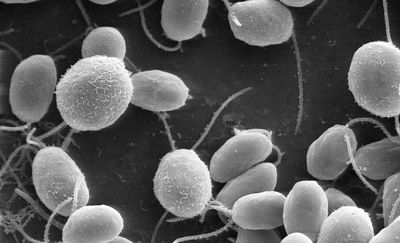
- AOptical (light) microscope
- BScanning electron microscope
- CTransmission electron microscope
- DLaser scanning microscope
7What type of microscope was used to take this image?
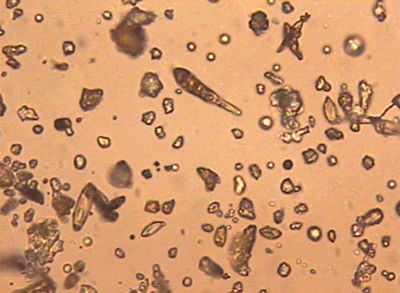
- AOptical (light) microscope
- BScanning electron microscope
- CTransmission electron microscope
- DLaser scanning microscope
8Which of the following are techniques for preparing a sample for microscopy?
Check all that apply.- ADehydration
- BEmbedding in wax
- CMaking sections
- DTreating
- ESalting
9A microscope of magnification x4000 takes a picture of a cell. In the image, the cell is 2cm wide. What is the actual width of the cell?
- A0.5um
- B50um
- C5um
Informações
- Descrição
- Biology (Cell Structure) Quiz sobre Microscopy, criado por Daniel Brand em 08-02-2017.
- Autor
- Daniel Brand
- Idioma
- English
- Visualizações
- 5.399
- Etiquetas
- Avaliação
- 3,0 de 5 · 1 avaliação Avalie este quiz