
Quiz
Science
This quiz has question types that open in the usual player.
Questions in this quiz (139)
1The Greek philosopher who gave the atom its name was
- ADemocritus
- BDalton
- CThomson
- DRutherford
2Which of the following has the least mass
- ANucleus
- BProton
- CNeutron
- DElectron
3Electrons are particles that
- AHelp make up the nucleus and are negatively charged
- BHelp make up the nucleus and are positively charged
- CAre located outside of the nucleus and are negatively charged
- DAre located outside of the nucleus and have no charge
4Isotopes exist because atoms of the same element can have different numbers of
- AProtons
- BNeutrons
- CElectrons
- DNone of the above
5In his gold foil experiment,Rutherford concluded that the atom is mostly space with a small,massive,positively charged center because
- AMost of the particles passed straight through the foil
- BSome particles were slightly deflected
- CA few particles bounced back
- DAll of the above
6What did Democritus,Dalton,Thomson, Rutherford,and Bohr all have in common
- AThey each identified new elements
- BThey each identified new isotopes of atoms
- CThey each contributed to the development of the atomic theory
- DThey each conducted experiments in which particles colided
7Atoms are composed of
- AElectrons and neutrons
- BProtons and neutrons
- CElectrons,protons, and neutrons
- DAtomic mass units
8A lithium atom has 3 protons 3 neutrons and 3 electrons. Which of the following sets of particles represents an isotope of this atom
- A4 protons 3 neutrons and 4 electrons
- B3 protons 4 neutrons and 3 electrons
- C3 protons 3 neutrons and 2 electrons
- D4 protons 4 neutrons and 4 electrons
9How did Rutherford know where the particles went after being “shot” at the gold foil?
- AA computer told him where the particles landed
- BAn electronic mesh surrounding the foil beeped where the particles landed
- CThe foil was surrounded with a screen coated with zinc sulfide,which glowed where the particles struck
- DHe did not know where theme particles went
10Electrons with the most energy will be found ____ the nucleus
- AFurther from
- BCloser to
- CIn the middle of
- DIn protons in
11The discovery of which particle proved that the atom is NOT indivisible
- AProton
- BNeutron
- CElectron
- DNucleus
12The current model of the atom suggests that
- AElectron clouds surround the nucleus
- BProton clouds surround the nucleus
- CElectrons travel in definite paths around the nucleus
- DThe exact path of a moving electron can be predicted
13______ proposed that all atoms are small, hard particles made of a single material formed into different shapes and sizes.
- ADalton
- BDemocritus
- CThomson
- DRutherford
14If a Boron atom has 5 protons 6 neutrons and 5 electrons, it has a mass number of
- A11
- B10
- C6
- D5
15Who described atoms as being the smallest particles and realized they would bond with other atoms to make compounds
- ADalton
- BBohr
- CRutherford
- DSchrodinger
16Isotopes have different
- AAtomic numbers
- BMass numbers
- CChemical properties
- DCharges
17The smallest particle into which an element can be divided and still be the same substance is a(n)
- AElectron
- BProton
- CAtom
- DMolecule
18Schrodinger describes the location of the electrons as _____
- ARings
- BElectron clouds
- CDefinite paths
- DTrack paths
19If Thomson’s model of the atom were correct,then the particles in Rutherford’s experiment would have
- ABounced directly back to the source
- BBeen deflected to the right
- CBeen deflected to the left
- DContinued in a straight line
20Neutrons are particles that
- AHelp make up the nucleus and have no charge
- BHelp make up the nucleus and are positively charged
- CAre located outside the nucleus and are negatively charged
- DAre located outside the nucleus and have no charge
21The SI unit is used to express the masses of particles in the atoms is the
- AKilogram (kg)
- BGram (g)
- CNewton (N)
- DAtomic mass unit (amu)
22Thomson’s model of the atom would closely resemble a
- ABlueberry muffin (plum pudding)
- BGelatin
- CThe solar system
- DA balloon
23Who performed an experiment proving that electrons exist
- ABohr
- BDalton
- CThomson
- DRutherford
24What is the mass number of this atom?
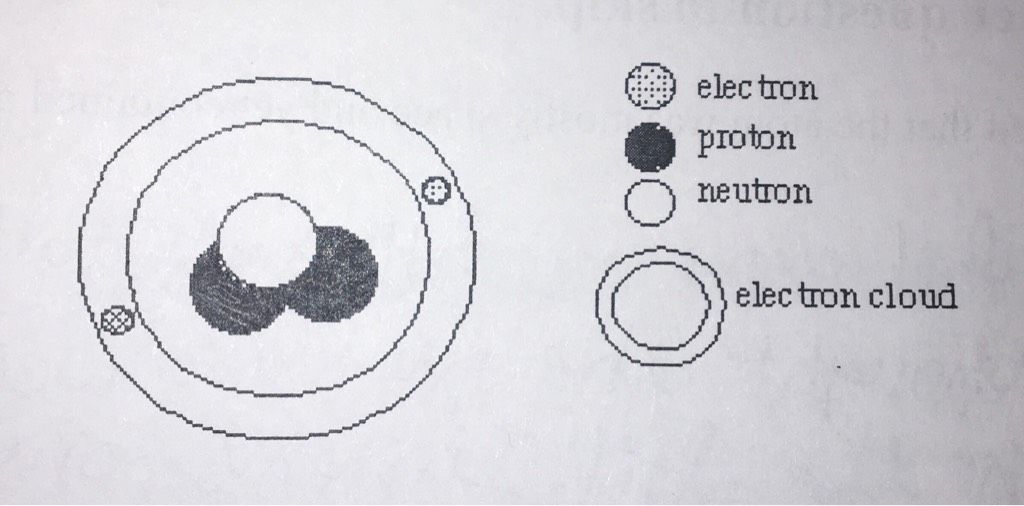
- A3
- B3
25Who discovered that there are small negatively charged particles inside the atom?
- ABohr
- BDalton
- CThomson
- DRutherford
26What particles make up a nucleus
- AElectrons and neutrons
- BNeutrons
- CProtons and neutrons
- DElectrons, protons, and neutrons
27When Rutherford shot alpha particles through gold foil, he expected the particles to pass through easily. The deflection of some particles helped him discover the _____
- ANucleus
- BProton
- CElectron
- DMass number
28How did people respond when Democritus proposed the idea of an “uncuttable” particle
- AThy accepted his idea and Democritus became famous
- BThey accepted his idea when they saw the results of his experiments
- CThey did not believe Democritus because Aristotle disagreed with him
- DThey did not believe Democritus because the electron has already been discovered
29Who suggested that electrons travel around the nucleus in definite paths
- ADalton
- BRutherford
- CBohr
- DThomson
30Who performed an experiment proving the existence of an atomic nucleus
- AThomson
- BDalton
- CDemocritus
- DRutherford
31After concluding that your tests support your hypothesis, you should
- AKeep it secret so that no one steals your idea
- BPublish your results so that other scientists can learn from you
- CWait around to see if anyone else discovers the same thing
- DNone of the above
32The international System of Units
- AIs based on standardized body measurements
- BContains units that are based on the number 10
- CIs also known as the English system
- DWas invented in China
33Before starting a science investigation, you must
- AFollow your teachers instructions
- BRead lab procedures carefully
- CDetermine what you are trying to discover
- DAll of the above
34If a tester hypothesis does not produce the expected results
- ARevise the hypothesis and retest
- BDon’t trash the results——it might lead to another discovery
- CThe experiment was done wrong
- DManipulate the data to fit the hypothesis
35A scientist who wants to study the possible side effects of a new medicine would probably
- AGive each group the same dose of medicine
- BSurvey random people about the medicine’s effects
- CInclude a control group that receives no medicine
- DUse different numbers of subjects in each treatment group
36To describe the length of a grain of rice ,you would use
- AMillimeters (mm)
- BDecimeters (dm)
- CMeters (m)
- DKilometers (km)
37Which of the following is true of a conclusion
- AYou must test it
- BIt states what you think will happen
- CIt compares the results to the hypothesis
- DYou must organize it into tables and graphs
38Does the number of hours of sleep that students receive affect there test grades? What is the dependent variable
- AHours of sleep
- BTest grades
- CHappiness of the students
- DHow many fall asleep during the test
39During the tests of the bubble gum, you only changed the brand of gum. The brand of the gum was an example of a (an)
- AIndependent variable
- BStandard
- CDependent variable
- DControl group
40What does the prefix milli- mean
- A1/1,000
- B1/100
- C100
- D1,000
41A large quarts crystal is added to a graduated cylinder containing 80 mL of water, raising the level to 90 mL of water. what is the volume of the quarts
- A10 cm3
- B80 cm3
- C90 mL
- D90 cm3
42Analyzing the results of your experiment can be
- AObtaining data from your experiment
- BOrganizing your data into tables and graphs
- CDoing calculations to learn more about your results
- DBoth (b) and (c)
43The process trying to answer a question or solve a problem using logical steps is called
- AHypothesis
- BMetric system
- CScientific method
- DProblem
44An experimental group during an experiment includes what
- AThe control
- BThe independent variable
- CThe dependent variable
- DB and C only
45The length of a pencil is best measured in
- ACentiliters
- BCentimeters
- CMeters
- DKilograms
46Which of the following is used to measure the mass of an object
- AGraduated cylinder
- BMeterstick
- CSpring scale
- DElectronic Balance
47The length 2 m is equal to
- A200 cm
- B1,000 mm
- C5,000 mm
- DAll of the above
48What type of investigation has no hypothesis
- ADescriptive
- BComparative
- CExperimental
- DAll of the above
49After forming a hypothesis you should
- ATest your hypothesis
- BAsk a question
- CAnalyze the results
- DDraw conclusions
50Graduated cylinders are used to measure
- AThe area of a solid
- BThe length of an object
- CThe volume of liquids
- DThe mass of a solid
51If an object has a mass of 90 g and a volume of 30 cm3 what is its density
- A0.33 g/cm3
- B3 g/cm3
- C60 g/cm3
- D270 g/cm3
52A hypothesis must be
- ATestable
- BA theory
- CMade into a law
- DBoth (a) and (b)
53The factor that an experimenter changes in an experiment and causes the result you see is called the
- AControl
- BIndependent variable
- CAnalysis
- DDependent variable
54An appropriate SI unit for density would be
- Ag
- BL/m3
- Cg/mL
- Dm
55A controlled experiment involves
- AA control group an experimental group and a standard
- Ba control group an experimental group and a variable
- CA controlled factor a standard and a variable
- DAn experimental group a standard and a variable
56A (n) [blank_start]hypothesis[blank_end] is a possible explanation or answer to a question
- Ahypothesis
57[blank_start]Density[blank_end] is an object’s mass divided by its volume
- ADensity
58An element that is a non-metal which a very reactive gas is most likely a member of the
- ANoble gases
- BAlkali metsls
- CHalogens
- DTransition metals
59Which is NOT found on the periodic table
- AThe actinides
- BThe carbon group
- CThe transition metals
- DThe radioactive group
60One property of the alkali metals is that they are
- ANot very useful elements
- BToo hard to cut with a knife
- CVery reactive with other elements
- DFound in nature uncombined with other elements
61Which of the following is NOT a noble gas
- AArgon
- BHydrogen
- CHelium
- DNeon
62The noble gases
- AAre very reactive non metals
- BAre the most abundant in Earth’s atmosphere
- CAren’t very useful
- DHave atoms with filled outer energy levels
63What is the least number of energy levels an atom can have
- AOne
- BTwo
- CThree
- DSeven
64Valence electrons are important because they
- ADetermine the atomic number of an element
- BAre only found in nature
- CDetermine how an element will react (or bond) with other substances
- DTell how electrons are counted
65Which group is the most reactive
- AAlkali metals
- BTransition metals
- CAlkaline earth metals
- DLanthanides
66Actinides and lanthanides are part of the
- AMetals
- BNon metals
- CMetalloids
- DTransition metals
67The group of metals that are soft enough to be cut up with a knife are
- AAlkali metals
- BTransition elements
- CAlkaline earth metals
- DLanthanides
68Elements in a family or group in the periodic table often share similar properties Because
- AThey look alike
- BThey are found in the same place on earth
- CThey have the same physical state
- DTheir atoms have the same number of electrons in their outer energy level
69Alkali metals are the most reactive of all the metals because they have _____ electron(s) in their outer energy level
- A1
- B2
- C7
- D8
70Which of the following is the LEAST reactive
- AAlkali metals
- BAlkaline earth metals
- CHalogens
- DNoble gases
71Lanthanides and actinides are placed at the bottom of the periodic table
- ABecause they are all radioactive
- BBecause they are elements that have been predicted but not yet discovered
- CTo keep the periodic table from being too wide
- DAll of the above
72The number of _____ is most important in determining how an atom will react
- AProtons
- BNeutrons
- CElectrons in the innermost energy level
- DElectrons in the outermost energy level
73Why do atoms have no charge
- AThe number of protons is equal to the number of neutrons
- BThe number of electrons is equal to the number of neutrons
- CThe number of protons is equal to the number of electrons
- DThere is no equal number of neutrons protons and electrons
74The number of electrons in an atom can be determined from the _____ of an element
- AAtomic mass
- BMass number
- CAtomic number
- DBonding number
75The levels farther from the nucleus contain electrons that have ______ levels closer to the nucleus
- ALess energy then
- BHalf the energy of
- CThe same energy as
- DMore energy than
76Atoms of elements in groups 1 and 2 have _____ their group number
- AThe same number of valence electrons as
- BNo general rule relating their valence electrons to
- C10 fewer valence electrons than
- DNone of the above
77Which is the correct group number for the halogens
- A14
- B16
- C8
- D17
78Which is the correct group number for the alkaline earth metals
- A1
- B2
- C13
- D14
79The noble gases make up the group number
- A6
- B2
- C18
- D19
80The element calcium (Ca) is in group 2. How many valence electrons does each of its atoms have
- A1
- B2
- C6
- D20
81The element Potassium (K) is in group 1. How many valence electrons does each of its atoms have
- A1
- B2
- C6
- D19
82On the periodic table which elements is NOT a metalloid
- AArsenic
- BSilicon
- CAntimony
- DThallium
83The halogens have ____ valence electrons
- A4
- B6
- C7
- D8
84This element is a semi conductor contains 4 valence electrons and has 4 energy levels name this element
- AGallium
- BSilicon
- CCalcium
- DGermanium
85___ have properties of both metals and non metals
- AOther metals
- BAlkaline earth metals
- CHalogens
- DMetalloids
86What metal has 1 valence electron 19 protons in its nucleus and reacts strongly with water
- APotassium
- BCesium
- CSodium
- DFluorine
87This non mental is in the same group as lead and is located in period 2
- ASilicon
- BCarbon
- CTin
- DOxygen
88This element has 4 valence electrons is in the same period as chlorine and is used in computer chips
- APhosphorus
- BArsenic
- CSilicon
- DCarbon
89The electrons that are located in the outermost energy level an atom has one would
- ACount the number of valence electrons
- BLook at the atomic number
- CCount the number of rows down on the periodic table until the row with the element is reached
- DAverage the atomic mass of all elements on the period
90Ionic bonds share electrons between atoms
- ATrue
- BFalse
91The number of electrons on the outermost energy level are called the oxidation number
- ATrue
- BFalse
92The chemical bond that exists in the compound ammonia (NH3) is an ionic bond
- ATrue
- BFalse
93Phosphorus would want to gain 3 electrons because It already has 5 valence electrons and this would give it great stability
- ATrue
- BFalse
94Metals tend to gain electrons when they make an ion
- ATrue
- BFalse
95Valence electrons are the electrons on the innermost energy level
- ATrue
- BFalse
96Since calcium has 2 valence electrons it will give away 1 is those electrons when it becomes an ion
- ATrue
- BFalse
97An atom can lose a proton while making an ion
- ATrue
- BFalse
98In which area of the periodic table do you find elements whose atoms easily gain electrons
- AAcross the top two rows
- BAcross the bottom row
- COn the right side
- DOn the left side
99Which of the following describes what happens when an atom becomes an ion with a -2 charge
- AThe atom gains two protons
- BThe atom loses to protons
- CThe atom gains two electrons
- DThe atom loses to electrons
100Which of the following does NOT describe ionic compounds
- AHave a high melting point
- BAre brittle
- CDo not conduct an electric current in water
- DDissolve easily in water
101Which pair of atoms can form an ionic bond
- ASodium (Na) and Potassium (K)
- BPotassium (K) Flourine (F)
102_____ are formed when atoms lose electrons
- APositive ions
- BNegative ions
- CElements
- DCompound
103Molecular compounds
- ADissolve easily in water
- BCan conduct an electric current
- CConsist of individual particles called molecules
- DHave high melting points
104Ionic compounds
- AForm a crystal lattice
- BHave low melting points
- CAre flexible
- DConsist of individual particles called molecules
105Compounds whose bonds are the force of attraction between two oppositely charged particles are called
- ANonmetallic compounds
- BMetallic compounds
- CMetalloidal compound
- DIonic compounds
106A compound that shatters when hit with a hammer is most likely a(n)
- AIonic compound
- BMolecular compound
- CMetallic compound
- DMetalloidal compound
107Magnesium oxide melts at 2,800•Celsius what type of compound is magnesium oxide
- AIonic compound
- BMolecular compound
- CMetallic compound
- DMetalloidal compound
108Which type of compound includes acids which can conduct an electric currents when it is dissolved in water
- AMolecular compound
- BOrganic compound
- CIonic compound
- DMetallic compound
109______ compounds are composed of elements whose atoms share electrons
- AMetallic
- BCoordinate
- CIonic
- DMolecular
110Compounds that are composed of molecules are called
- AMolecular compounds
- BIonic compounds
- CMetallic compounds
- DMetalloidal compounds
111When a sodium atom and a chlorine atom bond to form sodium chloride
- AThe sodium atom loses an electron and the chlorine gains an electron
- BThe chlorine atom loses an electron and the sodium atom gains an electron
- CA covalent bond forms so neither atom loses or gains an electron
- DNot enough information is provided
112Metals ____ and form positive ions
- ALose electrons
- BLose protons
- CGains electrons
- DGains protons
113Nonmetals which _____ form negative ions
- AGain protons
- BLose protons
- CGain electrons
- DLose electrons
114When atoms make ions what time of atom likes to GIVE AWAY valence electrons to become positive
- ANoble gases
- BNonmetals
- CHalogens
- DMetals
115When determining how many valence electrons are in an atom in group 15 you would
- AJust look at the group number = 15
- BIgnore the 1 in the group number=5
- CLook at the atomic number
- DLook at the mass
116How many valence electrons does Flourine have
- A7
- B2
- C5
- D1
117What is the charge of Flourine when it makes an ion
- A+7
- B+1
- C-7
- D-1
118______ are formed when atoms lose electrons
- APositive ions
- BNegative ions
- CElements
- DNeutral ions
119Chemical indicators are
- AChemicals that change colors in different pHs
- BUsed to show a certain temperature of a solution
- CUsed to identify whether a compound is ionic or molecular
- DAll of the above
120Which of the following substances does NOT exist as a diatomic molecule
- AOxygen
- BIodine
- CNitrogen
- DWater
121The forces that hold different atoms or ions together are
- AElectric currents
- BChemical bonds
- CPhysical bonds
- DNuclear forces
122A carbon atom can bond to four other atoms because it has
- AFour different cations
- BFour valence electrons
- CTwo inner energy levels
- DNo protons in its nucleus
123In which type of bond do atoms share electrons
- ACovalent bonds
- BMetallic bonds
- CIonic bonds
- DPolyatomic bonds
124In covalent bonding electrons are
- ATransferred
- BShared
- CLost
- DGained
125Exothermic reactions do not require any activation energy
- ATrue
- BFalse
126According to the law of conservation of mass, three atoms of calcium can react to produce products that contain no calcium
- ATrue
- BFalse
127I’m chemical reactions, energy is needed to break bonds
- ATrue
- BFalse
128All chemical reactions occur at the same rate
- ATrue
- BFalse
129When a chemical equation contains the same number of atoms on both sides, the equation is equally balanced
- ATrue
- BFalse
130Lowering the temperature slows down most chemical reactions
- ATrue
- BFalse
131A chemical reaction in which more energy is absorbed than is released is endothermic
- ATrue
- BFalse
132Which graph illustrates the type of reaction that occurs when wood burns? Graph 1 or graph 2
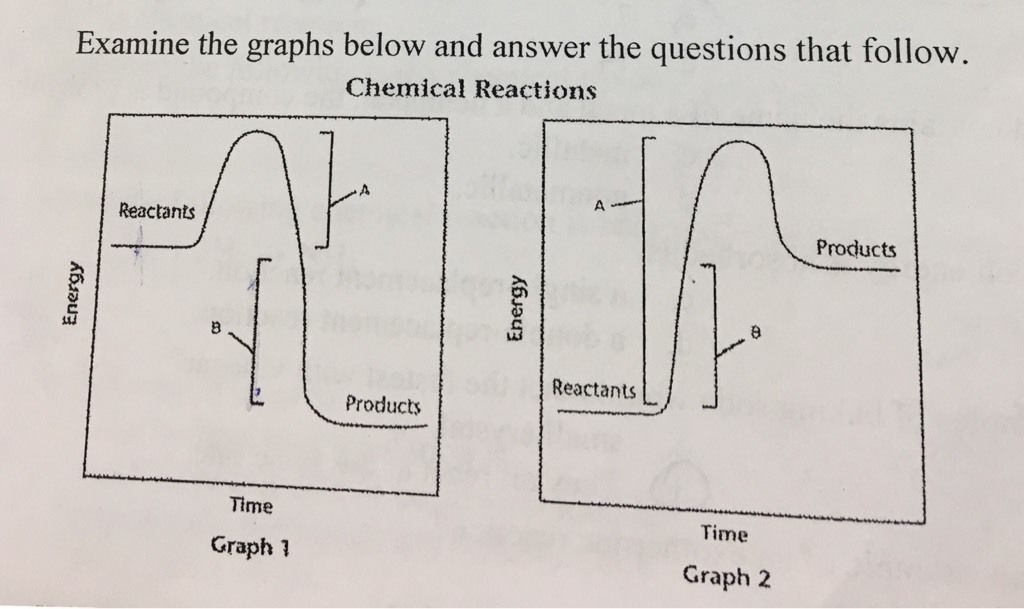
- AGraph 1
133What is indicated by B in graph 1? Energy given off or energy absorbed
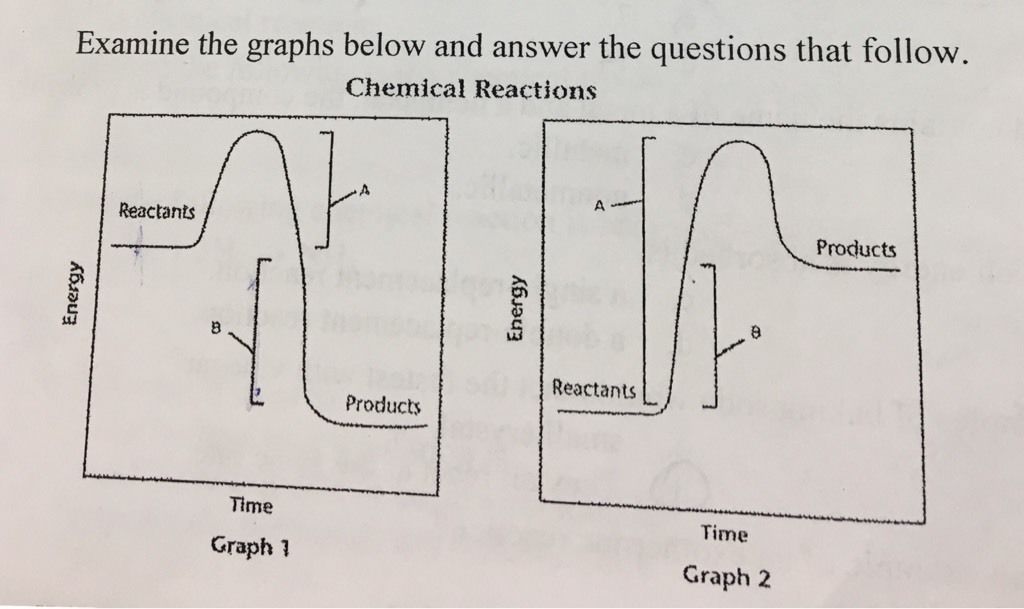
- Aenergy given off
134What type of reaction in shown in Graph 2? Endothermic reaction or exothermic reaction
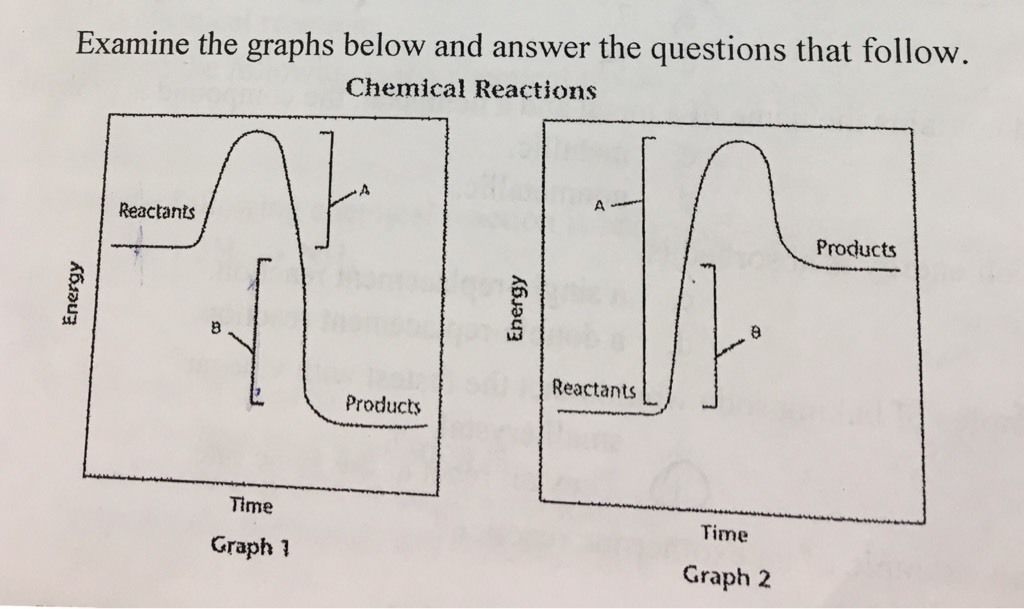
- Aendothermic reaction
135What type of reaction is shown in graph 1?endothermic reaction or exothermic reaction
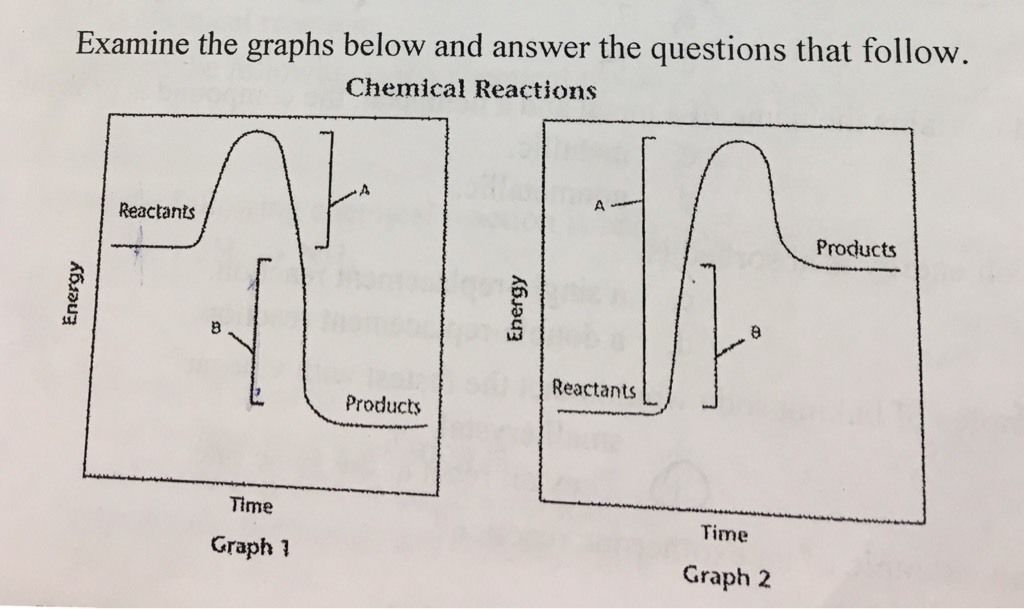
- Aexothermic reaction
136Al + HCl ——> AlCl3 + H2
- AAl + HCl ——> AlCl3 + H2
- B2Al + 6HCl ——-> 2AlCl3 + 3H2
- CAl + 3HCl ——> AlCl3 + 3H2
- DAl + 3HCl ——> AlCl3 + H2
137F2 + CL ——>KF + Cl2
- AF2 + KCl ——> KF + Cl2
- BF2 + KCl2 ——-> KF2 + Cl2
- CF2 + 2KCl ——-> KF + Cl2
- DF2 + 2KCl ———> 2KF + Cl2
138The starting materials in a chemical reaction are called the ____
- AReactants
- BProducts
- CYields
- DSymbols
139The starting materials in a chemical reaction are called the ____
- AReactants
- BProducts
- CYields
- DSymbols
Information
- Description
- 8th grade Science Quiz on Science, created by Kaitlyn Wallace on 13/12/2017.
- Author
- Kaitlyn Wallace
- Language
- English
- Views
- 46
- Tags
- Rating
- No ratings yet Rate this quiz