
Quiz
Microelectronics
This quiz has a time limit, so it opens in the usual player.
Questions in this quiz (35)
1The output stage of a 741 op-amp is a
- Adifferential amplifier
- Bcommon-base amplifier
- Ccommon-emitter amplifier
- Dpush-pull amplifier
2A steady voltage of -0.75 V is applied to an op amp integrator having component values of R = 200 kΩ and C = 2.5µF. Assuming that the initial capacitor charge is zero, determine the value of the output voltage 100 ms after application of the input.
- A0.35 V
- B0.15 V
- C0.25 V
- D0.015 V
3The op amp shown below has an input bias current of 100 nA at 20°C. Calculate the output offset voltage due to the input bias current.
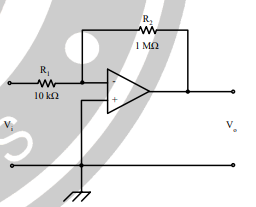
- A0.88 mV
- B0.77 mV
- C0.99 mV
- D0.11 mV
4An op-amp that uses positive feedback is known as a
- Azero-crossing detector
- BSchmitt trigger
- Cpeak detector
- Dvoltage follower
5The operating mode of an op-amp, when both inputs are tied together to both inputs is called
- Adifferential mode
- Brejection mode
- Cdouble-ended mode
- Dcommon mode
6In the inverting amplifier of the figure shown, Ri = 1kΩ and Rf= 2kΩ. Determine the output voltage when the input voltage is 0.4 V.
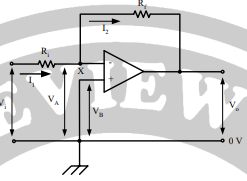
- A-0.80 V
- B-0.10 V
- C-0.90 V
- D-0.11 V
7Referring to the same figure in the above problem, what is the output when the input voltage is -1.2 V?
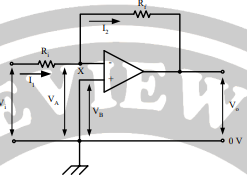
- A+1.2 V
- B+ 2.2 V
- C+ 2.0 V
- D+ 2.4 V
8Calculate the output voltage for this circuit when V1 = 2.5 V and V2 = 2.25 V.
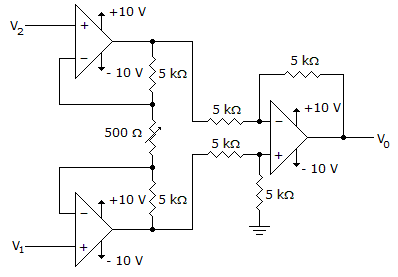
- A-5.25 V
- B2.5 V
- C2.25 V
- D5.25 V
9Calculate the output voltage if V1 = –0.2 V and V2 = 0 V.
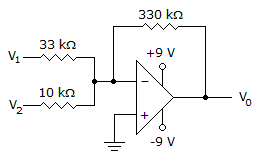
- A0 V
- B-6.6 V
- C-4 V
- D2 V
10How many op-amps are required to implement this equation?
Vo = V1- A2
- B3
- C4
- D1
11Calculate the output voltage if V1 = V2 = 0.15 V.
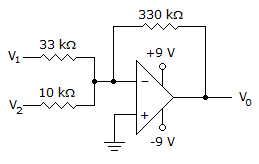
- A0 V
- B4.65 V
- C6.45 V
- D-6.45 V
12When an op-amp circuit uses a single supply voltage, the dc output voltage from the op amp should be equal to
- A1/2 Vcc
- BVcc
- Czero
- D0.1 Vcc
13When an op-amp circuit uses a single supply voltage, the dc output voltage from the op amp should be equal to
- Anegative
- Bpositive
- Czero
- DNone of the Above
14The op-amp comparator circuit uses
- ANegative feedback
- BA resistor
- CPositive Feedback
- DNo feedback
15Dual-in-line pick up (DIP) is the most popular IC package because
- AIt is low in cost
- BIt is one of the thinnest package known
- CIt ruggedly resist vibration due to its solid construction
- DAll of These
16What is the typical input resistance of the op-amp amplifier when measured under open loop?
- A2 MΩ
- B3 MΩ
- C1.5 MΩ
- D2.5 MΩ
17The reason why integrated circuits are divided into digital linear categories is because
- AThey either process analog or digital signals
- BThey are either used as input of output components
- CUp to the present these are the only two known categories
- DThey are simply circuits that happen to be constructed integrally and like all circuits are either switching type or amplifying type
18For a constant input voltage to an integrator, why is the voltage across the capacitor linear?
- ACapacitor diode does not dissipate heat
- BCapacitor current is constantly changing
- CCapacitor current is linear
- DCapacitor current is constant
19ICs for military and space applications are tested in the temperature range of
- A0°C to +70°C
- B-55°C to +125°C
- C-173 ºC to + 100°C
- D-10°C to + 25°C
20For most commercial and industrial operations, ICs are tested in the temperature range of
- A0°C to +70°C
- B-55°C to +125°C
- C-173°C to + 100°C
- D-10°C to + 25°C
21What is the typical total power dissipated by the operational amplifier?
- A5 mW
- B0.5 mW
- C50 mW
- D500 mW
22 An op-amp circuit that has its output tied directly to the inverting input terminal is called a ________________
- ACurrent follower
- BInverting amplifier
- CNon-inverting amplifier
- DVoltage follower
23Refer to the given figure. A square wave input is applied to this amplifier. The output voltage is most likely to be
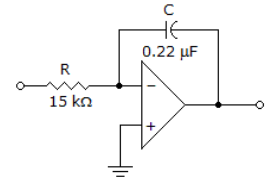
- Aa square wave
- Ba triangle wave
- Ca sine wave
- Dno output
24A typical value of open-loop voltage gain for a 741 op-amp is
- A100
- B200,000
- C0.5
- D100,000
25Determine the cut-off frequency of an op-amp having specified values B1 = 1 MHz and AVD = 200 V/mV.
- A4 Hz
- B5 Hz
- C1 kHz
- D1 MHz
26The input impedance of an inverting amplifier is approximately equal to
- ARi
- Bzero
- Cinfinity
- DRf
27The change in input offset current due to temperature change
- Adelta input offset current
- Bslew rate
- Cinput offset current drift
- DPSRR
28What is the maximum output voltage swing of an op-amp?
- A+V to -V (supply voltage)
- B+VSAT to –VSAT
- C+½V to -½V
- Ddepends on the input signal
29Which of the following are variations of the basic summing amplifier?
- AAveraging Amplifier
- BScaling Amplifier
- CBoth of the Above
- DNone of the Above
30How many op-amps are required to implement this equation?
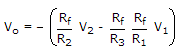
- A2
- B3
- C4
- D1
31Calculate the input voltage if the final output is 10.08 V.
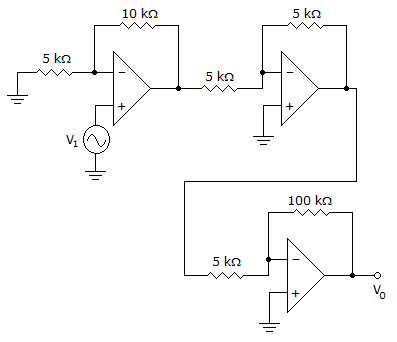
- A–1.05 V
- B0.525 V
- C0.168 V
- D4.2 V
32How many op-amps are required to implement this equation?
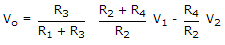
- A2
- B3
- C4
- D1
33Calculate the cutoff frequencies of a bandpass filter with R1 = R2 = 5 k and C1 = C2 = 0.1 μF.
- AfOL = 318.3 Hz, fOH = 318.3 Hz
- BfOL = 636.6 Hz, fOH = 636.6 Hz
- CfOL = 318.3 Hz, fOH = 636.6 Hz
- DfOL = 636.6 Hz, fOH = 318.3 Hz
34Calculate the output voltage if V1 = 300 mV and V2 = 700 mV.
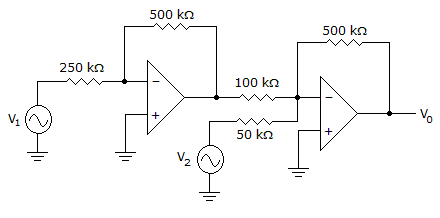
- A0 V
- B-12 V
- C12 V
- D-4 V
35Calculate the output voltage.
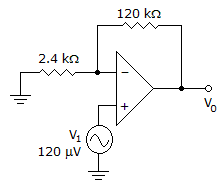
- A-6.00 mV
- B6.0 mV
- C6.12 mV
- D-6.12 mV
Information
- Description
- Quiz on Microelectronics
- Author
- John Martin Magayanes
- Language
- English
- Views
- 5
- Tags
- Rating
- No ratings yet Rate this quiz