
Quiz
PLC Chapter 1-4 Part 1
This quiz has question types that open in the usual player.
Questions in this quiz (55)
1Select the main functions of a PLC
- AReplacing Relay Logic
- BReplacing programmable logic
- CTiming
- DProcessing digital signals
- EProcessing analog signals
- FSaving energy compared to relay
- GComparing
- HCounting
- ICalculating
2The structure of a PLC isn't based on any other electronic; their design is unique to themselves.
- ATrue
- BFalse
3A PLC eliminates the mess of hardwiring that relay controls require
- ATrue
- BFalse
4Which function control responds faster to data.
- AProgrammable Logic Control
- BRelay Logic Control
5The PLC has a [blank_start]_____[blank_end] cost compared to relay logic controls.
- Alower
6If an application requires more than a [blank_start]half-dozen[blank_end] of control relays, a PLC will probably be more cost effective
- Ahalf dozen
7Communications Capability - A PLC can communicte with other computer based systems to perform functions such as supervisory [blank_start]control[blank_end], data [blank_start]gathering[blank_end], [blank_start]monitoring[blank_end] devices and process parameters, and [blank_start]download[blank_end] and upload of programs
- Adownload
- Bgathering
- Cmonitoring
- Dcontrol
8PLCs are easier to trouble shoot thanks to built-in [blank_start]resident diagostics[blank_end] and [blank_start]override[blank_end] functions
- Aresident diagostics
- Boverride
9The term architecture can refer to:
- APLC hardware
- BPLC software
- CA combination of both
- DNone the given answers
- EPLC hardware, PLC software, or to a combination of both.
10An [blank_start]open architecture[blank_end] design allows the system to be connected [blank_start]easily[blank_end] to [blank_start]devices[blank_end] and programs made by other manufacturers.
- Aopen architecture
- Beasily
- Cdevices
11A system with a [blank_start]closed architecture[blank_end], is one whos [blank_start]design[blank_end] is proprietary, making it more difficult to [blank_start]connect[blank_end] to other systems
- Aclosed architecture
- Bdesign
- Cconnect
12A [blank_start]fixed[blank_end] I/O is typical of small PLC's that come in one package with no separate, removable units. The processor and I/O are packaged [blank_start]together[blank_end].
- Afixed
- Btogether
13[blank_start]Modular[blank_end] I/O is divided by compartments into which separate modules can be plugged. This feature [blank_start]greatly[blank_end] increases youor options and the unit's flexibility.
- AModular
- Bgreatly
14The power supply provides [blank_start]DC[blank_end] power to all modules that plug into the [blank_start]rack[blank_end]. For large PLC systems, this power supply [blank_start]does not[blank_end] normally supply power to the field devices.
- ADC
- Brack
- Cdoes not
15The [blank_start]CPU[blank_end] consists of a [blank_start]microprocessor[blank_end] for implementing the [blank_start]logic[blank_end] and [blank_start]controlling[blank_end] the communications among the modules.
- Amicroprocessor
- BCPU
- Clogic
- Dcontrolling
- Eprocessing
16The processor requires [blank_start]memory[blank_end] for storing the results of the [blank_start]logical[blank_end] operations performed by the microprocessor as well as the operating system and the PLC program.
- Amemory
- Blogical
17What is an I/O system?
- AA system with a closed architecture, is one whos design is proprietary, making it more difficult to connect to other systems
- BAn open architecture design allows the system to be connected easily to devices and programs made by other manufacturers.
- CI/O system forms the interface by which field devices are connected to the controller.
- DA programming device is used to enter the desired program into the memory of the processor. The program can be entered using relay ladder logic which is one of the most popular programming languages.
18Input devices are hardwired to [blank_start]Input terminals[blank_end]
- AInput terminals
19Examples of input devices include:
- APush buttons
- BLimit switches
- CMice
- DKeyboard
- ESensors
20Examples of Output devices include:
- ASmall Motors
- BMotor Starters
- CLarge Motors
- DSpindle
- ESolenoid Valves
21In order to isolate internal components from the input and output terminals, PLCs often employ an [blank_start]optical isolator[blank_end], which uses light to coupe the circuits
- Aoptical isolator
22External devices are referred to as [blank_start]field devices[blank_end] or [blank_start]Real-world[blank_end] devices
- Afield devices
- BReal world
23A programming device is used to enter the desired program into the [blank_start]memory[blank_end] of the processor. The program can be entered using [blank_start]relay ladder logic[blank_end] which is one of the [blank_start]most popular[blank_end] programming languages.
- Arelay ladder logic
- Bmost popular
- Cmemory
24A programming language that instead of using letters, ladder logic programming uses symbols to show their intended outcome.
- ATrue
- BFalse
25A program in ladder logic isn't similar to a schematic for a relay control circuit.
- ATrue
- BFalse
26Name the most popular programming device for a PLC
- AA Computer
- BA Dedicated Programming Device
- CA Gameboy
27A program is a user developed set of [blank_start]instructions[blank_end] for the PLC to [blank_start]execute[blank_end].
- Ainstructions
- Bexecute
28What input device is this?

- ASolenoid
- BPush Button
- CTemperature Switch
- DMotor Starter Coil
29What is the purpose of each value in a Rack/Slot address?
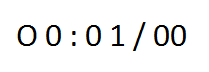
- AFile Type
- BFile Number
- CFile Delimiter
- DFile Delimiter
- EFile No.
- FFile Type
- GFile Type
- HFile No.
- IFile Delimiter
- JRack No.
- KGroup no.
- LFile Delimiter
- MRack No.
- NGroup No.
- OTerminal Number
- PFile Delimiter
- QBit Delimiter
- RBit Address
- STerminal Number
- TFile Number
- UGroup Number
30An input interface module [blank_start]accepts[blank_end] signals from the machine or process devices and convert them into signals that can be used by the controller
- Aaccepts
- Bconverts
- Creverts
31An output interface device [blank_start]converts[blank_end] controller signals into external signals used to control the machine or the process
- Aconverts
32The hardware assembly which houses the I/O modules, processor modules, and power supplies is called a [blank_start]chassis[blank_end]
- Achassis
33An addressable unit consisting of 128 input points and 128 output points is called a [blank_start]logical rack[blank_end]
- Alogical rack
34What kind of module does a remote I/O use to communicate with the processor module?
- ACommunication Module
- BEmail Module
- CBreakfast
- DRope and Cups
35Which of the following programmable logic controlers uses a Rack/Slot based addressing scheme?
- AAllen-Bradley PLC-5
- BSLC 50
- CAllen-Bradley ControlLogix
- DSLC 60
- ESTC 50
- FAllen-Bradley PLC 60
36Which of the following PLCs use a tag based addressing scheme?
- ASLC 50
- BSLC 60
- CSLC 70
- DSLC 40
- EAllen-Bradley ControlLogix
- FSLC ControlLogix
37The most common I/O interface is the ___ type.
- ADiscrete
- BAnalog
- CLoud
- DDigital
38A discrete I/O interface connects field input devices of the ON/OFF nature such as selector switches,
- ATrue
- BFalse
39The classification of discrete I/O covers bit oriented inputs and outputs.
- ATrue
- BFalse
40Each [blank_start]discrete[blank_end] I/O module is powered by some field supplied voltage source
- Adiscrete
41Discrete I/O modules receive power from the:
- Abackplane through the PLC module power supply
- Bbackplane through the CPU module power supply
- Cbackplane through the communication module power supply
42A switch that opens and closes a circuit either electromechanically, or electronically is called a [blank_start]relay[blank_end]
- Arelay
43Individual AC outputs are usually limited by the size of the triac to
- A 1A or 2A
- B2A or 3A
- C 1A or 4A
44An [blank_start]optical Isolator[blank_end] is used to provde electrical isolation between the power and logic circuitry
- Aoptical Isolator
45Certain DC I/O modules specify whether the module is designed for interfacing with current-source or current-sink devices.
- ATrue
- BFalse
46A sinking digital I/O (input/output) provides a [blank_start]grounded[blank_end] connection to the load
- Agrounded
47A sourcing digital I/O provides a [blank_start]voltage[blank_end] source to the load
- Avoltage
48If the module is current-source, then the input or output device must be [blank_start]current-sinking[blank_end]
- Acurrent-sinking
49Analog input and output devices have how many possible number of values?
- AInfinite
- B2
- C3
- D6
- E5
- F7
50Typical analog inputs and outputs vary from:
- A0 to 20 milliamps
- B4 to 20 milliamps
- C0 to 10 volts
- D0 to 10 milliamps
- E4 to 20 volts
51The two basic type of analog input modules are [blank_start]voltage[blank_end] sensing and current sensing.
- Avoltage
52The main element of the analog input module is an analog to digital (A/D) converter
- ATrue
- BFalse
53[blank_start]Bipolar[blank_end] input modules can accept signals that swing between a negative and positive value.
- ABipolar
54[blank_start]Unipolar[blank_end] input modules can accept an input signal that varies in the positive direction only.
- AUnipolar
55[blank_start]Resolution[blank_end] refers to the smallest change in input signal value that can be sensed
- AResolution
Information
- Description
- College PLC 301 Quiz on PLC Chapter 1-4 Part 1, created by second_second101 on 01/10/2015.
- Author
- second_second101
- Language
- English
- Views
- 39
- Tags
- Rating
- No ratings yet Rate this quiz
More on PLC Fundamentals and Hardware