
Quiz
Standing Waves
This quiz has question types that open in the usual player.
Questions in this quiz (18)
1Nodes:
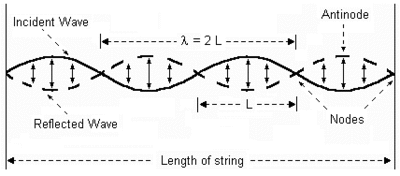
- AZero amplitude
- BPoints of (total) destructive interference
- COccur at fixed ends
- DAmplitude zero => String not moving => No energy absorbed => Pattern not disturbed if touched
- EPoints of constructive interference
- FMaximum (positive/negative) amplitude
- GOccur at free ends
2Antinodes:
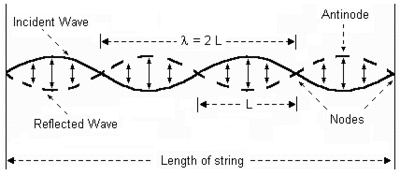
- AZero amplitude
- BPoints of (total) destructive interference
- COccur at fixed ends
- DMaximum (positive/negative) amplitude
- EPoints of constructive interference
- FOccur at free ends
3Speed of Standing/Stationary Waves:
- [blank_start]Node to node[blank_end] or [blank_start]antinode to antinode[blank_end] is equal to [blank_start]1/2 λ[blank_end].
- To calculate speed use [blank_start]v = fλ[blank_end] where [blank_start]λ[blank_end] is [blank_start]2 x[blank_end] the [blank_start]distance[blank_end] from node to node or antinode to antinode.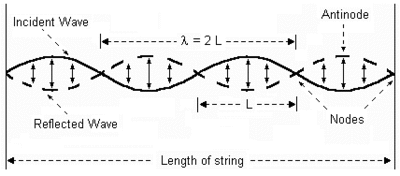
- ANode to node
- Bantinode to antinode
- C1/2 λ
- Dλ
- E2 x
- Fv = fλ
- Gdistance
4Coherence:
- Coherent = [blank_start]constant[blank_end] [blank_start]phase[blank_end] [blank_start]relationship[blank_end].
- Therefore, if the relationship isn't constant (i.e. source not [blank_start]coherent[blank_end]) then [blank_start]interference[blank_end] varies - a point could sometimes be [blank_start]constructive[blank_end] and sometimes be [blank_start]destructive[blank_end].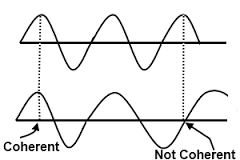
- Aconstant
- Bphase
- Crelationship
- Dcoherent
- Einterference
- Fconstructive
- Gdestructive
5Phase Difference:
- Antiphase = [blank_start]180°/π radians[blank_end] out of phase with another wave.
- In phase = [blank_start]0/360°/2π radians[blank_end] phase difference.
Both waves need to have the same [blank_start]frequency[blank_end] to see [blank_start]interference[blank_end] (constructive and destructive) and for waves to be [blank_start]in phase or in antiphase[blank_end].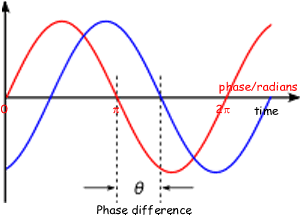
- A0/360°/2π radians
- B180°/π radians
- C180°/π radians
- D0/360°/2π radians
- Efrequency
- Fphase difference
- Ginterference
- Hwaves
- Iin phase or in antiphase
- Jcoherent
6To produce a standing wave you need (for the 2 waves):
1. Same f[blank_start]requency[blank_end].
2. Same a[blank_start]mplitude[blank_end].
3. Same m[blank_start]edium[blank_end].
4. Waves travelling in [blank_start]opposite[blank_end] directions.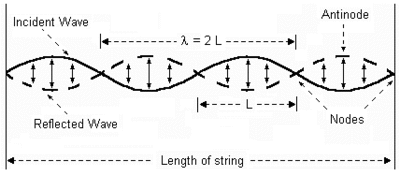
- Arequency
- Bmplitude
- Cedium
- Dopposite
7Increasing Frequency of a Standing Wave:
- As frequency increases, wavelength [blank_start]decreases[blank_end].
- At [blank_start]most[blank_end] frequencies there is [blank_start]no standing wave[blank_end].
- The [blank_start]higher[blank_end] the frequency, the more [blank_start]nodes and antinodes[blank_end] of the standing wave.
- [blank_start]Amplitude[blank_end] decreases as number of nodes [blank_start]increases[blank_end].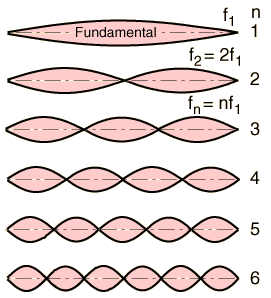
- Ano standing wave
- Bmost
- Cnodes and antinodes
- Dhigher
- Edecreases
- Fincreases
- GAmplitude
8What are the lengths of the harmonics?
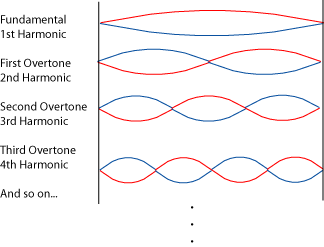
- AL = 1/2 λ
- BL = λ
- CL = 3/2 λ
- DL = 2 λ
9Open and Closed Pipes:
E.g. for the fundamental frequency/first harmonic.
- You need an [blank_start]antinode[blank_end] at the [blank_start]open[blank_end] end to hear maximum amplitude.
- The closed end is a [blank_start]fixed[blank_end] end so it will be a [blank_start]node[blank_end].
- Going from open to closed the frequency h[blank_start]alves[blank_end] because the [blank_start]closed[blank_end] end becomes a node making the length go from [blank_start]1/2[blank_end] λ to 1/4 λ (fundamental frequency only).
In general, the other [blank_start]harmonics[blank_end] can be formed from the various overtones by using open and closed pipes. You can calculate the f[blank_start]requency[blank_end] and w[blank_start]avelength[blank_end] of each overtone in each type of pipe.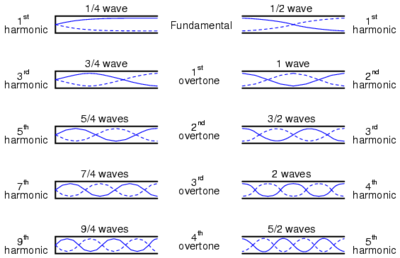
- Aantinode
- Bopen
- Cfixed
- Dnode
- Eclosed
- F1/2
- Gharmonics
- Hrequency
- Iavelength
- Jalves
10Strobe Lamp:
- A strobe lamp needs to [blank_start]capture[blank_end] the string [blank_start]twice[blank_end] per [blank_start]cycle[blank_end] in order to see the [blank_start]2[blank_end] positions of the standing wave (at maximum and minimum [blank_start]amplitude[blank_end] preferably).
- Therefore maximum frequency of the strobe lamp must be [blank_start]2[blank_end] x f[blank_start]requency[blank_end] of vibration generator.
- There is a maximum because any higher frequency will [blank_start]capture[blank_end] the string at points [blank_start]other[blank_end] [blank_start]than[blank_end] the maximum amplitude.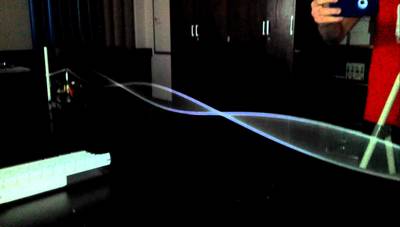
- Atwice
- Bcapture
- Ccycle
- D2
- Eamplitude
- F2
- Gother
- Hthan
- Icapture
- Jrequency
11What do the letters stand for?
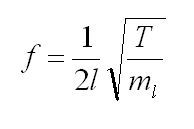
- AFundamental frequency only
- BTension of string
- CMass per unit length of string
- DLength of string
12Changing Frequency on a Guitar:
- [blank_start]Decreasing[blank_end] length = [blank_start]reduced[blank_end] wavelength so frequency increases (as v = fλ and [blank_start]v[blank_end] is constant).
- [blank_start]Increasing[blank_end] tension = [blank_start]increased[blank_end] speed so frequency increases (as λ = v/f and λ is constant i.e. [blank_start]length[blank_end]).
- [blank_start]Decreasing[blank_end] mass of string = [blank_start]increased[blank_end] speed so frequency increases (as λ = v/f and λ is constant i.e. [blank_start]length[blank_end]).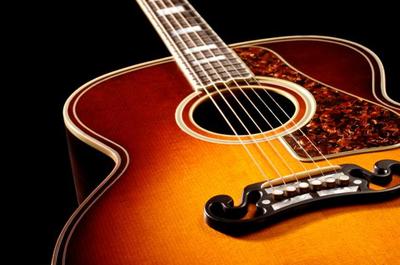
- ADecreasing
- BIncreasing
- CIncreasing
- DDecreasing
- EDecreasing
- FIncreasing
- Greduced
- Hincreased
- Iincreased
- Jreduced
- Kincreased
- Lreduced
- Mv
- Nλ
- Olength
- Pmass
- Qlength
- Rspeed
13How are Standing/Stationary Waves Produced?
- A vibration t[blank_start]ransducer[blank_end] attached at one end of a s[blank_start]tretched[blank_end] string with the other end [blank_start]fixed[blank_end] is given a wave [blank_start]frequency[blank_end] by a [blank_start]signal[blank_end] generator and creates that wave by [blank_start]vibrating[blank_end] the string.
- The wave generated by the vibration transducer is [blank_start]reflected[blank_end] back and forth.
- If you alter the signal generator so the transducer produces an [blank_start]exact[blank_end] number of waves in the [blank_start]time[blank_end] it takes for a wave to get to the end and [blank_start]back[blank_end] [blank_start]again[blank_end], when the o[blank_start]riginal[blank_end] and [blank_start]reflected[blank_end] waves meet they [blank_start]superpose[blank_end] each other which produces [blank_start]nodes[blank_end] and [blank_start]antinodes[blank_end]. The frequencies at which this occurs are called "[blank_start]resonant[blank_end] [blank_start]frequencies[blank_end]".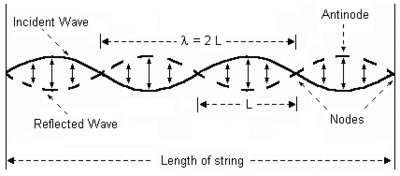
- Afixed
- Bfrequency
- Csignal
- Dvibrating
- Ereflected
- Fexact
- Gtime
- Hback
- Iagain
- Jreflected
- Ksuperpose
- Lnodes
- Mantinodes
- Nresonant
- Ofrequencies
- Pransducer
- Qtretched
- Rriginal
14Definition of Standing/Stationary Waves:
The [blank_start]superposition[blank_end] of two [blank_start]progressive[blank_end] waves with the same w[blank_start]avelength[blank_end], s[blank_start]peed[blank_end] and f[blank_start]requency[blank_end] moving in [blank_start]opposite[blank_end] directions.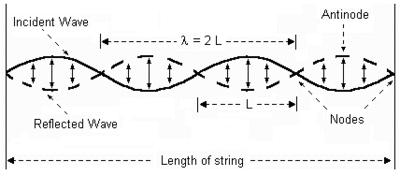
- Asuperposition
- Bprogressive
- Cavelength
- Dpeed
- Erequency
- Fopposite
15What Happens When a Standing Wave is Formed?
Each particle [blank_start]vibrates[blank_end] at [blank_start]right angles[blank_end] to the string and at [blank_start]resonant frequencies[blank_end], an [blank_start]exact[blank_end] number of [blank_start]half wavelengths[blank_end] fits onto the string.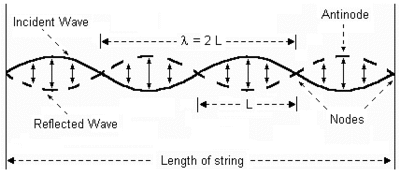
- Avibrates
- Bright angles
- Cresonant frequencies
- Dexact
- Ehalf wavelengths
16Demonstrating Stationary Waves with Microwaves:
Microwaves [blank_start]reflected[blank_end] off a m[blank_start]etal[blank_end] p[blank_start]late[blank_end] set up a stationary wave.
A meter or l[blank_start]oudspeaker[blank_end] is attached to the p[blank_start]robe[blank_end] so you can detect the v[blank_start]ariations[blank_end] in microwaves.
You can find the nodes and antinodes by moving the probe between the t[blank_start]ransmitter[blank_end] and r[blank_start]eflecting[blank_end] p[blank_start]late[blank_end] (i.e. places of z[blank_start]ero[blank_end] amplitude and places of minimum/[blank_start]maximum[blank_end] amplitude).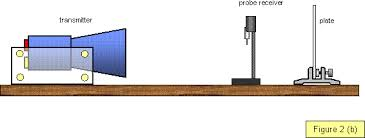
- Areflected
- Boudspeaker
- Cransmitter
- Deflecting
- Elate
- Fetal
- Glate
- Hrobe
- Iariations
- Jero
- Kmaximum
17Demonstrating Stationary Waves with Sound:
Powder can show stationary waves in a tube of a[blank_start]ir[blank_end].
Stationary s[blank_start]ound[blank_end] waves are produced in the glass tube.
The lycopodium powder laid along the [blank_start]bottom[blank_end] of the tube is shaken away from the [blank_start]antinodes[blank_end] but left [blank_start]undisturbed[blank_end] at the [blank_start]nodes[blank_end] (sound is a [blank_start]longitudinal[blank_end] wave so particles of powder will be [blank_start]vibrating[blank_end] side to side - [blank_start]parallel[blank_end] to direction of wave travel).
- Abottom
- Bantinodes
- Cundisturbed
- Dnodes
- Elongitudinal
- Fvibrating
- Gparallel
- Hir
- Iound
18The lowest frequency at which a standing wave is formed is the fundamental mode of vibration.
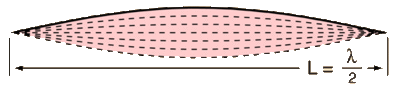
- ATrue
- BFalse
Information
- Description
- AS - Level Sally's Physics (Waves and Particle Nature of Light) Quiz on Standing Waves, created by Sally Lancaster on 11/03/2016.
- Author
- Sally Lancaster
- Language
- English
- Views
- 1
- Tags
- Rating
- No ratings yet Rate this quiz