
Quiz
1.3 Continental Drift
This quiz has question types that open in the usual player.
Questions in this quiz (15)
1Why are earthquakes rare in ocean basins away from MORs?
- AOcean basins are found in the middle of the plate where there is no tectonic activity.
- BEarthquakes only occur at MOR's.
- CIt is aseismic.
2Why is there a positive heat flow over the axial rift of an MOR?
- ADue to rising magma and volcanic activity.
- BDue to the density of the rocks.
3How have satellites provided evidence for sea floor spreading?
- AThey can measure the changing distance between two points over time.
- BThey can predict movement of plates.
4[blank_start]Transform[blank_end] faults displace mid-ocean ridges.
They form [blank_start]perpendicular[blank_end] to the axial rift.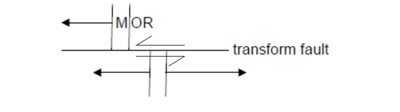
- ATransform
- Bperpendicular
5Seismic [blank_start]tomography[blank_end] has been used to provide evidence for mantle plumes and hot spots by taking [blank_start]3D[blank_end] images of heat flow to show areas of [blank_start]high[blank_end] heat flow compared to cooler ones.
- Atomography
- B3D
- Chigh
6Label the image to show the formation of island chains and seamounts over a hotspot.
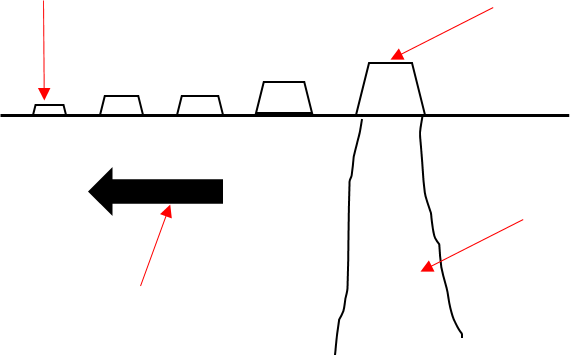
- Aoldest seamount
- Byoungest island
- Cmantle plume
- Ddirection of plate movement
7How does a chain of islands and seamounts develop over a hotspot?
Rising magma creates an [blank_start]island[blank_end].
The plate moves over the [blank_start]hotspot[blank_end].
The mantle plume is [blank_start]stationary[blank_end].
Older islands [blank_start]sink[blank_end] and are eroded.- Aisland
- Bhotspot
- Cstationary
- Dsink
8What is a mantle plume?
- AA stationary area of high heat flow in the mantle which rises from great depths and produces magma that feeds hot spot volcanoes.
- BA body of lower density buoyant material rising upwards.
- CThe surface expression of a mantle plume.
9Using the fit of Africa and S. America describe the evidence for the movements of continents over time.
Fit of the [blank_start]continents[blank_end]
- Fit along edge of continental [blank_start]shelf[blank_end].
- Few [blank_start]overlaps[blank_end] due to younger rock deposited.
- Few gaps due to [blank_start]erosion[blank_end].
Rock types
- Matching [blank_start]rock[blank_end] sequences across the join of the continents
- Same age of rocks across the [blank_start]join[blank_end]
eg. Precambrian - cratons
eg. Carboniferous - [blank_start]glacial deposits[blank_end]
Mountain chains
- Same trend of mountain [blank_start]belts[blank_end] across the join of the continents
- structures such as folds / faults match up
- same rock types in the mountain belt across the join
- same [blank_start]age[blank_end] of mountains across the join
Fossils
- outcrops of fossils match up / same fossils on different continents
- fossils that could not have crossed an ocean the same on both continents
eg reptile - [blank_start]Mesosaurus[blank_end]
eg plants - [blank_start]Glossopteris[blank_end]
Glaciations
- direction of [blank_start]striations[blank_end] shows movement of ice and the striations match up
- glacial [blank_start]erratics[blank_end] can be found on both continents
- glacial rocks match up across the join
- Carboniferous ice [blank_start]sheet[blank_end] can be seen across Africa and South America- Acontinents
- Bshelf
- Coverlaps
- Derosion
- Erock
- Fjoin
- Gglacial deposits
- Hbelts
- Iage
- JMesosaurus
- KGlossopteris
- Lstriations
- Merratics
- Nsheet
10Fossils found in Africa and S. America used as evidence for continental drift:
Reptile = [blank_start]Mesosaurus[blank_end]
Plant = [blank_start]Glossopteris[blank_end]- AMesosaurus
- BGlossopteris
11Label the diagram of an MOR.
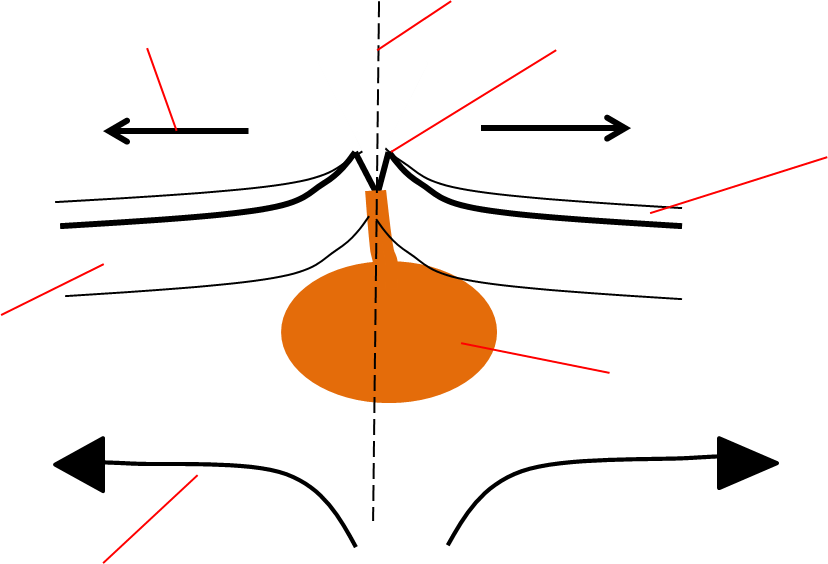
- Aaxial rift
- Bmagma chamber
- Cconvection currents
- Dbasalt pillow lavas
- Ethin layer of sediment
- Fmid-ocean ridge
- Gdirection of plate movement
12Label the diagram of the oceanic-continental convergent plate margin.
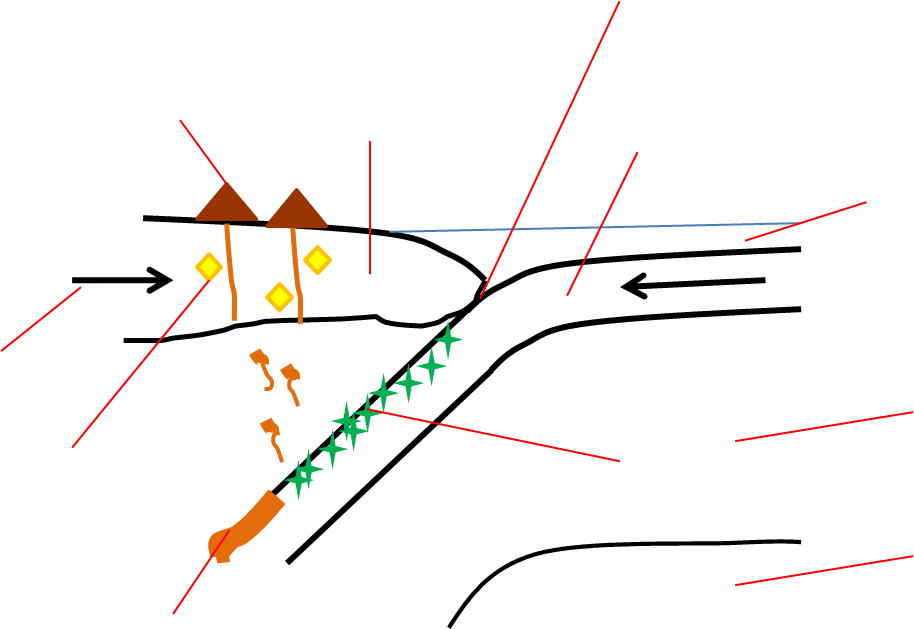
- Apartial melting of subducting plate
- Bbatholith
- Cvolcano
- Ddirection of plate movement
- Econtinental crust
- Ftrench
- Goceanic crust
- HBenioff zone
- IAsthenosphere
- JLithosphere
- Ksea level
- Lrising magma
13Label the diagram of the continental-continental convergent plate margin.
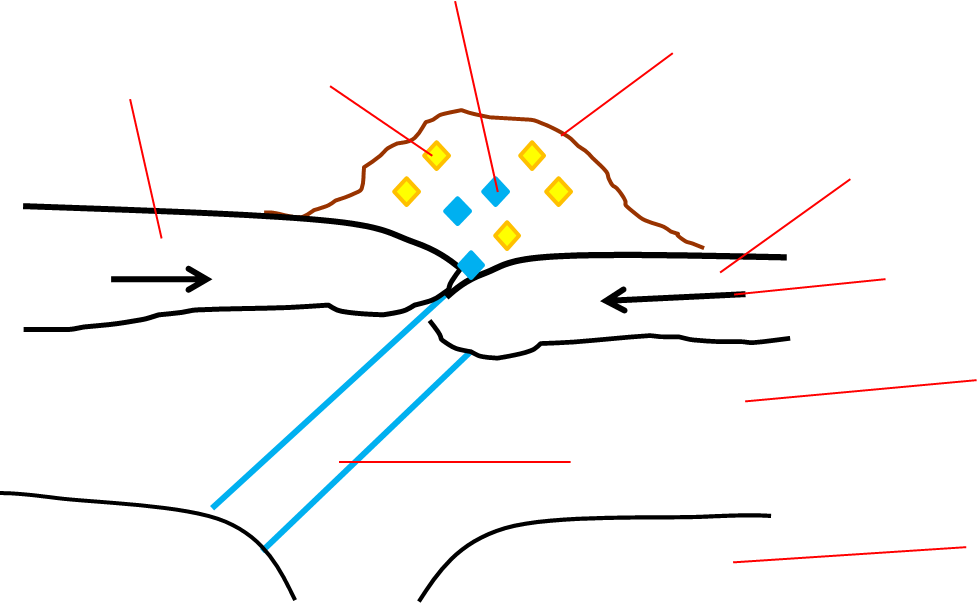
- Aophiolite
- Bbatholith
- CLithosphere
- DAsthenosphere
- Eancient oceanic crust
- Ffold mountains
- Gcontinental crust
- Hcontinental crust
- Idirection of pate movement
- Jform by orogenesis
14Label the diagram of a oceanic-oceanic convergent plate margin.
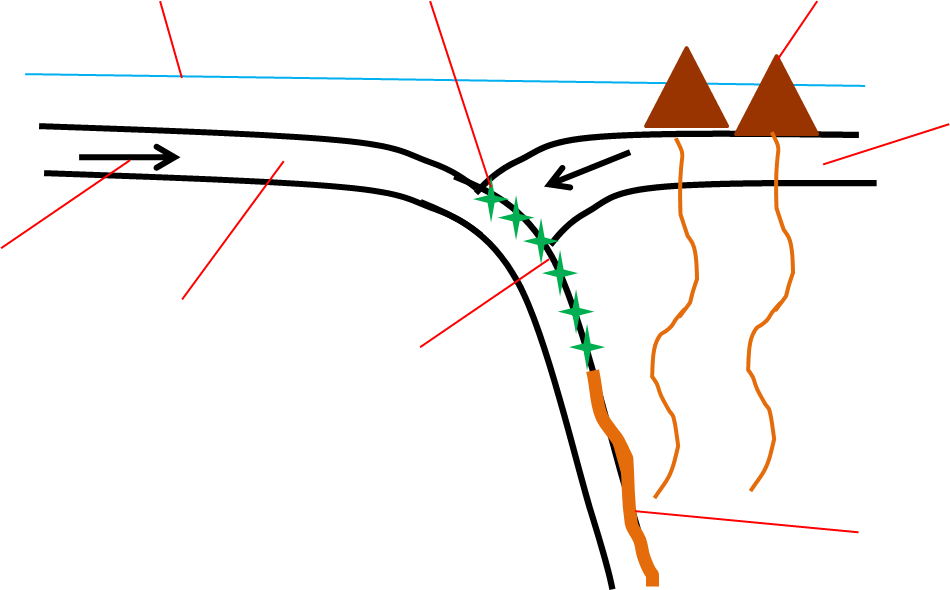
- Asea level
- Bsubducting oceanic crust
- CBenioff zone
- Dpartial melting
- Evolcanic island
- Foceanic crust
- Gdeep sea trench
15Give examples of the different types of plate margins:
Divergent: [blank_start]Mid-Atlantic Ridge[blank_end]
Oceanic-Continental Convergent: [blank_start]Nazca[blank_end] and [blank_start]South American[blank_end]
Continental-Continental Convergent: [blank_start]Indian[blank_end] and [blank_start]Eurasian[blank_end]
Oceanic-Oceanic Convergent: [blank_start]Pacific[blank_end] (subducting) and [blank_start]Philippine[blank_end]
Conservative: [blank_start]Pacific[blank_end] and [blank_start]North American[blank_end]- AMid-Atlantic Ridge
- BNazca
- CSouth American
- DIndian
- EEurasian
- FPacific
- GPhilippine
- HPacific
- INorth American
Information
- Description
- Pgs. 24-45
- Author
- Izzy Backhouse
- Language
- English
- Views
- 55
- Tags
- Rating
- No ratings yet Rate this quiz