Preference utilitarianism claims that we should not seek to maximise pleasure, but the satisfaction of people's preferences.
Singer approached issues by seeking the best consequences for all involved, in accordance with people's preferences, and the strength of those preferences.
All sentient beings get preferences, however those who can communicate them are most important. Animals and unborn babies are included in sentient beings.
Most animals cannot have preferences, so we should act in accordance with their best interests. If you ignore the interests of animals (e.g. eating factory farmed meat) then you are being speciest.
Interests - something in favour of maintaining an animal or human's wellbeing and health, for the organism's benefit.
Satisfying preferences is an improvement on the more classical forms of utilitarianism, as people can often choose things that don't make them happy.
It is also easier to know whether someone's preferences have been satisfied, in comparison to how much pleasure they experience.
It can be right to satisfy someone's preferences, even if they cannot derive any pleasure from it. e.g.) I could want you look after my ant farm when I die. You look after my ants, even though I cannot derive any pleasure from this.
This theory protects the vulnerable, as all sentient beings get preferences.
Preference utilitarianism isn't just about not causing harm, but about considering best interests and doing good.
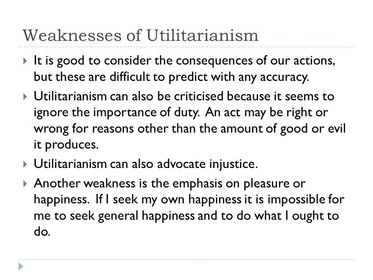
It is not clear how to weight one preference against another, and fulfilled preferences are harder to add up than pleasure and pain.
There are different definitions of sentience, depending on who you ask.
Singer doesn't attribute full rights to unborn or newborn babies - there is major controversy over giving full preferences at 4 weeks old.
This theory gives rights to severely mentally ill people, who have had their rights taken away from them for the protection of both themselves and others. If they are unable to rationalise, should they really be given preferences?
This branch of Utilitarianism can go against common laws - for instance, abortion may be off limits if someone considers a foetus to be sentient, and thus capable of having preferences.