circulation

Description

Edexcel IGCSE circulation topic 1 LV
emily  Wallace
Slide Set by emily Wallace, updated more than 1 year ago
emily  Wallace
Created by emily Wallace over 8 years ago
0
0

Resource summary

Slide 1

    Blood
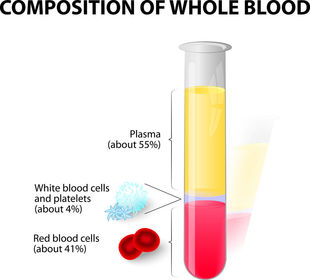
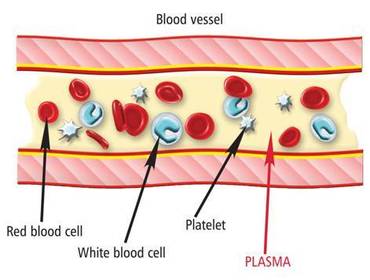
    5 litres in the body -a specific type of tissue consisting of millions of cells in a fluid- jobs: to TRANSPORT SUBSTANCES around the body DEFEND body against infections and disease 

Slide 2

Slide 3

    Platelets
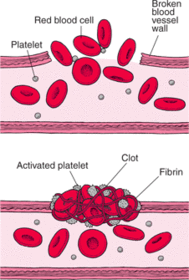
    NO NUCLEUS  - fragments of cells made in BONE MARROW [400,000 per Cm3 of blood]CLOTTS blood vessels are usually smooth- when cut they become rough; this causes a chemical to be released. FIBRINOGEN = soluble protein  FIBRIN = insoluble protein             ^           fibrin - MESH where red blood cells and platelets are trapped 

Slide 4

    Red Blood Cells 
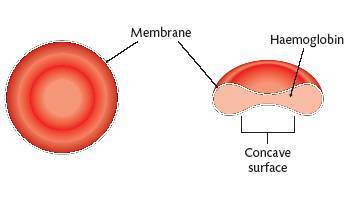
    [5,000,000 per CM3]Made in RED BONE MARROW live for 4 MONTHS - destroyed in LIVER SPLEEN  red pigment - IRON  no nucleus = Haemoglobin  BICONCAVE shape = increased surface are  Haemoglobin > a Protein > contains Iron = carries O2Haemoglobin + oxygen --------> oxyhaemoglobin CO poisoning Haemoglobin has a GREATER AFFINITY for CO than O2.breathed CO - less O2 binds with haemoglobin - tissues starve - no energy -deathCO = Car exhausts fumes and cigarettes 

Slide 5

    White Blood Cells Pt1
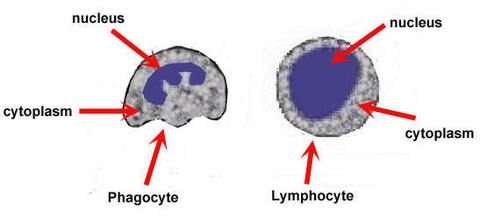
    - larger than red bloods cells- fewer of them [ 8,000 per CM3] function  DEFEND against disease causing micro organisms called Pathogens.primary body defences ---> skin & openings secret defensive chemicals e.g.. mucus, HCl 2 types - Phagocytes & lymphocytes

Slide 6

Slide 7

    Lymphocytes 
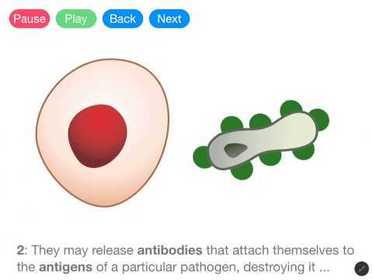
    - made in the LYMPHATIC SYSTEM - Live for SEVERAL YEARS SPHERICAL shape & Red Blood Cell size  LARGE NUCLEUS, Small NON-GRANUAL CYTOPLASM  Function:produce ANTIBODIES ANTIBODIES target surface of proteins called ANTIGENS then tell lymphocytes to produce more anitbodies  cause Micro organisms to CLUMP TOGETHER  PROMOTES phagocytosis   prevents Antigens INVADING HOST CELL tagets toxins with ANTI-TOXINS

Slide 8

Show full summary Hide full summary

Similar

The Circulatory System
Johnny Hammer
Biology AQA 3.1.3 Cells
evie.daines
Biology AQA 3.2.5 Mitosis
evie.daines
Biology AQA 3.1.3 Osmosis and Diffusion
evie.daines
Biology- Genes, Chromosomes and DNA
Laura Perry
Biology- Genes and Variation
Laura Perry
Enzymes and Respiration
I Turner
GCSE AQA Biology - Unit 2
James Jolliffe
GCSE AQA Biology 1 Quiz
Lilac Potato
Using GoConqr to study science
Sarah Egan
Cells and the Immune System
Eleanor H