Poor sampling method
Non-random sample (Not all subjects have equal likelihood of being chosen)
Self-selection effect
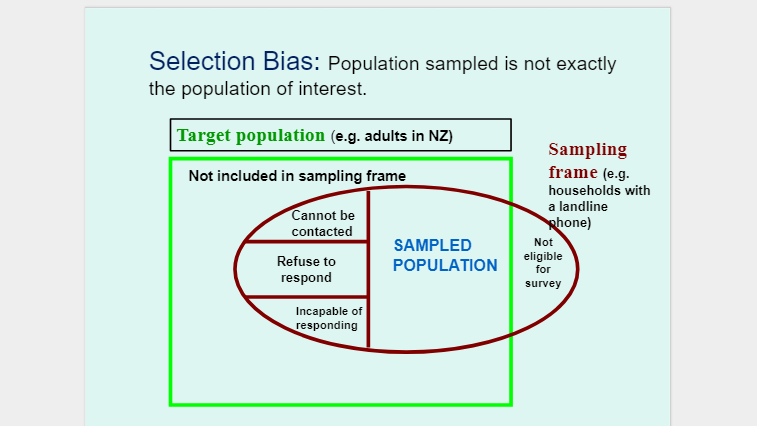
Sampling frame does not represent the population
Low response rate
Questionnaire or measurement error
Poorly written questions
Question order effect
Poor measurement protocols
Behavioural effects
Interviewer effect
Wanting to look good
Responses affected by weather, political or current events
Potential Sources of Non-sampling errors
Slide 2
Methods of Data Collection
Surveys and Polls
Experimental Studies
Observational Studies
Slide 3
Polls and Surveys
Poll
Few questions
Multi-choice type only
Survey
Many questions
May have branches and skips
May have a “tick multiple boxes” option
May have open-ended, write a comment questions
Non-response bias
When people who have been targeted to be surveyed do not respond:
Potential bias if non-respondents are likley to behave differently to respondents with respect to the question being asked.
e.g. Non-respondents in an employment survey are likely to be those who work long hours.
Self-selection bias
People decide themselves whether to be surveyed or not.
Question effects
Subtle variations in wording can have an effect on responses.
e.g. “Should euthanasia be legal?”
vs. “Should voluntary euthanasia be legal?”
People are more likely to favour “voluntary” euthanasia.
Slide 8
Behavioural considerations
People tend to answer questions in a way they consider to be socially desirable.
e.g. pregnant women being asked about their drinking habits may be reluctant to admit that they drink alcohol
Interviewer effects
Different interviewers asking the same question can obtain different results.
e.g. the sex, race, religion , manner
of the interviewer
may influence how people respond to a particular question.
Survey-format effects
-question order e.g.
“To what extent do you think teenagers are affected by peer pressure when drinking alcohol ?”
followed by:
“ Name the top 5 peer pressures you think teenagers face today.”
-survey layout
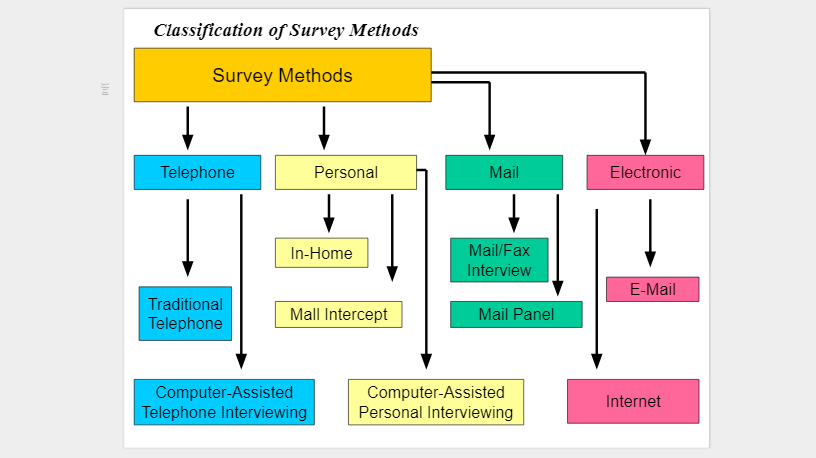
-interviewed by phone or in-person or mail.
Slide 9
Transferring findings
Taking the data from one population and transferring the results to another.
e.g. Auckland opinions may not be a good indication of New Zealand opinions.
continued...
Slide 10
Non-Sampling Errors
can be much larger than sampling errors
are always present
can be virtually impossible to correct for after the completion of survey
virtually impossible to determine how badly they will affect the result
good surveys try to minimize them in the design of the survey (e.g. do a pilot survey first)
Slide 11
Survey/Polls
A report on a sample survey/poll should include:
Who carried it out and who funded it
target population (population of interest)
sample selection method
the sample size and the margin of error
the date of the survey
the exact question(s) being asked
the results
the claims (inferences) made