
Flashcards
Lesson 5
Cards in this deck (17)
- 1Lesson 5Recruiting Talented
Employees - 2Strategic recruiting Employee recruiting is the process of
identifying and attracting people to work for an organization.
A strategic approach to recruiting helps an organization to become an employer of
choice and thereby obtain and keep great
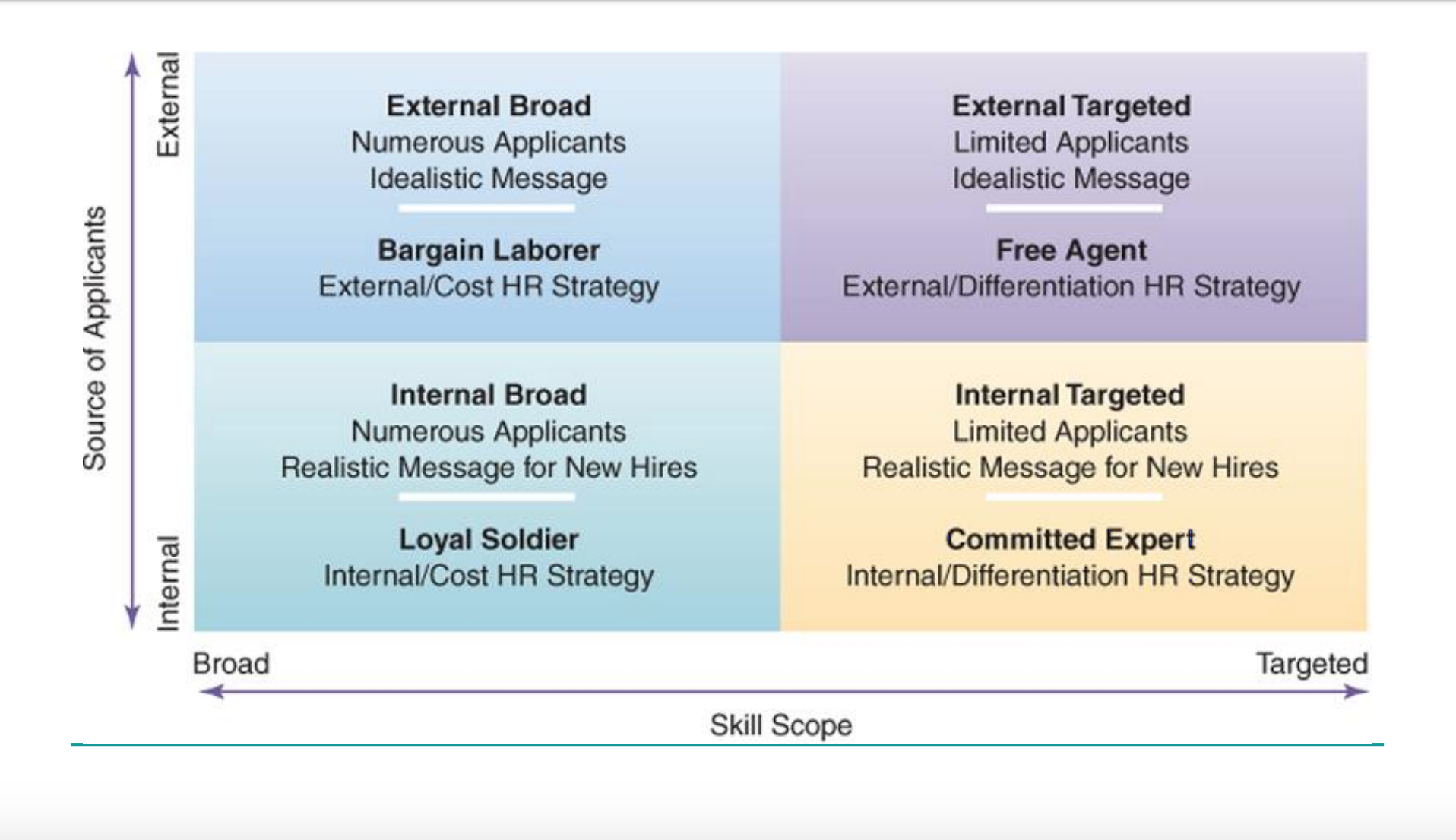
employees. - 3Factors influencing recruiting Strategies There are two approaches:
> Broad scope, which represents a set of work skills that a lot of
people have.
> Targeted scope, which represents a set of skills that only a few
people have.
There are two sources:
> Internal sourcing seeks to fill job openings with people who are
already working for the organization.
>>These are current employees who are ready for promotions or for different
tasks.
> External sourcing of recruits seeks to fill job openings with
people from outside the organization.
>> Primary sources of recruits are other organizations. - 4Strategic Framework for Employee Recruiting
- 5Human Resource Planning HR planning is the process of forecasting
employment needs.
The process involves:
1. assessing current employment levels;
2. predicting future needs;
3. planning for internal movement;
4. predicting external hiring needs. - 6The Job Search Effective recruiting is understanding the needs, goals, and behaviors of people searching for jobs.
There are three types of people looking for work:
1. people entering the workforce for the first time.
2. people who have been in the workforce, but are currently unemployed.
3. people who are currently employed, but seeking a different job. - 7Organizational Attractiveness The four general characteristics that attract applicants to organizations are:
1. Familiarity
2. Compensation
3. Specific job traits
4. Recruiting sources - 8Familiarity Organizations with a strong brand image thus have an overall advantage when it comes to recruiting.
However, efforts to create an image as a
generally desirable place to work are very
important for less well-known companies. - 9Compensation and specific job traits People like organizations which:
>Pay competitively;
> Offer better and more flexible benefits;
>Help to exploit greater opportunities for advancement ;
> Assure higher job security.
But we have also to consider Organizational Traits
> People like working for organizations which have positive reputations such being friendly, sincere, kind, and trustworthy.
>Another organizational trait is innovativeness. People want to work for innovative organizations because they think their work will be interesting and fun.
> A third desirable trait is competence. People want to work for an organization that is successful . - 10Recruitment Sources Organizations use a variety of sources to find job applicants.
>Some sources, such as referrals from current employees, are relatively informal.
> Other sources, such as professional recruiters, are more formal.
Some of the various sources are as follows:
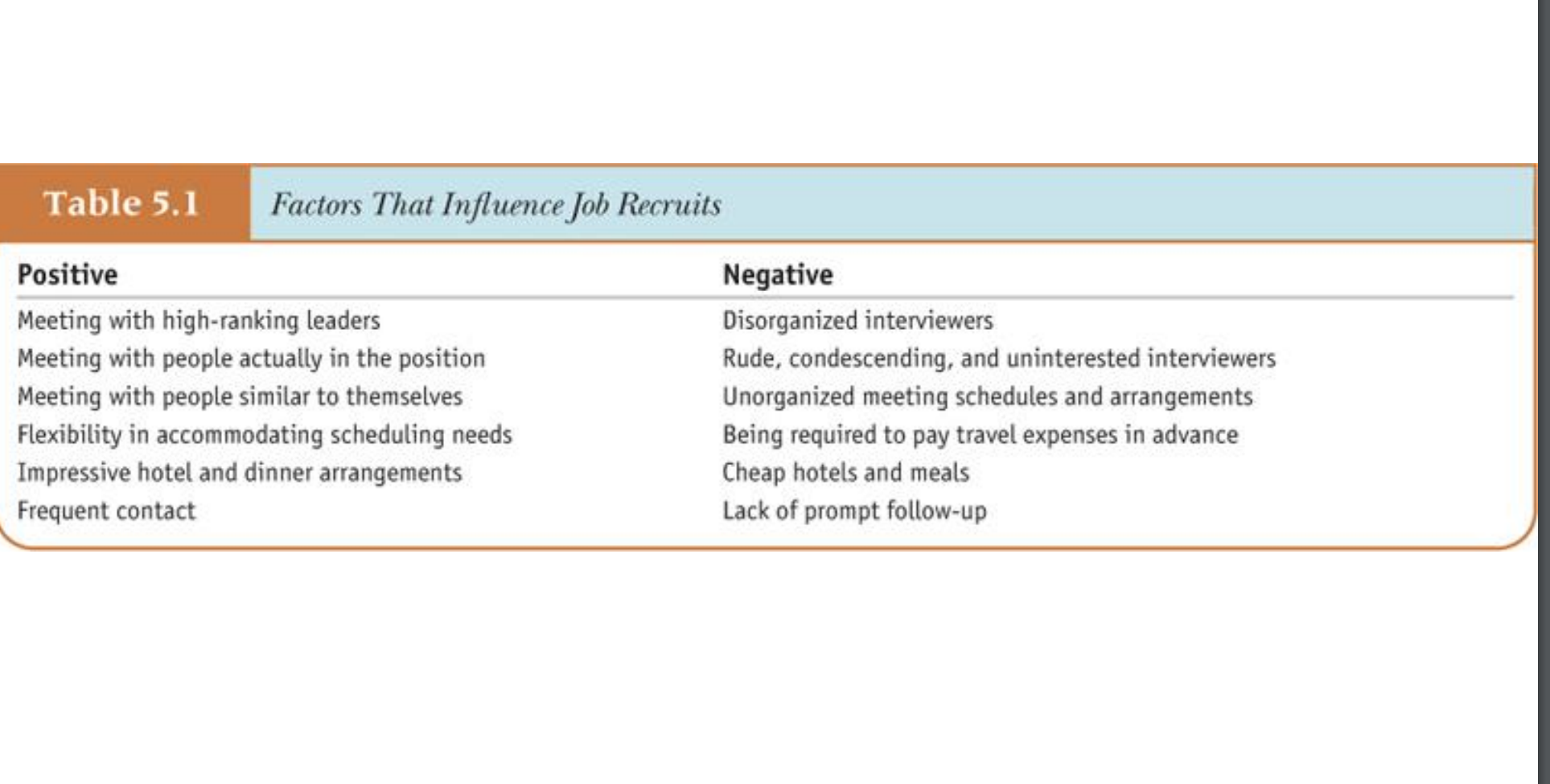
> job posting, employee referrals, print advertising, electronic recruiting, employment agencies, and campus recruiting. - 11Factors that Influence Job Recruits
- 12Effective Recruiting Four common measures include:
1. Cost
2. Time
3. Quantity
4. Quality - 13Cost Measures Cost measures include such things as the
money paid for advertising, agency fees, and referral bonuses.
Also included is travel expenses for both
recruiters and recruits, as well as salary costs for people who spend time and effort on
recruiting activities. - 14Time Measures Time measures assess the length of the
period between the time recruiting begins and the time the new employee is in the position.
Estimates suggest that the average time to fill a position is 52 days. - 15Quantity Measures Focus on the number of applicants or hires that are generated through various recruiting activities.
Common measures include number of inquiries generated, number of job applicants, and number of job acceptances.
These are measures of efficiency, and they provide information about the reach of recruiting practices. - 16Quality Measures Is the extent to which recruiting activities
locate and gain the interest of people who
are actually capable of performing the job.
Typical measures include assessments of
how many applicants are qualified for the job, as well as measures of turnover and
performance of the people hired. - 17Effective Recruiting The most frequently used measures of recruiting combines assessments of cost and quantity.
> One measure is cost per hire, which is calculated by dividing the total cost of a particular search by the number of hires it provides.
> The other is cost per applicant, which is calculated by dividing the cost of a recruiting method, such as a newspaper advertisement, by the number of people who respond.
Information
- Description
- Business/Economics Flashcards on Lesson 5, created by Ladi Dadi on 30/10/2019.
- Created by
- Ladi Dadi
- Views
- 13
- Rating