
Quiz
The Ancient Greece
Create a free account to finish this quiz
Save your progress and see your final score.
Already have an account? Sign in
Questions in this quiz (25)
1Choose the correct option about THE NATURAL ENVIRONMENT:
(4 sentences are correct)- AThe Greek-speaking world was originally called Hernios.
- BThe Greek-speaking world was originally called Hellas.
- CAncient Greece was a single, unified country.
- DAncient Greece wasn't a single, unified country.
- EIt's a land dry and rocky.
- FIt's a land wet and rocky.
- GEach Greek territory has its own government and laws.
- HEach Greek territory depend on the main government.
2Select correct options about MINOAN CRETE:
(4 options are correct)- ADevelop in Mycenas during the Bronze Age.
- BImportant role in trade across the Mediterranean.
- CDevelop in Crete during the Bronze Age.
- DImportant role in trade across the Ionic Sea.
- ERuled by powerful kings like King Minos.
- FCrete was its most important city.
- GRuled by powerful king like King Knossos.
- HKnossos was its most important city.
3Choose the correct options about MYCENAE:
(2 sentences are correct)- AWas another Bronze Age.
- BAthens was its most important city.
- CWas another Gold Age.
- DMycenae society was dominated by warriors.
4Select correct sentences about THE DARK AGE:
(2 sentences are correct)- AMycenaean civilisation desappeared in about 1150 BC.
- BWe know much about this period.
- CMycenaean civilisation desappeared in about 1510 BC.
- DWe don't know mucho about this period.
5Choose correct options about POLEIS:
(5 sentences are correct)- AThe Greeks lived in city-sates or polis.
- BIt wasn't a region with own government, laws and army.
- CThe Greeks lived in cities called villages.
- DAthens, Sparta, Istambul and Crete are mainly poleis.
- EIt was a region with own government, laws and army.
- FAthens, Sparta, Corinth and Thebes are mainly poleis.
- GAristocracy was form by cultural minority. Sparta was the principal city.
- HDemocracy replaced aristocracy in some poleis. It had assemblies and councils. Crete was the principal city.
- IAristocracy was form by privileged minority. Sparta was the principal city.
- JDemocracy replaced aristocracy in some poleis. It had assemblies and councils. Athens was the principal city.
6Select correct options about the reasons to create colonies:
(2 options are correct)- AThe social development
- BOverpopulation
- CThe increase of taxes
- DThe spread of religion
- EThe economy
7Choose correct options about dates of GREEK EXPANSION:
(2 sentences are correct)- A700-650 BC To the west
- B750-650 BC To the west
- C650-550 BC To the east
- D650-500 BC To the east
8Select correct options about WEST EXPANSION:
(5 sentences are correct)- AOn the islands and coast of the Doric Sea.
- BLibya in northern Asia.
- CMalta, southern Italy.
- DSouthern Iberian Peninsula.
- EThe east coas of the Germany.
- FOn the islands and coast of the Ionian Sea.
- GLibya in northern Africa.
- HSicily, southern Italy.
- ISouthern France.
- JThe east coast of the Iberian Peninsula.
9Choose the correct option about EAST EXPANSION:
- AColonies were founded in the east, around the Caspian Sea.
- BColonies were founded in the east, arount the Black Sea.
- CColonies were founded in the east, around the Ionic Sea.
10The Greeks came into contact with other people (Phoenicians, Etruscans and Egyptians)
- ATrue
- BFalse
11Select correct options about THE CLASSICAL AGE:
(3 sentences are correct)- AThe poleis of Athens and Sparta were the dominant powers.
- BThere were wars between the Greeks and the Persians, and between the Greek poleis.
- CThe poleis of Athens and Thebes were the dominant powers.
- DThere were wars between the Greeks and the Asians, and between the Greek poleis.
- EThis was a period of outstanding economical achievement (Pericles was news taxes).
- FThis was a period of outstanding cultural achievement (Pericles was rebuilt the Acropolis).
12Select correct options about DEMOCRACY IN ATHENS:
(3 sentences are correct)- ALawmakers like Pericles introduced political reforms in Athens.
- BAthens became an oligarchy, which means "rule by the people".
- CAll mens participated in political life.
- DOnly citizens (men) participated in political life.
- EAthens became a democracy, which means "rule by the people".
- FLawmakers like Solon introduced political reforms in Athens.
13Choose correct options about OLIGARCHY IN SPARTA:
(3 sentences are correct)- AOligarchy, which means "rule by the people".
- BThey spend most of their time preparing for warfare.
- CSparta wasn't the great rival of Athens.
- DOligarchy, which means "rule by the few".
- EThey spend most of their money preparing for cultural life.
- FSparta was the great rival of Athens.
14Complete the sentences about THE PERSIAN WAR (499-479 BC):
The Persians conquered many of the poleis (__1__).
In __2__, these cities __3__ Persians, and other poleis supported them.
First Persian War. Finished when __4__ defeated the Persians (Battle of __5__ in __6__).
Second Persian War (__7__). __8__ of Persia invaded Greece, but defeated (Battle of __9__).- A1.- 5th / 2.- 498 BC / 3.- rebelled / 4.- wariors / 5.- Salamis / 6.- 490 BC / 7.- 480 BC / 8.- Queen / 9.- Marathon
- B1.- 6th / 2.- 499 BC / 3.- rebelled / 4.- hoplites / 5.- Marathon / 6.- 490 BC / 7.- 480 BC / 8.- King / 9.- Salamis
- C1.- 5th / 2.- 495 BC / 3.- rebelled / 4.- hoplites / 5.- Marathon / 6.- 490 BC / 7.- 485 BC / 8.- King / 9.- Salamis
15Choose the correct option to complete the next sentences about THE PELOPONNESIAN WAR (431-404 BC):
Delian League (__1__) to defend the city-states against future __2__ attacks.
Economical, political and cultural domination of __3__.
Peloponnesian League (__4__).
Peloponnesian War. __5__ won the war and became the leading polis.
The Greek city-states were __6__ than before.- A1 Athens / 2 Italian / 3 Sparta / 4 Sparta / 5 Athens / 6 much poor
- B1 Sparta / 2 Persian / 3 Athens / 4 Sparta / 5 Athens / 6 much weaker
- C1 Athens / 2 Persian / 3 Athens / 4 Sparta / 5 Sparta / 6 much weaker
16Choose the correct option to complete next sentences about ALEXANDER THE GREAT:
__1__. Mountainous kingdom in the north of Greece.
They were strongly influenced by Greek culture.
__2__ conquered nearly all the poleis (__3__ century BC).
Alexander the Great continued his conquests. He defeather the __4__.- A1.- Macedon / 2.- Philip II of Macedon / 3.- 4th / 4.- Persian Empire
- B1.- Albanian / 2.- Philip IV of Macedon / 3.- 3th / 4.- Persian Empire
- C1.- Macedon / 2.- Philip V of Macedon / 3.- 4th / 4.- Persian Empire
17Choose the correct option to complete next sentences about HELLENISM:
__1__ founded many cities in the conquered territories, like __2__.
Greek culture + Eastern ideas = Hellenism.
When Alexander died, his generals __3__ the empire into __4__.- A1 Philip / 2 Alexandria / 3 divided up / 4 separate kingdoms
- B1 Alexander / 2 Crete / 3 divided down / 4 unique kingdom
- C1 Alexander / 2 Alexandria / 3 divided up / 4 separate kingdoms
18Select the correct option to complete next sentences about SOCIETY:
__1__. It's a minority of only adult men. They took part in politics, full rights and paid taxes.
__2__. They don't have full rights.
__3__. No political rights and no go to public shows. Under the authority of man.
__4__. Paid taxes and fought in the army. Not allowed to own land.
__5__. Prisioners of war or they children.- A1 Citizens / 2 Non-citizens / 3 Women / 4 Metics / 5 Slaves
- B1 Citizens / 2 Non-citizens / 3 Metics / 4 Slaves / 5 Women
- C1 Citizens / 2 Non-citizens / 3 Slaves / 4 Metics / 5 Women
19Choose the correct option to complete next sentences about ECONOMIC ACTIVITIES:
AGRICULTURE. The land was __1__ in many regions. Main products: __2__.
LONG DISTANCE TRADE. Trade acroos the __3__. Imported food, wood and copper. They used __4__ coins called drachmas.
LOCAL COMMERCE. Crafstmen sold their products in their workshops. They often exchanged products.
CRAFTS. The Greeks made excellent __5__, which they exported to other regions. They also manufactured textiles and leather.- A1 poor / vines, wheat and olives / 3 Mediterranean / 4 gold / 5 textiles
- B1 rich / 2 vines, wheat and olives / 3 Ionic / 4 gold / 5 pottery
- C1 poor / 2 vines, wheat and olives / 3 Mediterranean / 4 silver / 5 pottery
20Select the correct option to complete next sentences about RELIGION:
The Greeks were __1__. Each city had a god that gave it special protection.
__2__. They were born from the union of a god and a human.
__3__. They were immortal, but looked human.
__4__. They were colourful stories about all these gods and heroes.
__5__. They were messages from the gods, and were usually interpreted by a prest.
__6__. The homes of the gods, and priests and priestesses were their servants.- A1 Polytheistics / 2 Gods / 3 Heroes / 4 Greeks myths / 5 Temples / 6 Oracles
- B1 Polytheistics / 2 Heroes / 3 Gods / 4 Greeks myths / 5 Oracles / 6 Temples
- C1 Polytheistics / 2 Heroes / 3 Gods / 4 Greeks myths / 5 Temples / 6 Oracles
21Select the correct option to complete next sentences about GREEK THEATRE:
__1__ originated in religious celebrations to the god __2__.
Tragedies, comedies and satyr plays were presented in __3__ theatres. All actors were __4__ with masks.- A1 Drama / 2 Dionysus / 3 outdoor / 4 men
- B1 Drama / 2 Heracles / 3 outdoor / 4 women
- C1 Drama / 2 Dionysus / 3 indoor / 4 men
22Choose the correct option to complete next sentences about PHILOSOPHY AND SCIENCE:
Greeks are the first to use __1__ to explain universe.
The leading Greek philosophers lived in __2__.
The greatest Greek __3__: Socrates, Plato and Aristotle.
Important __4__: Pythagoras and Archimedes.
The first __5__: Herodotus and Thucydides.- A1 reason and logic / 2 Athens and Sparta/ 3 mathematics / 4 scientists / 5 politicians
- B1 reason and logic / 2 Athens and Alexandria / 3 philosophers / 4 scientists / 5 historians
- C1 reason and logic / 2 Athens and Sparta / 3 politicians / 4 scientists / 5 historians
23Select the correct option about GREEK TEMPLES:
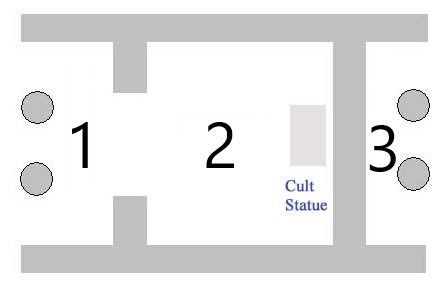
- A1 Opisthodomos / 2 Pronaos / 3 Naos
- B1 Pronaos / 2 Opisthodomos / 3 Naos
- C1 Pronaos / 2 Naos / 3 Opisthodomos
24Select the correct option about THE THREE ORDERS:
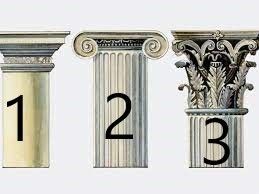
- A1 Doric / 2 Corinthian / 3 Ionic
- B1 Doric / 2 Ionic / 3 Corinthian
- C1 Corinthian / 2 Doric / 3 Ionic
25Select the correct option about PERIODS OF SCULPTURE:
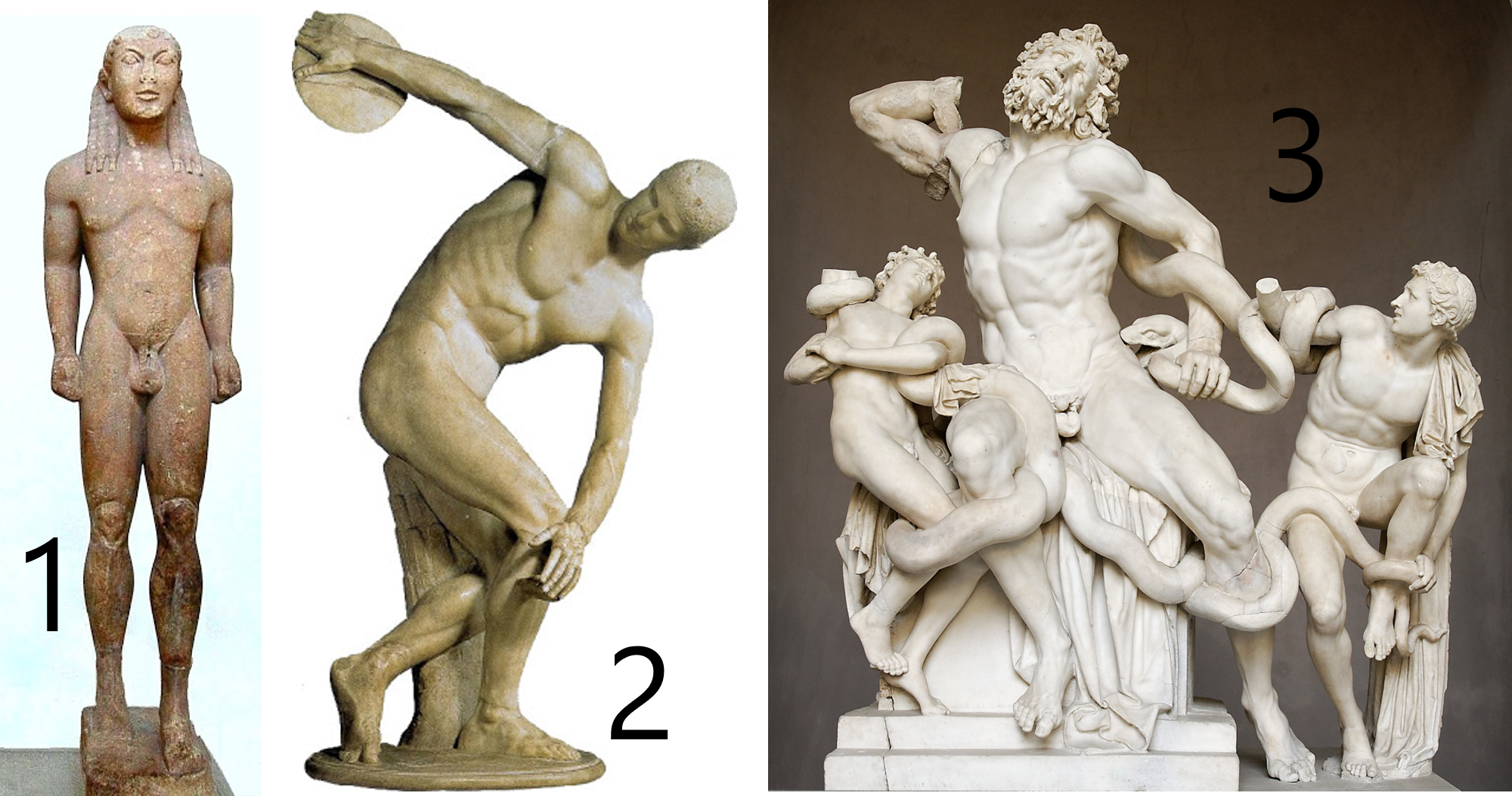
- A1 Classical Period / 2 Archaic Period / 3 Hellenistic Period
- B1 Archaic Period / 2 Hellenistic Period / 3 Classical Period
- C1 Archaic Period / 2 Classical Period / 3 Hellenistic Period
Information
- Description
- Primero Ciencias Sociales Quiz on The Ancient Greece, created by Lourdes Mora Arévalo on 27/03/2021.
- Author
- Lourdes Mora Arévalo
- Language
- Español
- Views
- 30
- Tags
- Rating
- No ratings yet Rate this quiz