
Notizen
Conversion Experience
Inhalt der Notizen (5)
Seite 1
Overview
'Conversion' means to change in form, character or function, and in a religious context, it is where person changes their beliefs.
Conversion experiences raise some interesting issues: although inner experience cannot be empirically detectable, the resulting changes in behaviour are something that can be empirically observed. Often these changes occur dramatically over days and weeks, which for many believers is a powerful piece of evidence for the existence of God.
However, some thinkers see conversion as a psychological event. Sometimes crisis type events can cause rapid transformation.
Conversion experiences can be either voluntary (volitional) or involuntary (self-surrender).
Edwin Starbuck (1866-1947) drew parallels with the finding of identity in adolescence. Most religious conversions occur when people are between the ages of 15-24. It is worth noting that in Starbuck's study that non-religious adolescents go through similar stages of anxiety and depression before finding a sense of identity.
Psychologists John Lofland and Rodney Stark conducted a study of conversion in 1965 and noted the pattern which can be seen in all kinds of conversions. There is an element of passivity to conversions. Although people choose to believe and follow God, they feel like someone or something is acting upon them. Do non-religious adolescents experience this?
To simply reduce the experience to a psychological phenomena fails to fully address the question of the cause of the experience.
Conversion experiences tend to follow a pattern although some can be dramatic and intense and others slower to develop:
The individual is dissatisfied with their current ‘system of ideas.’ People who are content are less likely to be converted.
The person searches, at an intellectual and emotional level, for a basis on which to make a decision i.e. turning to the Bible or going to church.
There is an emotional crisis point where the person often feels God’s presence as well as a feeling of sinfulness and then repentance. Sometimes the experience is described in terms of visions, voices and bright lights.
The person feels a sense of peace and joy and they lose their worries. They have a desire to talk to others and share their experience.
In the longer term they may experience a change in direction in life (new career) and a new sense of purpose.
William James
William James (January 11, 1842 – August 26, 1910) was an American philosopher and psychologist who was also trained as a physician.
James believed the truth could be found in the results and because conversion often results in dramatic changes in character and lifestyle, this counts as empirical evidence in favour of spiritual claims - remember that he puts a great deal of emphasis on the end result of the experience.
He argued that sudden conversion is very real to the recipient which God has caused, so we must count conversion experiences as genuine spiritual claims.
He contended that those having a sudden conversion felt it to be a miracle rather than a natural process.
Even when James saw conversion as being a natural process, he maintained that it was inspired by the Divine.
Problems with Conversion Experiences
People can hide behind conversion experiences. For instance, Rosemary West who brutally raped, tortured and murdered children, some of which were her own children converted to Christianity in prison. This may have been to gain forgiveness from the general public.
People may also have a conversion experiences before they die. This may be out of fear of what will happen to them after death, and be nothing to do with God's revelation at all.
Seite 2
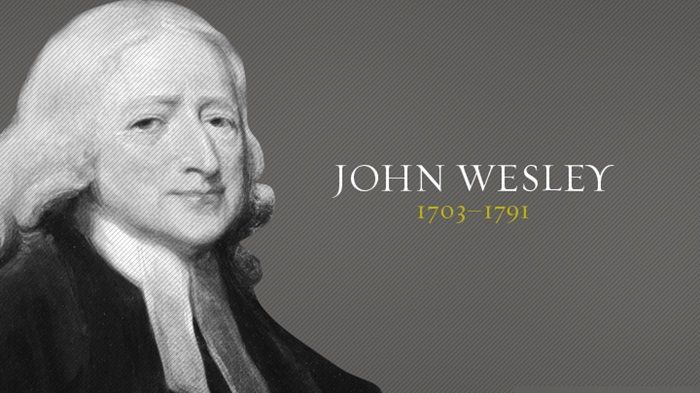
John Wesley
John Wesley was an Anglican minister who founded the Methodist movement.
He returned to England after voyaging to America in 1735, to become a pastor to the British colonists. The woman he had courted in Savannah married another man, and when he tried to enforce the disciplines of the 'holy club' he had attended in Oxford, the church congregation rebelled.
Wesley had had a strong Anglican upbringing; his father being a priest, and his mother teaching morals and religion to her 19 children.
It seemed Wesley was frustrated with striving for God's approval; "I was indeed fighting continually, but not conquering. … I fell and rose, and fell again."
On May 24, 1738, he had an experience that changed everything. He described the event in his journal:
"In the evening, I went very unwillingly to a society in Aldersgate Street, where one was reading Luther's preface to the Epistle to the Romans. About a quarter before nine, while he was describing the change which God works in the heart through faith in Christ, I felt my heart strangely warmed. I felt I did trust in Christ, Christ alone for salvation, and an assurance was given me that he had taken away my sins, even mine, and saved me from the law of sin and death."
A former member of the 'holy club', George Whitefield, was having remarkable success as a preacher, especially in the industrial city of Bristol. Hundreds of working-class poor, oppressed by industrialising England and neglected by the church, were experiencing emotional conversions under his fiery preaching. So many were responding that Whitefield desperately needed help.
Wesley hesitantly accepted, feeling apprehensive about the radical style of Whitefield's direct and outdoor preaching (which was a radical innovation of the time).
The two preachers parted ways, as Wesley was unable to accept the Whitefield's Calvinist belief of predestination.
Wesley did not intend on forming a new denomination, however, historical circumstances and his organisational genius conspired against his desire to remain in the Church of England.
Wesley's followers first met in private home "societies." When these societies became too large for members to care for one another, Wesley organised "classes," each with 11 members and a leader. Classes met weekly to pray, read the Bible, discuss their spiritual lives, and to collect money for charity. Men and women met separately, but anyone could become a class leader.
"Do all the good you can, by all the means you can, in all the ways you can, in all the places you can, at all the times you can, to all the people you can, as long as ever you can."
The movement grew rapidly, as did its critics, who called Wesley and his followers "methodists," a label they wore proudly. It got worse than name calling at times: methodists were frequently met with violence as paid ruffians broke up meetings and threatened Wesley's life.
Though Wesley scheduled his itinerant preaching so it wouldn't disrupt local Anglican services, the bishop of Bristol still objected. Wesley responded, "The world is my parish"—a phrase that later became a slogan of Methodist missionaries.
Wesley, in fact, never slowed down, and during his ministry he travelled over 4,000 miles annually, preaching some 40,000 sermons in his lifetime.
Wesley then organised his followers into a "connection," and a number of societies into a "circuit" under the leadership of a "superintendent." Periodic meetings of Methodist clergy and lay preachers eventually evolved into the "annual conference," where those who were to serve each circuit were appointed, usually for three-year terms.
In 1787, Wesley was required to register his lay preachers as non-Anglicans. Meanwhile, on the other side of the Atlantic, the American Revolution isolated Yankee Methodists from their Anglican connections. To support the American movement, Wesley independently ordained two lay preachers and appointed Thomas Coke as superintendent. With these and other actions, Methodism gradually moved out of the Church of England—though Wesley himself remained an Anglican until his death.
An indication of his organisational genius, we know exactly how many followers Wesley had when he died: 294 preachers, 71,668 British members, 19 missionaries (5 in mission stations), and 43,265 American members with 198 preachers. Today Methodists number about 30 million worldwide.
Source
Methodism Today
The Methodist church has Ministers, who are the leaders of the church, but other members of the church are invited to be 'lay preachers'.
Many Methodists do not drink, having signed the temperance pledge - but it is not a condition of being a member of the fellowship.
The Methodist church is based on the teachings of John Wesley, and has a strong social emphasis. The style is quite 'basic' and minimalist - the chapels are quite bare and simple (compared to Anglican or Catholic) and there is a strong emphasis on your personal, quite private, relationship with your conscience rather sharing it with the clergy. There is also less emphasis on Mary - a Methodist, for example, would not offer prayers to the Virgin Mary.
There is lots of emphasis on your own personal responsibility as a Christian.
It has a very 'low church' ethos - no incense, no robes, and crosses tend to be wooden without a statue of Christ on them.
Source
Seite 3
Case Study: Nicky Cruz
https://www.youtube.com/watch?v=5dNDGIqR5oU (Einbetten)
Nicky Cruz is a Christian evangelist, the founder of Nicky Cruz Outreach, an evangelistic Christian ministry.
Cruz was born in Puerto Rico, and lived with his parents, who were active followers of spiritism.
At the age of 15, his parents sent him to live in New York with his brother. After running away and living on the streets of the city, he became a member of the Mau-Mau street gang, and about six months later Cruz was selected Warlord of the gang. He quickly rose to be their leader.
Shortly after this, David Wilkerson was preaching in the neighbourhood when Cruz first encountered him. Wilkerson tried (and failed) to convert Cruz to Christianity.
Later, Wilkerson organised an evangelistic meeting in the neighborhood with the intent of converting the Mau-Maus. When Cruz heard about it, he headed with some of the members of his gang for the boxing arena where the meeting was being held, on a bus sent specially by Wilkerson.
According to Cruz, when he arrived at the arena, he "felt guilty about the things that he had done" and began to pray. After preaching, Wilkerson asked the Mau-Maus to take up a collection. Cruz volunteered and led a group of the gang through the crowd insisting on people giving money. Going backstage, he saw an exit, but convinced the group to give the money to Wilkerson on stage.
Wilkerson prayed with Cruz, and Cruz asked God to forgive him.
Afterward, Cruz and some of the gang members who were converted went to the police and turned in all of their bricks, handguns and knives, shocking the police officers in the station.
Cruz began to study the Bible and went to Bible college. He became a preacher and returned to his old neighborhood, where he preached and converted more of the Mau-Maus to Christianity, including the gang's new leader, Israel Narvaez.
https://www.youtube.com/watch?v=amg_Q4aT6Mg&list=PLInZckkOhgS8NJZCOkY-aiqeV5Jqe5knB (Einbetten)
Seite 4
St Paul's Conversion
Before his conversion, Paul, then known as Saul, was a "zealous" Pharisee who "intensely persecuted" the followers of Jesus. Says Paul in his Epistle to the Galatians.
Acts 9 tells the story as a third-person narrative:As he neared Damascus on his journey, suddenly a light from heaven flashed around him. He fell to the ground and heard a voice say to him, "Saul, Saul, why do you persecute me?"
"Who are you, Lord?" Saul asked.
"I am Jesus, whom you are persecuting," he replied. "Now get up and go into the city, and you will be told what you must do."
The men traveling with Saul stood there speechless; they heard the sound but did not see anyone. Saul got up from the ground, but when he opened his eyes he could see nothing. So they led him by the hand into Damascus. For three days he was blind, and did not eat or drink anything.— Acts 9:3–9, NIV
The account continues with a description of Ananias of Damascus receiving a divine revelation instructing him to visit Saul at the house of Judas on the Street Called Straight and there lay hands on him to restore his sight. Ananias is initially reluctant, having heard about Saul's persecution, but obeys the divine command:"Lord," Ananias answered, "I have heard many reports about this man and all the harm he has done to your holy people in Jerusalem. And he has come here with authority from the chief priests to arrest all who call on your name."
But the Lord said to Ananias, "Go! This man is my chosen instrument to proclaim my name to the Gentiles and their kings and to the people of Israel. I will show him how much he must suffer for my name."
Then Ananias went to the house and entered it. Placing his hands on Saul, he said, "Brother Saul, the Lord—Jesus, who appeared to you on the road as you were coming here—has sent me so that you may see again and be filled with the Holy Spirit." Immediately, something like scales fell from Saul’s eyes, and he could see again. He got up and was baptized, and after taking some food, he regained his strength. — Acts 9:13–19, NIV
Seite 5
Secular Conversion Examples
Britney Spears
Originally Britney Spears was a Disney Channel presenter.
As she progressed her career into mainstream pop music, she changed her image.
Later on in her career, as her bi-polar disorder worsened, she developed a drug addiction and shaved her head.
She has now made a comeback into the public eye, as she has gone through rehab and seems to be starting a new chapter in her life.
Eminem
Marshall Mathers grew up with a mother who had a prominent drug addiction.
He used his experiences growing up as inspiration for his music to launch his rap career, and make a better life for yourself.
50 Cent
Tookie
Stanley 'Tookie' Williams was the leader of the Crips gang during the 1960's and 1970's. The gang was a notorious American street gang, which had its roots in South Central Los Angeles.
Stanley Williams was convicted in 1979 of four murders during a robbery, as well as multiple murders from another case. The jury recommended the death penalty, and the judge accepted the recommendation and sentenced him to death.
From the beginning of his sentence, Williams maintained his innocence regarding the four murders, alleging there was misconduct, exclusion of evidence and a biased jury selection. Williams claimed that the police had "not a shred of tangible evidence, no fingerprints, and no crime scenes of bloody boot prints." However, it was testified that the gun shells found at the murder scene matched Williams' gun.
As an inmate at San Quention State Prison, Williams spent six and a half years in solitary confinement in the late 1980's for multiple assaults of guards and fellow inmates.
After two years in solitary, Williams began to examine his life choices and repented for his past actions. He attributed his transformation to God, and began speaking out against gang violence.
He filed for a federal appeal in 1988, and told court officials he was a changed man, but his appeal was denied.
In 1994, he was released from solitary. With his new mind-set, he began writing a book and in 1996, he published the first of eight books, Tookie Speaks Out Against Gang Violence. These 'anti-gang' books were aimed at children.
The next year, Williams wrote an apology for his role in creating the Crips. "I am no longer part of the problem. Thanks to the Almighty, I am no longer sleepwalking through life."
He also wrote the book, Life in Prison, a short non-fiction work explaining the horrors of jail.
Whilst on death-row he was also nominated for the Nobel Peace Prize 6 times and nominated for the Nobel Prize for Literature 4 times.
In 2004, Williams helped create the Tookie Protocol for Peace, a peace agreement for one of the deadliest and most infamous gang wars in the country between the Crips and their rival, the Bloods.
Tookie received a letter from George W. Bush commending him for his actions.
A biographical TV-movie entitled Redemption: The Stan Tookie Williams Story was made in 2004, and featured Jamie Foxx as Williams.
With his death sentence close at hand, Williams petitioned again for clemency (the right for mercy) in 2005. California Governor Arnold Schwarzenegger met with Williams to help decide whether the sentence should be changed to life in prison. Williams' defenders and prosecutors each had 30 minutes to plead their case to the governor.
However...
Schwarzenegger said, "Is Williams' redemption complete and sincere, or is it just a hollow promise? Stanley Williams insists he is innocent, and that he will not and should not apologise or otherwise atone for the murders of the four victims in this case. Without an apology and atonement for these senseless and brutal killings there can be no redemption. In this case, the one thing that would be the clearest indication of complete remorse and full redemption is the one thing Williams will not do.
Tookie was the first person that Arnold Schwarzenegger condemned to the death penalty as the Governor of California.
On the 13th December, 2005, Williams was executed via lethal injection.
Hours before his death, he said; "I just stand strong and continue to tell you, your audience, and the world that I am innocent and yes, I have been a wretched person, but I have redeemed myself."
Informationen
- Beschreibung
- A-Level (Year 2) Philosophy (Religious Experience) Notiz am Conversion Experience, erstellt von Summer Pearce am 16/09/2016.
- Erstellt von
- Summer Pearce
- Aufrufe
- 4
- Bewertung