
Quiz
Medical OSCE quiz - epipen, medical and social histories, CAGE, medical emergencies, vital signs
Dieses Quiz enthält Fragetypen, die sich im gewohnten Player öffnen.
Fragen in diesem Quiz (40)
1Label the epipen correctly
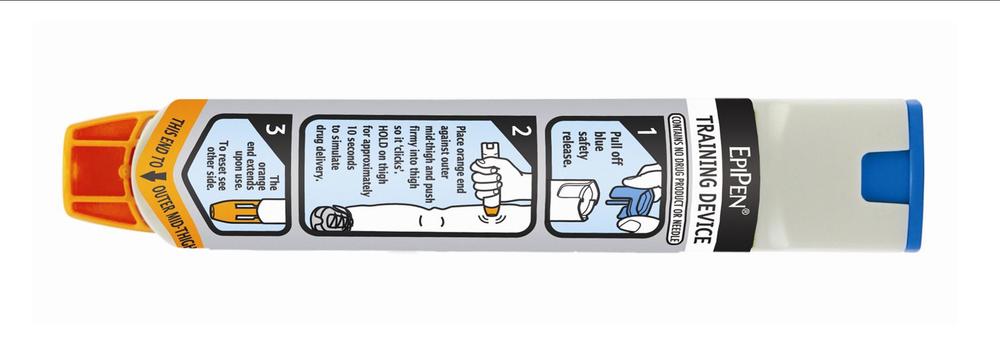
- AThis end away from patient
- BThis end into thigh
- CThis end away from patient
- DThis end into thigh
2During a medical history, you must take note of a patient's previous dental history.
This includes any previous r[blank_start]estorations[blank_end] (eg. crowns, fillings, bridges), dentures, and [blank_start]periodontal[blank_end] treatment.
You should make a note of the reason for any [blank_start]extractions[blank_end] and if they have had any [blank_start]orthodontic[blank_end] work.
Ask the patient about their pattern of [blank_start]attendance[blank_end], their [blank_start]availability[blank_end] for appointments, and if they have ever had any problems with [blank_start]local anaesthetic[blank_end].
Also ask if they have had any [blank_start]oral hygiene[blank_end] advice.- Aestorations
- Bperiodontal
- Cextractions
- Dorthodontic
- Eattendance
- Favailability
- Glocal anaesthetic
- Horal hygiene
3Social history
A[blank_start]ppointments[blank_end] at the dental school take a [blank_start]long time[blank_end] and treatment courses may continue for months. It is important to ask the patient if they are ok with this. You should ask the patient about their o[blank_start]ccupation[blank_end] and their mode of [blank_start]transport[blank_end] to the dental school.
In social history you should ask the patient about any [blank_start]dietary[blank_end] habits (e.g. snacking, fizzy drinks, tea, coffee etc) and their [blank_start]oral hygiene[blank_end] regime.
Asking about smoking;
- [blank_start]Do[blank_end] they smoke?
- If so, [blank_start]how much[blank_end] do they smoke? [blank_start]What[blank_end] do they smoke? [blank_start]How long[blank_end] have they smoked for? Have they ever [blank_start]quit[blank_end]? Have they any [blank_start]desire[blank_end] to quit?
Asking about drinking:
- Ask patient if they drink, and continue to [blank_start]CAGE[blank_end] questions, you can assess any risk from there.- Appointments
- Blong time
- Cccupation
- Dtransport
- Edietary
- Foral hygiene
- GDo
- Hhow much
- IWhat
- JHow long
- Kquit
- Ldesire
- MCAGE
4If a person has smoked half a pack a day for the last 20 years, what is this is pack years?
- A40 years
- B10 years
- C20 years
- D5.5 years
5If a person has smoked 3 packs a day for 8 years, how many pack years is this?
- A24
- B48
- C11
6How many cigarettes are usually in a standard "pack"?
- A10
- B20
- C40
- D5
7What does the C stand for in the CAGE questionnaire?
- AHave you ever cried from drinking too much?
- BHave you ever thought of cutting down on your alcohol?
- CHow many centilitres of alcohol do you drink a day?
- DCan you go a day without drinking?
8What does the A stand for in the CAGE questions?
- AHave you ever avoided work from drinking too much?
- BHave you ever felt annoyed by someone criticising your alcohol intake?
- CHave you ever been angry as a result of drinking?
9What does the G stand for in the CAGE questions?
- AHave you ever felt guilty about your alcohol intake?
- BHave you ever felt good about your alcohol intake?
- CHave you ever gotten ill from your alcohol intake?
10What does the E stand for in the CAGE questions?
- ADo you ever empty your stomach from excessive alcohol intake?
- BDo you ever have an eye opener or a drink first thing in the morning to steady your nerves?
- CDoes everyone at home drink?
11True or false? A pint of beer can range from 2.3-4.5 units depending on the ABV
- ARichtig
- BFalsch
12What does a large glass of wine usually contain in units of alcohol?
- A2.0 units
- B4.0 units
- C1.6 units
- D3.3 units
13A unit of alcohol is measured as...
- A10ml of vodka or similar spirit
- B25ml of pure alcohol
- C70ml of vodka or similar spirit
- D10ml of pure alcohol
14How long after someone stops breathing do brain cells start to die?
- A10 minutes
- B6 minutes
- C3 minutes
- D5 minutes
15This poor lady is unconscious in the road after collapsing on her bike from not having breakfast. Daft girl. Label the diagram correctly with the dropdown menu to show what you need to do with an unconscious casualty.

- ADANGER - check area is safe
- BCHECK response - shake shoulders, shout
- CAIRWAY - open and maintain
- DBREATHING - look, listen, feel
- EBREATHING - look, listen, feel
- FAIRWAY - open and maintain
- GDANGER - check area is safe
- HCHECK response - shake shoulders, shout
- ICHECK response - shake shoulders, shout
- JDANGER - check area is safe
- KAIRWAY - open and maintain
- LBREATHING - look, listen, feel
- MBREATHING - look, listen, feel
- NAIRWAY - open and maintain
- ODANGER - check area is safe
- PCHECK response - shake shoulders, shout
16Label the image to show the stages of placing someone in the recovery position
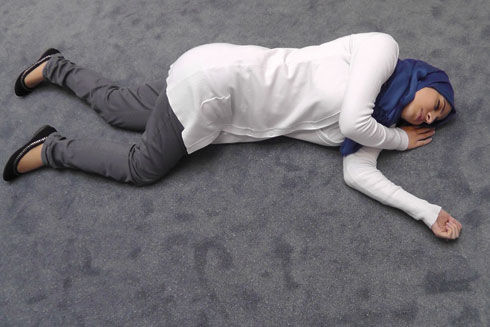
- APlace nearest palm up, at right angles
- BBring furthest arm over to cheek
- CLift furthest leg up & roll
- DSupport head whilst rolling
- ETilt head back to maintain airway
- FBring leg up at right angles
- GCheck circulation in lower arm
- HTurn every 30 minutes
- ITurn every 30 minutes
- JBring leg up at right angles
- KTilt head back to maintain airway
- LSupport head while rolling
- MLift furthest leg up & roll
- NBring furthest arm over to cheek
- OPlace nearest palm up, at right angles
- PPlace nearest palm up, at right angles
- QBring furthest arm over to cheek
- RLift furthest leg up and roll
- SSupport head whilst rolling
- TTilt head back to maintain airway
- UBring leg up at right angles
- VCheck circulation in lower arm
- WTurn every 30 minutes
- XTurn every 30 minutes
- YCheck circulation in lower arm
- ZBring leg up at right angles
- AATilt head back to maintain airway
- ABLift furthest leg up and roll
- ACBring furthest arm over to cheek
- ADPlace nearest palm up, at right angle
- AESupport head while rolling
- AFPlace nearest palm up, at right angles
- AGBring furthest arm over to cheek
- AHLift furthest leg up and roll
- AISupport head whilst rolling
- AJTilt head back to maintain airway
- AKBring leg up at right angles
- ALCheck circulation in lower arm
- AMTurn every 30 minutes
- ANPlace nearest palm up, at right angle
- AOBring furthest arm over to cheek
- APLift furthest leg up and roll
- AQSupport head whilst rolling
- ARTilt head back to maintain airway
- ASBring leg up at right angles
- ATCheck circulation in lower arm
- AUTurn every 30 minutes
- AVPlace nearest palm up, at right angle
- AWBring furthest arm over to cheek
- AXLift furthest leg up and roll
- AYSupport head whilst rolling
- AZTilt head back to maintain airway
- BABring leg up at right angles
- BBCheck circulation in lower arm
- BCTurn every 30 minutes
- BDPlace nearest palm up, at right angles
- BEBring furthest arm over to cheek
- BFLift furthest leg up and roll
- BGSupport head whilst rolling
- BHTilt head back to maintain airway
- BIBring leg up right angles
- BJCheck circulation in lower arm
- BKTurn every 30 minutes
17The recovery position is adopted to prevent the unconscious person from [blank_start]inhaling[blank_end] any v[blank_start]omit[blank_end], and should be done [blank_start]before[blank_end] you go for help if you are by yourself. If the casualty has a [blank_start]neck injury[blank_end] you should only turn if the airway is [blank_start]compromised[blank_end]. You should check the casualty thoroughly for other injuries or [blank_start]bleeding[blank_end] whilst you are observing them. They should ideally be covered with a [blank_start]blanket[blank_end] and [blank_start]reassured[blank_end] constantly.
Should you find an unconscious casualty that isn't breathing, you must [blank_start]call 999[blank_end] immediately, ensure the casualty is on a [blank_start]flat[blank_end] surface, and begin [blank_start]CPR[blank_end]- Ainhaling
- Bomit
- Cbefore
- Dneck injury
- Ecompromised
- Fbleeding
- Gblanket
- Hreassured
- Icall 999
- Jflat
- KCPR
18If a patient faints, they may show signs of...
- ACold/clammy
- BDizziness
- CPallor
- DSlow weak pulse
- ENausea
- FHot to touch, sweaty
- GRapid, strong pulse
- HWidened pupils
- ILucidity
19Should a person faint in the chair, which position should they be placed in?
- A
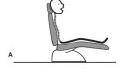
- B
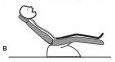
- C
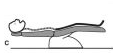
- D
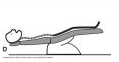
- A
20If a person faints in the chair, you should:
- [blank_start]Elevate[blank_end] legs above the heart to improve [blank_start]blood flow[blank_end]
- [blank_start]Loosen[blank_end] clothing (if restrictive!)
- Monitor [blank_start]breathing[blank_end] and [blank_start]pulse[blank_end]
The patient should recover in a [blank_start]few minutes[blank_end]. It may be a good idea to give them a [blank_start]glucose drink[blank_end]. Reassess patient for ABC and c[blank_start]onsciousness[blank_end]- AElevate
- Bblood flow
- CLoosen
- Dbreathing
- Epulse
- Ffew minutes
- Gglucose drink
- Honsciousness
21A patient presents with rapid shallow breathing, fast heartbeat, sweating, trembling, and nausea - what are they likely experiencing?
- ASyncope (fainting)
- BHyperventilation
- CHypoventilation
- DAngina
22If a person is hyperventilating, you should:
- [blank_start]Encourage[blank_end] patient to [blank_start]control[blank_end] their breathing
- Explain what is happening and [blank_start]reassure[blank_end]
- Guide patient to [blank_start]slow[blank_end] breathing
- Assess and [blank_start]monitor[blank_end]- Acontrol
- BEncourage
- Creassure
- Dslow
- Emonitor
23If a patient presents with crushing chest pain, radiating to arms, greyish pallor, sweating and nausea, what are they most likely experiencing?
- AAngina
- BHyperventilation
- CSyncope
- DAsthma attack
24Where would you spray glyceryl trinitrate 0.4mg spray in an angina patient?
- ABuccal sulcus
- BEye
- CSublingual
- DCheek
25How long after administering a nitroglycerin spray or tablet should symptoms resolve in an angina patient? After this time an ambulance should be called.
- A5 minutes
- B20 minutes
- C10 minutes
- D15 minutes
26Should a patient experience an acute attack of angina, you should:
Administer [blank_start]oxygen[blank_end] - 15L over 10 minutes
[blank_start]Glyceryl trinitrate[blank_end] spray (0.4mg) or tablet (0.5mg)
Check [blank_start]pulse[blank_end] for regularity
Monitor and r[blank_start]eassess[blank_end]
Refer to hospital if attack lasts longer than [blank_start]15 minutes[blank_end]- Aoxygen
- BGlyceryl trinitrate
- Cpulse
- Deassess
- E15 minutes
27If a patient presents with crushing retrosternal pain, weak irregular pulse, loss of consciousness, pallor, breathlessness vomiting, what are they likely experiencing?
- AHyperventilation
- BAngina
- CMyocardial infarction
- DAsthma attack
28If you suspect someone is suffering a myocardial infarction, what is the first thing you should do?
- AShout for help
- BCall an ambulance
- CClear space for danger
- DCheck breathing
- EPut in recovery position
29If a patient is suffering a myocardial infarction, you should do the following:
- [blank_start]Call 999[blank_end] IMMEDIATELY
- Deliver [blank_start]oxygen[blank_end]
- Maintain [blank_start]airway[blank_end]
- Give [blank_start]glyceryl trinitrate[blank_end] spray sublingual
- Aspirin [blank_start]300mg[blank_end] crushed or chewed for [blank_start]anti platelet[blank_end] effect
- Monitor and reassess- ACall 999
- Boxygen
- Cairway
- Dglyceryl trinitrate
- E300mg
- Fanti platelet
30When you are checking for signs of life of a casualty;
L[blank_start]OOK[blank_end] - for chest [blank_start]movement[blank_end]
L[blank_start]ISTEN[blank_end] - for [blank_start]breathing[blank_end]
F[blank_start]EEL[blank_end] - [blank_start]breath[blank_end] on cheek
L[blank_start]OOK[blank_end] AGAIN - signs of [blank_start]coughing[blank_end], limb [blank_start]movement[blank_end], perfusion
F[blank_start]EEL[blank_end] AGAIN - body [blank_start]warmth[blank_end]
Can you palpate a [blank_start]carotid pulse[blank_end] for more than [blank_start]10[blank_end] seconds? Do this whilst you check the other things. If the patient is breathing and you've put them in recovery position you should constantly asses [blank_start]ABCDE[blank_end] whilst you are waiting.- AOOK
- Bmovement
- CISTEN
- Dbreathing
- EEEL
- Fbreath
- GOOK
- Hcoughing
- Imovement
- JEEL
- Kwarmth
- Lcarotid pulse
- M10
- NABCDE
31If a patient is experiencing an effective cough you should...?
- ABegin back blows x5 and abdominal thrusts x5
- BEncourage pt to cough
32If a patient is experiencing an ineffective cough, you should...?
- ABegin back blows x5 and abdominal thrusts x5
- BEncourage cough
33Pyrexia is defined as...
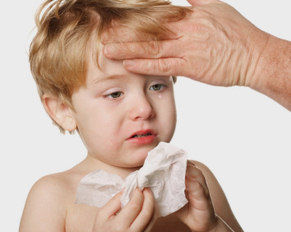
- AMore than 38 degrees
- BMore than 38.5 degrees
- CMore than 37.5 degrees
- DMore than 37 degrees
34Hypothermia is defined as...?
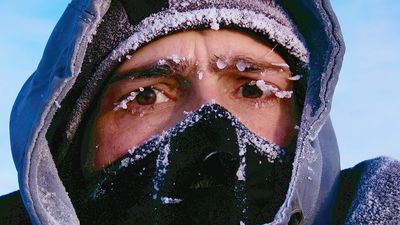
- ALess than 25 degrees
- BLess than 27 degrees
- CLess than 37.5 degrees
- DLess than 35 degrees
35You are taking an oral temperature from a patient.
1. [blank_start]ICE[blank_end] - i[blank_start]ntroduce[blank_end], consent, [blank_start]expose[blank_end]
2. Ensure patient hasn't undertaken any activity that might lead to a [blank_start]false reading[blank_end], like e[blank_start]xercise[blank_end], hot or cold drink)
3. Place patient in [blank_start]comfortable[blank_end] position
4. Apply disposable cover if necessary
5. Place sensor in [blank_start]floor[blank_end] of mouth between [blank_start]lateral[blank_end] aspect of tongue and [blank_start]lingual[blank_end] aspect of m[blank_start]andible[blank_end]
6. Get patient to [blank_start]close their lips[blank_end] so the oral temperature is not altered by intake of air
7. Leave thermometer for [blank_start]60 seconds[blank_end], reassure patient
8. Remove thermometer, [blank_start]record[blank_end] in notes.- AICE
- Bntroduce
- Cexpose
- Dfalse reading
- Exercise
- Fcomfortable
- Gfloor
- Hlateral
- Ilingual
- Jandible
- Kclose their lips
- L60 seconds
- Mrecord
36The pulse rate in a healthy individual should range between....
- A50-80bpm
- B100-120bpm
- C90-110bpm
- D60-80bpm
37Tachycardia is defined as...
- AMore than 100bpm
- BMore than 80bpm
- CLess than 80bpm
- DLess than 100bpm
38Bradycardia is defined as...
- AMore than 100bpm
- BMore than 60bpm
- CLess than 100bpm
- DLess than 60bpm
39True or false: the most likely cause of an irregular rhythm in the heartbeat is ventricular fibrillation
- ARichtig
- BFalsch
40The normal respiratory rate in adults is...
- A12-20 breaths per minute
- B18-22 breaths per minute
- C22-28 breaths per minute
Informationen
- Beschreibung
- 4th year dentistry
- Sprache
- English
- Aufrufe
- 77
- Schlagwörter
- Bewertung
- Noch keine Bewertungen Bewerte dieses Quiz