
Karteikarten
Biology - Photosynthesis - (Part I)
Karten in diesem Stapel (33)
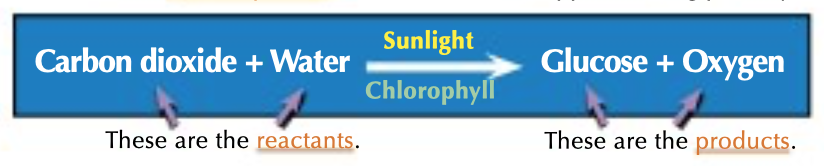
- 1What is photosynthesisa chemical process which takes place in every green plant
- 2What does photosynthesis do?produces food in the form of glucose
(a carbohydrate) - 3Where does photosynthesis happen in the plantall the green bits
mainly the leaves - 4What word equation summarises photosynthesis
- 5Name the four things needed for photosynthesissunlight
chlorophyll
carbon dioxide
water - 6What is Chlorophylla green chemical found in the chloroplasts of plant cells.
- 7What does carbon dioxide do in plants?diffuses into the leaves from the air
- 8What is the purpose of water for plants?It absorbs soil by the plant roots and is carried up to the leaves
- 9Chlorophyll absorbs s______ and uses its energy to convert c______ d______ and w_____ into g_____.sunlight
carbon dioxide
water
glucose - 10Why are leaves on plants broad?the big surface area absorbs light
- 11Where are most of the chloroplasts found in cells of leavesnear the top where they can get most light
- 12The underside of the leaves are covered in tiny holes, what are they called?stomata
- 13What do the stomata on the underside of the leaves do?Allow carbon dioxide to diffuse into the leaf from the air and allow oxygen to diffuse out.
- 14Leaves also contain a network of veins, what is their job?to deliver water to the leaf cells and take away glucose.
- 15What are the long narrow cells packed with chloroplasts, mainly at the top of the cells called?palisade cells
- 16What is transpiration?movement of water through a plant and its leaves
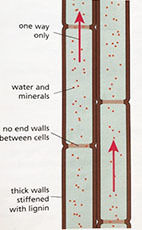
- 17What is the name of the pipeline that transports water and minerals from the roots up the plant stem and into the leaves.xylem
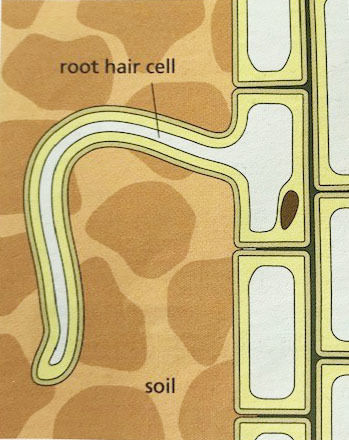
- 18The roots of the plant have a special cell which penetrate between the soil particles, they have a long surface area to absorb water, what are they called?root hair cells
- 19Plants grow using the food they make for themselves in photosynthesis but to keep healthy they need something else which they find in the soil, what is it?minerals
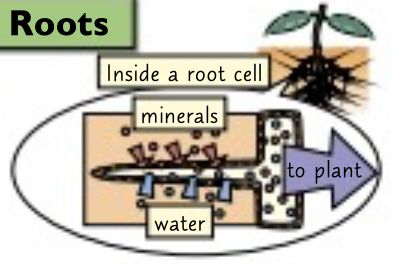
- 20What does phosphorus deficiency cause?poor root growth and discoloured leaves
- 21What do fertilisers (or manure) do?release minerals quickly into the soil
- 22How would you test a leaf for starchboil the leaf to destroy the cell wall and break down cellulose fibres.
Put leaf in test tube filled with me - 23Hydrogen Carbonate is an orange solution. In more acidic conditions it turns..(what colour)yellow
- 24Hydrogen Carbonate is an orange solution. In less acidic conditions it turns..(what colour)red
- 25Carbon dioxide dissolves in water to form what?an acidic solution
- 26Which raw material are used in photosynthesis?water, light and chlorophyll
- 27What did Jan Baptist van Helmont discover and then Joseph Prisleythat a rat could not live in a sealed jar!
if you put a plant with the rat it would live until the plant couldn't photosynthesis because there was no light - 28name 5 ways plants use glucoseturn it to starch and store
store as fats and oils
makes cellulose for plant cell walls
use for energy
protiens for growth and repair - 29What type of reaction is photosynthesisendothermic reaction
- 30Explain photosynthesis in 3 stagescarbon dioxide and water go into the leaf
light energy is absorbed by chlorophyl
glucose is made with light energy + Co2 + water - 31What is a waste product of photosynthesis?oxygen
- 32Name 3 uses of glucose from photosynthesisPhotosynthesis doesn't happen at night (no light)
Glucose fats and oils
amino acids - (which are made from absorbing nitrate ions from the soil) - 33why do farmers want to increase the rate of photosynthesis how do they do this?increases the yield of crops produced by adding light and heat in green houses and carbon dioxide which is expensive.
Informationen
- Beschreibung
- Exploring how plants make food - p 176 - 177 Looking at leaves - p 178 - 179 Exploring the movement of water and minerals in plants p 180- 181 Investigating the importance of minerals to plants p 182 - 183 Investigating photosynthesis p 184 - 185
- Erstellt von
- Seth Bailey
- Aufrufe
- 13
- Bewertung