
Karteikarten
Values Based Marketing
Karten in diesem Stapel (25)
- 1What is Values-Based Marketing?1. A set of processes for creating, communicating and delivering value to customers.
2. An appeal to a customer's values and ethics.
3. It shifts marketing from a product-centric approach to a customer-centric one - 2Define The Product Concept?The product concept proposes that consumers favor products offering the most quality, performance, or innovative features
- 3What is the “better-mousetrap” fallacy?Believing a better product will
by itself lead to demand/sales.
A new or improved product will not necessarily be successful unless it’s priced, distributed, advertised, and sold properly. - 4What is customer centricity?shaping separate offers, services, and messages to individual customers,
based on information about past transactions, demographics, psychographics, and media and
distribution preferences. By focusing on their most profitable customers, products, and channels,
Achieving profitable growth & capturing a larger share of each customer’s expenditures by building high customer loyalty. They estimate individual customer lifetime value and design their market offerings and prices to make a profit over the customer’s lifetime. - 5The rate of change and innovation means that organisations can no longer rely on their physical infrastructures and products to sustain their competitive advantage. What should they do instead?organisations need to rely on their in depth
knowledge and capabilities as their main source of competitive advantage. - 6Explain the following quote & the relevance of this to marketing: “People Don’t Want a Drill, They Want a quarter of inch Hole” -Theodore LevittThe good or product is the drill;
the service is to drill the hole where, when and how the customer wants it and the value is the hole itself.
selling the drill is no longer your main goal. Your goal is to ensure the customers get the holes they want. - 7B2B: For a sales person to add value to their customer they must remain actively involved up until the moment where the customers achieve their desired outcomes. What does this imply?This implies a much longer sales cycle, which requires that:
1. The sales people focus on customer experience
rather than customer satisfaction.
2. The sales people needs knowledge about the customer business processes rather than product knowledge.
3. The whole organisation becomes customercentric
rather than product-centric. - 8Name the 4 principles used in harnessing co-creation as a process to engage with customers in B2B Marketing1. Focus on ends instead of means
2. Turn your customer into an active
partner
3. Develop value propositions based
on organisational capabilities.
4. Focus on learning through dialogues and building relationships. - 9Develop value propositions based on organisational capabilities - what does this mean, in B2B marketing?In the co-creation approach, the sales person does not present the organisation’s value propositions but instead presents their capabilities. The focus is on how to share resources and
capabilities to jointly develop solutions that
will help the customer to do their job - 10Market-driven organizations have 3 superior capabilities in the following areas:1. superior market sensing,
2. customer linking, and
3. channel bonding capabilities - 11Define market sensing as a distinctive capability ( 3 behavioral components)Narver and Slater (1990) :
1. customer orientation—the
firm's understanding of the target market; 2. competitor orientation—the firm's understanding of the long run
capabilities of present and prospective competitors
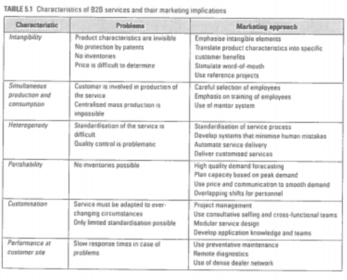
3. interfunctional coordination—the coordinated utilization of company resources to create superior customer value. - 12Key Characteristics of B2B Marketing?
- 13—
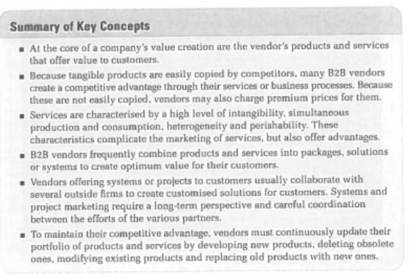
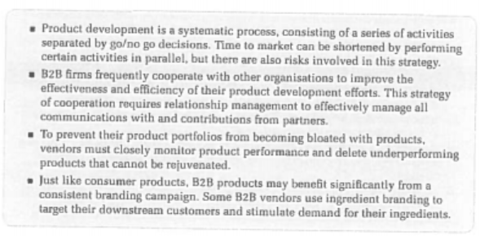
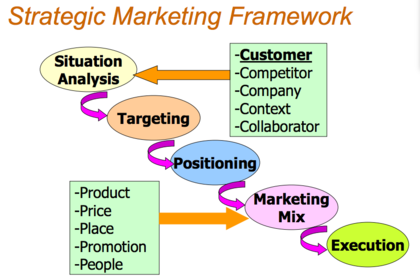
- 14What is the strategic marketing framework?
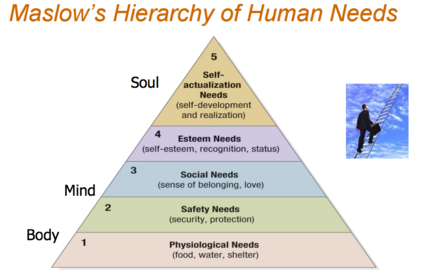
- 15What is the Maslow's Hierarchy of Needs?
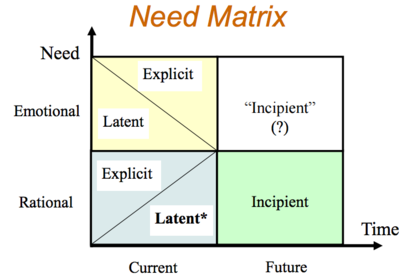
- 16What is the Needs Matrix?
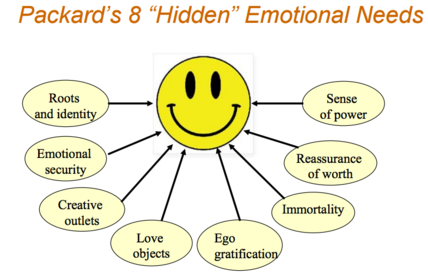
- 17Name Packard's 8 Hidden Emotional Needs
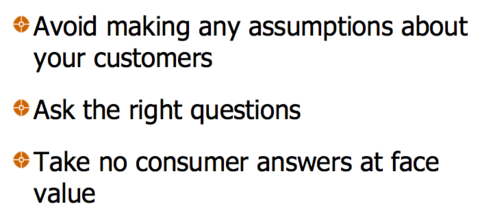
- 18What are the 3 principles that are key when pursuing Consumer Insights?
- 19Name the 5 ways of identifying consumer needs
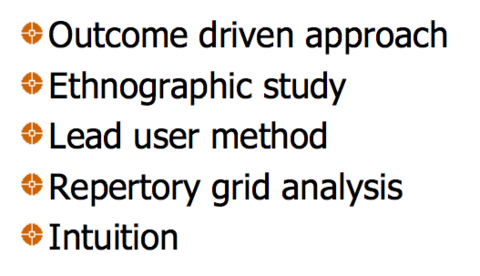
- 20What is ethnographic study in the context of marketing?Ethnography is the branch of anthropology that involves trying to understand how people live their lives. Unlike traditional market researchers, who ask specific, highly practical questions, anthropological researchers visit consumers in their homes or offices to observe and listen in a nondirected way. The goal is to see people’s behavior on their terms, not the researchers'. While this observational method may appear inefficient, it enlightens us about the context in which customers would use a new product and the meaning that product might hold in their lives.
- 21What is the outcome driven approach in the context of marketing?Outcome-Driven Innovation (ODI) is a strategy and innovation process built around the theory that people buy products and services to get jobs done.As people complete these jobs, they have certain measurable outcomes that they are attempting to achieve. It links a company's value creation activities to customer-defined metrics. ODI theory posits that companies typically collect the wrong kinds of input from their customers, and states that all the company should find out is what the customers’ ultimate output goal is: what they want the product or service to do for them, not how it should do it. The goal of the method is to help companies discover new product and service opportunities.
- 22What is the traditional definition of value in B2B marketing?The customer is treated like a target, & value for org's are created by the p&s that consumers buy.
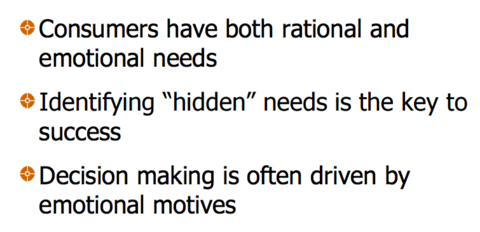
This view is very product and supplier centric - 23What are the 3 key lessons with regards to customer needs?
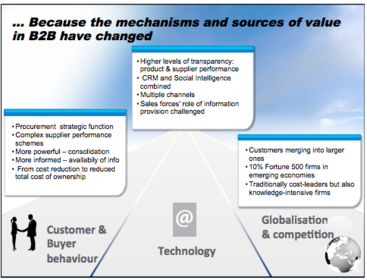
- 24Why has the value fundamental in B2B marketing?
- 25—
Informationen
- Beschreibung
- MBA Marketing Karteikarten am Values Based Marketing, erstellt von Georgia Tan am 01/03/2016.
- Erstellt von
- Georgia Tan
- Aufrufe
- 13
- Tags
- Bewertung