
Karteikarten
Bug Orders
Karten in diesem Stapel (22)
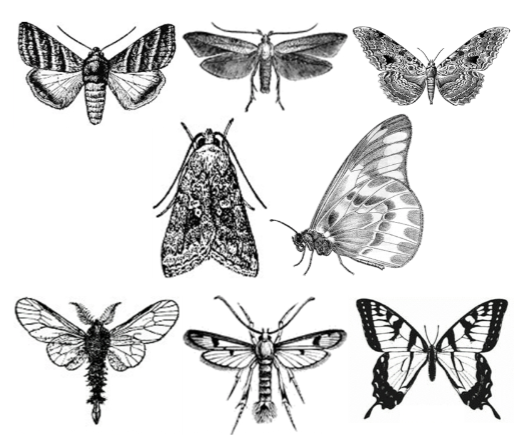
- 1—Lepidoptera
-Butterflies, skippers & moths•Name means “scale wings”
-Complete metamorphosis
-Wings with specialized overlapping scales
-Adults - proboscis or non-feeding
-Larvae - chewing mouthparts
-Butterflies & skippers diurnal, most moths nocturnal
-Butterflies & skippers with naked pupae (chrysalis); moth pupae often in silken cocoons - 2—Collembola
-Springtails
-Name refers to collophore
-No metamorphosis
-Continue to molt as adult
-Primitively wingless
-Chewing mouthparts
-Jump with furcula and tenaculum-
Common in soil and leaf litter-
Mostly fungus feeders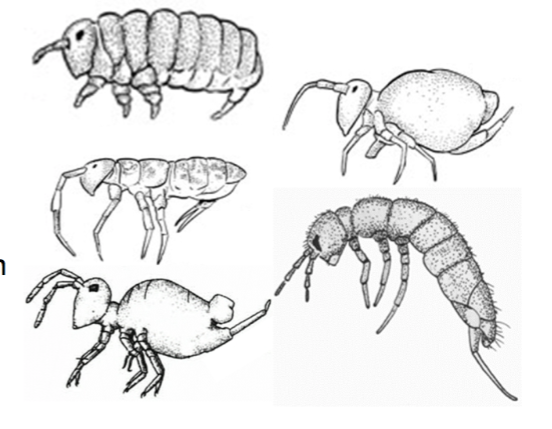
- 3—Thysanura
-Silverfish & firebrats
-Name means “fringed tail”
-Body flattened, covered with scales
-No metamorphosis
-Primitively wingless
-True insects
-Chewing mouthparts
-3 “tails” or cerci
-Omnivores
-Some species associated with humans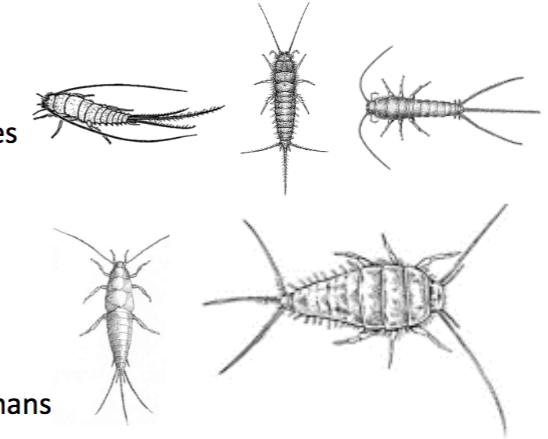
- 4—Ephemeroptera
-Mayflies-
-Name means “ephemeral”, “short lived”
-Two pairs triangular wings
-Chewing mouthparts (naiad = immature)
-Fish food
-Indicators of water quality
-Adults very short lived, can occur in huge swarms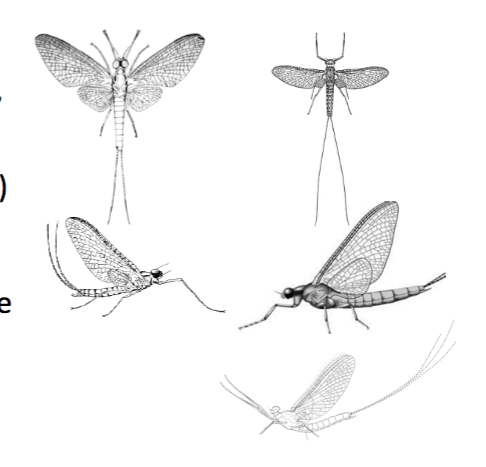
- 5—Odonata
-Dragonflies and damselflies
-Name means “tooth"
-2 pairs elongate wings with network of venation
-Chewing mouthparts
-All are predaceous (naiads & adults)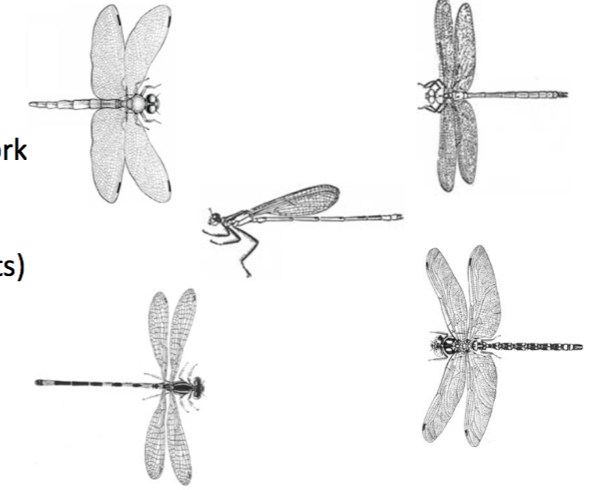
- 6—Plecoptera
-Stoneflies
-Name means “folded wing”
-Gradual metamorphosis
-Prefer cool, rocky streams with noticeable current
-Indicators of stream health (pollution & temperature)
-Chewing mouthparts, variable feeding habits
-Adults may or may not feed
-Filamentous gills if present (naiads)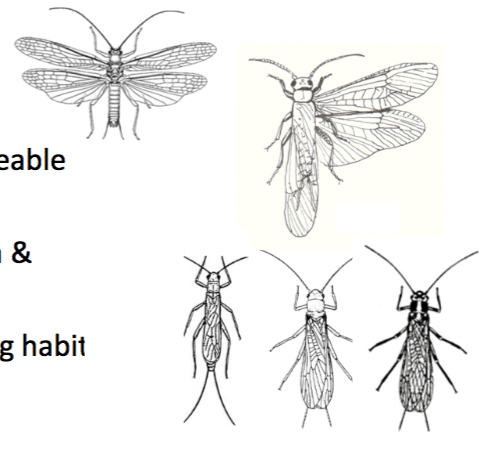
- 7—Blattodea
-Cockroaches
-Name derived from “blatta”, Greek for cockroach
-Gradual metamorphosis
-Wings leathery, often reduced
-Chewing mouthparts•Mostly omnivores
-Cursorial legs – fast runners
-Some are household pests, most are tropical & live outside
-Some species show social behavior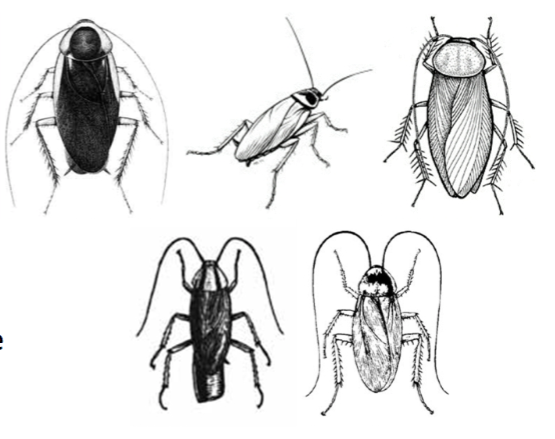
- 8—Blattodea
-Clade: Isoptera
-Termites•Gradual metamorphosis
-Social insects with caste system
-Wings membranous, absent in workers
-Chewing mouthparts
-Structural pests
-Symbiotic microorganisms
-Digest cellulose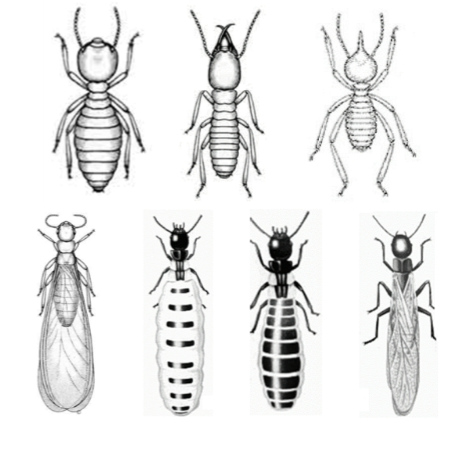
- 9—Phasmatodea
-Walkingsticks (& leaf insects)
-Name means “apparition” or “phantom”
-Gradual metamorphosis
-Wings reduced or absent
-Chewing mouthparts
-Foliage feeders
-Cryptic appearance, often nocturnal
-Sexually dimorphic (size)
-Most can reproduce parthenogenetically
-Can regenerate legs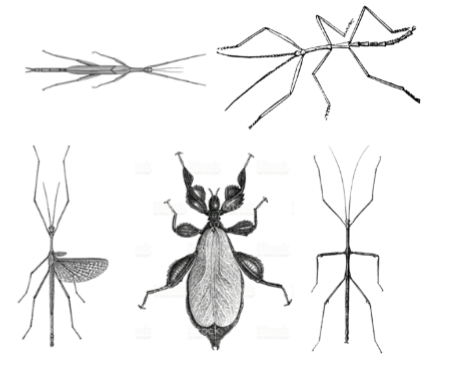
- 10—Mantodea
-Praying mantids
-Name means “soothsayer or prophet”
-Gradual metamorphosis
-Forewing leathery
-Chewing mouthparts
-Raptorial front legs
-Predaceous
-Eggs in ootheca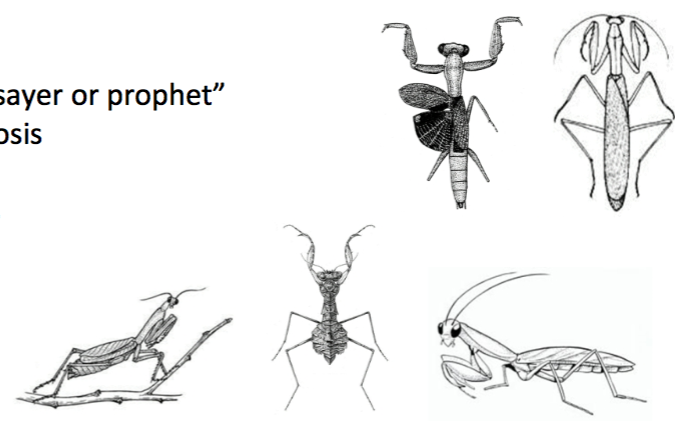
- 11—Orthoptera
-Grasshoppers, crickets, katydids
-Name means “straight wing”
-Gradual metamorphosis
-Forewing leathery
-Chewing mouthparts-
Hind legs modified for jumping
-Mostly phytophagous
-Sound production
-Hearing by tympanal organ (on front tibia or 1st abdominal segment)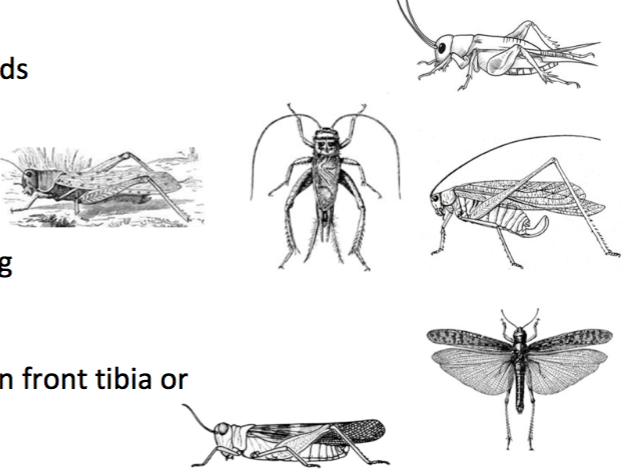
- 12—Dermaptera
-Earwigs
-Name means “skin wing”
-Gradual metamorphosis
-2 pairs of wings; front pair leathery, often reduced (elytra)
-Chewing mouthparts
-Mostly omnivores
-Forceps-like cerci
-Some are nuisance pests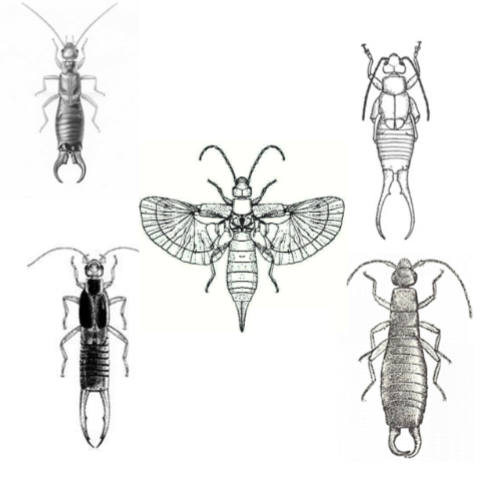
- 13—Phthiraptera
-Chewing & sucking lice
-Wingless
-Gradual metamorphosis
-Chewing or sucking mouthparts
-Feed on vertebrate blood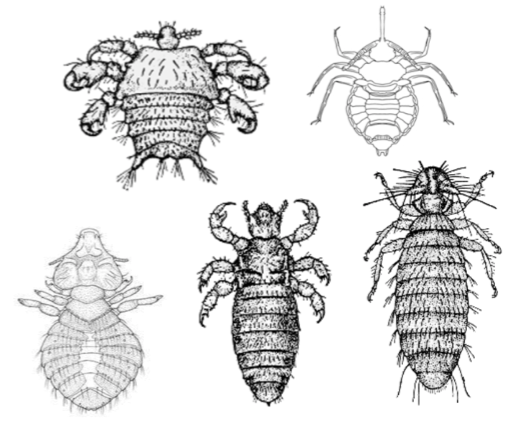
- 14—Thysanoptera
-Thrips (singular and plural)
-Name means fringe wing
-Gradual metamorphosis
-Mouthparts are rasping/sucking
-Can transmit plant diseases
-Size is small (2-3 mm)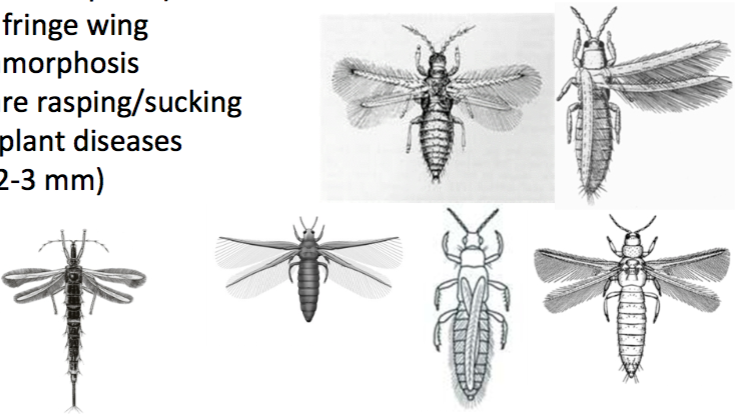
- 15—Hemiptera
-True bugs, aphids, leafhoppers, cicadas, scale insects, mealybugs, etc.
-Name means “half wing”
-Gradual metamorphosis
-Piercing-sucking mouthparts
-Phytophagous, predaceous, or blood sucking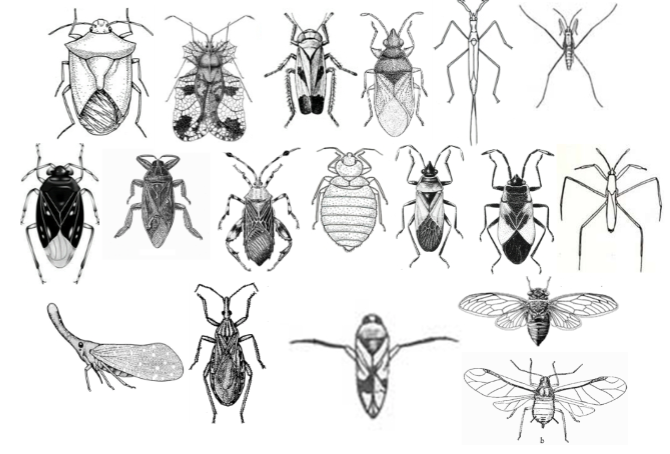
- 16—Hymenoptera
-Sawflies, bees, wasps, ants
-Name means “membranous wings”
-Complete metamorphosis
-Chewing or chewing-lapping mouthparts
-Trend toward sociality in bees, wasps, and ants
-Important as pollinators,
-Parasitoids, and pests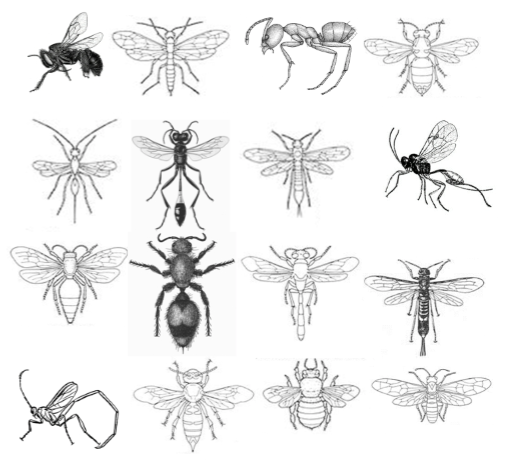
- 17—Trichoptera
-Caddisflies
-Name means “hairy wings”
-Complete metamorphosis
-Winged adults nocturnal, often
-attracted to light
-Chewing mouthparts, adults may not feed
-scavengers, herbivores, predators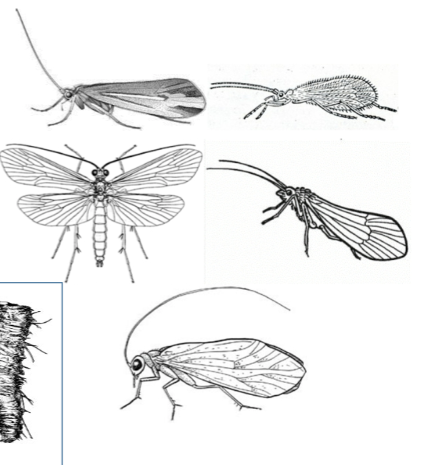
- 18—Coleoptera
-Beetles, including weevils
-Name means “sheath wing”
-First pair of wings hardened (elytra)
-Complete metamorphosis
-Chewing mouthparts
-Largest order of insects
-Over 125 families
-350,000 named species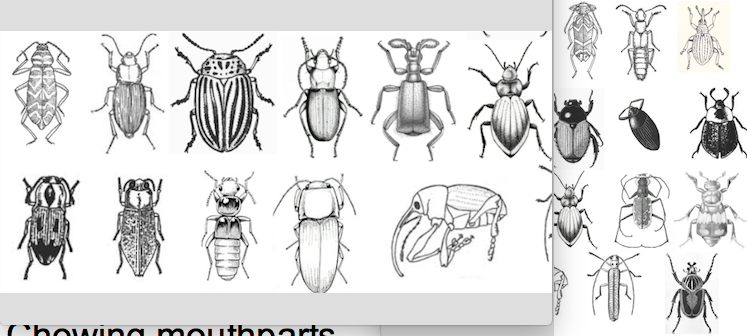
- 19—Neuroptera
-Lacewings & antlions
-Name means “nerve wing”
-Complete metamorphosis
-Some are aquatic as larvae
-2 pairs membranous wings
-Chewing mouthparts as larvae/adults
-Mostly predaceous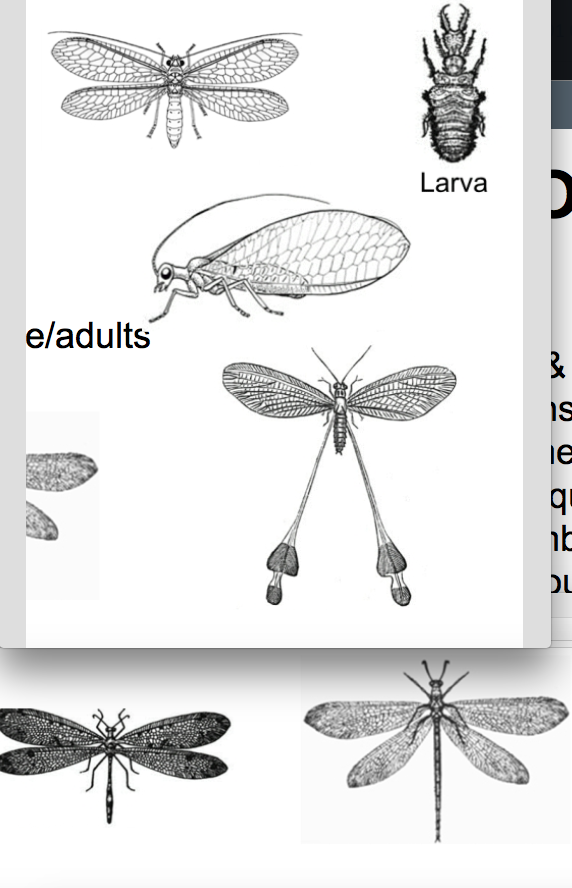
- 20—Mecoptera
-Scorpionflies, hangingflies
-elongated snout
-Name means “long wings”
-Complete metamorphosis
-Winged or wingless
-Chewing mouthparts
-Elongated head
-Some species with scorpion-like tail
-Adults are predators
-Larvae have variable feeding habits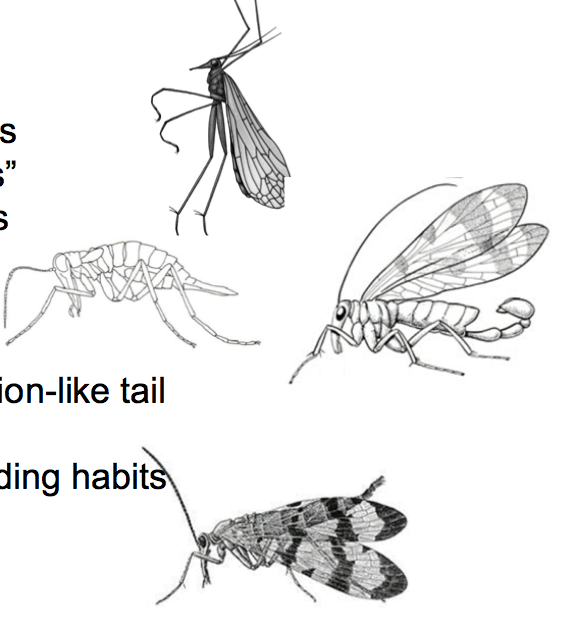
- 21—Siphonaptera
-Fleas
-Name means “siphoning” & “wingless”
-Complete metamorphosis
-Secondarily wingless
-Sucking mouthparts
-Laterally flattened
-Adults feed on blood of birds and mammals
-Larvae feed as scavengers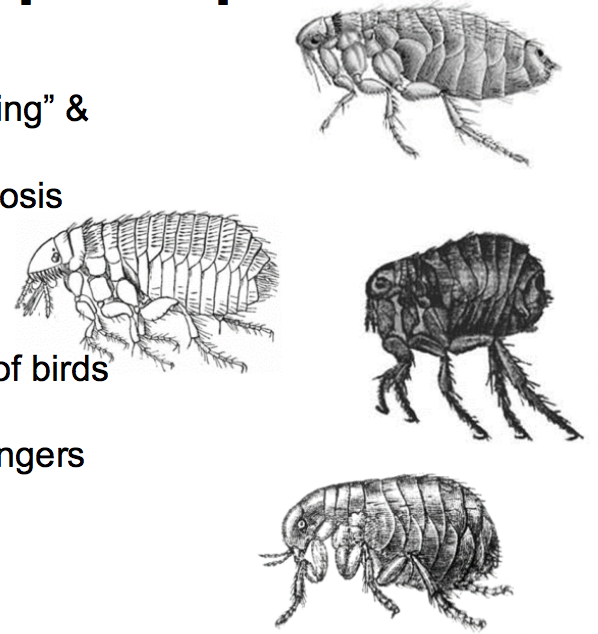
- 22—Diptera
-True flies, mosquitoes, gnats, midges
-Name means “two wings”
-Complete metamorphosis
-Larvae are legless maggots
-1 pair of wings + halteres
-Mouthparts variable•150,000 named species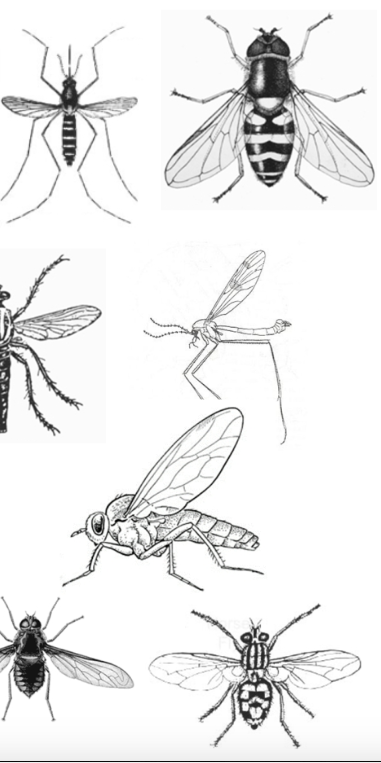
Informationen
- Beschreibung
- Karteikarten am Bug Orders, erstellt von Carolyn Mahn am 09/02/2018.
- Erstellt von
- Carolyn Mahn
- Aufrufe
- 38
- Tags
- Bewertung