GoConqr hat ein neues Design! Sag uns, wie es dir gefällt.

Karteikarten

49 Processes & ITTOS
Daniel Gomez-Windshuttle PMP Certification Englisch 49 Karten

49 Processes & ITTOS

Karten in diesem Stapel (49)

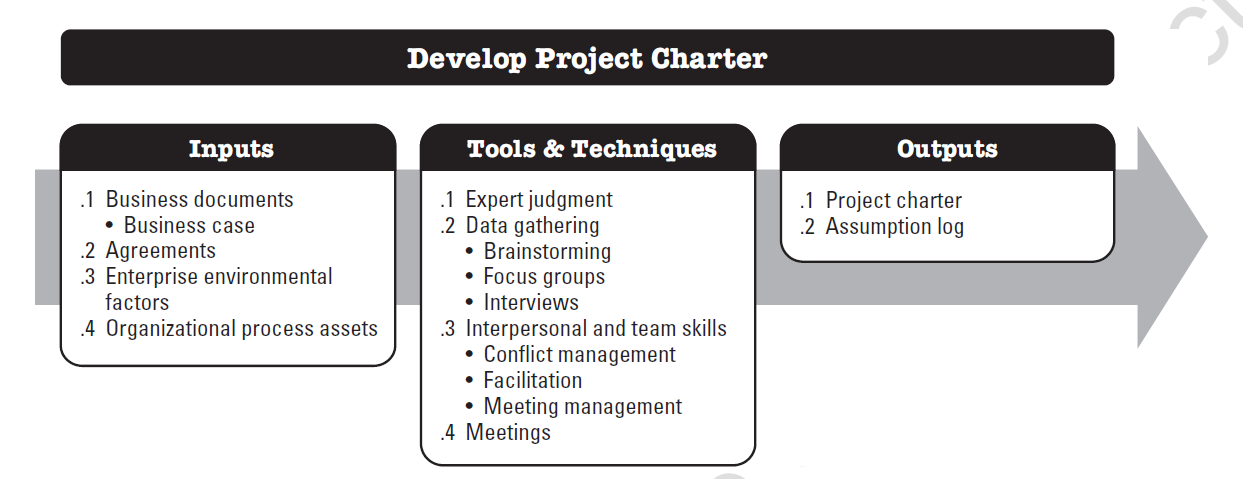
  1. 1Develop Project Charter – Authorizing the project and providing the PM with authority to use resources. (I)Develop Project Charter – Authorizing the project and providing the PM with authority to use resources. (I)
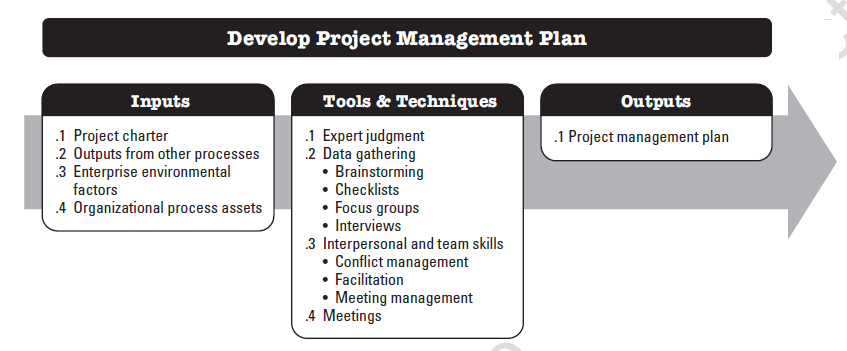
  2. 2Develop Project Mgmt. Plan – Integrating subsidiary plans into a comprehensive project plan. (P)Develop Project Mgmt. Plan – Integrating subsidiary plans into a comprehensive project plan. (P)
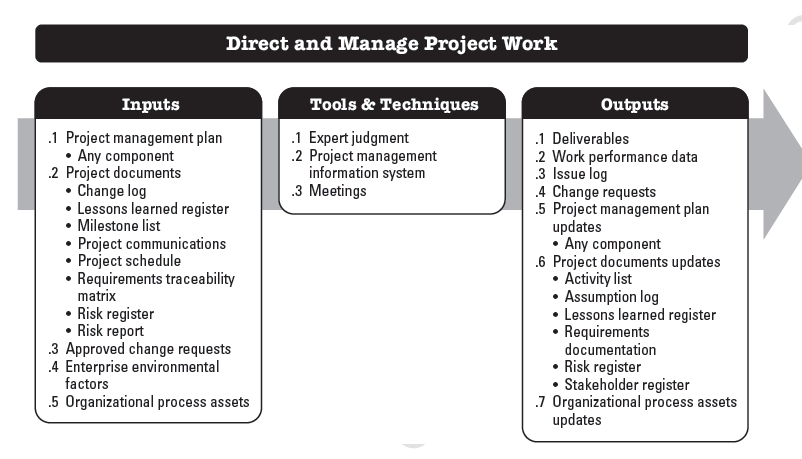
  3. 3Direct & Manage Project Work – Performing project work and implementing approved changes. €Direct & Manage Project Work – Performing project work and implementing approved changes. €
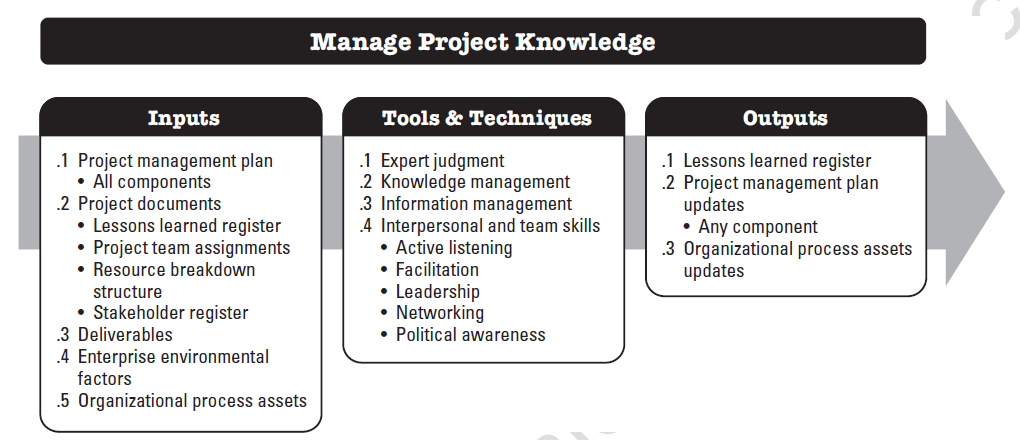
  4. 4Manage Project Knowledge – Creating and using knowledge to support the project and the organization. (E)Manage Project Knowledge – Creating and using knowledge to support the project and the organization. (E)
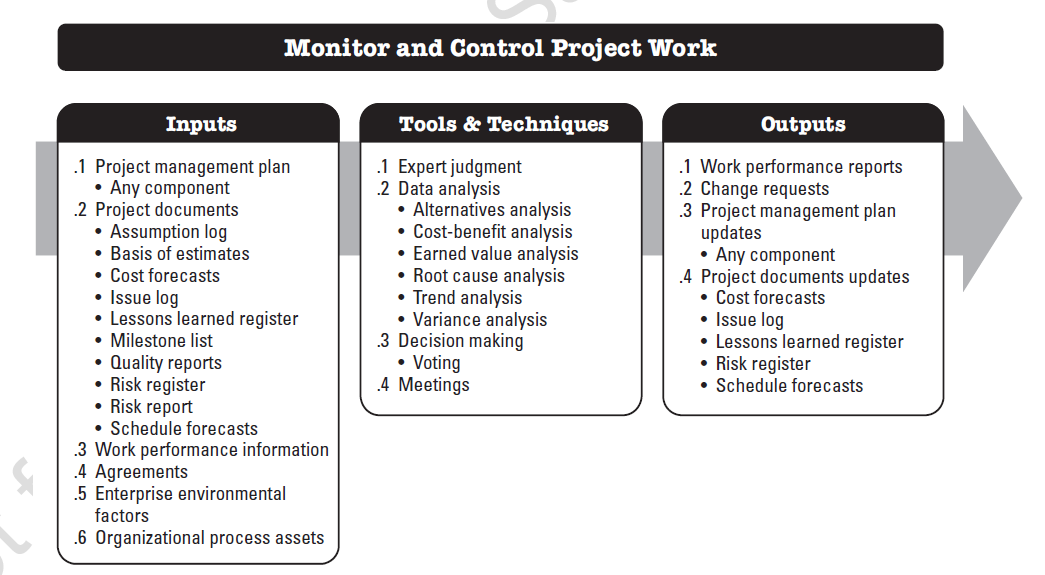
  5. 5Monitor & Control Project Work – Tracking and reporting project progress against the objectives. (M&C)Monitor & Control Project Work – Tracking and reporting project progress against the objectives. (M&C)
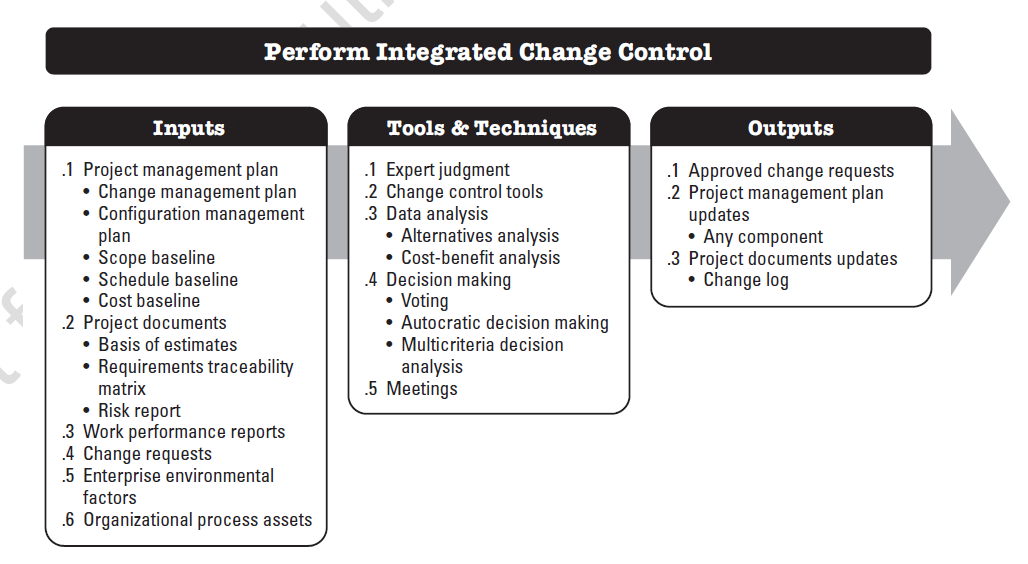
  6. 6Perform Integrated Change Control – Reviewing and approving change requests; communicating the decisions. (M&C)Perform Integrated Change Control – Reviewing and approving change requests; communicating the decisions. (M&C)
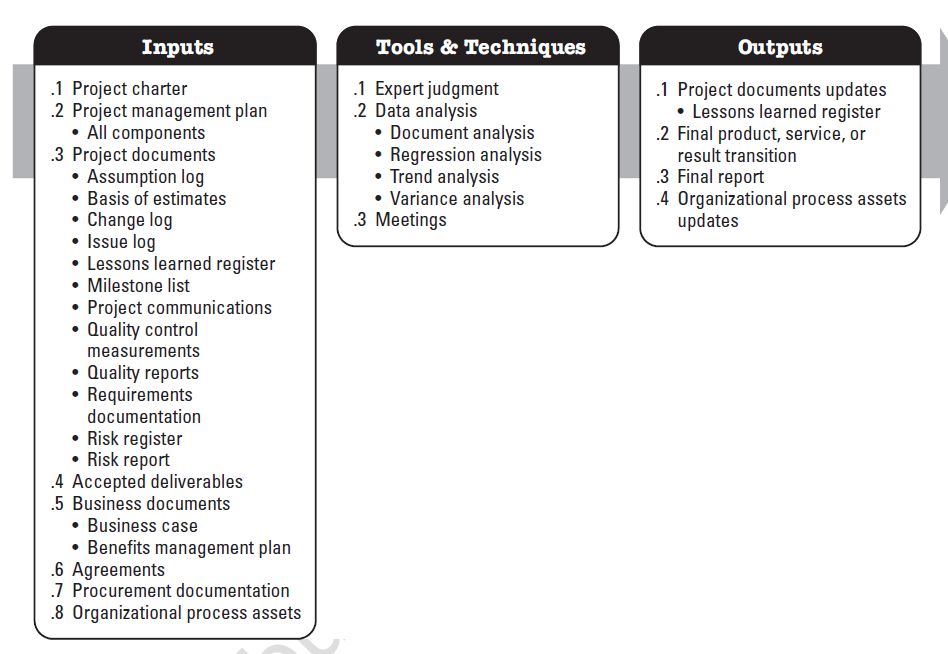
  7. 7Close Project or Phase – Formally completing the phase or project. (C)Close Project or Phase – Formally completing the phase or project. (C)
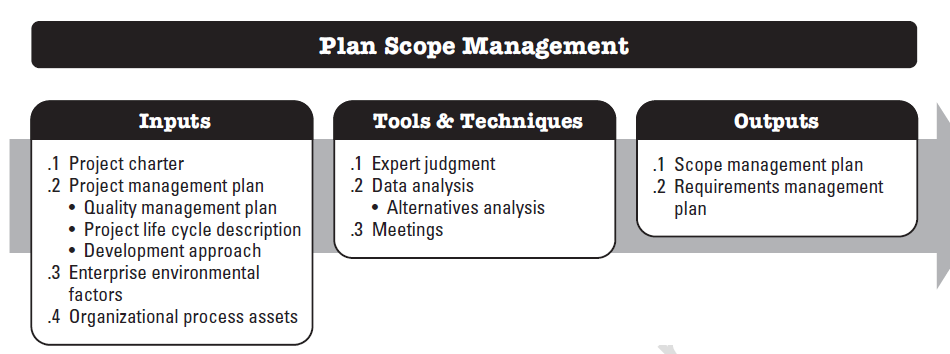
  8. 8Plan Scope Management – Documenting how scope will be defined and controlled. (P)Plan Scope Management – Documenting how scope will be defined and controlled. (P)
  9. 9Collect Requirements – Documenting stakeholder needs. (P)Collect Requirements – Documenting stakeholder needs. (P)
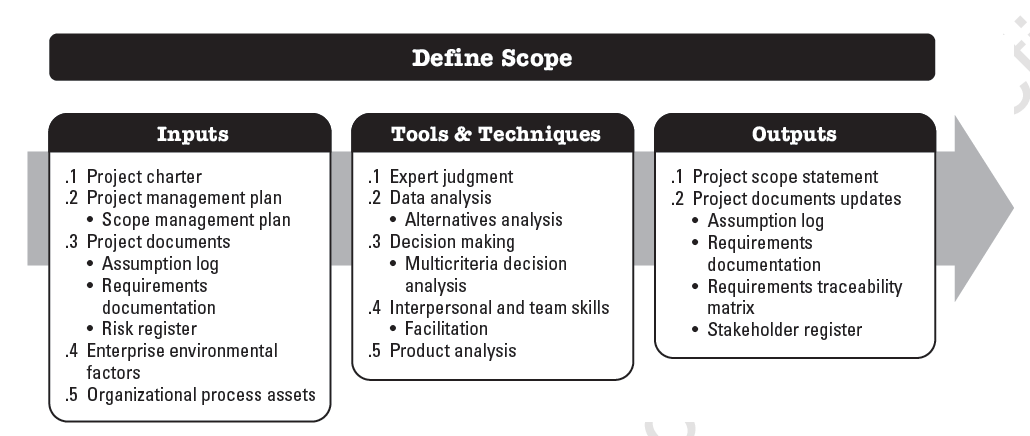
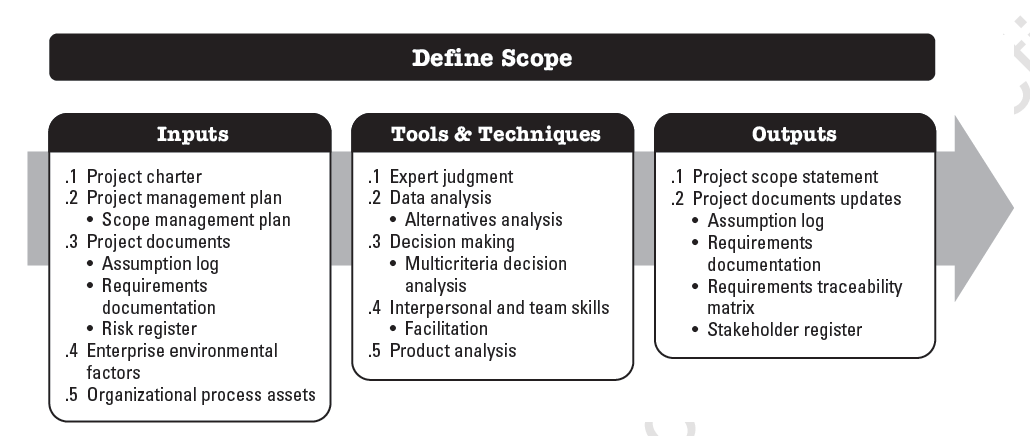
  10. 10Define Scope – Developing a detailed project and product description. (P)Define Scope – Developing a detailed project and product description. (P)
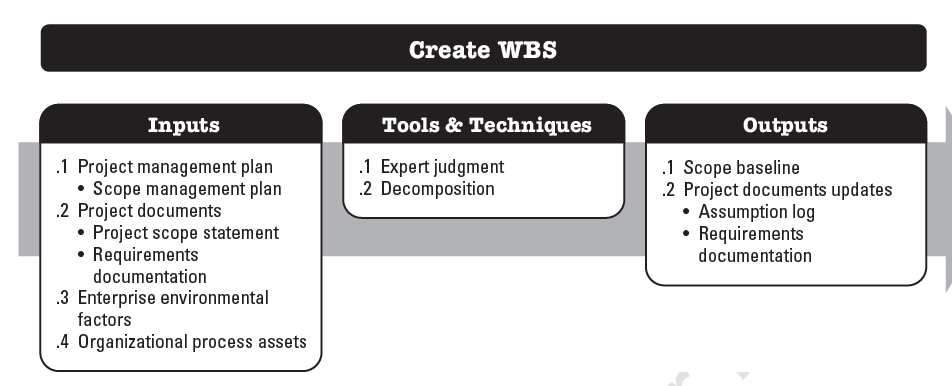
  11. 11Create WBS – Decomposing project work into smaller components. (P)Create WBS – Decomposing project work into smaller components. (P)
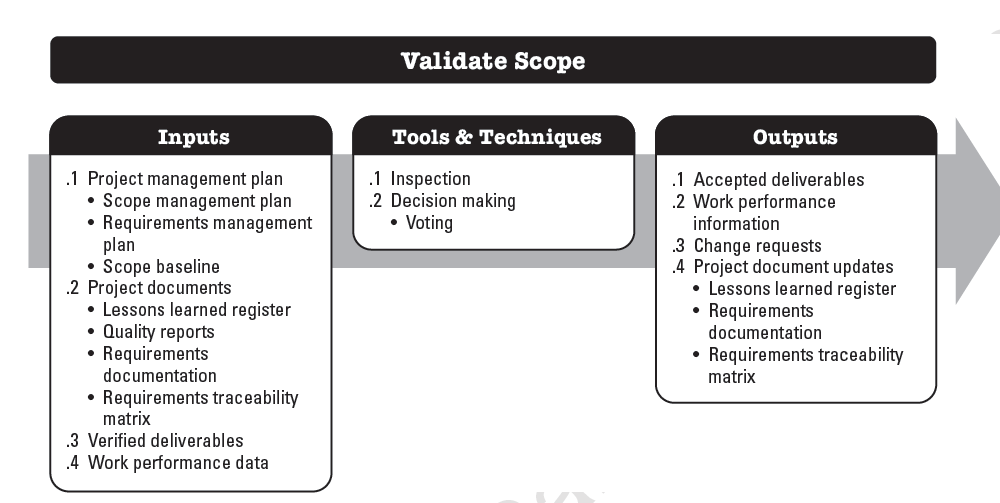
  12. 12Validate Scope – Formalizing acceptance of completed deliverables. (M&C)Validate Scope – Formalizing acceptance of completed deliverables. (M&C)
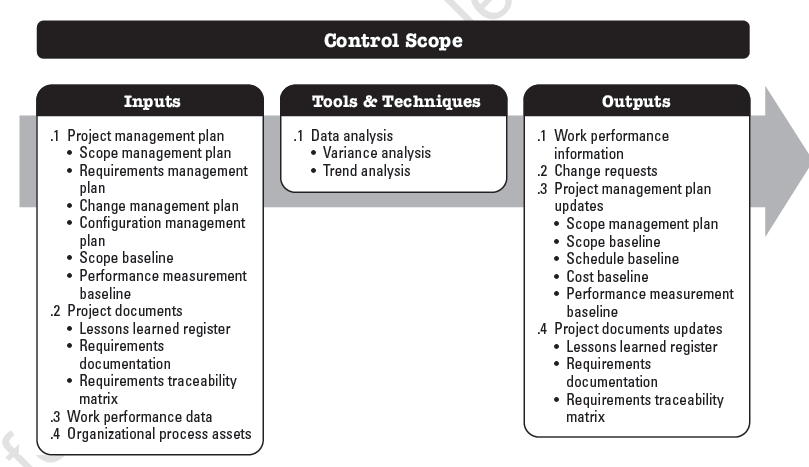
  13. 13Control Scope – Monitoring project scope and managing changes to the scope baseline. (M&C)Control Scope – Monitoring project scope and managing changes to the scope baseline. (M&C)
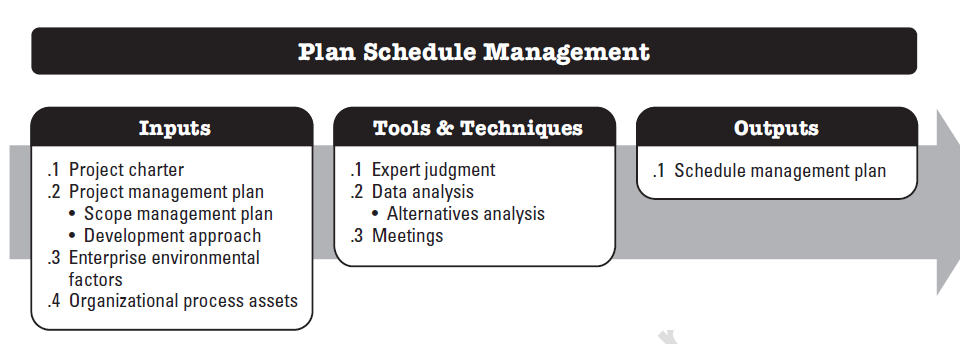
  14. 14Plan Schedule Management – Documenting how the schedule will be developed and controlled. (P)Plan Schedule Management – Documenting how the schedule will be developed and controlled. (P)
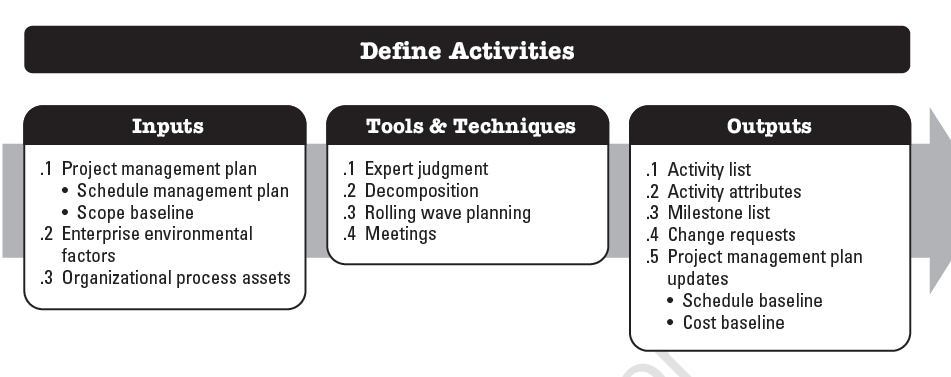
  15. 15Define Activities – Identifying the steps required to produce project deliverables. (P)Define Activities – Identifying the steps required to produce project deliverables. (P)
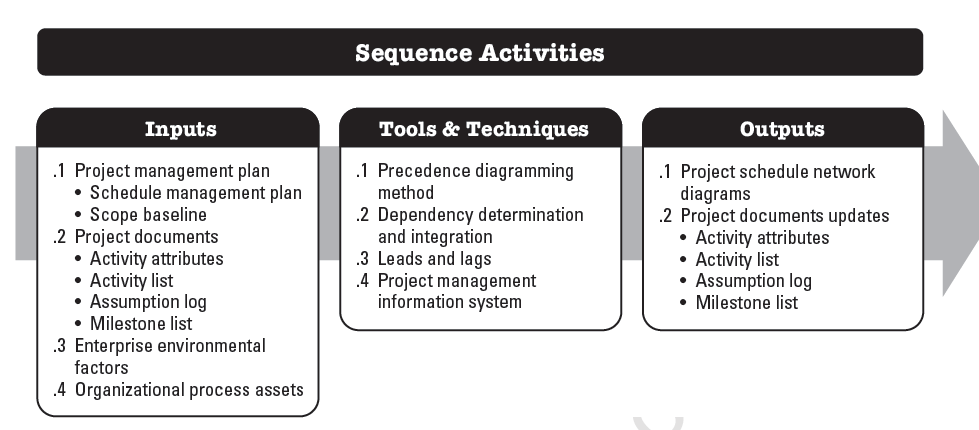
  16. 16Sequence Activities – Identifying relationships (or order) of project activities. (P)Sequence Activities – Identifying relationships (or order) of project activities. (P)
  17. 17Estimate Activity Durations – Approximating the # of work periods needed to complete activities. (P)Estimate Activity Durations – Approximating the # of work periods needed to complete activities. (P)
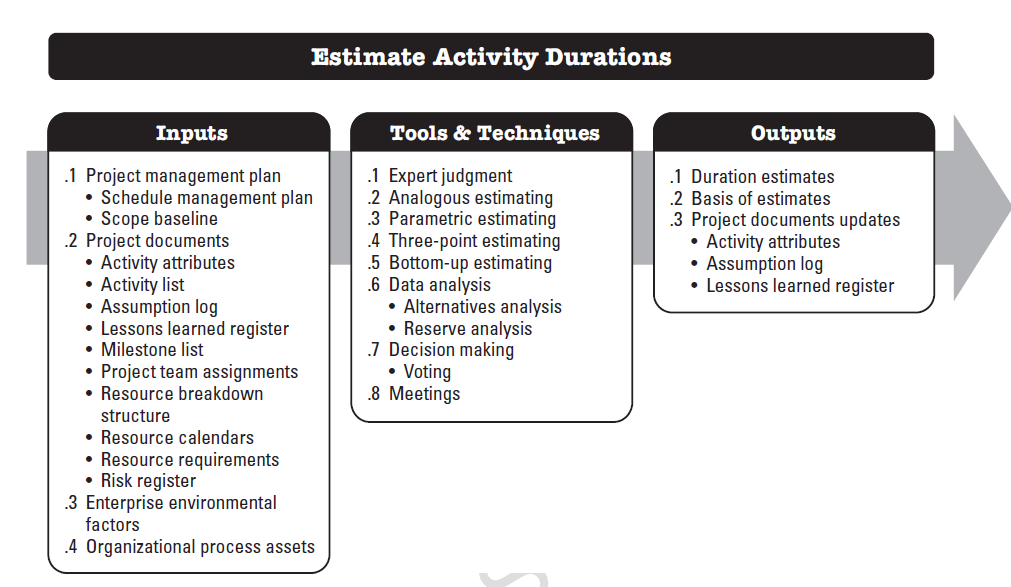
  18. 18Develop Schedule – Analyzing activities sequences and estimates to create the schedule. (P)Develop Schedule – Analyzing activities sequences and estimates to create the schedule. (P)
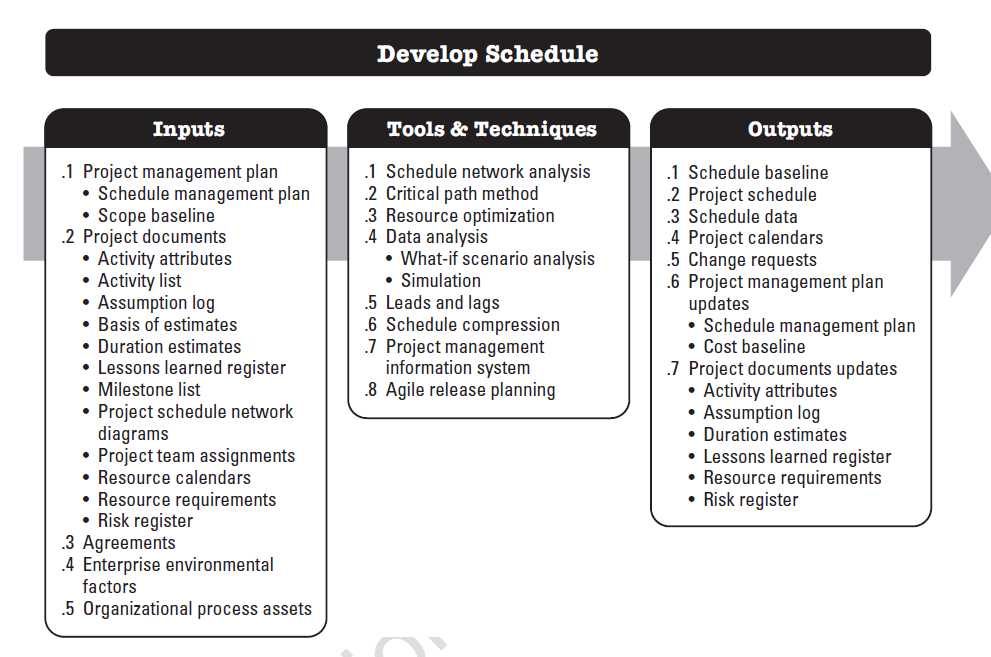
  19. 19Control Schedule – Monitoring progress of activities and managing changes to the schedule baseline. (M&C)Control Schedule – Monitoring progress of activities and managing changes to the schedule baseline. (M&C)
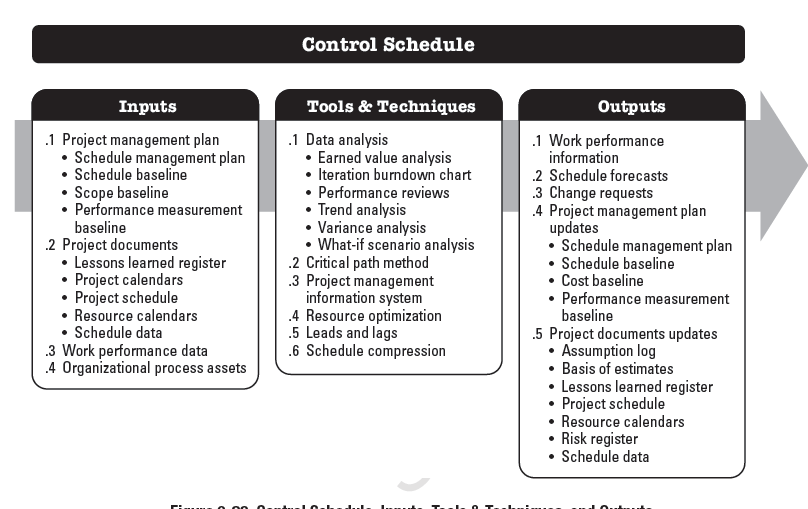
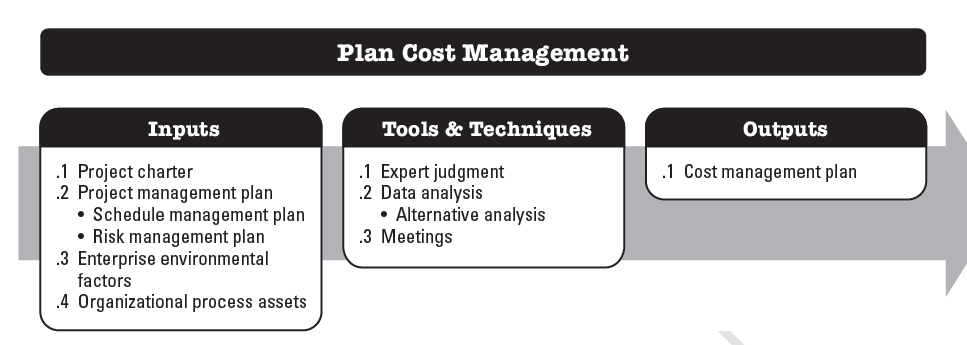
  20. 20Plan Cost Management – Documenting how to estimate and control project costs. (P)Plan Cost Management – Documenting how to estimate and control project costs. (P)
  21. 21Estimate Costs – Approximating the finances needed to complete project activities. (P)Estimate Costs – Approximating the finances needed to complete project activities. (P)
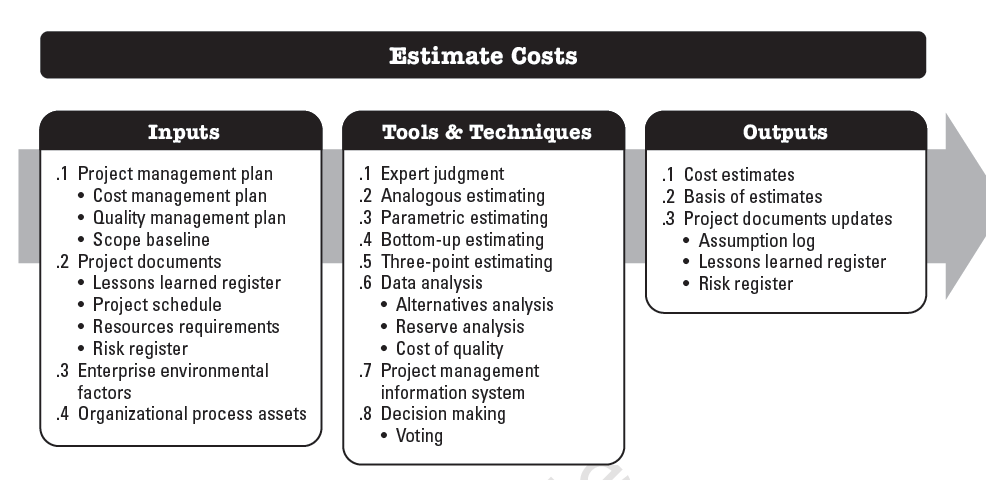
  22. 22Determine Budget – Aggregating the costs of individual activities to generate the cost baseline. (P)Determine Budget – Aggregating the costs of individual activities to generate the cost baseline. (P)
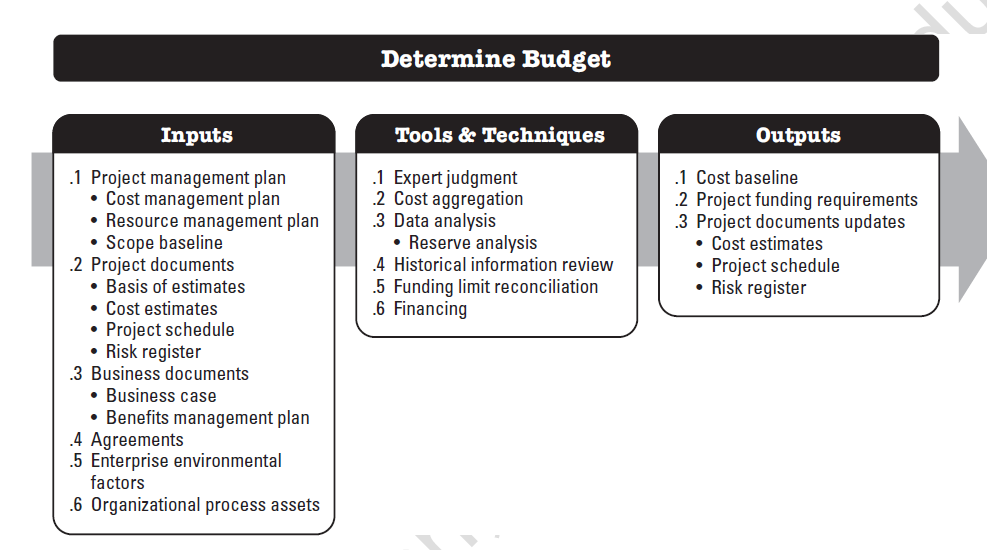
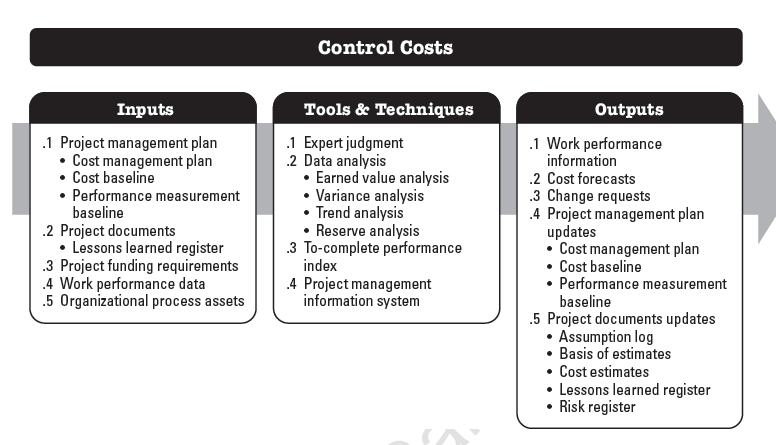
  23. 23Control Costs – Monitoring project costs and managing changes to the cost baseline. (M&C)Control Costs – Monitoring project costs and managing changes to the cost baseline. (M&C)
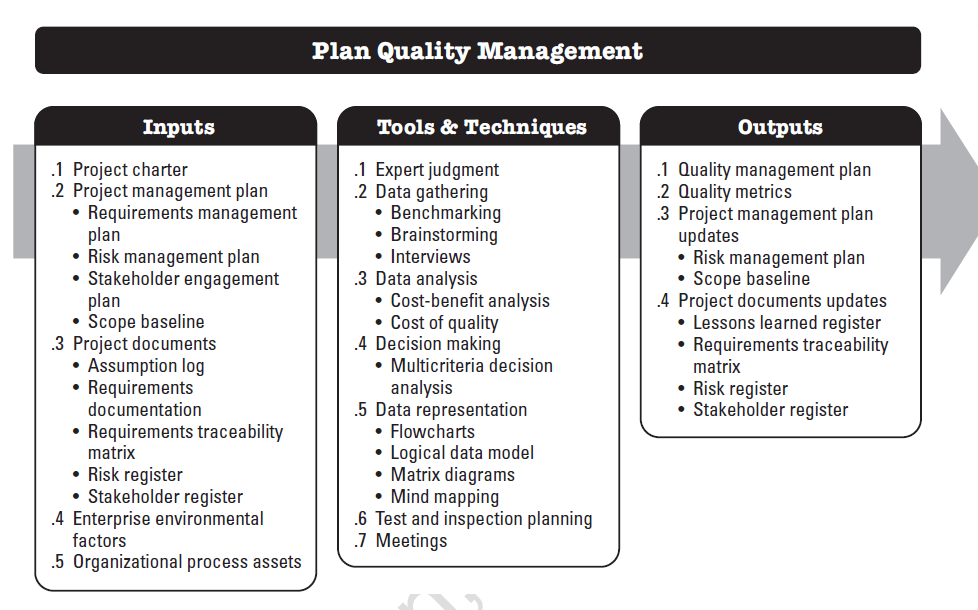
  24. 24Plan Quality Management – Identifying quality requirements and documenting how to comply with them. (P)Plan Quality Management – Identifying quality requirements and documenting how to comply with them. (P)
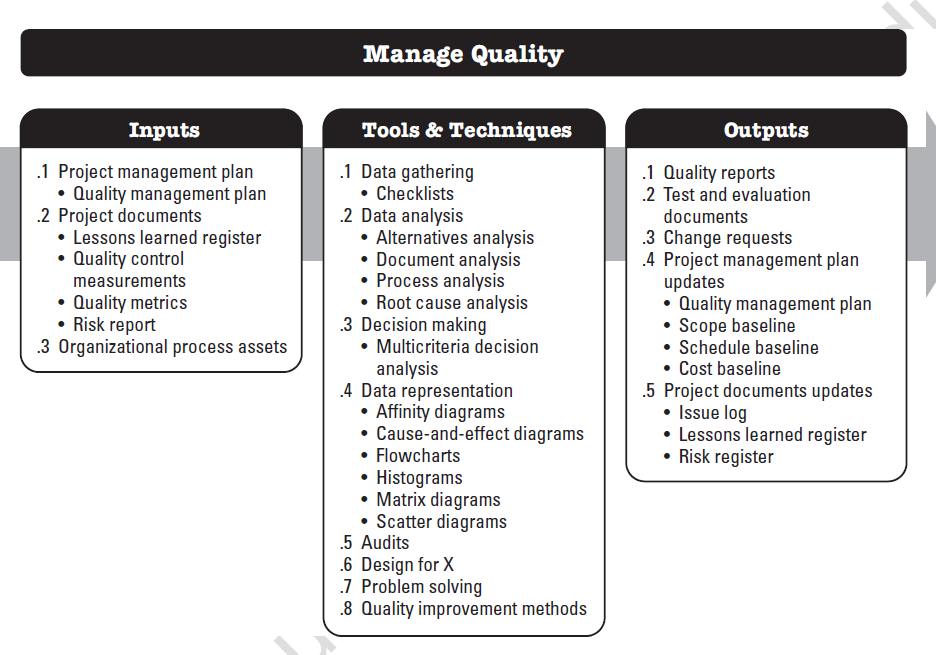
  25. 25Manage Quality – Converting the quality management plan into actionable quality activities. (E)Manage Quality – Converting the quality management plan into actionable quality activities. (E)
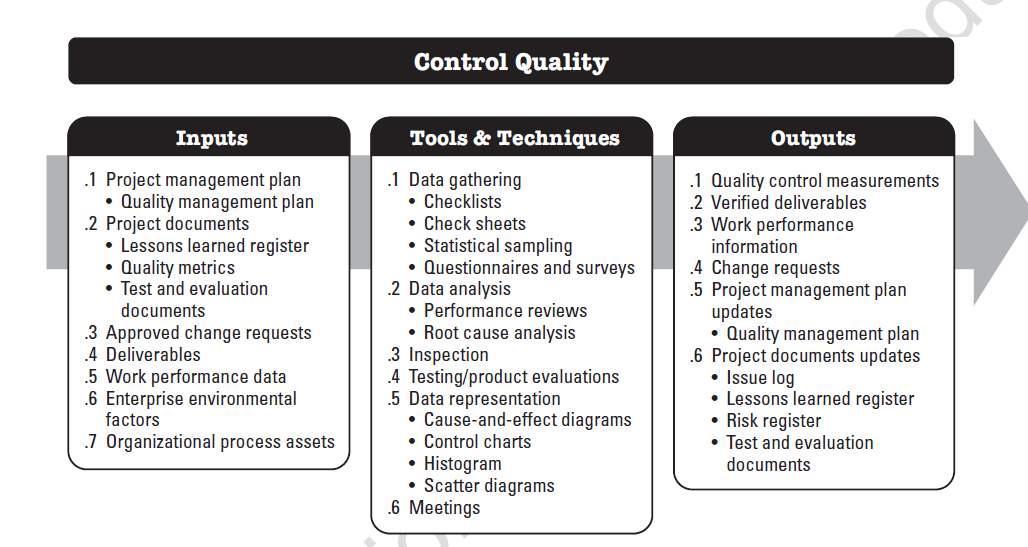
  26. 26Control Quality – Monitoring outcomes of quality activities to evaluate performance. (M&C)Control Quality – Monitoring outcomes of quality activities to evaluate performance. (M&C)
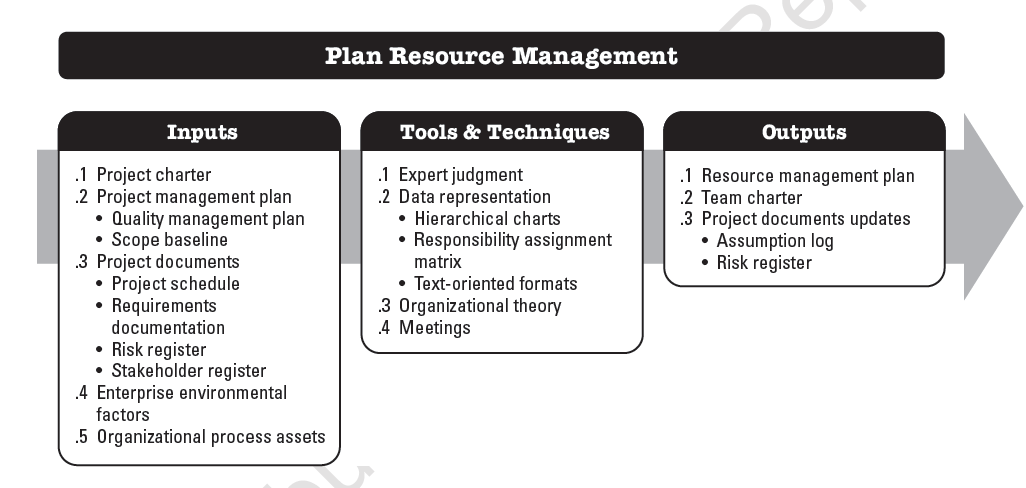
  27. 27Plan Resource Management – Document responsibilities and create a staffing management plan. (P)Plan Resource Management – Document responsibilities and create a staffing management plan. (P)
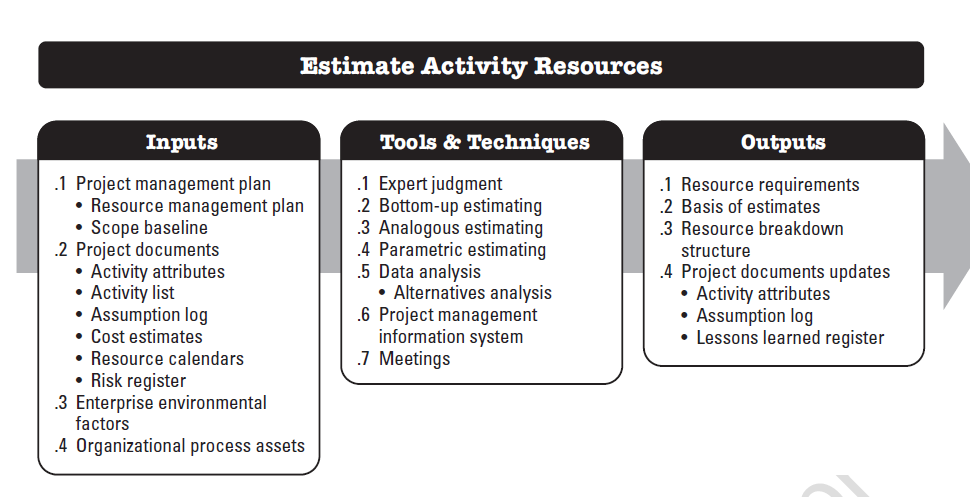
  28. 28Estimate Activity Resources – Estimating the manpower, materials, and equipment needed to complete the project. (P)Estimate Activity Resources – Estimating the manpower, materials, and equipment needed to complete the project. (P)
  29. 29Acquire Resources – Obtaining the manpower, materials, and equipment needed to complete the project. (E)Acquire Resources – Obtaining the manpower, materials, and equipment needed to complete the project. (E)
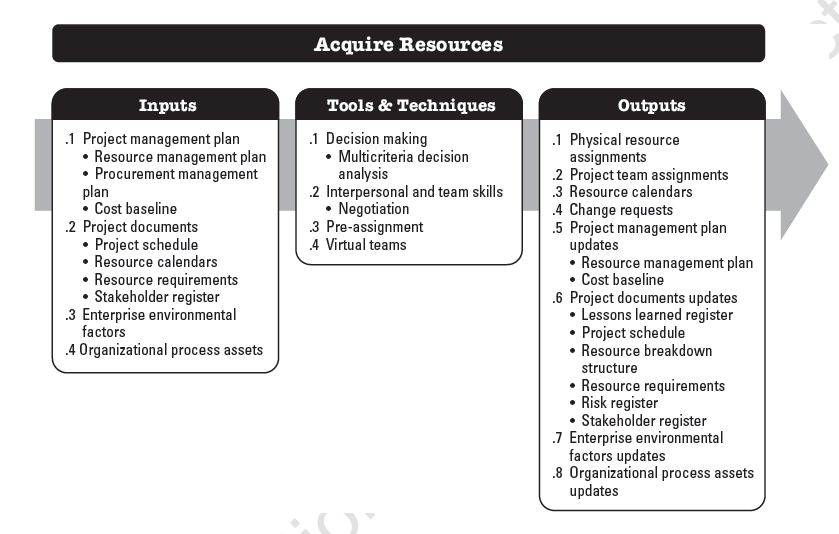
  30. 30Develop Team – Improving team skills and relations to enhance project performance. (E)Develop Team – Improving team skills and relations to enhance project performance. (E)
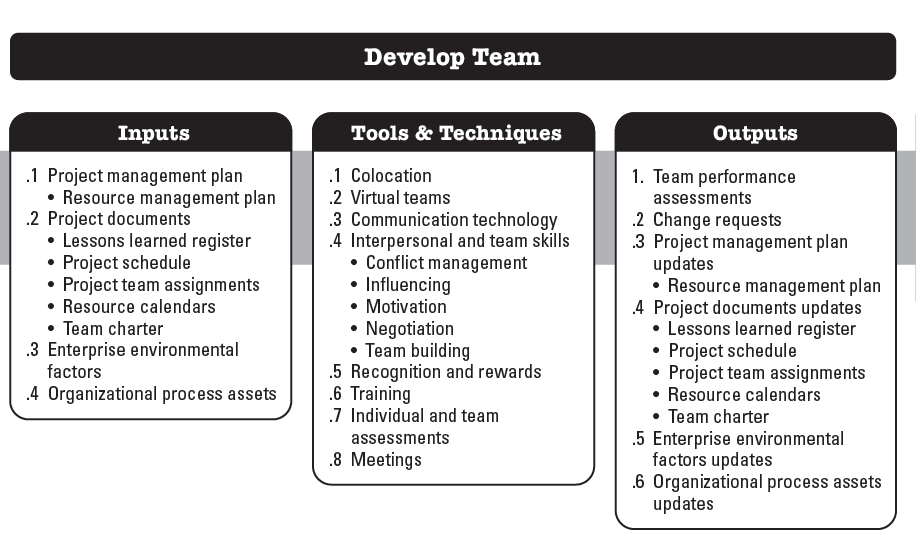
  31. 31Manage Team – Tracking team member performance, providing feedback, and resolving issues. (E)Manage Team – Tracking team member performance, providing feedback, and resolving issues. (E)
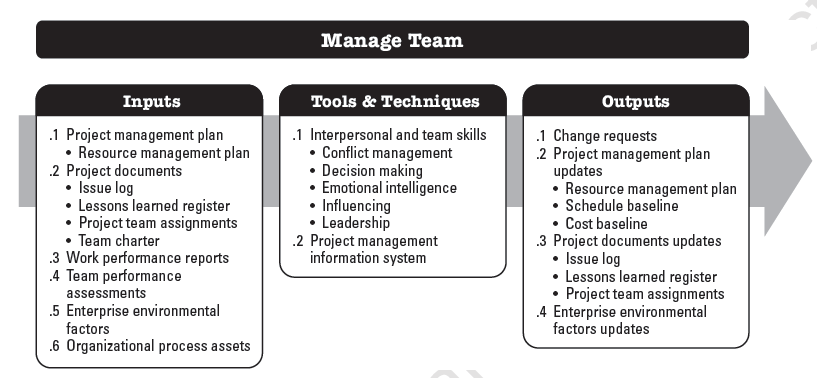
  32. 32Control Resources – Monitoring planned versus actual resource usage. (M&C)Control Resources – Monitoring planned versus actual resource usage. (M&C)
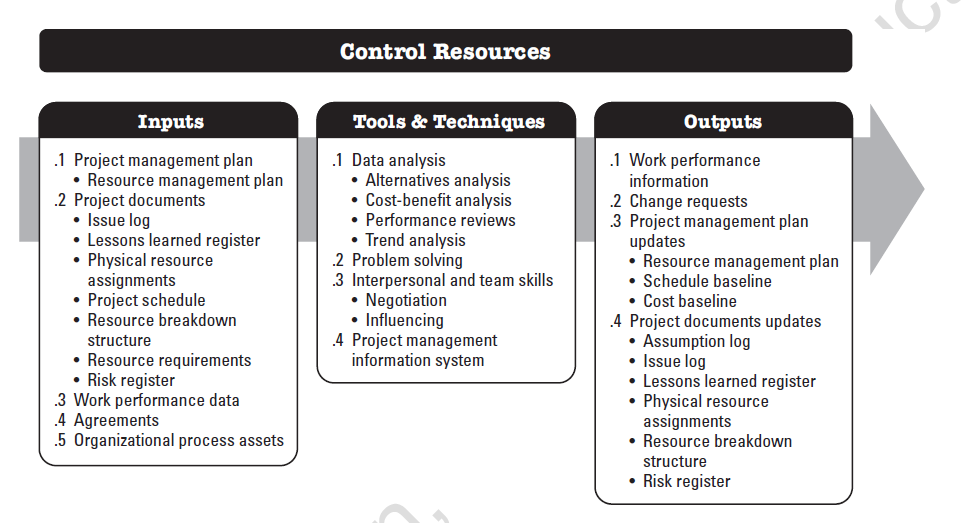
  33. 33Plan Communications Management – Developing a plan for communications based on the needs of stakeholders. (P)Plan Communications Management – Developing a plan for communications based on the needs of stakeholders. (P)
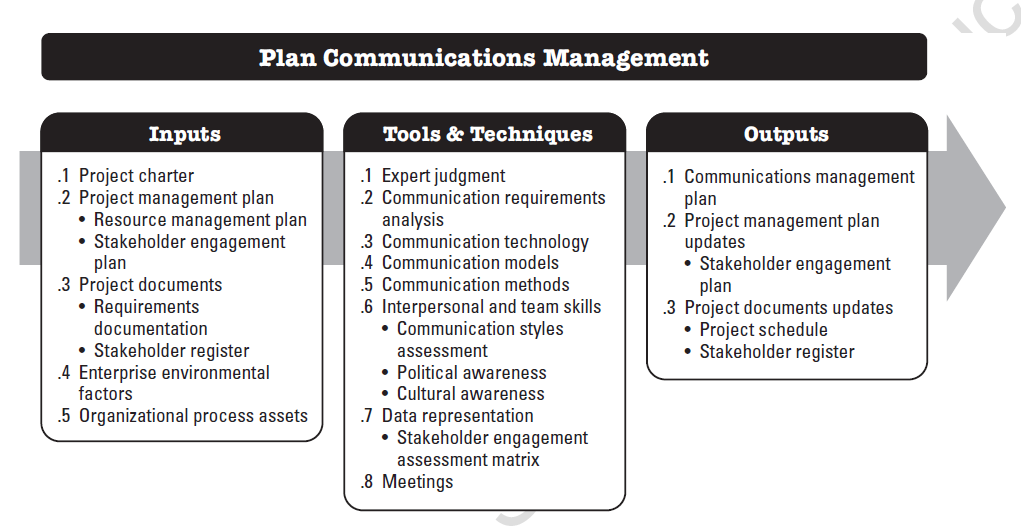
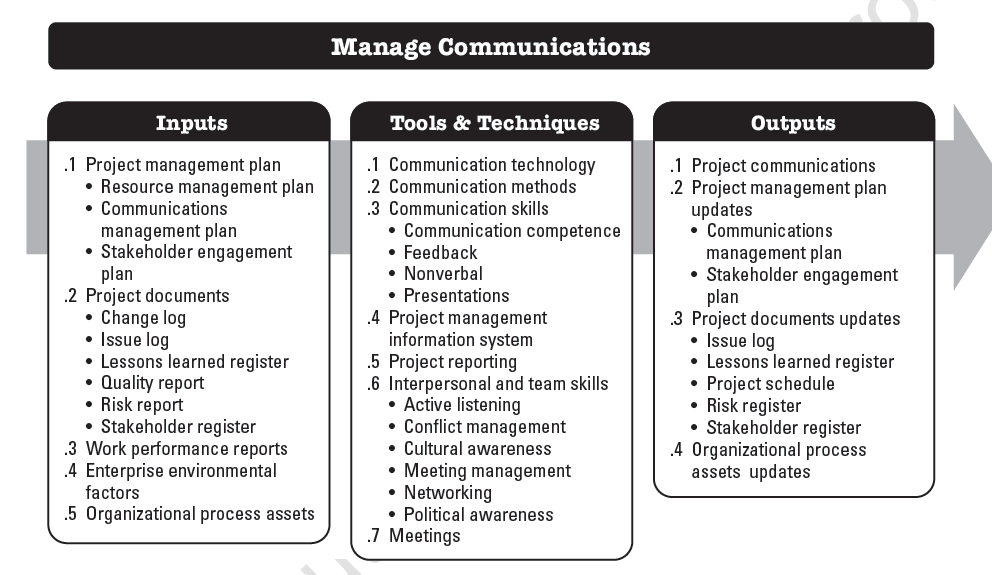
  34. 34Manage Communications – Creating and distributing project information. (E)Manage Communications – Creating and distributing project information. (E)
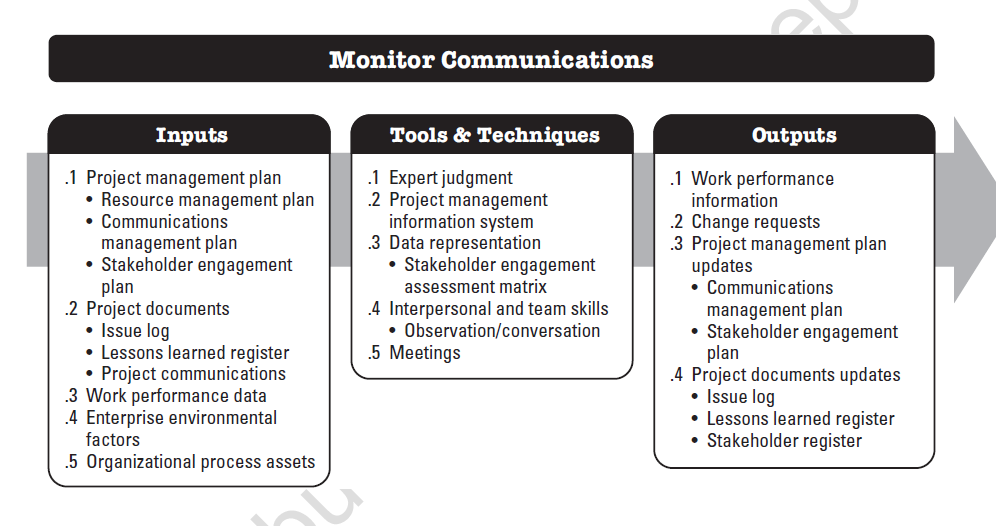
  35. 35Monitor Communications – Monitoring communications to ensure stakeholder needs are met. (M&C)Monitor Communications – Monitoring communications to ensure stakeholder needs are met. (M&C)
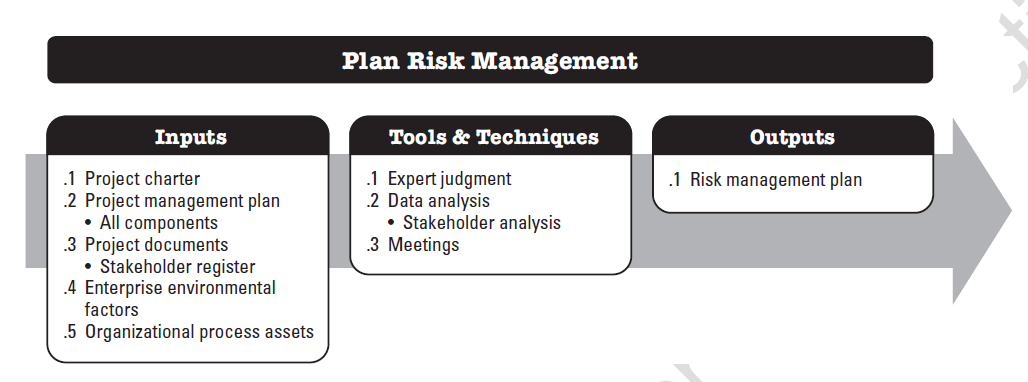
  36. 36Plan Risk Management – Defining how to conduct risk management on the project. (P)Plan Risk Management – Defining how to conduct risk management on the project. (P)
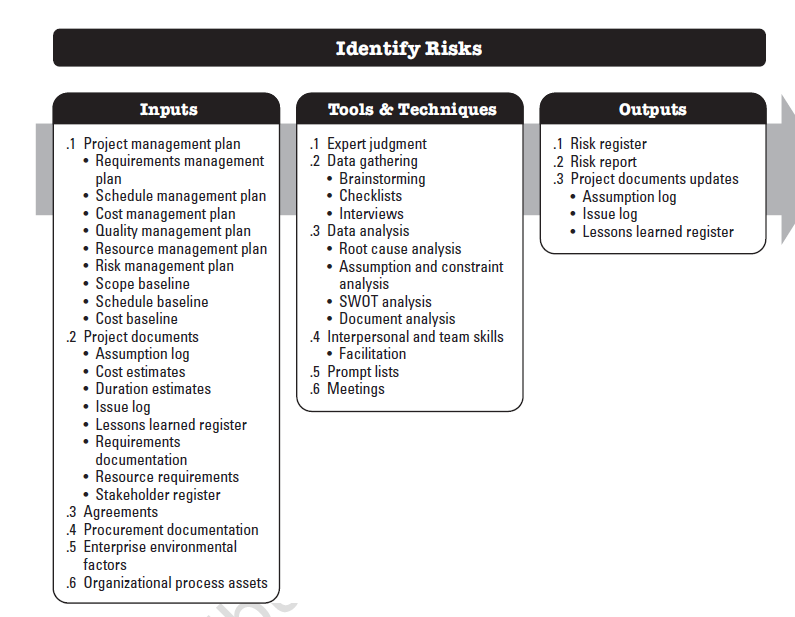
  37. 37Identify Risks – Detecting risks that may affect the project. (P)Identify Risks – Detecting risks that may affect the project. (P)
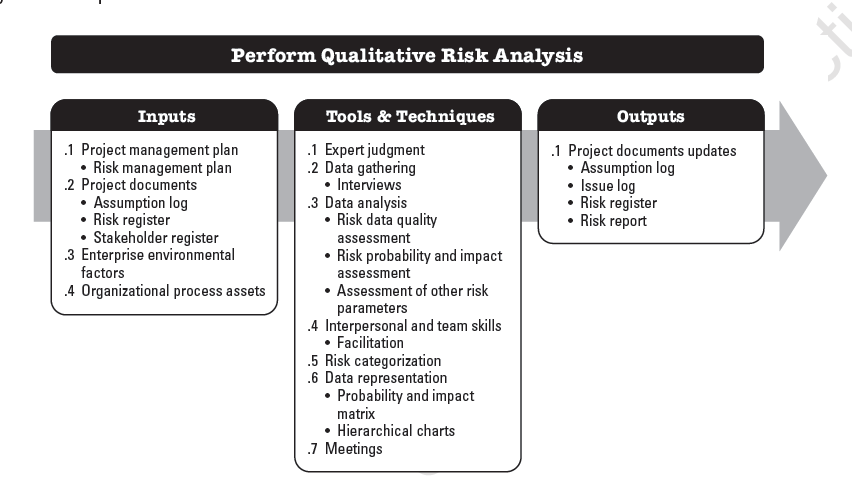
  38. 38Perform Qualitative Risk Analysis – Prioritizing risks by evaluating their probability and impact. (P)Perform Qualitative Risk Analysis – Prioritizing risks by evaluating their probability and impact. (P)
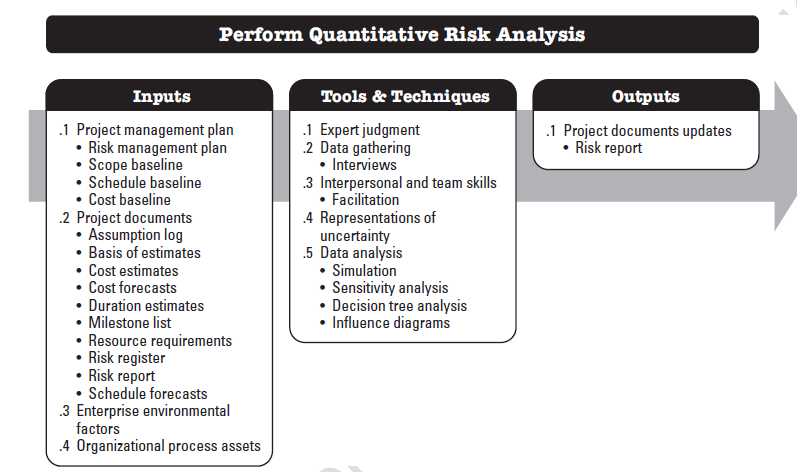
  39. 39Perform Quantitative Risk Analysis – Numerically analyzing the effect of risks on project objectives. (P)Perform Quantitative Risk Analysis – Numerically analyzing the effect of risks on project objectives. (P)
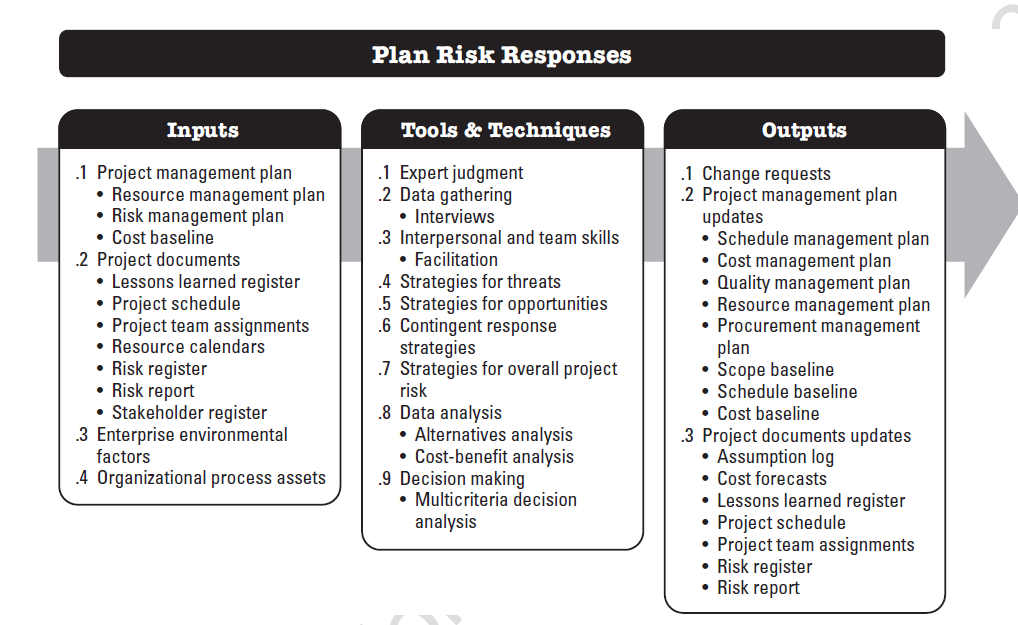
  40. 40Plan Risk Responses – Defining strategies and actions to address project risks. (P)Plan Risk Responses – Defining strategies and actions to address project risks. (P)
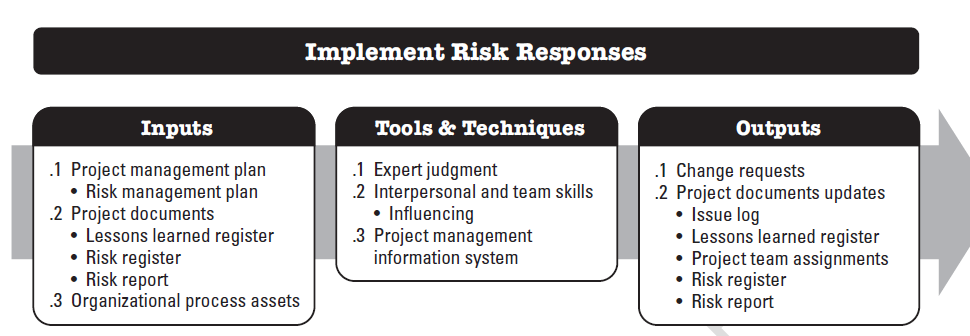
  41. 41Implement Risk Responses – Putting risk response plans into effect. (E)Implement Risk Responses – Putting risk response plans into effect. (E)
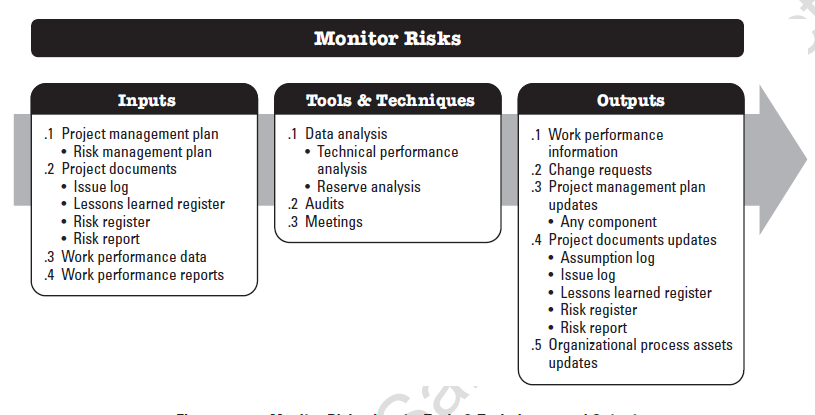
  42. 42Monitor Risks – Tracking existing risks and identifying/analyzing new risks. (M&C)Monitor Risks – Tracking existing risks and identifying/analyzing new risks. (M&C)
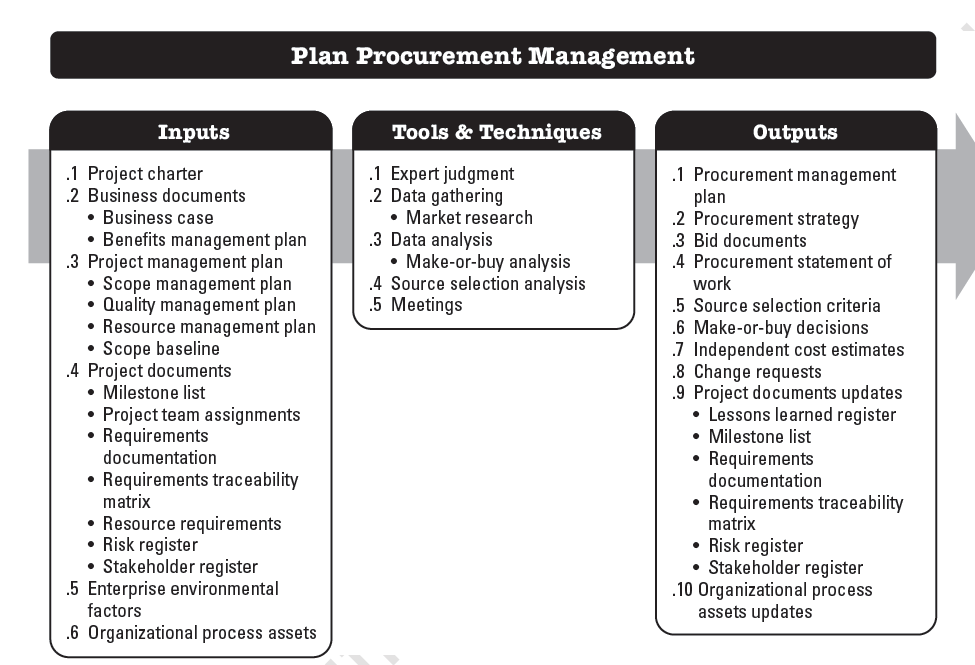
  43. 43Plan Procurement Management – Documenting the procurement method and identifying potential sellers. (P)Plan Procurement Management – Documenting the procurement method and identifying potential sellers. (P)
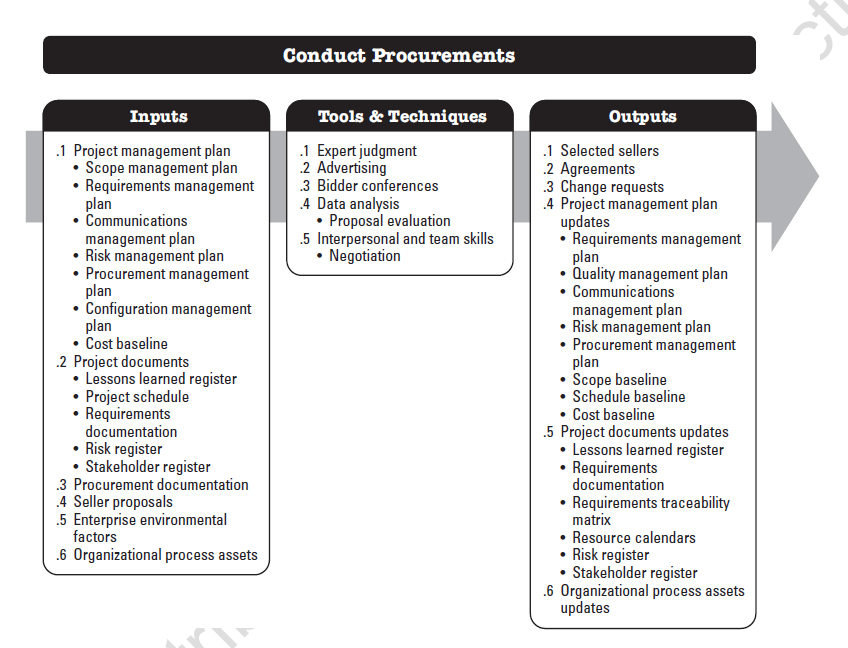
  44. 44Conduct Procurements – Collecting seller responses, choosing a seller, and awarding a contract. (E)Conduct Procurements – Collecting seller responses, choosing a seller, and awarding a contract. (E)
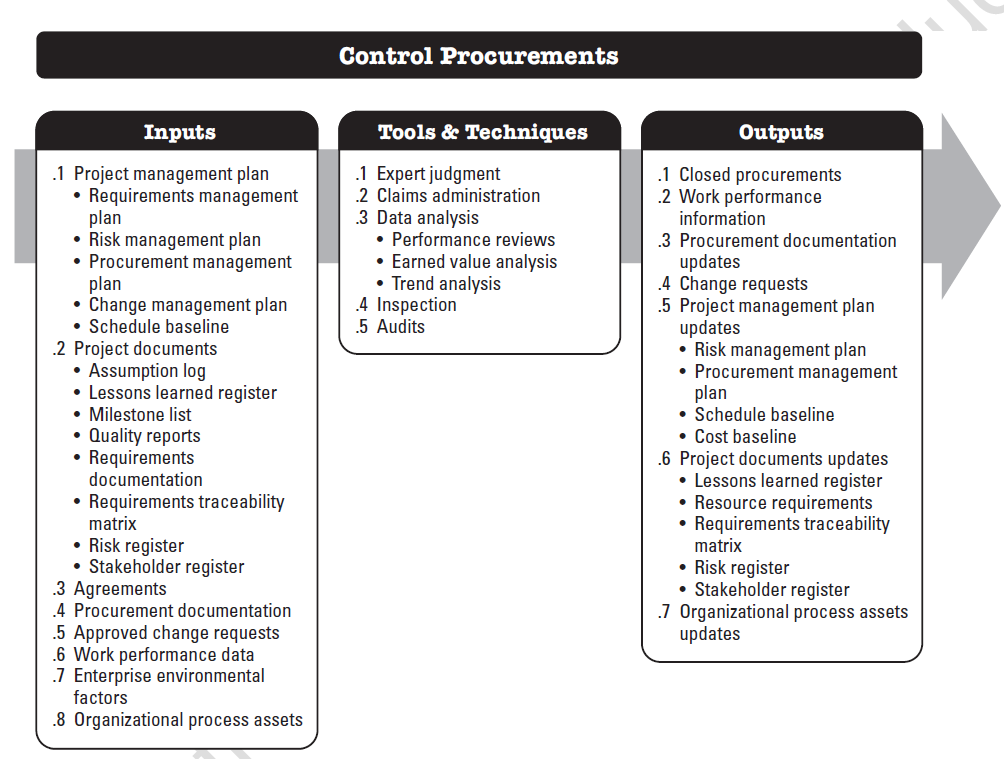
  45. 45Control Procurements – Managing procurement relationships and monitoring contract performance. (M&C)Control Procurements – Managing procurement relationships and monitoring contract performance. (M&C)
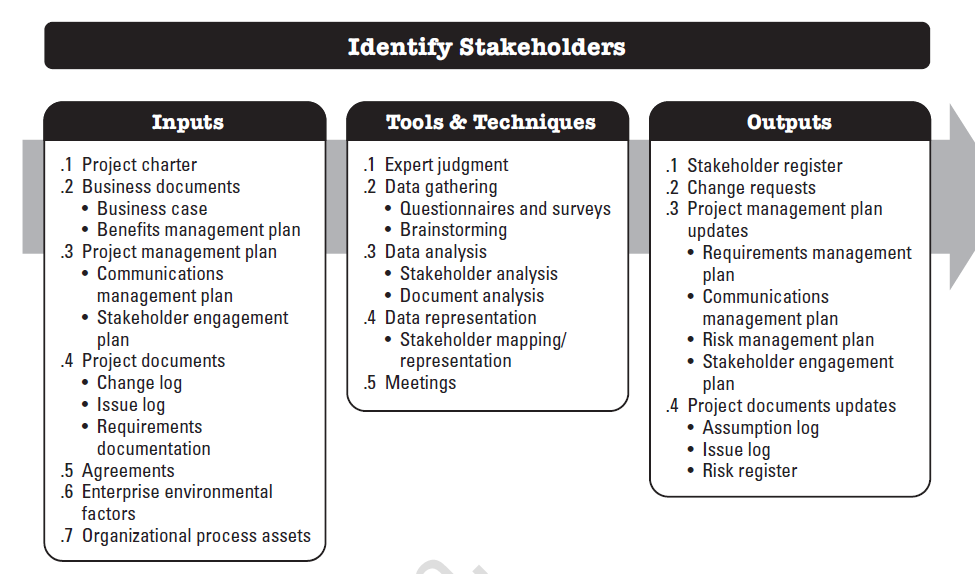
  46. 46Identify Stakeholders – Determining who will be affected by the project and noting their involvement/impact. (I)Identify Stakeholders – Determining who will be affected by the project and noting their involvement/impact. (I)
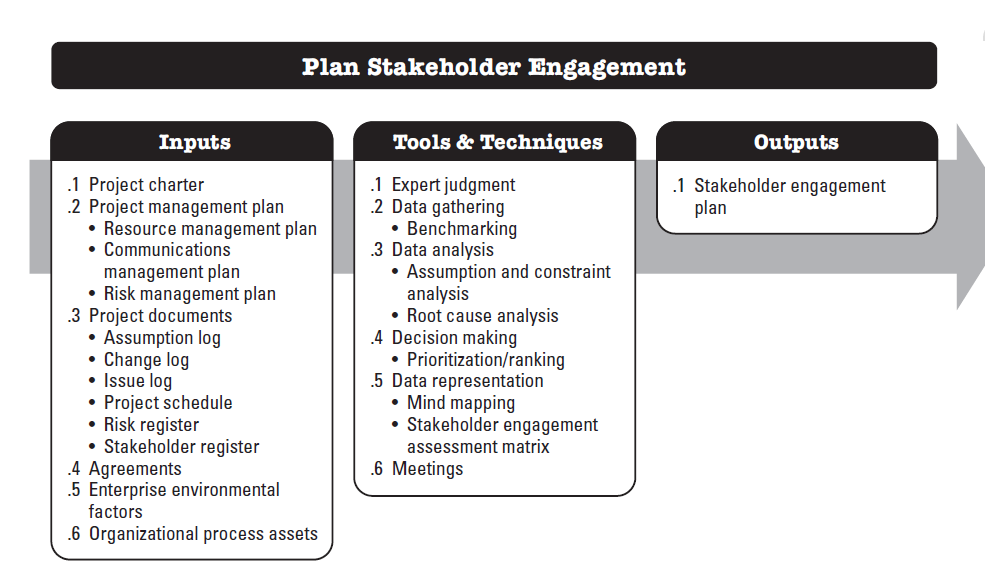
  47. 47Plan Stakeholder Engagement – Developing strategies to appropriately engage stakeholders during the project. (P)Plan Stakeholder Engagement – Developing strategies to appropriately engage stakeholders during the project. (P)
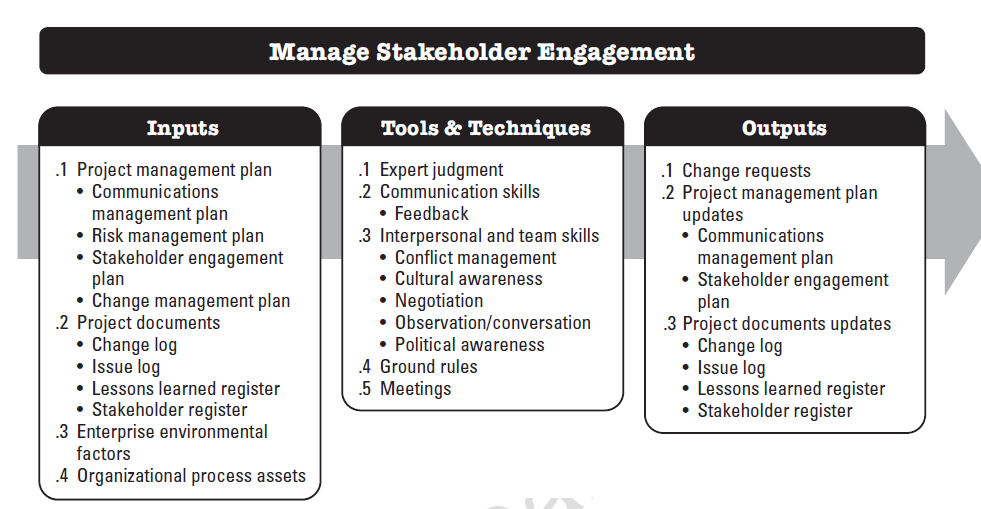
  48. 48Manage Stakeholder Engagement – Communicating with stakeholders and addressing issues. (E)Manage Stakeholder Engagement – Communicating with stakeholders and addressing issues. (E)
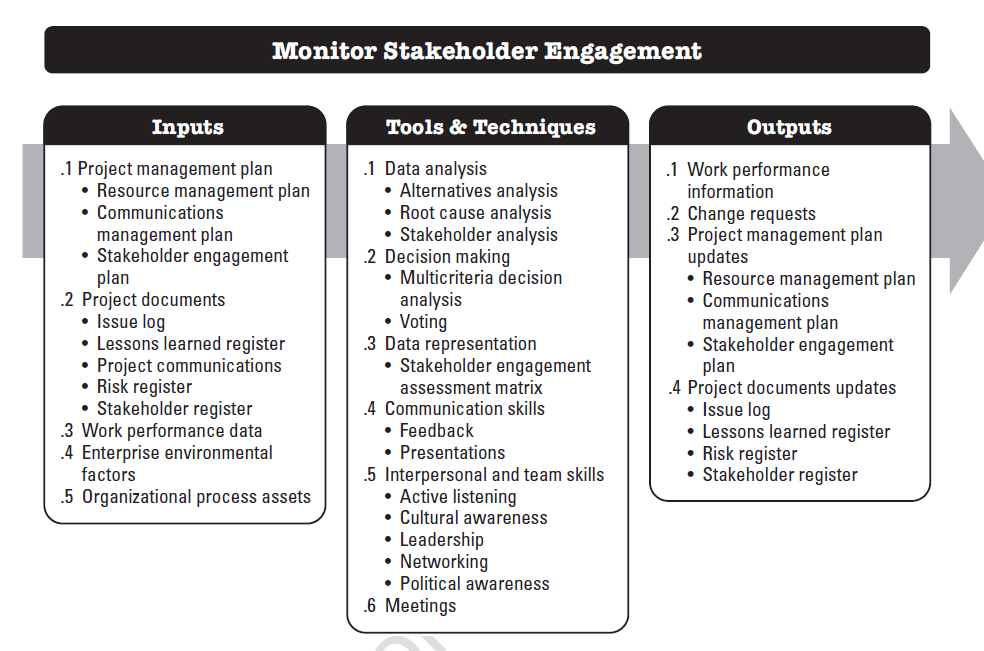
  49. 49Monitor Stakeholder Engagement – Monitoring and adjusting plans for engaging stakeholders. (M&C)Monitor Stakeholder Engagement – Monitoring and adjusting plans for engaging stakeholders. (M&C)
Informationen

Beschreibung
49 Processes & ITTOS
Erstellt von
Daniel Gomez-Windshuttle · Nov 2018
Aktualisiert
25 Nov 2018
Aufrufe
13
Bewertung

Feedback

Worum geht es?

Wie gefällt dir das neue Design?

Dein Eindruck