Karteikarten
Lecture One - Major Types of Biological Molecules
Karten in diesem Stapel (30)
- 1Concepts to understandLife is carbon-based
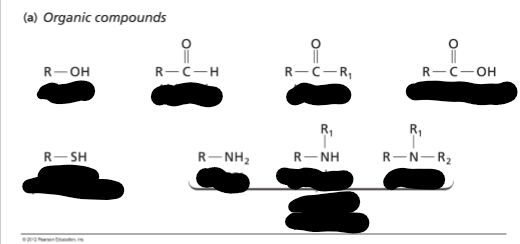
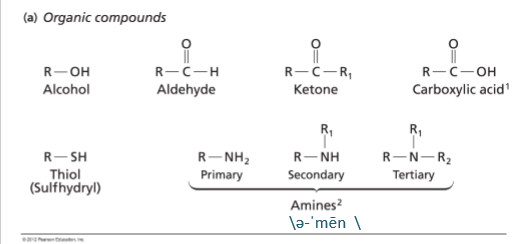
Major organic compounds encountered in biochemistry
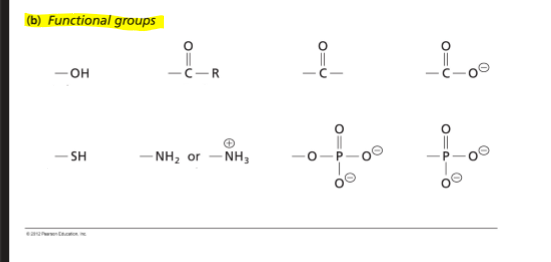
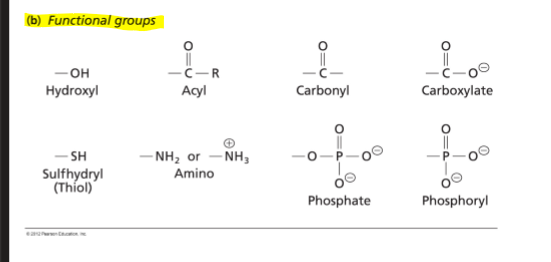
Major functional groups
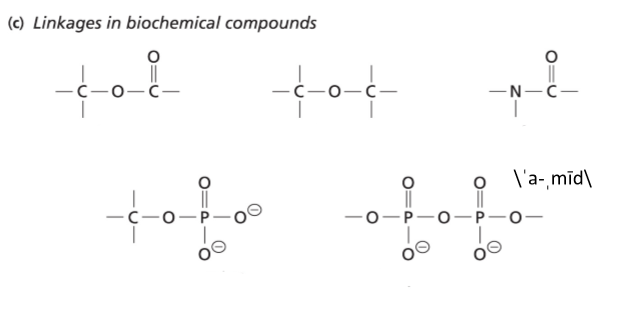
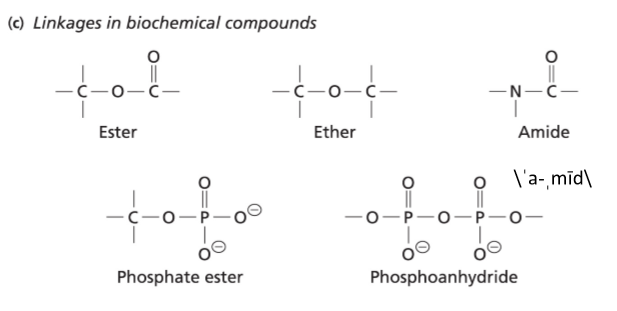
Major linkage types in biopolymers
Four major types of biomolecules - 2Biochemistry is the chemistry of life What are the properties of life in the context of biochemistry? • Incredible complexity and organization Information (genetical, structural) => __ entropy Biomolecules - organelles — cells — tissues — organs — organisms Homeostasis (body temperature, salts, voltage potentials, ...) Metabolism (anabolism, catabolism, pathways) Responsiveness to the environment Growth & Reproduction Adaptation, including geneticallylow
- 3The principles of biochemistry ar common to ___ living beings.all
- 4Biochemistry VS. Organic Chemistry -Very __ range of temperatures -Narrow range of pH -Atmospheric pressure -Water is the major ____ (versus a wide variety in organic chemistry) -Carbon-based (limited choices of elements & molecules) How does LIFE find solutions? ____narrow
solvent
ENZYMES (see lectures 8-10) - 5Life is ___ based Why C? • Four ___ bonds => diversity of 3D structures • Stable double, triple bonds • Forms/breaks bonds with _, _, & _ • Reversible oxidation/reduction C-based molecules active under the ____ conditions Alternatives to C? B : 3 electrons; not stable 5 electrons; N-N-N => explosives Si: Large radius => Si-Si is a weak bond P : Not stablecarbon
covalent
O, H, & N
physiological - 6Other elements of life • Oxygen, hydrogen, nitrogen, phosphorus, sulfur are major elements In addition to homo- (C-C), form heteronuclear bonds (C-O) These covalent bonds can break and form Several other elements are in small (trace) quantities Examples: Ca2+ Mg2+ Fe2+ & Fe3+ Water is an essential solvent and ___ -->50-95 % (by body weight) -->Unique properties: small size, chemical stability, low viscosity, polarity, melting & boiling points, ...reactant
- 7Basic Organic Compounds encountered in biochemistry
- 8Four classes of biological macromolecules WHat are the functions of each? l. Carbohydrates = ____ ll. Lipids = ____ Ill. Nucleic Acids = ____ IV. Proteins = ____ Most of the biological macromolecules, except for lipids, are ___ Polymers are formed from like monomers Depending on the polymer, different types of ___ bonds formedI. Structure, energy
II. Biological membranes, energy
III. Information, energy
IV. Structure, chemical reactions, signaling, energy
polymers
covalent - 9Functional groups (FG) -can be distinguished in all four types of biological macromolecules (same FG can be a part of a wide variety of "life" molecules) FG: a group of atoms that demonstrate characteristic reactions
- 10Biomolecules (biopolymers) are held together by linkages
- 11Carbohydrates = Saccharides = ___ Example = Glucose FG's = hydroxy & carbonyl Glucose interconverts b/w alpha & beta forms and is in equilibrium in solutionsugars
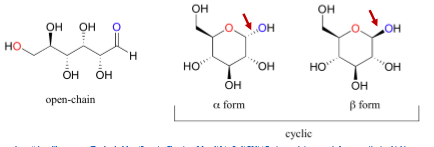
- 12Monosaccharides (single sugars) Glucose, Fructose, Galactose
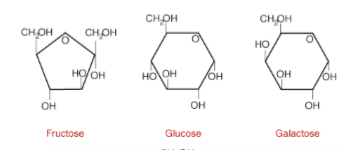
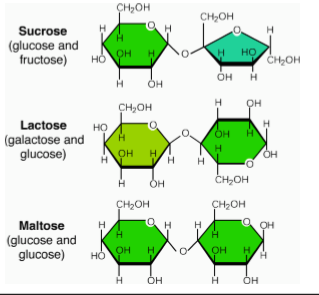
- 13Disaccharides (2 sugars) Sucrose = table sugar Lactose Maltose
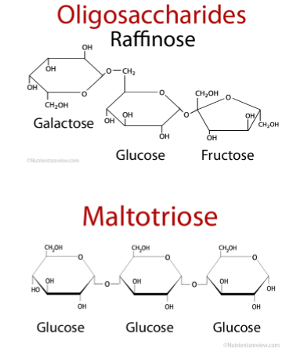
- 14Oligosaccharides -consist of a few (3-10) monosaccharides
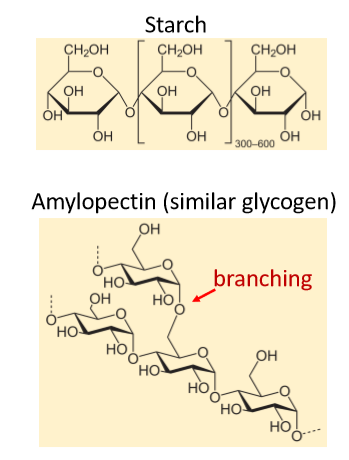
- 15Polysaccharides -are long polymers
- 16What happens when you digest sugar? -Ether bond breaks with the addition of water (____ reaction). -Enzyme plays a key role.hydrolysis
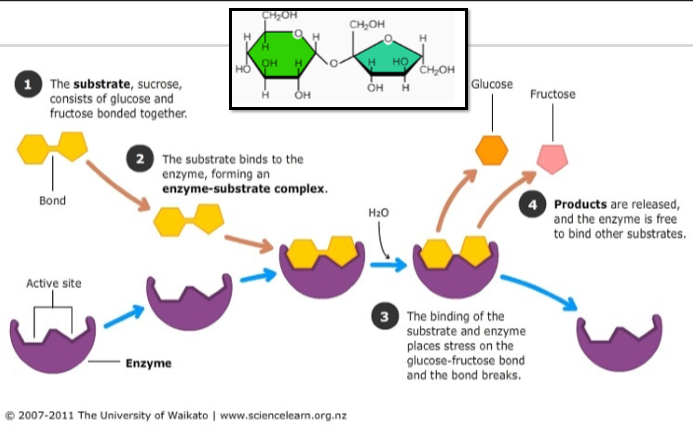
- 17Sugars/Carbohydrates - Function • Energy source — e.g. glucose • Structure — e.g. ___ • Part of another biomolecule: v/ Nucleotides contain a sugar moiety v/ Glycoproteins: ___ with covalently attached a carbohydrate Glycolipids: lipids with ____ covalently attached These complex molecules will be discussed later in detailcellulose
proteins
carbohydrate - 18Protein is a polymer of ___ ___ • a-amino acids are the building blocks • Peptides is < __ amino acids • ____ is >50 amino acids • A protein is one or more polypeptidesamino acids
50
Polypeptide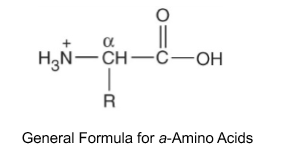
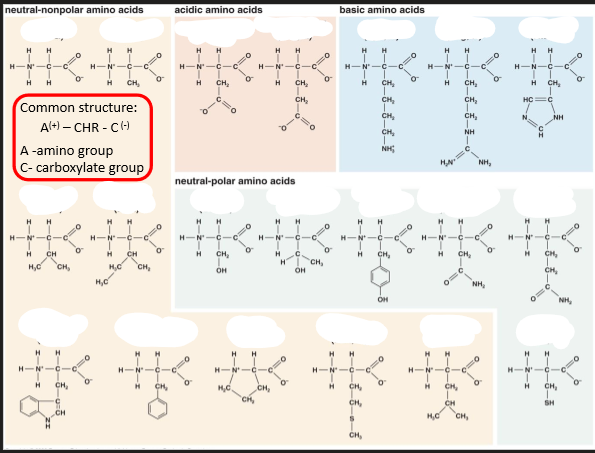
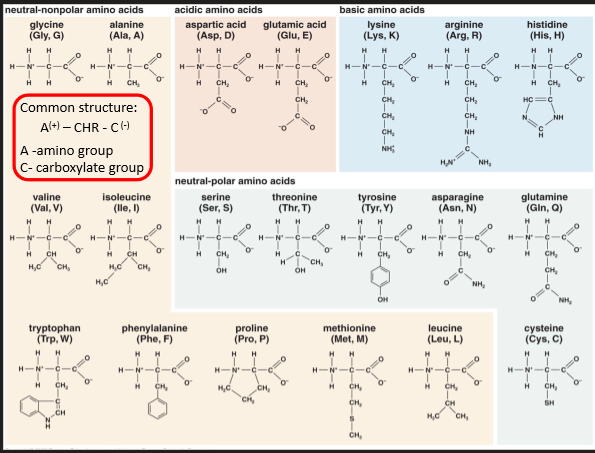
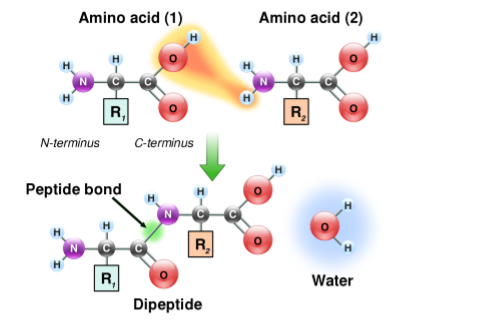
- 19Amino Acids • a-amino acids are building blocks of proteins • In peptides, amino acids are covalently attached via ___ bonds There are 20 standard a-amino acids in proteins • Properties of amino acids and proteins are determined by the properties of the ___ ___ of the amino acids • Amino acids can be grouped depending on the chemical properties of their side chain: charge, polarity, acidity, interaction with water, ... • Polypeptides are folded to form a functional 3D structure. In water hydrophobic residues are buried ___. -->Membrane proteins - oppositepeptide
side chains
inside - 20—
- 21Dehydration reaction forms the peptide (amide) bond
- 22Nucleic Acids (DNA, RNA) Nucleic acid is a polymer of ___ monomers Nucleotides are formed from three functional groups: 1. Phosphate group (P) 2. A 5-carbon sugar: (R) Ribose, (D) Deoxyribose 3. Nitrogenous base: (A) Adenine, (G) Guanine, (C) Cytosine, (T) Thymine, (U) Uracilnucleotide
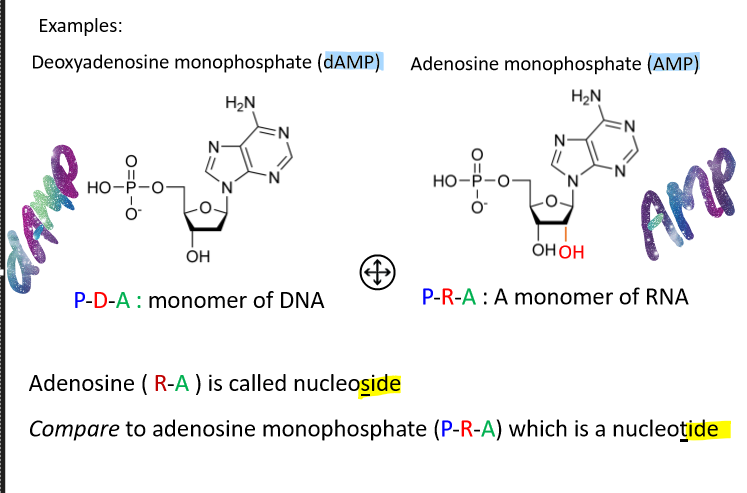
- 23—
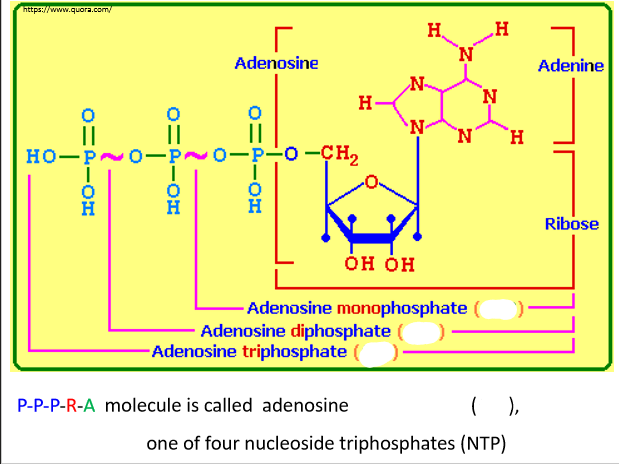
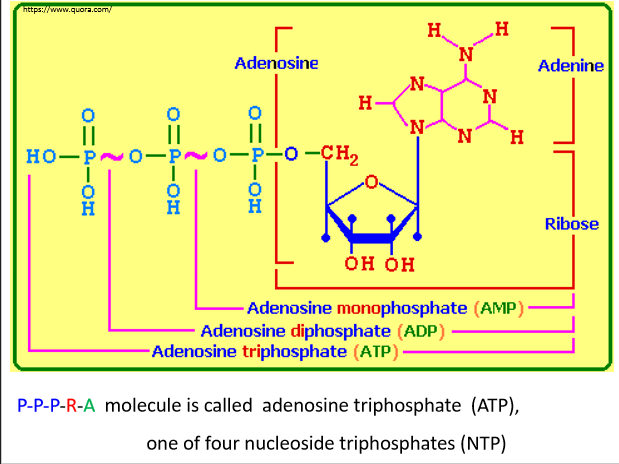
- 24Nucleic Acid Synthesis NTPs (nucleoside triphosphates) are ___ building blocks dNTPS (deoxynucleoside triphophates) are ___ building blocksRNA
DNA - 25LIPIDS Lipid molecules contain relatively large ___ fragments ___ : do not dissolve in water but do dissolve in non-polar solvents Do NOT form ____hydrocarbon
hydrophobic
polymers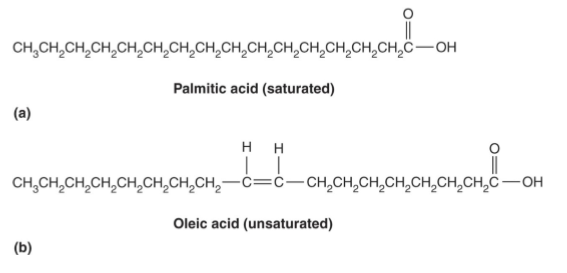
- 26Simplest lipids are ___ ___ FAs consist of a terminal carboxyl group (___) and hydrocarbon tail or chain (___).fatty acids
polar
nonpolar - 27Glycerophospholipid -Amphiphilic -Form bilayers
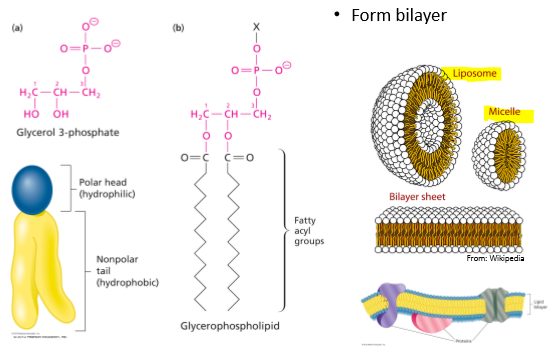
- 28Triglyceride (triacylglycerol, TAG, TG) is an ester-linked glycerol & 3 FAs -FAt found in the ___ -Excessive calories are saved as __ ___ in the form of triglyceride -Skin oil -High levels in the blood may cause stroke, heart diseases, pancreatits, ...blood
body fat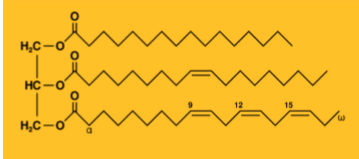
- 29Waxes
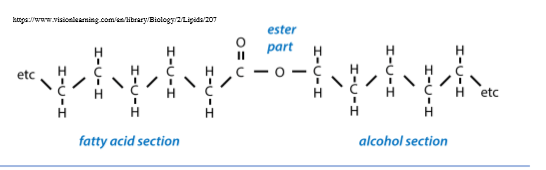
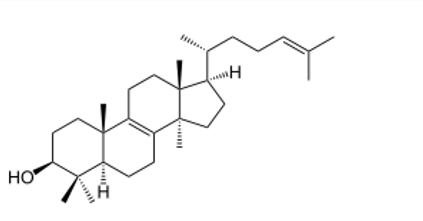
- 30Steroids