
Karteikarten
Perception, Exposure, and Attention
Karten in diesem Stapel (19)
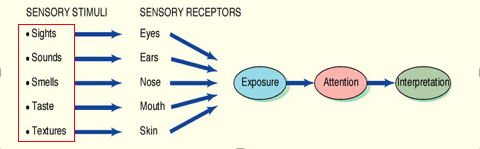
- 1describe the process of taking in information (from exposure to behavior)
- 2what is exposure?Exposure is the process by which consumers (consciously or not) come into physical contact with a stimulus.
subliminal exposure
supraliminal exposure - 3What is the Mere Exposure Effect(Zajonc 1968, 1980)
People tend to like more stimuli that have been presented more frequently, even though they can’t notice that one group of stimuli was presented more often.
**more frequently exposed the more you'll like what your exposed to - 4why do you like something more if your exposed to it more?Fluency (Bornstein and D’Agostino 1994): high levels of exposure make it easier to process the information, which makes consumers like it more. It is an automatic, unconscious process
- 5mere exposure in marketing and advpeople are continuously exposed to advertisement (ex online banner ads) and whether they are recognize it or not, they build a liking toward he ad. this does however reach a peak and slopes after due to simply being over-exposed
**it gets annoying** - 6what is subliminal exposure? SUBLIMINAL PERCEPTIONStimuli are presented below (sub) the threshold (limen) of recognition.
even though you are unaware of being exposed, you can be subliminally subjected to stimuli that manipulate the human mind to generate a desired perception - 7subliminal exposure mythsPopcorn Experiment (1957):
*exposure to ppl eating and drinking will increase sales - not proven*
(Drink Coke / Eat Popcorn)
Self-help cassettes – stop smoking, lose weight, don’t be jealous
*listening to tapes while driving or sleeping will help better yourself even though you are unaware and dont need to do anything - 8subliminal exposure myth (class video - political campaign) SUBLIMINAL PERCEPTION EXAMPLEPolitical campaign:
Bushes rat campaign...
the word rat would pop out.
only for seconds but thought process was that ppl would not recognize, but would acquaint the democratic party with the word rat and would perceive them as rats - 9AttentionThe extent to which conscious mental processing activity is devoted to a particular stimulus.
- 10Why is attention selective?attention is selective because we are subject to sensory overloads. Today there are tremendous amounts of ad's and increase amount of sensory stimuli fighting for our attention.
* consumers are exposed to far more information than they can process * - 11what determines what we do or don't pay attention to? individual factorsindividual factors:
people sometimes control what they want to pay attention to...
(need to buy a car) -- may focus on car advertisements
*human attention is involuntarily drawn by things that are personally relevant.*
Cocktail party effect:
if you hear your name across the room, you will shift your focus and pay attention to the on going conversation because our attention is drawn to what is perceived as being personally relevant.
this tells us that our brains are constantly taking in our surroundings, and puts more focus to what is perceived as personally relevant and puts more processing power towards processing that info - 12what determines what we do or don't pay attention to? source factorssource location, attractiveness, emotional appeal and novelty contribute to the level of attention we allocate
examples:
placing ads in unexpected places
attractive models > unattractive models
Humorous ad's get our attention
emotional appealing ads get attention
novelty and unexpected ads = good - 13how do people assign meaning to objectsthrough the process of interpretation
- 14what is interpretationInterpretation: refers to the meaning we assign to sensory stimuli.
- 15interpretation biasconsumers are biased by:
Their beliefs and automatic associations
(french wine better, darker coffee stronger)
Their affective states - mood and emotions
(I feel good so this product is good)
Their preferences/desires
(who i cheer for influences how i see the game) - 16Example of interpretation of productsThe palmpilot vs apple newton
the palm pilot was advertised as an organizer... people were able to interpret its uses and grasp the concept easier than the apple newton which was advertised as a hand held computer... we couldn't grasp the concept at that time and therefore the palm pilot was a success and the apple newton was a failure - 17Dan Ariely interpretation bias and consumer preferencesthree groups tests to taste beer w vinegar added
1) blind - no knowledge
2) before - informed then tasted
3) after - tasted then informed
results showed
1) blind liked most
2) before liked least
3) after liked more than before but less than blind sample - 18general class take awayBe aware of cues that people use to interpret the meaning of your product
Challenge: deviate from expectation and yet lead to the “wanted” interpretations.
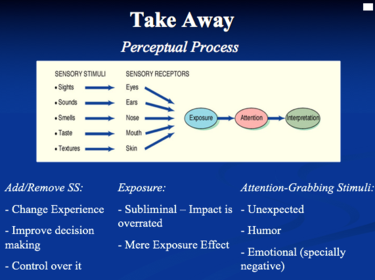
Beliefs, affective states, preferences, and attribute information not only influence conscious interpretation, but also how the brain responds to the product - 19perceptual process take away
Informationen
- Beschreibung
- review for mkt 310 exam 1 "Perception, Exposure, and Attention" chapter 2 notes for review sheet plus side notes
- Erstellt von
- ericjordan92
- Aufrufe
- 81
- Tags
- Bewertung