Karteikarten
The Cell
Karten in diesem Stapel (38)
- 1What is Cytology?Study of cells
- 2What is the Continuity of Life?Cell can only be made from pre-existing cells. There is an unbroken chain of cells since life began on the planet 3.4 billion years ago
- 3What is Cell Ultra Structure?It is the fine detail of a cell as seen using the electron microscope
- 4What is an organelle?It is a distinct cellular component with a specific function
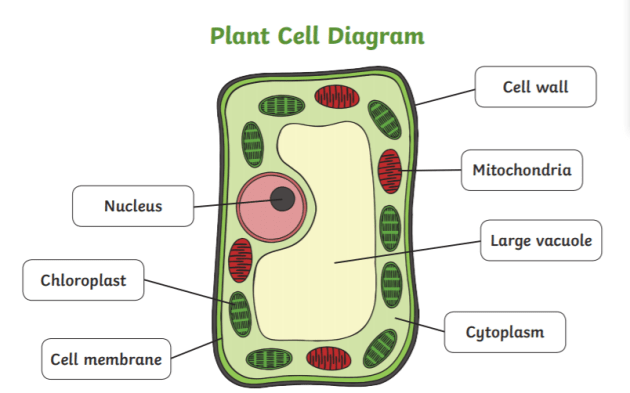
- 5Draw a Plant Cell
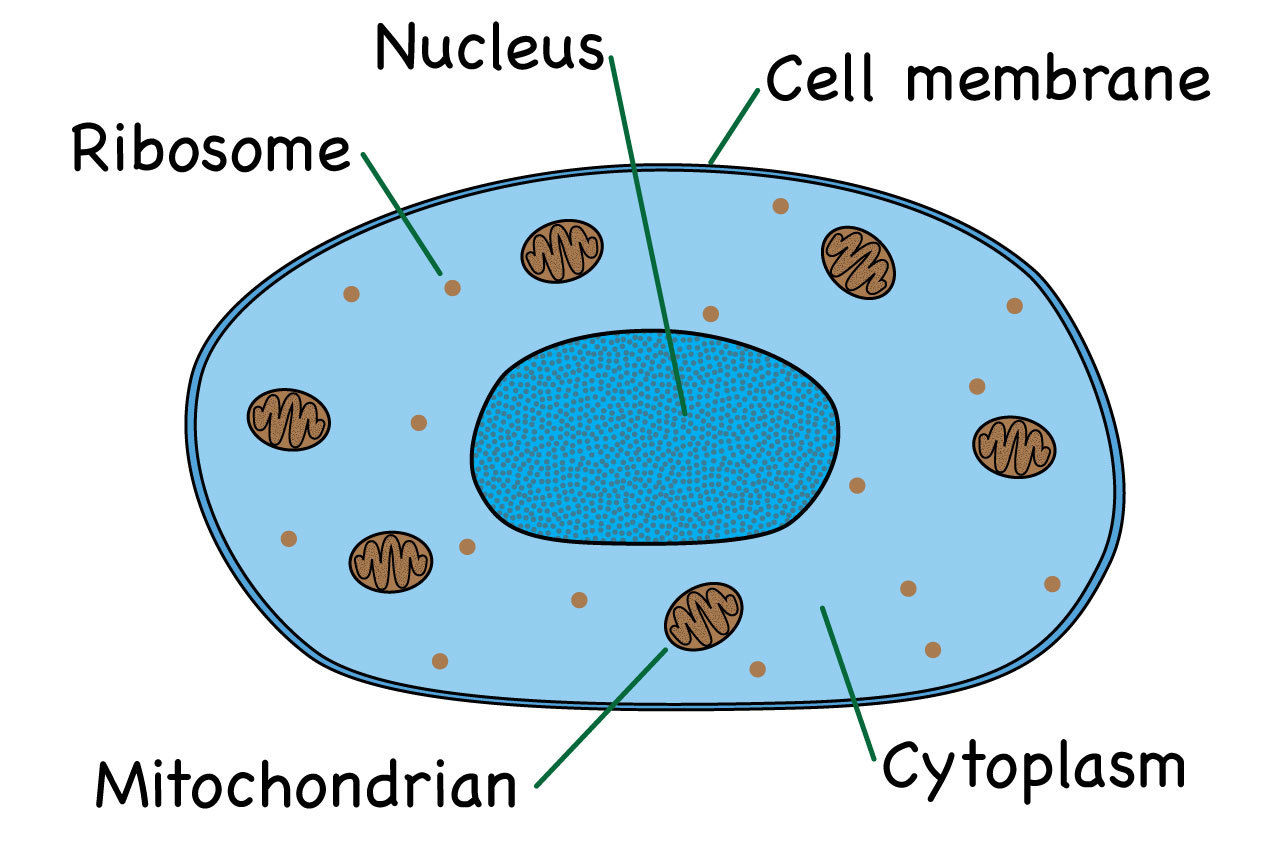
- 6Draw an Animal Cell
- 7Describe the Cell Wall*Only in plant cell
*Made from cellulose
*Fully permeable
*A middle lamella made of pectin is found between adjacent cells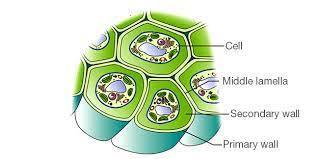
- 8What are the functions of the cell wall?1.Gives the cell Shape, Strength and Support (SSS)
- 9Describe the Cell Membrane*Found in all cells
*Flexible structure made from phospholipids and proteins
*Proteins are in constant motion in the cell so its called "the fluid mosaic model"
*It is semi-permeable - 10What are Phospholipids?*They are arranged in a double layer forming a lipid-bi-layer
*Phosphates are hydrophilic
*Lipids are hydrophobic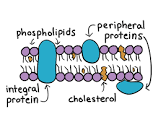
- 11What are the functions of the cell membrane?1.Controls the passage of substances in and out of the cell
2.Retains the contents of the cell in place
3.Recognises molecules that touch the cell
4.Gives the cell some shape and support - 12Describe cytoplasm*It is the liquid area of the cell
*the cytoplasm without the organelles is called cytosol - 13What is the function of cytoplasm?It contains/suspends the cells organelles
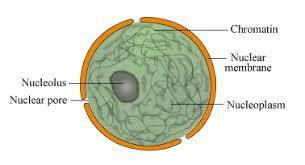
- 14Describe the Nucleus*Its the sac-like structure surrounded by a double membrane
*The nuclear membrane contains nuclear pores
*The nucleus contains two main parts; the nucleolus and the genetic material - 15Describe the nucleolus*it is a small, spherical, darkly staining body
*It makes ribosomes - 16Describe the Genetic material in the nucleus*Nucleus contains strands of DNA (deoxyribonucleic acid)
*DNA is arranged into structures called chromosomes in diving cells
*DNA is arranged into structures called chromatin when the cell is not diving (long and thread like) - 17Draw the Nucleus
- 18What is the function of the Nucleus?It controls and regulates the activities of the cell
- 19Describe the large vacuole*Found in plant cells- they are a large fluid-filled sack
*COntains cell sap (Sugar, Salts, Water and Wastes) (SSWW) - 20What is the function of the large vacuole?1.Storage of SSWW
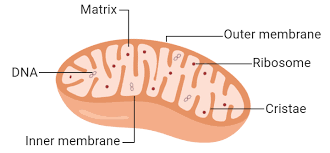
2.Provide structural support for plants by storing water - 21Describe the mitochondria*Rod shaped structure, site of respiration
*Mitochondria have a double membrane: one smooth outer one and a highly folded inner membrane
*Contains folds called cristae- this is where energy is released - 22What is the function of Cristae?It is to increase the surface area of the inner membrane, which has enzymes involved in respiration
- 23What the difference between active and inactive cells?Active cells have many mitochondria e.g muscle cells
Inactive cells have few mitochondria
e.g fat cells - 24What is the function of mitochondria?To control cellular respiration- the release of energy from food
- 25Draw a mitochondria
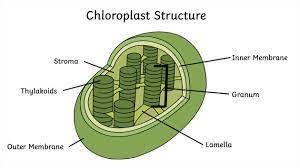
- 26Describe the Chloroplast*Found in plant cells
*Contain the green pigment chlorophyll which allows photosynthesis to take place
*Has a smooth double membrane - 27What is a Granum?It is a stack of thylakoids (it stores chlorophyll)
*The light stage of photosynthesis takes place here - 28What is the function of chloroplasts?to trap light energy for photosynthesis
- 29Draw a chloroplast
- 30Describe the ribosomeIt is a tiny grain like structure made from RNA and protein
- 31What is the function of ribosomes?TO make protein (protein synthesis)
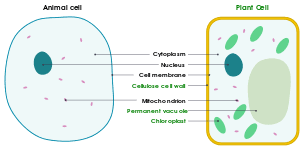
- 32Name 3 differences between plant and animals
- 33What do prokaryotic cells have?1.Do not have a nucleus
2. Do not have membrane bound organelles e.g. Mitochondria
3. Have a circular loop of DNA
4. Unicellular and belong to the Kingdom Monera - 34What do Eukaryotic cells have?1.Have a nucleus
2.Have membrane bound organelles e.g. Mitochondria
3.DNA is enclosed within the nucleus
4.They belong to the other 4 kingdoms - 35What are the 5 kingdoms of living things1.Monera e.g. Bacteria
2.Protista e.g. Amoeba
3.Plants e.g. Grass
4. Animals e.g. Man
5. Fungi e.g. Mushroom - 36What are the two types of microscopes?The Compound light microscope and the Electron Microscope
- 37What are the differences between the two microscopes?1.The compound light uses rays of light while the electron uses a beam of electrons
2.The compound light is portable and inexpensive while the electron microscope if expensive and not portable
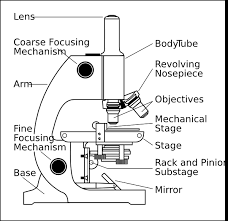
3. The compound light microscope can examine living tissues while the electron microscope can only examine dead tissues - 38Describe a microscope