
Karteikarten
the heart, cardiac cycle, control of heart beat, electrocardiogram
Karten in diesem Stapel (10)
- 1the events in one complete heart beat are known as the cardiac cyclethree main stages (atrial systole, ventricular systole and diastole.)
-the heart beats MYOGENICALLY (meaning that the events initiated within the heart muscle) - 2Atrial Systolethe SINO-ATRIAL NODE located in the RIGHT atrium initiates a wave of excitation (electrical impulses) across BOTH atria.
- this causes the cardiac muscle in the ATRIA to CONTRACT and the volume of the artia reduces so the pressure INCREASES pushing blood into the ventricles through the ATRIO-VENTRICULAR VALVES - 3semi-lunar valves1- Atrial systole: semi-lunar valves are CLOSED (as the pressure in the arteries is higher than that in the ventricles, which are RELAXED)
2-Ventricular systole: contraction continues>pressure in ventricles exceeds that of the arteries and blood exists the heart by OPENING and pushing through the semi-lunar valves (VENTRICULAR EJECTION)
3- Diastole: VENTRICLES relax 1ST > pressure in ventricles FALL below that of the ARTERIES and the semi-lunar valves CLOSE
- 4Atrioventricular valves (tripcuspid)1- Atrial systole: Atrioventricular valves are OPEN allowing blood to pass into the ventricles
2- Ventricular systole: as ventricles contract the atria RELAX (ATRIAL DIASTOLE). The CONTRACTION of the ventricles RAISES pressure of the blood in the ventricle chamber and pushes the atrio-ventricular valves SHUT as the pressure rises above that of the atria (ISOVOLUMETRIC CONTRACTION)
3- Diastole: muscles continue to relax, the pressure FALLS below that of the ATRIA and the atrio-ventricular valves OPEN.
- 5Ventricular systole1- wave of excitation collects at the ATRIO-VENTRICULAR NODE (located in the septum - junction of atria and ventricles) >electrical contraction DELAYED here for a short period of time (allowing atria to complete contraction and ventricles to fill) > ventricles ALWAYS contract AFTER atria
2- impulse is passed to APEX (heart peak at base) through a bundle of fibres (BUNDLE OF HIS) > heart contracts from the BOTTOM and squeezes blood upwards to arteries
3- impulse spreads through cardiac muscle of the ventricles through branches (PURKINJE FIBRES)
4- as ventricles contract the atria RELAX (ATRIAL DIASTOLE). The CONTRACTION of the ventricles RAISES pressure of the blood in the ventricle chamber and pushes the atrio-ventricular valves SHUT as the pressure rises above that of the atria (ISOVOLUMETRIC CONTRACTION) >contraction continues>pressure in ventricles exceeds that of the arteries and blood exists the heart by OPENING and pushing through the semi-lunar valves (VENTRICULAR EJECTION)
- 6Diastole- following ventricular systole ALL cardiac muscles RELAX (both atria and ventricles).
1-VENTRICLES relax 1ST > pressure in ventricles FALL below that of the ARTERIES and the semi-lunar valves CLOSE, as the muscles continue to relax the pressure FALLS below that of the ATRIA and the atrio-ventricular valves OPEN.
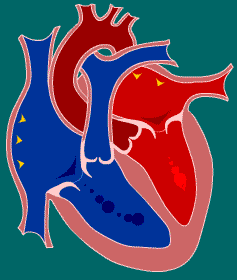
2- blood flows from veins through the relaxed atria, through the atrio-ventricular valves and into the ventricles - 7Atria- only have to move blood into ventricles so has a thin layer of muscle
- 8RIGHT ventricle-RIGHT ventricle moves the blood to the LUNGS and has a THICKER muscle layer than the atria
- 9LEFT ventricle-LEFT VENTRICLE have a very THICK layer of muscle as blood must be moved around the WHOLE BODY
- 10CALCULATING HEART RATEone cardiac cycle = 0.8 seconds
- heart rate is expressed in beats per minute so convert it
0.8/60= 75 beats per minute
Informationen
- Beschreibung
- Eduqas pg 185-190 theory booklet class pg 7-15
- Erstellt von
- Danielle Cope · Apr 2016
- Aktualisiert
- 23 Aug 2016
- Aufrufe
- 198
- Bewertung