
Karteikarten
Everything (ish)
Karten in diesem Stapel (45)
- 15 reproductive factors that influence breast cancer risk:1. age at menarche (younger ↑ risk)
2. age at menopause (older ↑ risk)
3. parity (more ↓ risk)
4. breastfeeding (time ↓ risk)
5. age at first childbirth (younger ↓ risk) - 2Think link between hormones and cancer may explain...differences in risk for some of the most commonly diagnosed female cancers (and risk of sons and testicular cancer too)
- 3Oral contraceptives and hormone replacement therapy can...increase risk of (hormone-related) cancer
- 4Pesticides contain _____ that may lead to health problems including cancer.Endocrine-disrupting chemicals (EDCs) or hormone mimics
(it is argued that ↑ pesticide use has lead to an ↑ in breast and testicular cancer -
h/e this could just be diet, drinking, ↓ age at childbirth or ↓ parity) - 5Central Tolerance: B cells are matured in the...Bone Marrow
- 6Central Tolerance: T cells are matured in the ....Thymus
- 7Double negative T cells → Large double positive T cells → Small double positive T cells... 3 things might happen next1. Single positive helper cell (CD4+)
2. Single positive cytotoxic cell (CD8+)
3. 98% recognise self and are atoptosed - 8Ignoranceanergy as a result of inaccessible or low concentrations of self antigen during peripheral tolerance.
- 9Central tolerance occurs in...the thymus and bone marrow
- 10Growth regulation in normal cells v neoplastic cells1. Growth factor dependency
2. Density dependent inhibition of growth
3. Anchorage dependence
4. Contact inhibition of movement
5. Adhesiveness - 11Definition of NeoplasmNew-growth - abnormal and continued growth of cells which are no longer subject to homeostatic controls typical of normal tissue
- 12Tumour growth rate is determined by 1 thing and influenced by 2 thingsdetermined by:
1. rate at which new cells replace old ones by cell division
influenced by:
1. adequate blood supply
2. hormones (in hormone responsive tumours) - 13Definition of ToleranceA type of specific unresponsiveness to an antigen induced by the exposure of specific lymphocytes to that antigen, but responds to other antigens
- 14Peripheral tolerance occurs in...the peripheral lymphoid organs
e.g. lymph nodes and lymphoid follicles in tonsils, Peyer's patches, spleen, adenoids, skin... - 15Definition of Self-ToleranceNormal individuals are tolerant of their own antigens (self-antigen)
- 16Source of the two (co)signals required for full T cell activation1. antigen
2. APC (antigen presenting cell) - 17Central toleranceApoptotic Cell Death
During maturation of lymphocytes in the thymus (T) or bone marrow (B), immature antigens that have a strong affinity for self-antigens are deleted by negative selection. - 18Immune Surveillance TheoryThe immune system constantly surveys for the presence of abnormal cells. When cancer cells arise they are eliminated; if they can evade it, tumours arise.
- 195 pieces of evidence supporting immune surveillance theory:1. Subclinical tumours apparent in post-mortems
2. Many tumours contain lymphoid cell infiltrates
3. Spontaneous regression can occur
4. Frequency ↑ in young and old (when immune system is ↓)
5. Tumours frequently arise in the immune supressed - 201 piece of evidence against immune surveillance theory...Oncogenenic viruses may have been "controlled" by the immune system and when the immunity reduced, the viruses proliferated resulting in tumours with a viral aetiology
- 213 means that a tumour may evade the immune system...1. immunologic enhancement of tumour growth
2. antibodies bind to tumour antigens "masking" them from the Cytotoxic T cells
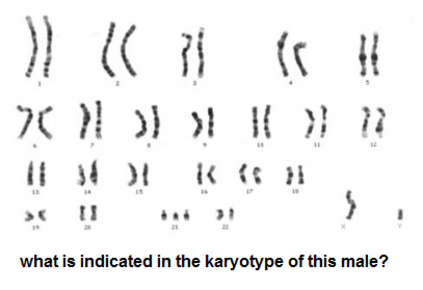
3. reducing the amount of MHC class 1 on tumour cells - 22—Down's syndrome
- 23Peripheral ToleranceClonal Anergy
no co-stimulatory signals "deactivate" the T cell without it "dying".
(the two signals normally come from the antigen and the APC) - 24A stimulus can be physical or chemical and leads to a cell adapting to their environment and reverting back to normal when the stimulus is gone.Tumour cells do not revert back to normal cells.
- 25Individuals with downs may be susceptible to heart defects, Alzheimer's, hearing, sight, thyroid and digestive problems as well as a specific cancer, namely...Leukaemia - a cancer of the blood.
Leukaemia does not produce tumours, it is instead the overproduction of cancerous white blood cells that are functionally useless. - 26Oncogenesgenes that code for proteins that, if abnormal in form or number, induce malignant growth by speeding up or switching on cell division
- 27Anti-oncogenesTumour-suppressor genes have the opposite effect to oncogenes
- 28HypertrophyIncrease in the size of an organ or tissue due to and increase in the size of individual cells
- 29TP53 geneis the tumour suppressor gene that encodes for the protein p53.
One of the most common defects in human cancers involves the gene TP53. - 30AtrophyAcquired shrinkage due to a decrease in the size or number of cells of a tissue, e.g. decrease in size of the ovaries after the menopause
- 31Proto-oncogenesThe un-mutated version of oncogenes that normally control how often a cell divides and the degree to which it differentiates.
Only one allele needs to be mutated to lead to the mutated oncogene version. This version is "constantly on" - 32HyperplasiaIncrease in the size of an organ due to an increase in the NUMBER of cells, e.g. lactating breast.
- 33Mouse Skin Applying an initiating agent alone results in...No Tumour
- 34Mouse Skin Applying an initiating agent, followed by promoter results in...Tumour Formation
- 35Mouse Skin Delaying the application of promoter several months after applying an initiating agent, results in...Tumour Formation
- 36Mouse Skin Applying promoter alone results in...No Tumour Formation
- 37Mouse Skin Applying an initiating agent after the promoter results in...No Tumour Formation
- 383 Rules of Infections and Cancer:1. The viruses involved all establish persistent infection and are often widespread in the normal human population
2. Cancer develops only in a small proportion of infected people, usually many years after their initial viral infection
3. Virus infection is just one link in a complex chain of events required for cancer devloped - 393 Rules of Direct Causal Association:1. All patients with the type of cancer in question have previously been infected with the virus
2. Every cancer of this type carries the virus' genetic information (the viral genome) in every malignant cell
3. The virus itself, or individual virus genes, can often "transform2 the growth of normal vells in cell culture. - 405 factors that contribute to the breakdown of tolerance:1. failure to delete autoreactive lymphocytes (peripheral and central tolerance failure)
2. Molecular mimicary
3. Abnormal presentation of self antigens
4. Epitope spreading
5. Polyclonal lymphocyte activation - 41MetaplasiaReplacement of one cell type in an organ by another.
This implies changes in the differentiation programme and is usually a response to a persistent injury. It is reversible so that the removal of the source of injury, restores the original cell type.
E.g. smoking causing a squamous metaplasia of columnar cells - 42Dysplasia(revisable) changes in
the cell type, size, shape and
organisation, that do not revert to
normal once the injury is removed.
"precancerous" - 43carcinomas come from...epithelium
- 44Lymphomas, leukaemias and myelomas come from..."blood bits"
- 45Sarcomas come from...muscle, cartilage, bone etc...
Informationen
- Beschreibung
- BSc (Hons) Biology Karteikarten am Everything (ish), erstellt von Sami-Jaine am 08/05/2013.
- Erstellt von
- Sami-Jaine
- Aufrufe
- 162
- Tags
- Bewertung